How much does a jin of yew seeds cost, and how should they be planted for best results?
Yew, also known as Taxus, is deeply popular on the market because every part of it is useful, combining medicinal, timber and ornamental value in one, and it has considerable application value in landscaping and in treating many kinds of tumor diseases, with good planting prospects, so many growers want to plant it too. So how much does a jin of yew seeds cost? And how do you plant them?
I. How much does a jin of yew seeds cost?
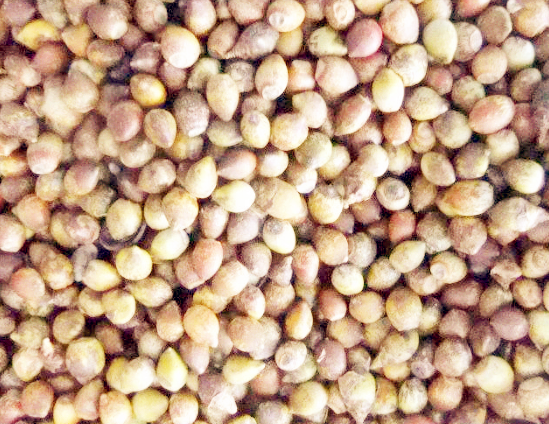
The price of yew seeds is not fixed; because of differences in seed variety, quality and market, prices vary greatly, but under normal circumstances the price of yew seeds is roughly 200-300 yuan per jin. Yew is recognized worldwide as a rare natural anti-cancer plant on the verge of extinction. Because under natural conditions yew grows slowly and has poor regenerative capacity, what is sold on the market today is generally grown artificially. For propagation, yew generally uses seed propagation and cutting propagation, mainly raising seedlings for transplanting. The plant height and stem thickness of yew seedlings grow slowly in the first two years after emergence, with plant height generally increasing by about 10 cm per year; after one year from transplanting, growth speeds up, and in 3-5 years the increase can reach 20-30 cm.
II. How are yew seeds planted?
1. Seed selection and site selection
Yew seeds mature in September-October; when the seeds turn deep red they can be collected. After collection, soak the seeds in water for 3-5 days, crush the flesh, wash clean, dry in the shade, and store indoors in a cool, dry place. The yew seedling site should be forest soil with deep soil layers, loose structure, rich in humus and well drained, suitable for raising seedlings. Yew is shade-loving, drought-tolerant and cold-resistant, and requires soil pH between 5.5-7.0. In addition, yew mostly prefers a cool, humid climate and can withstand low temperatures below minus 30°C, with an optimum temperature of 20-25°C. It likes moisture but fears waterlogging, and is suitable for planting on loose, moist, well-drained sandy loam.
2. Land preparation and fertilizing
After the seedling site is chosen, carry out land preparation and fertilizing. Newly opened seedling land with fertile soil need not be fertilized, but old seedling land must have the land well prepared and sufficient fertilizer applied. In autumn, plow 20-25 cm deep, then in spring do a shallow plowing and fine harrowing. While plowing, apply thoroughly decomposed, finely chopped manure, and make seedling beds 15-20 cm high, 1.2 m wide and 10-20 m long.
3. Seed germination
Before sowing, seeds must undergo germination treatment. Generally two germination methods are used: the alternate-year burial germination method and the overwintering burial germination method. With the alternate-year burial germination method, first soak the yew seeds in 45°C warm water for 3-4 days; when the seeds turn milky white, take them out and disinfect them with a 1-2% concentration copper sulfate solution, then mix them evenly with wet sand equal to 3 times the seed volume at 60% relative humidity, put them into straw bags or wooden boxes, and place them in an underground cellar. In addition, the cellar temperature in summer must not exceed 18-20°C; when the cellar temperature is high, set up a shade shed above or open the cellar door at night to cool it down. With this method, the seeds are cellared in autumn, buried for the whole of the second year, and taken out in the third year and spread in the sun for 24 days; when 20-30% of the seeds have germinated radicles, they can be sown. The overwintering burial germination method is suitable for seeds sown right after collection, that is, in the autumn of the same year remove the seed coat from fresh seeds, then soak and disinfect them, and then bury them using the same wet sand burial method as the alternate-year burial germination method. In the second year, 20-30 days before spring sowing, take the seeds out and spread them to dry on a windward-facing, shady slope, cover them with plastic film to raise the temperature, and pay attention to watering to keep them moist; when part of the seed shells split open, they can be used for sowing.
4. Seed sowing and field management
The sowing time is April-May each year, and the sowing rate is 0.045 kg-0.05 kg per square meter of seedling bed. When sowing, pay attention to leveling the bed surface and watering the bed thoroughly; press the seeds on the bed surface with a wooden roller so the seeds contact the soil, then cover with river sand to a thickness 2-3 times the size of the seeds, and press once more after covering with river sand. During the seed germination period, follow the principle of watering little but often, and guard against bird damage. After the seedlings emerge completely, spray Bordeaux mixture at 1% concentration every 7-10 days to prevent seedling damping-off. Two-year-old seedling beds can be given 3-5 applications of decomposed dilute human urine, and 1-2 applications of ammonium sulfate, with each ammonium sulfate application at 0.1 kg/10 m; after spraying, promptly wash the seedlings with clean water to prevent chemical injury. In June and July, apply potassium fertilizer to increase the degree of lignification of the seedlings.
5. Overwintering protection
Yew seedlings need overwintering protection measures. For 1-4 year old seedlings, cover with soil or grass to prevent drought. The soil covering should not be done too early, to avoid rotting the seedlings. From Frost's Descent to the Start of Winter, cover the seedlings with soil, with the soil covering 4-6 cm above the seedling tips. After Qingming, remove the cold-proof soil; to prevent physiological drying of the seedlings, it must be removed in 2-3 rounds, and after removing the soil, water promptly.
Summary: The above is the relevant introduction to yew seed prices and seed planting methods. Note that the above yew seed prices are for reference only, and the specific price should be based on the actual price. Growers can refer to the above prices when purchasing and plant according to the above methods. We hope this is helpful to friends in need!