Rosemary Planting Methods and 2019 Planting Prospect Analysis
Your first impression of rosemary probably comes from a song by Jay Chou, one of which is named after rosemary. The rosemary discussed today is the plant; extracts from its flowers and leaves can be made into rosemary essential oil, which is widely used in medicine and food. Many farmers have seen the planting prospects in it, so how is rosemary planted? What are the planting prospects for 2019?
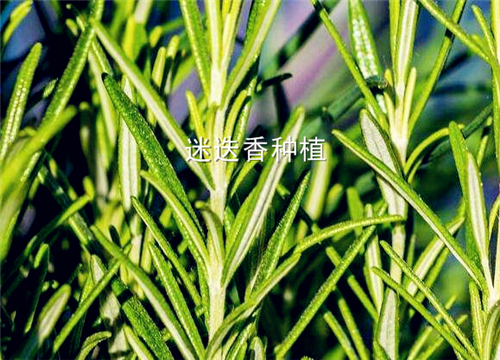
I. Introduction to Rosemary
Rosemary belongs to the Lamiaceae family. Its place of origin is in European and African countries, and it was later introduced to China for trial planting. It is now occasionally grown in garden areas in our country.
1. Distribution of Main Rosemary Producing Areas in China
Rosemary is grown in most areas of southern China, such as Guangdong and Guangxi, and it is also cultivated in the Shandong region.
2. Main Values of Rosemary
(1) Industrial Value
The stems, leaves and flowers of rosemary have a pleasant fragrance and can be used to blend air fresheners, perfumes, soaps and other cosmetic raw materials.
(2) Medicinal Value
Rosemary has a calming and soothing effect and helps refresh the mind, and it has a certain therapeutic effect on indigestion and stomach pain. It can also be used to treat insomnia, palpitations, headaches, indigestion and many other conditions.
(3) Edible Value
Rosemary has a relatively strong astringent effect, can promote blood circulation, stimulate hair regeneration, and improve hair loss.
II. How Is Rosemary Planted?
1. Rosemary Propagation Methods
There are mainly three rosemary propagation methods: seed propagation, cutting propagation, and layering propagation. The detailed steps are as follows:
(1) Seed propagation: Generally carried out in early spring when raising seedlings in a greenhouse. Both traditional soil seedling raising and plug tray seedling raising can be used. Traditional soil seedling raising requires preparing the seedling bed first. The seedling bed can be a flat bed or a small raised bed; the bed soil should be broken up and raked level, with sufficient fermented base fertilizer applied and enough bottom water poured. Broadcast sowing or drill sowing are both acceptable.
(2) Cutting propagation: Generally carried out from winter to early spring. Select fresh stems that have not fully lignified as cuttings, cut about 10-15 cm from the top, remove the leaves from the lower part of the branch, and insert directly into the medium. Keep the medium moist, and roots will form in 4 weeks.
(3) Layering propagation: Taking advantage of rosemary's characteristic of producing adventitious roots on the stems, bend the branches close to the ground and cover them with soil, leaving the top exposed to the air. Wait until new roots grow, then cut from the parent plant to form a new individual, and transplant it to open ground.
2. Transplanting
For transplanting rosemary, it is best to choose cloudy days, rainy days, or morning and evening times when sunlight is not strong. On the leveled land, first dig holes according to the row spacing, apply a small amount of base fertilizer, then cover the base fertilizer with a thin layer of soil, and then transplanting can be done. After transplanting, water thoroughly to settle the roots, and do not let the seedlings topple when watering.
3. Fertilizing
Rosemary is relatively tolerant of poor soil. During the seedling stage, according to different soil conditions, apply a small amount of compound fertilizer after intertillage and weeding. After fertilizing, cover the fertilizer with soil. After each harvest, apply a quick-acting fertilizer once, mainly nitrogen and phosphorus fertilizers.
4. Pruning
After rosemary survives planting, it can be pruned in 3 months. Each pruning should not exceed half the length of the branch.
5. Harvesting
Rosemary can be harvested for many years after one planting. Harvesting is mainly for branches and leaves, and scissors can be used or they can be directly broken off by hand.
The above 5 points are the introduction to rosemary planting methods.
III. What Are the Rosemary Planting Prospects in 2019?
1. Economic Benefits
After planting, rosemary can be harvested continuously for more than 10 years, and can also be harvested 1-3 times each year. The net income per mu per year can reach about 2000-6000 yuan. If made into potted plants and landscaping seedlings, the income per mu per year can reach 50000 yuan. This is because potted rosemary is more profitable.
2. Market Prospects
Rosemary extract is called golden liquid and is sold domestically and overseas. At present, the market price growth rate of rosemary extract is much higher than the growth rate of rosemary planting area, so the market prospects for planting rosemary as a raw material are very good. In addition to rosemary extract as a raw material, it can also be used to make rosemary tea, handmade sachets and other products, with broad market prospects.
Summary: The above content is an analysis of rosemary planting and planting prospects, and we hope it can help grower friends in need. This article is compiled from the internet.
How to Grow Herbs? Herb Planting Methods and Cultivation Techniques
Image: Herbs
[Common Questions] How to grow herbs? Herb planting methods and cultivation techniques
[Expert Answer]
Herbs are sometimes also called medicinal herbs. They are plants that give off a unique fragrance and usually also have functions such as flavoring, making spices, or extracting essential oils, and many of them also have medicinal value. Although the so-called herbs generally mainly refer to the leaf parts taken from green plants, including flowers, fruits, seeds, bark, roots and other plant parts, all parts may be used medicinally. Herbs are an important component of traditional medicine in countries around the world and provide most of the medicinal materials that can be used to treat diseases. However, due to population growth and urban expansion, the natural environment for plant growth has been destroyed, and with the rise of chemical pharmaceuticals, the use of herb plants has gradually declined in modern times.
So, how are herbs grown? The cultivation techniques are as follows:
1. Species Selection
There are many plants that can be used as herbs, but the most commonly used types are about 10 to 20. Some fragrances are relatively unacceptable to Chinese people, such as geranium, some are less suitable for Taiwan's climate, such as plants like angelica, and some themselves do not have a strong fragrance and are more often used for beauty purposes, such as aloe. Therefore, choosing the plants to cultivate according to the purpose and understanding their characteristics is the first step to success. You can go to the flower market to buy the types you want to cultivate. After buying them back, use asexual propagation by cuttings or division to increase the quantity, or buy seeds and grow them.
2. Growing Environment
This item includes the correct cultivation site or season. Before buying herbs to cultivate, you must first know where you want to plant them. Is there a courtyard at home? What are the sunlight conditions? Is the soil texture or drainage good or not? Do you want to plant them in flower pots or directly in the ground? These are all things you should understand clearly first, and then choose the herb types to cultivate based on these conditions. Even if you do not understand the characteristics of a type, you can ask the seller to choose for you or give you some suggestions. Some annual and biennial types will die after flowering, so the suitable season must be carefully chosen for planting. Since these herbs are mostly native to high-latitude regions, under Taiwan's climatic conditions, the cool climate in winter is more favorable for growth, and this is also something to know in advance.
Miniature potted flowers can be used at home and for viewing. The front row is rosemary, the second row is two different varieties of lavender, and the back row, from left to right, is thyme, lemon balm and lemon basil.
When growing different types of herbs in containers, attention should be paid to matching their growth characteristics. The lemon balm on the left is suitable for a shallow and wide container, while the rosemary on the right is suitable for a larger container.
3. Management and Care
Herbs are living plants, so during cultivation they must be cared for at all times in order to grow well. When caring for them, first observe the condition of the plants and then take appropriate measures. For example, when watering, wait until the soil is slightly dry before watering, so as to avoid root suffocation and death. Types with thick leaves should also not be watered too much; moderate dryness helps plant development. When harvesting or pruning, do not cut too much at one time, so as to avoid too much stress causing new buds not to grow and the plant to die. During rapid growth periods, put some organic fertilizer on the soil surface; when watering, the nutrients seep into the roots and are absorbed, helping good growth and development. As long as you pay attention to its growth condition at all times, everyone can try growing it at home and add more enjoyment to life.
4. Pest and Disease Control
In terms of insect pests, herbs contain special scents, and these scents themselves have a repellent effect on some pests, but some pests will still eat the leaves. For example, some varieties of basil will have cutworms. At this time, it is better to spend a little effort to pick them off by hand, or use insect-proof netting to cover and isolate them. For disease control, prevention is better than cure. The method is not to use previously cultivated old soil to grow herbs, because the pathogenic bacteria hidden inside will become a source of infection. In addition, cultivate herbs in a suitable environment or season, so that strong plants can naturally resist disease invasion. Remember that when fresh herbs are used, they are eaten raw or only briefly heated. If they contain pesticide components, it will have adverse effects on health.
5. Harvesting and Processing
Comprehensive processing and utilization: In addition to being used as garden plants and health vegetables, European herbs can also be processed into health aromatic tea, sachets, aromatic pillows, extracted essences and many other fragrant products. For example, health aromatic tea processed from German chamomile has functions such as treating headaches, relieving intestinal gas and bloating, and enhancing human immunity; sachets and aromatic pillows processed from thyme, lavender and schizonepeta have good therapeutic effects on insomnia, depression and so on; most European herbs can extract natural high-grade essences with various fragrances, which are widely used in food, textiles, building materials, leather and cigarette industries, and their economic benefits are astonishing.
[Editor's Comments] Herbs are aromatic plants. They can be used for flavoring, making spices, and even as medicine. Their uses are very wide, and they have broad planting prospects and economic benefits. So, how exactly should herbs be grown? The editor of First Agricultural Economics above explains the planting methods and key cultivation techniques of herbs for you, and we hope it is helpful to you.
Tips for Growing Potted Vegetables
Potted vegetables refer to vegetables grown in flower pots or other containers for people to view and pick. So let's take a look below at the potted vegetable techniques we have carefully recommended for you, and we hope they can be helpful to you.
Techniques for Potted Vegetables
Potted vegetables refer to vegetables grown in flower pots or other containers for people to view and pick. With the continuous improvement of people's living standards, some consumers show a need for novelty and specialness in vegetables, and some new planting methods are gradually being accepted by people. Many urban residents hope to grow some vegetables that are both ornamental and edible, and during festivals they can also be given as gifts to relatives and friends. However, it is very inconvenient for residents to raise seedlings and mix soil at home themselves, and many people still do not understand the techniques, making it difficult to grow successfully. If suburban vegetable farmers use potted methods to grow vegetables well in their own fields and then sell them to urban residents, it will be much easier for the residents to just care for them at home. Farmers can also obtain relatively high economic benefits. Generally, in protected cultivation, 667 sq m can grow about 12,000 pots of potted vegetables (2 crops per year). Calculated at a selling price of 3-5 yuan per pot, 667 sq m can achieve an output value of 40,000-50,000 yuan. After deducting expenses, 667 m can achieve benefits of more than 25,000 yuan.
Varieties Suitable for Potting
Fruit-viewing vegetables: colored sweet peppers, dwarf tomatoes, cherry tomatoes, firm-fruited tomatoes, ornamental eggplants, small peppers, mini watermelons, and various pumpkins, melons, zucchini, okra, and naranjilla, etc.
Colored vegetables: leaf beets, various lettuces, gynura bicolor, perilla, purple mallows, and variegated kale, etc.
Green leafy health vegetables: lettuce, parsley, madeira vine, kochia, mizuna, pearl cabbage, kale, basil, leaf-used goji, chives, and vegetable jute, etc.
Root and stem vegetables: fennel, cherry radishes, kohlrabi, turnips, mini radishes and carrots, etc.
Conditions Required for Potted Vegetables
Growing potted vegetables should be carried out in greenhouses, plastic tunnels and other protected areas, and the air vents and entrances should be tightly sealed with insect-proof netting. Micro-sprinkler or tap water irrigation facilities should be available. Choose flower pots of suitable size. Plastic flower pots, clay pots or wooden pots can be selected. For particularly precious varieties, purple clay pots and colored-glaze ceramic pots can also be used. For potted chives, foam boxes can be used, but clay pots should be placed inside a plastic pot when sold. In terms of substrate selection, fertilizer and pesticide selection, the following principles should be followed.
1. The substrate used must be clean and thoroughly disinfected. It must be nutritionally complete and free of pests and diseases. Generally, peat, vermiculite, perlite, spent mushroom material and clean river sand are used as the substrate.
2. Try not to use chemical fertilizers, and use more organic fertilizers such as sesame residue and peanut cake. Fully decomposed organic fertilizer made by fermenting bacteria and mainly using cow and sheep manure as raw material can also be used.
3. Certain microorganisms are allowed, such as rhizobia with nitrogen-fixing and phosphate-solubilizing functions, photosynthetic bacteria and phosphate-solubilizing bacteria. Through the activities of these beneficial bacteria, the full use of nutrients by vegetables is promoted.
4. Chemical pesticides are not allowed. Plant-based and mineral-based biological pesticides are allowed to control pests and diseases.
Key Cultivation Techniques for Potted Vegetables
Arrange a suitable sowing period. Arrange the sowing and transplanting period according to the length of the growth period and consumer demand, so that the cultivated varieties can be sold during holidays and peak tourism seasons.
At present, relevant departments and enterprises lack familiarity with the significance and role of vegetable distribution, and their enthusiasm for carrying out or accepting vegetable distribution is not high. As far as the whole society is concerned, understanding of the development prospects of vegetable distribution is still relatively vague.
Adjust suitable temperature, light and humidity. Fruit and leaf vegetables have different requirements for temperature and humidity. They should be planted separately and managed according to different temperature, humidity and light conditions.
Because the development of logistics and distribution in our country started late, education in logistics and distribution is still quite backward, which has become a major obstacle restricting the development of vegetable distribution.
Set up trellises and prune in time. Vegetables are required not only to grow well, but also to be beautiful and artistic. Dwarf crops should be pruned in time to remove yellow leaves. Tomatoes and melon-fruit types should use bamboo, wood or steel bars to build trellises of various shapes so that they can climb and grow.
Fertilizer and water management should be scientific. Use odorless organic fertilizer, water and control water at the right time, so that the root system is well developed, the growth is robust, and the fruiting is good. The most important thing is that it has no side effects on the body and is purely natural and green.
Pest and Disease Control for Potted Vegetables
1. Pick off insects. Although primitive, it is very effective. Always pay attention to the front and back of vegetable leaves and the surrounding soil to see whether there are signs of pests. 2. Isolate. As soon as you see branches and leaves infected or eaten by pests and diseases, remove them immediately and throw them into compost. Vegetables that are too severely damaged should be pulled up by the roots and thrown into compost.
3. Make natural insecticides yourself. There are many simple and effective formulas. An editor of a science magazine once introduced such a method: "When my vegetable garden was suffering greatly from pests, I found that some plants around the garden were safe and sound. I picked some branches and leaves of these plants, put them in a blender and blended them, then mixed them with an equal amount of water to make a solution. I sprayed this solution on the vegetables in the garden, and the result was very effective." This is because those plants unaffected by pests must contain some substance that resists disease and repels insects. In addition, asparagus juice can kill nematodes that harm tomatoes. Garlic also has a very good bactericidal and insect-repellent effect and can be ground into powder or squeezed into juice to spray on vegetables and seeds. Horseradish also has a strong bactericidal and insect-repellent ability, and also has the effect of purifying soil. Orange peel, chili, garlic, mint, marigold, sage, rosemary, nasturtium and other plants can all be used to make insect repellents.
4. Plow the soil. This can control pests such as cutworms, cotton bollworms, leafhoppers, aphids, and mole crickets. These pests like to lay eggs on crop stubble or in the soil after the summer and autumn harvest. Therefore, after the autumn harvest, plow the land once and bury the crop stubble into the soil to prevent pests from laying eggs on them. Before planting in early spring, plow the land again, which will eliminate most of the remaining pests. The plowing depth should be at least 15 cm. This can turn out the eggs, pupae and larvae of pests hiding in the soil, letting the strong sunlight, hot wind and natural enemies destroy them. In our grandparents' time, beneficial birds such as egrets were often seen following the farmer's plow, scratching for insects to eat. Now, egrets are rarely seen. But when plowing, if you can catch a few chickens and let them follow behind to eat insects, there will also be a good effect.
5. Use protective sleeves to protect seedlings. Wrap brown cardboard around the stems of seedlings, insert 5 cm into the soil, and leave about 3 cm above the ground. This can effectively prevent cutworms from biting off the seedlings. This method can also be used against cotton bollworms. 6. Sprinkle flour. In the early morning while the dew has not yet dried, sprinkle some flour on cabbage or head cabbage leaves. Near noon, you will see fat cabbage worms struggling in the batter and dying under the scorching sun.
7. Invite beneficial insects to help. Insects such as mantises, seven-spot ladybugs, parasitic wasps, and ground beetles can help us eliminate many pests. You can think of some ways to attract them.
8. Think of some ways to attract birds to help catch pests. 9. Make traps. This method can be used against earwigs. Take four 30 cm bamboo tubes, paint them green, let them dry, then tie them into a bundle with nylon rope and place it under a hedge or in other places where earwigs often appear. After a few days, on an early morning, shake the earwigs out of the bamboo tubes into boiling water or gasoline to kill them.
10. Rinse with water. Using a spray bottle to spray water can wash spider mites off vegetable leaves. Under normal circumstances, after being washed off, they will not return. This method can also be used against aphids that harm roses.
11. Sprinkle plant ash. Sprinkling a ring of plant ash or limestone powder around vegetables can also protect vegetables from cutworms. However, be careful not to sprinkle the ash on the vegetable leaves.
12. Place a bowl of beer beside the plants. It is said that this can lure snails and slugs to fall in and drown. You can also spread a ring of coarse sand, coal cinder or limestone powder around the vegetable beds to protect vegetables from snails and slugs.