Introduction to planting methods for shepherd's purse: grow this plant antibiotic well
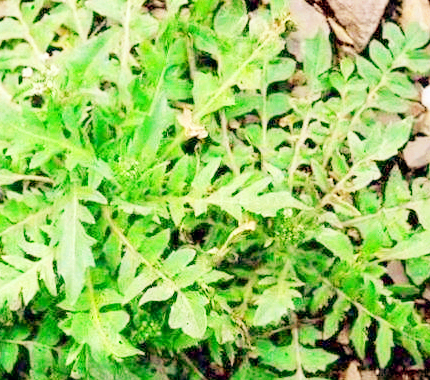
Shepherd's purse is also called hushengcao and other names. Because its nutritional value and medicinal value are both relatively high, and it has effects such as refreshing the mind and clearing heat, it is also known as a “plant antibiotic”. Therefore it is loved by many people, and many growers also want to plant it. So the editor will introduce the planting methods for shepherd's purse:
I. Planting time
Generally, wild vegetables have relatively strong adaptability to the environment, so shepherd's purse, as a wild vegetable, can be planted in three seasons a year. Generally, spring sowing is chosen between February and March, summer sowing is done around early August, and autumn is best chosen around September to October. In winter, the weather is relatively harsh and the yield is not high, so planting is generally not carried out.
II. Land preparation
Shepherd's purse can be planted anywhere and can also be planted in patches. It can also use land resources to be planted in gaps between other crops and on field ridges. However, for high yield, patch planting is generally chosen. When preparing the land, all weeds in the field need to be removed. Next, when turning the soil, try to turn it deeper to remove pathogens that may be carried in the deeper soil, then try to level the land as much as possible. If there are low-lying areas, fill the waterlogged spots with soil, and finally spread a layer of organic decomposed fertilizer or plant ash as base fertilizer.
III. Sowing
The main sowing method is broadcasting. When broadcasting, it should be spread relatively evenly. Generally, the seeds are mixed with some fine sand or fine soil to achieve a certain consistency so that sowing is more even. After sowing, the seeds should be pressed close to the soil, which helps the seeds absorb water from the soil and germinate faster. Spring sowing requires no special consideration; direct sowing is enough. For summer sowing, the temperature is relatively high, so the land needs to be watered wet before sowing. In autumn, the seeds need to be artificially pre-germinated first and then sown.
IV. Management
Shepherd's purse plants are not very large and tend to be small and fine, so weed management is relatively difficult. Generally, all weeds need to be removed before sowing. Afterward, if weeds become overgrown during the growth period of shepherd's purse, only manual weeding can be done. Next, fertilizer and water management for shepherd's purse also differs at different stages. In spring and summer, the growth period of shepherd's purse is relatively short, so during the entire growth process only two waterings and two fertilizations are needed. In autumn, the growth period is relatively long and there may not be much rain, so its growth status must be monitored at all times, and watering and fertilizing should be done according to the situation. The fertilizer applied is generally organic fertilizer or farmyard manure, which can make shepherd's purse grow closer to natural, pollution-free growth.
V. Disease prevention
Generally speaking, wild vegetables do not have many diseases and have extremely strong disease resistance. If symptoms appear, they are just some beetles, cabbage leaf worms, leaf rollers, and so on. They mainly live by eating leaves, so the most common control method is chemical control. Generally, trichlorfon or some pesticides containing relatively low toxic substances are used for spraying to ensure the original and most natural quality of shepherd's purse as much as possible.
VI. Harvesting
Harvesting is carried out in batches. Generally, the growth cycle of shepherd's purse is about 30-45 days. Although sowing is done at the same time, later growth speeds vary. Therefore, larger plants are dug out with roots, leaving smaller ones to continue growing. After each harvest batch, an appropriate amount of fertilizer can be applied to promote the growth process. Finally, when harvesting the last batch, remember to keep seeds.
Summary: The above is the relevant introduction to the planting methods for shepherd's purse. When planting, growers can refer to the above planting methods according to their own circumstances. I hope it helps friends in need!
Planting methods and precautions for Penstemon and propagation methods for Penstemon
The stems of Penstemon are relatively long, with some leaves and flowers distributed on both sides of the stems. The flowers are generally commonly seen in red and purple, and their ornamental value is very high. It is currently a relatively popular flower variety on the market. Many people like to plant it, but most people are not clear about its planting methods.
Planting methods for Penstemon
1. Soil selection. Penstemon cannot adapt to acidic soil. It can grow healthily in neutral or slightly alkaline soil. A fertile sandy soil with excellent drainage, good air permeability, and lime content is best.
2. Light and temperature. Penstemon likes light and grows most healthily in an environment with sufficient light, humid air, and good ventilation. However, Penstemon is not heat-tolerant, so in summer do not provide appropriate shade; prevent direct sunlight from damaging Penstemon flowers and leaves.
3. Watering: The soil for planting Penstemon must have good drainage. If potted, choose a flowerpot with holes at the bottom. Placing some crushed stones under the pot can prevent the soil from becoming too wet, causing Penstemon roots to rot.
4. Fertilizing: For Penstemon, pay attention to timely fertilization before and after flowering, which can make the flowers large and brightly colored. After flowering, cold protection measures should be taken to help it overwinter smoothly.
Precautions for Penstemon
1. Penstemon will have axillary buds and adventitious buds growing in large clusters, shortened internodes, yellowed and smaller leaves, and clear veins. In winter, small branches do not fall off and appear bird's-nest-like. Severe diseased plants die that same year, while mild ones also die after several years. Disease is severe in July—August each year.
2. In spring, ring-barking diseased branches can prevent pathogens from transferring and spreading to other parts, achieving control results.
3. Penstemon is cold-tolerant and likes a cool, humid environment, so it is suitable for growing in the north. Then for friends in the south, as long as you provide appropriate shade, do a good job of ventilation, apply less fertilizer, and water less, Penstemon can still safely pass the summer.
Propagation methods for Penstemon
1. Seed propagation. Sowing can be carried out when the temperature is 13-18℃, generally in autumn or early spring. Penstemon seeds germinate relatively slowly, so autumn sowing is often used. Seeds can be sown immediately after collection, and they will germinate when the temperature reaches above 18-21℃. During the growth period, topdress once every half month; either chicken manure or compound chemical fertilizer is fine. It should be noted that seed propagation is relatively prone to variation, so many excellent varieties generally do not use sowing.
2. Cutting propagation. Penstemon cutting propagation is also often carried out in autumn. Usually only excellent varieties are propagated by cuttings. After Penstemon flowers fade, select strong young shoot tips and cut them into 10 cm lengths as cuttings, disinfect the cut parts, and insert them into the substrate. Maintain humidity and provide appropriate shading; roots can form in about one month. Rooted plants can be potted and planted. If planted in a flower bed in the ground, they can be removed from pots in March or April after thawing the next year.
3. Division propagation. Penstemon division propagation is generally chosen in spring. After the mother plant shows new buds, dig out the mother plant (with soil) within a few days, determine new divided plants according to the sprouts, cut the new plants away from the mother body with a knife, and plant them directly. After planting, water thoroughly, and the root system can quickly expand into a sizable plant.
Common diseases of Penstemon and control methods
Clustered axillary buds and adventitious buds are a common disease of Penstemon.
1. Symptoms: Axillary buds and adventitious buds grow in large clusters, internodes shorten, leaves yellow and become smaller, and clear veins appear. In winter, small branches do not fall off and appear bird's-nest-like. Severe diseased plants die that same year, while mild ones also die after several years. Disease is severe in July to August each year.
2. Control methods: In spring, ring-barking diseased branches can prevent pathogens from transferring and spreading to other parts, achieving control results. At the initial stage of disease, spray a 4000-fold solution of tetracycline antibiotics.
When planting Penstemon, be sure to choose suitable soil, then control the temperature well, and sow at the appropriate time. In the later stage of planting, be sure to strengthen management of fertilizer, water, and diseases. Only by doing these tasks well can Penstemon grow well.
How to plant Bletilla striata_Planting methods for Bletilla striata
Bletilla striata is a species in the Orchidaceae family, genus Bletilla. If you want to plant it, then first you need to understand its planting methods! Today we will introduce the planting methods for Bletilla striata, hoping to help you!
Planting methods for Bletilla striata
Division propagation is generally used. Before new leaves sprout in spring, dig up old plants, divide the pseudobulbs into several portions, each with 1 to 2 buds, and plant them separately.
Propagation methods
Division propagation is commonly used. Before new leaves sprout in spring or after the aboveground parts wither in autumn and winter, dig up old plants, divide the pseudobulbs for separate planting. Each plant can be divided into 3-5 plants, and each plant must carry a terminal bud.
Seed propagation can also be used, but because the seeds are tiny and underdeveloped, sterile inoculation on culture medium is required, and the operation is complicated, so it is rarely used.
Cultivation
Bletilla striata likes a warm, shady, and humid environment. It is slightly cold-tolerant, strongly shade-tolerant, and avoids direct strong light. It is suitable for cultivation in sandy loam with good drainage and much humus. Before ground planting, plow the soil and apply sufficient base fertilizer. If propagating by seed, soak the seeds in cold water before sowing, mix with plant ash and Xin Gaozhi film to repel underground pests and diseases, isolate virus infection, strengthen respiratory intensity, and improve the seed germination rate; plant in early March, with a planting depth of 3 cm. During the growth period, keep the soil moist and spray Yaocai Gendaling at the appropriate time, so that the products of leaf photosynthesis (nutrients) are transported to the root system, improving the nutrient conversion rate and soil-loosening capacity, making the rhizome expand rapidly and greatly increasing the medicinal content. Pay attention to weeding and loosening the soil, and fertilize once every 2 weeks. Generally, it blooms 2 months after planting. From after flowering to mid-August, apply phosphorus fertilizer once, which can make the tuberous roots grow plump.
Pests and diseases
Black spot disease often occurs; spray with a 1000-fold solution of 70% thiophanate-methyl wettable powder. Sometimes root-knot nematode disease is harmful; drench the potting soil with 3% carbofuran granules.
Clinical applications of Bletilla striata
Pulmonary tuberculosis
For various types of pulmonary tuberculosis in which anti-tuberculosis drugs are ineffective or slow in efficacy, adding Bletilla striata can achieve relatively good results. According to observations: among 60 patients with long-term unhealed disease, after 3 months of medication, 42 cases were clinically cured, with X-rays showing complete absorption or fibrosis of lesions, closure of cavities, normal erythrocyte sedimentation rate, negative sputum bacteria, and disappearance of clinical symptoms; 13 cases improved significantly, and 2 cases showed no change. In another 40 patients with infiltrative type and thick-walled cavities, after medication, cavities closed in 24 cases, markedly shrank in 12 cases, and lesions improved with absorption in 16 cases. Some believe that Bletilla striata therapy has better efficacy for infiltrative pulmonary tuberculosis mainly with caseous lesions; in terms of symptoms, the treatment effect is relatively obvious for cough, hemoptysis, and so on. Usage: grind into powder and take orally. Adults 6-30 grams daily, generally 12-18 grams. Divided into 3 doses. It can be taken continuously for several months, with the maximum reaching 2 years. In addition, with 3 qian of Bletilla striata powder, divided into 3 doses daily, used for 13 cases of pulmonary tuberculosis hemoptysis, most achieved hemostatic effects within 1-3 days.
Whooping cough
Bletilla striata powder taken orally, dosage for those within 1 year old is 0.1-0.15 g/kg body weight, and for those over 1 year old is 0.2-0.25 g/kg body weight. Treating 89 cases, the results showed that symptoms significantly lessened within 5 days of medication in 37 cases, significantly lessened within 10 days in 15 cases, ineffective in 6 cases, and treatment interrupted in 31 cases.
③ Treatment of bronchiectasis
Adults take 2-4 grams of Bletilla striata powder each time, 3 times daily, with 3 months as one course of treatment. In 21 patients after 1-2 courses, sputum volume significantly decreased, cough lessened, and hemoptysis was controlled.
Silicosis
Take 5 Bletilla striata tablets each time (each tablet contains 1 fen of raw drug), 3 times daily. In 44 cases of simple type patients, after taking medication for 3 months to 1 year, symptoms such as chest pain, shortness of breath, cough, black sputum, and hemoptysis all significantly lessened or disappeared, body weight increased, lung function improved, and the blood sodium citrate reaction improved somewhat. However, X-ray changes were not very significant.
Duodenal ulcer bleeding
Adults take 1-2 qian of Bletilla striata powder each time, 3-4 times daily. Observing 69 cases, the average time for stool to turn yellow and occult blood to turn negative was 5.17 days and 6.5 days respectively, and the average hospital stay was 19.7 days. During treatment, oral Bletilla striata plus Callicarpa injection was observed, but the efficacy did not improve significantly.
Acute perforation of duodenal ulcer
Under strictly specified indications, Bletilla striata therapy may allow some patients to avoid surgery and achieve cure of perforation. According to observations of 29 cases, 23 succeeded, 1 failed and underwent surgery, 1 developed subdiaphragmatic abscess and duodenal fistula, and 4 died (1 died after switching to surgery due to shock during Bletilla striata treatment. 3 were already in critical condition on admission). The ideal cases suitable for Bletilla striata therapy are generally so-called acute ulcer perforation, or those with not severe ulcer symptoms before perforation and within the indications for suturing; cases in which lesions have already become localized are even more suitable. The contraindications for Bletilla striata therapy are:
1. Those in whom the diagnosis of gastroduodenal ulcer perforation is not sufficiently certain;
2. Those with perforation after a full meal;
3. Those who, even if conservative therapy succeeds, still require delayed surgery;
4. Those who already have obvious abdominal distension, low-pitched dullness, obvious tenderness on anal examination, or a palpable mass on physical examination, and are estimated to have relatively much fluid in the abdominal cavity;
5. Those whose general condition has already become mildly poor.
Treatment method: First use a gastric tube to aspirate all gastric contents, then remove the gastric tube, and quickly swallow 3 qian of Bletilla striata powder with cold boiled water; the amount of cold boiled water should preferably not exceed 90 milliliters. After 1 hour, repeat the above dose once. Starting from the second day, change the Bletilla striata dose to 1 qian, 3 times daily.
On the 1st day, absolute fasting should be observed; on the 2nd day, a small amount of water or liquid diet can be given; from the 3rd day, semi-liquid diet can be resumed. During treatment, anti-shock measures, fluid replacement, blood transfusion, and use of antibiotics are the same as general routine management, and at the same time strict observation of the evolution of systemic and local symptoms must be emphasized. If there is systemic deterioration, such as increased pulse rate, expansion of peritonitis symptoms, or increased degree of low-pitched dullness, a prompt decision should be made to immediately change the treatment plan and adopt surgical treatment. In practice, it has been observed that Bletilla striata has high viscosity and may form a gelatinous membrane of a certain thickness in the stomach, thereby blocking the perforation and stopping the overflow of gastric contents. In successfully treated cases, pain began to improve significantly within 1-5 hours and could disappear completely within 12-24 hours, and abdominal muscle tension and tenderness also improved accordingly. However, some reports have pointed out that after taking Bletilla striata, gastric contents increase, promoting gastric peristalsis, hindering the wrapping of the greater omentum and covering by the liver, and even having the drawback of causing the wrapped omentum to detach again; the swallowing action and nausea and hiccups when taking Bletilla striata are enough to increase intra-abdominal pressure, which can enlarge the perforation and cause re-perforation; if taking Bletilla striata is unsuccessful, the Bletilla striata paste flows into the abdominal cavity, and because it is viscous, it brings difficulties to surgical cleaning of the abdominal cavity, and may even cause postoperative intestinal adhesion. Therefore, it is believed that Bletilla striata therapy is not ideal.
Tuberculous fistula
Apply Bletilla striata powder topically. According to the amount of secretion, apply medicine once daily or every other day. After secretion decreases, it can be changed to once or twice a week. Usually after about 15 applications, it gradually heals. The powder must be sent deep into the fistula and packed full. If the fistula opening is narrow, it can first be incised to enlarge it and remove necrotic material. In 10 patients with pulmonary tuberculosis complicated by tuberculous fistula, all were cured after about 12-30 applications. The scar after healing had no special protrusion, and no recurrence was seen. Practice has proved that external application of Bletilla striata has effects such as absorbing and discharging local secretions, restoring and enhancing function, promoting new granulation tissue, cleaning wounds, and accelerating healing.
Burns and surgical trauma
Take fresh Bletilla striata, peel off the outer skin, wash with sterile normal saline, add sterile distilled water at a ratio of 1:10, soak cold overnight, heat to boiling the next day, and filter under reduced pressure with a sterilized No. 4 glass funnel. The filtrate is dispensed into ampoules or glass bottles and sealed by melting. Sterilize with high-pressure steam at 15 pounds for 30 minutes, and it becomes Bletilla striata mucilage. For local trauma or first- and second-degree burns involving about 20% or less of body surface area, Bletilla striata mucilage can be applied for treatment. Before applying the medicine, first clean the wound surface with normal saline; after applying the medicine, cover with Vaseline gauze, bandage, and fix. If there is no severe infection, change the dressing after 5-7 days. For infected wounds, change the dressing once every other day. In 9 burned child patients (average wound area 8%), 2 appendicitis surgical incisions, and 38 trauma patients (average wound area 11%), all were cured after 1-3 treatments. The therapeutic effects of Bletilla striata mucilage for general surgical trauma and burns may be: first, through the neural reflex mechanism, it enhances the body's defense capacity and stimulates granulation tissue proliferation; second, it has antibacterial effects on Staphylococcus and Streptococcus, and can form a protective membrane locally, controlling and preventing infection; third, it can shorten blood coagulation time and reduce bleeding, thereby facilitating wound healing.
Anal fissure
Prepare Bletilla striata powder with distilled water into a 7-12% liquid. After dissolving, warm slightly, let stand for 8 hours, and filter to become a yellowish-white mucilage. For every 100 milliliters of mucilage, add 100 grams of gypsum powder, stir evenly, and sterilize under high pressure to make Bletilla striata paste. Before medication, first perform a sitz bath of the anus with warm water or dilute potassium permanganate solution, then use toothless forceps to hold a Bletilla striata paste cotton ball and insert it about 2 cm from the anus, wiping back and forth 2-4 times, then remove it. Then leave one Bletilla striata paste cotton ball inside the anus at 2-3 cm, take another Bletilla striata paste cotton ball and place it on the anal fissure wound surface, apply a gauze piece coated with Bletilla striata paste to the anus, and fix with adhesive tape. Change the dressing once daily, with a full course of treatment of 10-15 days. If the medicine cannot be inserted inward at the first treatment, first apply a large amount of Bletilla striata paste to the anal area; on the 2nd day, the anal sphincter relaxes, and the cotton ball can be smoothly inserted and wiped back and forth. Treating 11 cases, after 3 months of observation, not a single case failed. In 9 cases, blood in stool disappeared after the first dressing change, and in 2 cases with sphincter spasm, after 1 application the sphincter relaxed and the medicine could be smoothly inserted, and blood in stool stopped at the second dressing change. After application, during the 1st to 2nd bowel movements, all were painless or had reduced pain; from 6-10 days, the wound surfaces all healed by visual observation. It is believed that the reason for the effect is mainly that after application, it can quickly relax the anal sphincter and relieve pain and stop bleeding, while Bletilla striata paste has the effects of lubricating, protecting the wound surface, and promoting tissue regeneration.
Other
The hemostatic powder made from Bletilla striata has a relatively good hemostatic effect on small blood vessel bleeding and oozing from skin and muscle layer incisions in certain surgeries, and an even better hemostatic effect after tooth extraction; however, the hemostatic effect on cut small and medium veins and arteries is not satisfactory. Application of Bletilla striata powder in the treatment of esophageal and gastric variceal bleeding in late schistosomiasis, ulcerative colitis bleeding, hemorrhagic purpura, and oral mucosal tuberculous ulcers all has certain efficacy. It has also been reported that a Bletilla striata plasma substitute made from the mucilaginous part of Bletilla striata has a certain efficacy on hemorrhagic shock in animal experiments, with effects similar to dextran; clinical trials have the effect of maintaining blood volume and raising blood pressure. No antigenicity was found, and there were no obvious side effects, no pyrogen reaction, and no effect on liver and kidney function, blood picture, bleeding time, or coagulation time. During trials, 3 people experienced transient mild fever (below 37.5℃), and another 1 person experienced an allergic reaction at the 5th injection. The above situations may be related to impurity of the preparation.