Chayote Planting Time and Methods Explained in Detail, Teaching You How to Grow It Step by Step
Among the plants of the Cucurbitaceae family, there is one that can be used as a vegetable or eaten raw as a fruit - the chayote, which is widely grown in the Jiangnan region. Today we will explain in detail the planting time and method steps for chayote; after reading this, you won't have to worry about not knowing how to grow it! If you don't believe it, just keep reading.
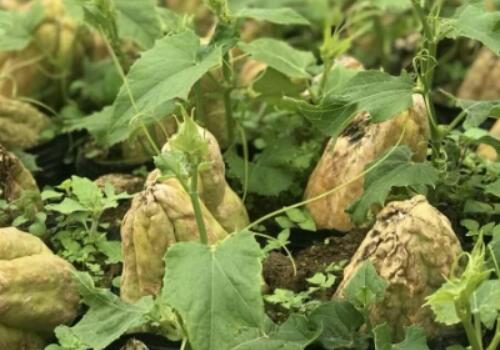
I. Overview of Chayote
1. Distribution of Chayote
Chayote is a perennial herbaceous climbing vine with persistent roots. It is also called qianjin gua, sunren gua, annan gua, shou gua, fengshou gua, yang gua, heshou gua, peng gua, tuer gua, peng gua, hu'er gua, and so on. It is an "exotic species" introduced to our country in the early 20th century. It is native to Mexico, Central America, and the West Indies. At present, the provinces in China where it is grown most include Yunnan, Guizhou, Zhejiang, Fujian, Guangdong, Sichuan, and Taiwan, China.
2. Value of Chayote
Chayote is rich in nutrients and has tender flesh. It contains water, protein, vitamins, potassium, calcium, phosphorus, and more. Regularly eating chayote can, to a certain extent, enhance the human body's ability to resist disease. Eating chayote also has effects such as promoting urination and sodium excretion, dilating blood vessels, lowering blood pressure, and improving intelligence. It also has a certain auxiliary effect on the treatment of indigestion, chest tightness and bloating, vomiting, liver and stomach qi pain, and bronchitis with cough and excessive phlegm.
II. Chayote Planting Time and Methods
If you want to grow high-quality, high-yield chayote, then you must be clear about its planting time and method steps. Once you master the methods below, you won't have to worry about not knowing how to grow chayote.
(I) Chayote Planting Time
1. Chayote is a plant that likes warmth and cannot tolerate severe cold, so in low-temperature areas it can only be cultivated in greenhouses. If using a greenhouse for chayote cultivation, you can start in early to mid-March; for open-field planting, choose mid-April each year to begin.
2. In Shandong Province, sowing is done from late December to early January of the following year in a solar greenhouse. Generally, sowing is done in ceramic flower pots or plastic nutrient pots with a diameter of 15-20 cm.
(II) Chayote Planting Method Steps
1. There are many varieties of chayote. Choose different varieties according to different environmental conditions. For example, in southern regions you can choose green-skinned and white-skinned varieties; in the Fujian region you can choose Guling hezhang gua and white-skinned chayote.
2. Select a fully mature fruit that is plump, large, and free of scars or damage as the seed fruit. When the seed fruit sprouts young shoots, you can begin raising seedlings. The nutrient soil used for seedling raising should be prepared by mixing sandy soil with good aeration and garden soil in equal parts. Place the sprouting end of the seed fruit facing up and the stem end facing down. Remove weak or excess sprouts promptly.
3. Once the danger of frost has passed, chayote can be transplanted. A certain amount of base fertilizer should be applied to the soil before transplanting. Planting density should be determined according to actual conditions. After transplanting, water to help the seedlings recover. Because chayote has strong climbing ability, use bamboo poles, wooden sticks, ropes, and so on to let it climb.
4. During the rapid growth period of chayote, carry out more intertillage loosening of the soil and watering. Keep the soil moist but not waterlogged. Once it enters the full flowering and full fruiting period, in addition to maintaining moisture, you can also spray nitrogen and phosphorus fertilizer on the leaves 2-3 times, or apply decomposed human and livestock manure.
5. During the growth period, chayote should be protected against downy mildew, powdery mildew, whitefly, red spider mites, and other pests and diseases. Apply different agents according to different situations, and be sure to use only safe and environmentally friendly agents permitted by the state.
How to Grow Strawberries from Seed - Detailed Steps to Teach You the Correct Planting Method
Strawberry is a perennial herb, 10-40 cm tall. The stem is lower than or nearly equal to the leaves, densely covered with spreading yellow soft hairs. The leaves are trifoliate, with leaflets having short petioles, relatively thick texture, obovate or rhombic, dark green on the upper side. So, do you know how to grow strawberries from seed? Below, the editor of wed114 will tell everyone about the method for growing strawberries from seed. Let us also be able to grow delicious strawberries. Come take a look!
How to Grow Strawberries from Seed: Sprouting
Generally, strawberry seeds can be stored for about 2 years at room temperature. To improve the germination rate, before sowing you can wrap the seeds in gauze, soak them for 24 hours, and treat them in a refrigerator at a low temperature of 0°C-3°C for about 15 days to break seed dormancy, then sow. The germination rate will be higher. Friends who are impatient can also skip the cold treatment and directly use the method below to sprout the seeds, but without low-temperature treatment to break dormancy, the germination rate may decrease.
The method is as follows: First pour the seeds into warm water at 50-60°C and wash them while stirring constantly until the water temperature drops to about 25°C, then stop. Continue soaking for 2-3 hours, then remove them and gently rub them with your hands until the seed coat is clean and glossy. Then rinse them clean with clear water and cover them with several layers of wet gauze. (Old Zhang believes this is done because when collecting strawberry seeds, there is strawberry acid on them, so it must be washed off.) Place them at 25-30°C for sprouting. Three times a day (morning, noon, and evening), wet the gauze with warm water to keep the seeds in a moist environment. Once 60-70% of the seeds have sprouted white, they can be sown.
How to Grow Strawberries from Seed: Sowing
Strawberry seeds are relatively small, so sowing must be done carefully. It is best to use seedling soil plus a seedling tray, or seedling blocks plus a seedling box. Friends who really do not have these conditions can use sieved fine sandy loam mixed with some finer humus soil, fill it into a flower pot, and sow in the pot.
It is worth noting that before sowing, first spray water thoroughly, spraying the seedling substrate thoroughly. Friends using pots directly can keep the soil height about one centimeter below the upper rim of the flower pot, then evenly scatter the seeds. After broadcasting, cover with about 0.1 cm of sieved fine soil, or do not cover with soil at all, as long as your seedling substrate is soft enough. Cover the pot with plastic film and keep the soil moist. At a temperature of 25°C, seedlings can begin to emerge 15-25 days after sowing. (Strawberry seeds sprout slowly. Old Zhang once only discovered sprouts after a month, and at the time almost gave up.) When the seedlings grow 2 true leaves, divide them into pots. When they have 3-5 leaves, they can be planted in the ground.
How to Grow Strawberries from Seed: Seedling Management
First, watering: during the seedling stage, flooding irrigation is not suitable. Sprinkler irrigation can be used to meet water needs. After the seedlings grow 6 true leaves, small flooding irrigation can be used to prevent silt from burying the seedlings.
Second, weeding: during the small seedling stage, weeds should be pulled frequently and promptly.
Third, thinning and filling in seedlings: once the small seedlings grow 3-5 true leaves, they can be transplanted, thinning where dense and filling in where sparse.
Fourth, topdressing: when the small seedlings grow 6 true leaves, the first topdressing can be carried out. It is best to apply water-soluble fertilizer or urea. Friends growing in courtyards generally broadcast it, scattering fertilizer with water; friends growing in pots can dissolve urea in water to make a dilute fertilizer and spray it. For the first topdressing, the amount should be small. After that, apply fertilizer once every 20-30 days. As the seedlings grow larger, the amount of fertilizer can be appropriately increased.
How to Grow Strawberries from Seed: Transplanting
After the seedlings have grown for 3-4 months, they can be lifted and transplanted, with plant and row spacing kept at 20-30 cm. The transplanting time is best from late July to mid-August. They will bear fruit in the spring of the following year.
Strawberry cultivation has a three-year cycle. In the first year, only very few strawberries can be harvested; in the second year, many will be harvested; but by the third year or after three years, strawberry yield will decline noticeably, and the plants need to be replaced. Therefore, reasonably arrange the cultivation of new plants to ensure that every year some strawberries are second-year plants, which can obtain the greatest economic benefit.
When strawberries grow well, they produce a kind of runner, and at the end of the runner new small plants will grow. When the small plant grows 3-4 leaves, you can cut it off and plant it in another flower pot, taking care to water it. It is best not to let first-year new plants bear strawberries; only let them grow more leaves. So when you find that a one-year-new strawberry has bloomed, remove the flowers. At the same time, do not forget to hang a small tag on the plant and write the planting date of the new plant on it, so you do not forget later. Remove other excess runners on the new plant. If strawberries are planted in the yard in the ground, also pay attention to weeding. When watering, be careful not to get the strawberries wet.
How to Grow Strawberries from Seed: Care
If you have a greenhouse at home, you can move the strawberries into the greenhouse, which is even better. Strawberries are also more likely to bear fruit. After the strawberry fruiting period has passed, you can move them out of the greenhouse and place them outdoors to overwinter. In a sense, if strawberry plants experience some frost, it is more helpful for increasing yield the following year.
Strawberry is a very easy plant to cultivate and can be transplanted. Sometimes you may find that the plant has yellow leaves, but do not worry; just remove them. In winter, you can keep the yellow leaves until new leaves grow in the following spring, then remove the dead yellow leaves, and pay attention to watering, weeding, and pest control.
You can also plant strawberries in plant bags, but be sure to water evenly to prevent birds from pecking the strawberries and prevent pest damage. The soil in plant bags dries out easily, so it needs to be checked frequently to keep the soil moist.
Detailed Guide to Growing Gazania - Best Sowing Time for Gazania
Gazania is also called African sun flower, because its entire inflorescence is like a medal, hence the name gazania. Gazania has brilliant flower colors, complex patterns, and a unique plant shape, with extremely high ornamental value. So how do you grow gazania? When should you sow it? Next, let's look at gazania growing methods and gazania sowing time.
I. Gazania Growing Methods
Soil: For potted soil, use a mixture of culture soil, leaf mold, and coarse sand. During the growing period, fertilize once every half month. Keep the pot soil moist and provide sufficient sunlight, and gazania can bloom continuously. If you do not keep seeds, promptly cut off the spent flowers after flowering, which can reduce nutrient consumption, encourage it to form more flower buds, and continue blooming. In winter, place gazania indoors for cultivation, and it can still continue to bloom.
Temperature: Gazania tolerates high temperatures and fears waterlogging. The suitable growing temperature is 13-20°C. It can be propagated by sowing, division, cuttings, or plant tissue culture. It can be spring-sown in April or autumn-sown in September. Gazania tolerates low temperatures and is not afraid of frost, but it cannot endure long periods of freezing. In warmer regions, it needs to be covered to overwinter before winter arrives; in cold northern regions, it cannot overwinter outdoors. Gazania has strong adaptability to high temperatures above 30°C. The winter temperature should not be lower than 5°C. Although it can tolerate short periods of 0°C low temperature, if the low temperature lasts too long, frost damage is likely to occur.
Water: Gazania is relatively sensitive to water. During the stem and leaf growth period, the soil needs to be moist. If there is too much soil moisture during the plum rain season, the plant is prone to waterlogging and death. During high summer temperatures, air humidity should not be too high, and the pot soil should not be waterlogged; otherwise, both are unfavorable for gazania growth and flowering.
Light: Gazania is a light-loving flower and needs sufficient sunlight during both the growing and flowering periods. If the cultivation site has insufficient light, it will lead to soft leaves, fewer flower buds, smaller flowers, and lighter flower color. Gazania grows well in fertile, loose, and well-drained sandy loam.
II. Gazania Sowing Time
Generally speaking, gazania can be sown in spring and autumn, that is, around March and around September. In northern regions, spring sowing can be appropriately delayed, and autumn sowing can be appropriately advanced; in southern regions, the opposite can be done, with spring sowing earlier and autumn sowing later. The best temperature for sowing gazania is about 18°C-20°C. After sowing, cover with about 0.5 cm of soil. Generally, it will germinate in 3-7 days.
The above isgazania growing methodsand an introduction to gazania sowing time. Gazania is suitable for arranging flower beds and flower borders, and potted plants can decorate small courtyards or windowsills, looking like one flower face after another, comical and amusing.
Recommended reading:
① How to grow gaillardia - Gaillardia cultivation methods
② How to grow Snow Chrysanthemum - Snow Chrysanthemum cultivation methods
③ How to grow cornflower from seed - Cornflower growing methods
④ How to grow potted daisies - Daisy cultivation methods
⑤ Coreopsis cultivation methods and precautions