How much does a Huashan pine sapling cost per plant, and how do you make it into a bonsai?
The reason Huashan pine is called by this name is because it is produced in Mount Hua, Shaanxi, China. It is an evergreen tree with excellent wood that can be used as a raw material for the fiber industry, building materials, and more. In addition, tannin extract can be obtained from its bark, aromatic oil can be made from its leaves, resin can be produced from its trunk, and oil can be pressed from its seeds, giving it very high application value. So how much does a Huashan pine sapling cost per plant? How do you make it into a bonsai?
I. How much does a Huashan pine sapling cost per plant?
The exact price of a Huashan pine sapling per plant is affected by factors such as the height, diameter at breast height, crown width, supply market, and purchase quantity of the Huashan pine. The price of Huashan pine saplings changes every year. The relevant information has been checked and compiled as follows:
Huashan pine (height 15-20cm) 0.16 yuan/plant;
Huashan pine (height 20-30cm) 1.5-2.5 yuan/plant;
Huashan pine (height 200cm) 380 yuan/plant;
Huashan pine (height 4cm, crown 3cm) 1050 yuan/plant;
Huashan pine (height 300cm, crown 200cm, ground diameter 50cm) 650 yuan/plant;
Huashan pine (ground diameter 2-5cm) 150-900 yuan/plant.
II. How do you make Huashan pine into a bonsai?
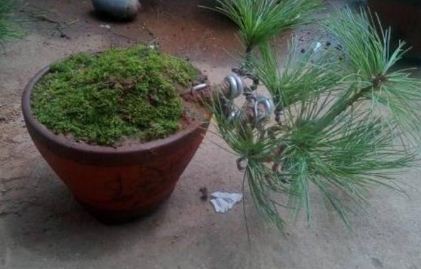
1. Choose a suitable pot
To make a Huashan pine bonsai, you must first choose a suitable pot so that they complement each other. Generally, glazed ceramic pots and purple clay pots are both acceptable. In the early stages of planting, the pot for the Huashan pine seedling must be breathable. Once it has adapted to the potting soil, you can switch to a pot you like. Everyone can give free rein to their ideas and decide according to their own preferences, as long as the material of the pot you choose is suitable for its growth.
2. Soil requirements for planting
Huashan pine does not have high soil requirements and can survive well in many types of soil, especially in moist, well-loosened, slightly acidic sandy loam. For potted cultivation, leaf mold soil, garden soil, and the like can also be used. Remember, Huashan pine is not tolerant of saline-alkali conditions.
3. Planting time and method
The most suitable time for planting and potting Huashan pine is in spring, that is, in March. Of course, if you want to plant it in autumn, that is also possible, but rooting is poor. When purchasing Huashan pine seedlings, they should come with soil; cut off dead branches and overly long roots, and be careful to treat the wounds properly and take disinfection measures. If the pot is very shallow, pay attention to preventing lodging.
4. Shaping
The purpose of making a Huashan pine bonsai is to create a good overall shape, so appropriate pruning and shaping are necessary. Generally, bending and binding the branches is the main method, with pruning as a supplement. If you have purchased 2-3 year old Huashan pine saplings, we can shape the main trunk into a curved form, then cut off excess branches and keep the side branches in a drooping state. After one year, remove the binding wire, adjust the relevant angles, and then it will slowly grow into the shape you want. Commonly used shaping styles include trunk style, formal upright style, cascade style, curved trunk style, and so on. Each has its own unique flavor. It depends on which charm you like, whether it is tall and upright or resembles a dragon.
Summary: The prices of Huashan pine saplings vary, so when purchasing, be sure to clarify the height, crown width, and other numerical details of what you are buying. Bonsai made from Huashan pine are also very beautiful, and interested friends can give it a try.
Complete collection of plant materials for making Chinese bonsai
Plant materials for making Chinese bonsai
(1) Sago palm (iron tree, phoenix-tail banana, phoenix-tail pine, fire-avoiding banana) Sago palm (Cycas revoluta Thunb) belongs to the Cycadaceae family and is an evergreen palm-like plant. Its tree posture is upright and vigorous, and its verdant green is about to drip, making it a commonly used bonsai material. It is native to Fujian, Taiwan, Guangdong, and other provinces in southern China, and the Yangtze River basin area. Sago palm bonsai generally has ornamental features such as exposed roots, aged trunks, dwarf plants, and green leaves. If a plant with a deformed stem is selected, it can be shaped into a creeping, reclining, crisscrossing, or lying posture. Its form is strange and peculiar, with a distinctive charm.
(2) Ginkgo (grandfather-grandson tree, white fruit tree) Ginkgo [Ginkgo biloba Linn; Maidenhair Tree (English)] belongs to the Ginkgoaceae family and is a large deciduous tree. In autumn, the leaves turn yellow, and the color is beautiful and very elegant and quiet, making it an important bonsai tree species. It is native to areas south of Shenyang, China, and north of Guangzhou. Varieties and forms include yellow-leaf, large-leaf, pagoda-shaped, weeping-branch, and variegated-leaf types. It was introduced to Japan during the Song Dynasty, spread from Japan to Europe in the mid-18th century, and then from Europe to the Americas. It has relatively few pests and diseases and a very long lifespan. Old stumps can be used to make bonsai; the tree shape is thick and dwarfed, and the branches can be twisted and shaped into formal upright, semi-cascade, and split-trunk styles. The young leaves are yellow-green, and the leaf color turns yellow in autumn, making it an elegant and quiet scene, a fine autumn view. Large ginkgo trees in Hubei, Hunan, and other provinces often develop aerial roots, called "ginkgo milk." Cutting off these aerial roots and performing cuttings to make them root and sprout into new plants for bonsai gives a rather ancient and peculiar appearance, making it truly a precious bonsai material.
(3) Golden larch (golden pine, water tree) ~ Golden larch [Pseudolarix
kaempferi (Lindl) Gord; P. amabilis (Nelson)] belongs to the Pinaceae family and is a large deciduous tree. Its leaves are shaped like coins, and in autumn the leaves turn golden yellow, making it very beautiful. It is a precious tree species unique to China. It is distributed in Zhejiang, Jiangsu, Anhui, Jiangxi, Hunan, Hubei, Sichuan, and other provinces in China, and there are pure forests and large trees in Mount Tianmu, Zhejiang. The tree is tall and its posture is graceful, making it one of the five major park tree species in the world. Its branch and trunk forms are not only graceful but also naturally branched, and after processing it easily takes shape, making it suitable for small bonsai or forest-style bonsai.
(4) Huashan pine (Huayin pine, green pine) Huashan pine [Pinus armandii
Franch; Armand Pine (English)] belongs to the Pinaceae family and is an evergreen coniferous tree. Its leaves are slender, curved, and drooping, making it an excellent bonsai tree species. It is mainly distributed in the mountainous areas of North China, Northwest China, and Southwest China, and has been introduced and cultivated in East China. The Huashan pine has a tall trunk form, verdant needles, and a graceful tree shape. By using techniques such as twisting and pruning, it can be made into a pine bonsai of high artistic value.
(5) Huangshan pine (Taiwan pine) Huangshan pine (Pinus taiwanensis Hayata; P. huangshanensis Hsia) belongs to the Pinaceae family and is a large evergreen tree. Those growing among rocks, where the soil layer is shallow, often have twisted branches and trunks, and their crowns spread out like a painting. Those growing on bare rocks at the mountain top or in stone crevices on ridge backs grow short and small, only a few chi tall, and can be transplanted into pots to make bonsai, which is extremely elegant. It is produced in Anhui, Zhejiang, Jiangxi, Hunan, Fujian, Taiwan, and other provinces. Its vertical distribution is above 700 m elevation. Its tree posture is vigorous and ancient. If a plant with a short tree form, curved trunk, and flat, canopy-like crown is selected and slightly modified, it can be made into a bonsai.
(6) Black pine (Japanese black pine, white-bud pine) Black pine (Pinus thunbergii Parl) belongs to the Pinaceae family and is a large evergreen coniferous tree. The crown of young trees is narrowly conical, while old trees often have horizontally spreading branches and trunks and umbrella-like crowns, sturdy and vigorous. It is distributed in the coastal areas of Shandong, Anhui, Jiangsu, Zhejiang, Fujian, and other provinces in China. Selecting short, crooked stump heads in the wild and subjecting them to root cultivation, binding, and pruning can produce pine bonsai with very high ornamental value. Black pine 2-3 year old seedlings are excellent rootstock for grafting Japanese white pine.
(7) Brocaded pine Brocaded pine (Pinus aspera Mayr; Brocaded Pine) belongs to the Pinaceae family and is an evergreen small tree. Its trunk shape is peculiar and has the appearance of peaks and ridges, and its leaves are needle-shaped. It is native to Japan and has been introduced and cultivated in various parts of China. It is one of the excellent bonsai materials.
(8) Thousand-head red pine (umbrella-shaped red pine, flat-top red pine) Thousand-head red pine [Pinus
densiflora cv. umbraculifera (Mayr.) Beissn] belongs to the Pinaceae family and is an evergreen coniferous tree species, a cultivar of red pine. The trunk is short, the branches mostly grow obliquely or become shrub-like, and the crown is oblate, later gradually becoming umbrella-shaped (flat-topped). It is cultivated in the Shandong Peninsula, Liaodong Peninsula, Yuntai Mountain in Jiangsu, and other places. Its crown shape is like an umbrella and its trunk is as red as cinnabar. If a short plant is selected and slightly shaped, it can form a pine bonsai with a graceful posture and high artistic value.
(9) Japanese white pine (five-hair pine, five-needle pine) Japanese white pine (Pinus
parviflora Sieb et Zucc) belongs to the Pinaceae family and is an evergreen coniferous tree species. It is native to Japan and has been introduced and cultivated in many cities in the Yangtze River basin and coastal areas of China. The plant is short, the branches are short and the leaves are fine, and they grow densely. Its posture is dignified and elegant, making it suitable as bonsai material. After binding and pruning, it can be made into various styles of white pine bonsai, such as formal upright style, slanting style, and cascade style. White pine is easy to shape and is a very good bonsai material. Its characteristics are vigor, ancient elegance, and rich poetic and pictorial charm.
(10) Dwarf Siberian pine Dwarf Siberian pine [Pinus pumila (Pall) Regel (P. cembra var. pumila Pall); Siberian Pine (English)] is a shrub. It is distributed in the Greater Khingan Range, the Lesser Khingan Range, and the Changbai Mountains in Northeast China, in areas above 1800 m elevation in the Changbai Mountains, above 1000 m in the Lesser Khingan Range, and in thin-soil zones at 600-1000 m in the Greater Khingan Range. Its trunk mostly lies prostrate, its branches are short and its leaves dense, and its leaf color is emerald green. It is a good material for bonsai and can be made into excellent works with spreading, prostrate branches and needles like bent iron.
(11) Mongolian Scots pine (roe pine, Hulunbuir pine, Mongolian red pine, Siberian red pine) Mongolian Scots pine (Pinus sylvestris) is an evergreen tree. It is native to Heilongjiang, Inner Mongolia, and other places. Its branch and trunk surfaces are rough, its needles are short and clustered, twisted, buds easily sprout on the needle fascicles, and the small branches droop. These are all favorable conditions for making bonsai. Shanghai has introduced and made bonsai from it; the trunk is curved and slanting, the branches droop, and its posture is light and elegant, naturally appropriate, with many similarities to Japanese white pine.
(12) Deodar cedar Deodar cedar [Cedrus deodara (Roxb) Loud. (C. libani Rich var. deodara Hook. f.); Deodar Cedar (English); Himalayan Cedar (American)] is an evergreen tree. The branches and trunk of deodar cedar are relatively soft, and the main trunk can be bent into a curved-trunk style, while the branch pads can be made into round-pad or weeping-branch styles. Deodar cedar bonsai is ordinary yet remarkable, soft yet strong, natural and appropriate, and is a bonsai tree species worth choosing.
(13) Japanese cedar (long-leaf Japanese cedar, peacock pine, wood Sal tree, cardamom-leaf peacock pine)
Japanese cedar [Cryptomeria fortunei Hooibrenk ex Otto et Dietr; C. kawai Hayata; C. japonica (L. f.) D. Don var. sinensis S. et Z.; Chinese cryptomeria (English)] is an evergreen tree. It is native to Zhejiang, Fujian, Jiangxi, Jiangsu (southern Jiangsu), southern Anhui, Sichuan, Yunnan, Guizhou, Hunan, Hubei, Guangdong, Guangxi, as well as Zhengzhou in Henan and Tai'an in Shandong, and other places. Mount Tianmu in Zhejiang, Nanping's 3800 Kan in Fujian, and Lushan in Jiangxi are famous production areas. There are many varieties of Japanese cedar; its dwarf and clustered-branch forms are suitable for making bonsai. Its branches and trunk are upright, and its leaf shape is elegant. It can be made into curved-trunk, slanting-trunk, weeping-branch, and round-pad style bonsai.
(14) Chinese swamp cypress Chinese swamp cypress [Glyptostrobus pensilis (Staunt) K. Koch (G. heterophyllum Endl, G. sinensis Loder, Taxodium sinense Forb, Thuja pensilis Staunt.); Chinese Cypress, Chinese Water-Pine (English)] belongs to the Taxodiaceae family and is a deciduous coniferous tree. In autumn the leaves turn brown, creating a beautiful landscape. It is produced in the Pearl River basin of South China and in Guangxi, Fujian, Jiangxi, Sichuan, Yunnan, and other places in China. When growing in rice fields and beside rivers, it often develops breathing roots and the trunk base becomes swollen, while when growing in dry areas the breathing roots are not well developed and the trunk base does not swell. Its tree shape is graceful, and it is a tree species unique to China. Guangdong and other places often use Chinese swamp cypress as bonsai material, giving it a distinctive style.
(15) China fir (spiny fir) China fir [Cunninghamia lanceolata (Lamb.) Hook. (C. sinensis R. Br); China Fir (English)] belongs to the Taxodiaceae family and is an evergreen coniferous tree species. It is produced in the Yangtze River basin of China and the provinces to its south. China fir has strong sprouting ability. Dig up wild small seedlings, plant them in pots, and let them tiller and cluster to create a forest-style bonsai with varying heights, different sizes, and alternating density. If mountain stones are added, it has even more wild mountain charm.
(16) Japanese umbrella pine (umbrella pine, Japanese golden pine) Japanese umbrella pine [Sciadopitys verticillata (Thunb.) Sieb. Zucc; Umbrella Pine (English)] belongs to the Taxodiaceae family and is an evergreen tree. It is native to Japan and has been cultivated in Lushan, Qingdao, Nanjing, Shanghai, Hangzhou, Wuhan, and other places in China. The leaf shape of Japanese umbrella pine is beautiful, making it a good material for making bonsai.
(17) Chinese juniper (round juniper) Chinese juniper [Sabina chinensis (L.) Antoine (Juniperus chinensis L.); Chinese Juniper (English)] belongs to the Cupressaceae family and is an evergreen tree. Its tree posture is vigorous and ancient, and its lifespan is very long. It is native to southern Northeast China and North China, and is distributed south to Guangdong and Guangxi, east to the coastal provinces, and west to Sichuan and Yunnan. The Chinese juniper has a graceful tree posture and is suitable for shaping, making it one of the main bonsai tree species. Its young trees and stumps are both suitable for pruning and binding, and can be made into curved-trunk, slanting-trunk, and cascade-style bonsai. The branch pads can be round-pad style or natural style. The resulting bonsai has clustered branches and leaves, verdant green, vigorous and ancient, clear and bright.
(18) Formosan juniper (mountain juniper, spiny pine) Formosan juniper [Juniperus formosana
Hayata (J. taxifolia Parl)] belongs to the Cupressaceae family and is an evergreen tree, a coniferous tree species. It is distributed
in Taiwan, Jiangsu, Anhui, Zhejiang, Fujian, Jiangxi, Hubei, Hunan, Shaanxi, Gansu, Sichuan, Yunnan, Guizhou, and the Xizang region. The leaves of Formosan juniper are spine-shaped, and the small branches hang down, giving it a natural, soft beauty. If matched with shaping forms such as curved trunk, slanting trunk, or cascade, it will certainly become a bonsai that combines hardness and softness, noble and elegant.
(19) Buddhist pine (Buddhist pine, soil fir) Buddhist pine [Podocarpus macrophyllus (Thunb.) D. Don (Taxus macrophylla Thunb); Long-leaved Podocarpus (English)] belongs to the Podocarpaceae family and is an evergreen tree. It is distributed in Jiangsu, Zhejiang, Fujian, Anhui, Jiangxi, Hunan, Sichuan, Yunnan, Guangxi, Guangdong, and other provinces. Its leaf shape is graceful, and its tree form is elegant and refined, ancient and vigorous, making it a commonly used bonsai tree species. Its trunk can be processed into curved-trunk, slanting-trunk, cascade, and other shaping forms. The branch pads can use round-pad style or natural style. After raising the roots and adding stones, it can become a top-grade bonsai.
(20) Nagi podocarp (Buddhist pine wood) Nagi podocarp [Podocarpus nagi (Thunb.)
ex Zoll.] belongs to the Podocarpaceae family and is an evergreen tree. Nagi podocarp is produced in Zhejiang, Fujian, Taiwan, Jiangxi, Hunan, Sichuan, Guangdong, Guangxi, and other provinces and regions. Its branches and leaves are emerald green, and its leaf shape is peculiar, making it a very good ornamental tree species. With slight trimming and the addition of mountain stones, Nagi podocarp is also a very interesting plant bonsai.
(21) Japanese yew (Northeast China yew, red juniper, rice tree, broad-leaved yew) Japanese
yew [Taxus cuspidata (T. baccata L. var. cuspidata Carr); Japanese yew (English)] belongs to the Taxaceae family and is an evergreen tree. Its tree form is dignified and graceful, making it an excellent bonsai tree species in China. It is distributed in the Changbai Mountains in Jilin and eastern Liaoning, and is cultivated in Shandong, Jiangsu, and Jiangxi. Because its trunk is red, its leaves are fine, and it tolerates pruning, it is suitable for shaping and is also an excellent bonsai tree species. It can be made into curved-trunk, slanting-trunk, and other shaped bonsai. Its form is elegant and ancient, with a distinctive style (Color Plate 10).
(22) Stiff-stem flowering quince (wrinkled papaya, iron-angle crabapple, stiff-stem papaya, wrinkled papaya) Stiff-stem flowering quince [Chaenomeles speciosa (Sweet.) Nakai; C. lagenaria (Loisel) Koidz.] belongs to the Rosaceae family, genus Chaenomeles, and is a deciduous shrub. It is distributed in Shaanxi, Gansu, Sichuan, Yunnan, Guangdong, and other provinces and regions. Its flower color is beautiful, and it blooms in early spring, making it suitable for flower-viewing bonsai. Sichuan-style bonsai often uses this tree to create forms such as the drop-crook style. Its tree form is graceful and its flower color is brilliant (Color Plate 11).
(23) Hall's crabapple (crabapple flower) Hall's crabapple [Malus halliana (Voss) Koehne] belongs to the Rosaceae family, genus Malus, and is a small deciduous tree. It is distributed in Jiangsu, Zhejiang, Shaanxi, Sichuan, Yunnan, and other provinces. Its flower color is vivid, and its drooping flower stalks are graceful and charming, with a distinctive appeal, making it also a good flower-viewing bonsai tree species. Sichuan-style bonsai processes Hall's crabapple into shaping forms such as paired crooks, three-bend nine-reverse crooks, and large-bend weeping branches, giving it the momentum of an old tree meeting spring, with a distinctive flavor. If its stump is selected, it can also be processed into a stump bonsai.
(24) Firethorn (torch fruit, red fruit) Firethorn [Pyracantha fortuneana
(Maxim) Li (P. crenato-serrata Rehd)] belongs to the Rosaceae family and is an evergreen shrub. It is produced in Jiangsu, Zhejiang, Fujian, Shaanxi, Hubei, Hunan, Sichuan, Guangxi, Yunnan, Guizhou, and other provinces, and is a common tree species in the subtropics. Its fruit remains for a long time without falling, coral-like all over the tree and
dazzling, making it an excellent material for fruit-viewing bonsai. Selecting small trees with fruiting ability and making them into curved-trunk and slanting-trunk commercial bonsai, the stumps can also be processed into medium and large bonsai.
(25) Plum blossom (spring plum) Plum blossom (Prunus mume Sieb et Zucc.)
belongs to the Rosaceae family and is a small deciduous tree. It blooms in early spring, with colors including red, pink, white, and purplish red. Single or double petals, fragrant. It is mainly distributed in the Yangtze River basin and the provinces to its south. The northward movement of plum blossom to North China has achieved preliminary success. In the Jiangnan region, plum is listed together with pine and bamboo, called
the "Three Friends of Winter." Plum blossom is also a major bonsai tree species. For example, in Su-style bonsai, split plum involves cutting off the crown of a fruiting plum, then splitting it in half, and grafting each half with varieties such as purplish red (bone-in red) and green calyx. Sichuan-style bonsai makes plum blossom into forms such as
the drop-crook and rolling dragon embracing pillar. Hui-style bonsai processes plum blossom into wandering dragon bend or three-platform styles. Yang-style bonsai makes plum blossom into the lump style, among which there are also basket-lifting style, downwind style, double-lump style, and so on. Bonsai made with plum blossom is vigorous and elegant, with a clear and elegant framework, curved and varied, with sparse shadows slanting across. When the flowers bloom in early spring, the subtle fragrance is pleasant. Plum stump bonsai, through trunk splitting or root raising, matched with an antique purple clay pot, dotted with peak stones, and covered with moss, has even more natural pleasure. The living lump in lump plum can turn a one- or two-year-old small tree into a large tree, giant tree, or ancient tree within two to three years, and the special shape formed by the lump is extremely astonishing.
(26) Peach Peach [Prunus persica (L.) Batsch.] belongs to the Rosaceae family and is a small deciduous tree. It is native to North China, Central China, Southwest China, and other places in China. Its tree posture is graceful and its flower color is brilliant, making it an excellent bonsai tree species. Yang-style bonsai's three-bend five-arm style and carved curved peach
flowers are vigorous and ancient. Sichuan-style drop-crook and rolling dragon embracing pillar forms are also used for peach blossom, and their forms are elegant and dignified, bright and generous.
(27) Chinese peashrub (peashrub) Chinese peashrub [Caragana sinica (Buc'hoz)
Rehd.; Pea Tree] belongs to the Fabaceae family and is a deciduous shrub. It is produced in northern and central China, and is also distributed in East China and Southwest China. Some grow in stone crevices, and this kind is also a bonsai material. The Shanghai Botanical Garden has a pot of curved-trunk style (natural form) Chinese peashrub bonsai, with suspended roots and exposed claws, curved trunk, emerald leaves, and brilliant flowers, with a distinctive charm.
(28) Chinese wisteria (red vine, yellow ring) Chinese wisteria [Wisteria sinensis (Sims)
Sweet; Chinese Wisteria] belongs to the Fabaceae family and is a deciduous woody vine. It is mainly distributed in Liaoning, Inner Mongolia, Hebei, Henan, Shanxi, Shandong, Jiangsu, Zhejiang, Sichuan, Gansu, Shaanxi, Hubei, Hunan, Guangdong, Yunnan, Guizhou, and other provinces and regions. It has a relatively long lifespan and strong sprouting ability, making it a very good bonsai tree species. Most often, old stumps are selected for potting, the vine trunk is slightly modified, or techniques such as twisting and slanting planting are used for shaping. Because its leaves or flowers naturally droop, it forms a twisted vine trunk, hard yet soft, and the hanging flowers and leaves are soft yet hard. When spring flowers are in full bloom, it will surely intoxicate people.
(29) Wintersweet (yellow plum flower) Wintersweet [Chimonanthus praecox (L.)
Link] belongs to the Calycanthaceae family and is a deciduous shrub, semi-evergreen in warm regions. Wintersweet varieties are quite abundant, and to date they have not yet been systematically organized and classified. It is mainly distributed in Hubei, Shaanxi, and other provinces in central China, and Yanling in Henan is a famous production area for wintersweet. It tolerates pruning and has strong branching ability. The Song Dynasty scholar Fan Chengda said in "Plum Manual" that "this plant is not originally of the plum category, but because it blooms at the same time as plum, its fragrance is also similar, and its color closely resembles honeycomb, it is therefore called wintersweet." He also said, "Because the flower is yellow, it is also called yellow plum flower." Plum blossom bonsai often uses plum stumps, and after slight processing, they form ancient plum stump bonsai. Their momentum is vigorous and ancient. In the cold winter months, the golden flowers bloom fully, and a faint, quiet fragrance fills the room, so that anyone who smells it will surely feel refreshed. That spirit of fearing no severe cold and struggling against it is even more inspiring.
(30) Deutzia (hollow deutzia) Deutzia (Deutzia scabra Thunb) belongs to the Hydrangeaceae family and is a deciduous shrub. It is mainly distributed in Zhejiang, Jiangxi, southern Anhui, Jiangsu, Hunan, Hubei, Sichuan, Guizhou, and other provinces. When it blooms, it is like patches of white snow resting on the branch tips. This scene truly has a distinctive flavor. Bonsai mostly uses old root stumps, lets them sprout, and with slight modification, it can become an excellent work.
(31) Mock orange Mock orange (Philadelphus incanus Koehne) belongs to the Hydrangeaceae family and is a small deciduous shrub. It is distributed in Northwest China and North China, and has been introduced and cultivated in the Yangtze River basin. Because its branches are dense and its flowers abundant, when it blooms it is covered in white snow, very spectacular, and stumps can be used to make bonsai.
(32) Japanese honeysuckle (honeysuckle, golden-silver vine, mandarin duck vine) Japanese honeysuckle
(Lonicera japonica Thunb.) belongs to the Caprifoliaceae family and is a semi-evergreen twining shrub, with slender and hollow small branches. It does not wither through the winter, hence the name honeysuckle. Main distribution: from Liaoning in the north, to Shaanxi in the west, to Hunan in the south, and to Yunnan, Guizhou, and other provinces in the southwest. Most often, old root stumps are slightly modified, and the trunk can be made into curved-trunk, slanting-trunk, cascade, and other forms, making it a good material for making bonsai.
(33) Chinese fringe flower (flower-ramming) Chinese fringe flower [Loropetalum chinense (R. Br)
Oliv.] belongs to the Hamamelidaceae family and is an evergreen shrub or small tree. It is mainly distributed in Jiangsu south of the middle and lower reaches of the Yangtze River, and in areas north of the Tropic of Cancer. The Chinese fringe flower has dry, simple stems, fine branches, dense leaves, and abundant flowers, making it an excellent bonsai tree material. For shaping, most often old wild root stumps are dug up and potted, and can be processed into curved-trunk, slanting-trunk, and other forms, with branch pads mostly in round-pad form. Young Chinese fringe flower can be short-cut to stimulate sprouts, and through pruning, cut into round-headed branch pads and sold as commercial bonsai. Bonsai using Chinese fringe flower as material mostly appears in the Yang-style and Hai-style bonsai of the lower Yangtze River.
(34) Boxwood (melon-seed boxwood, thousand-year dwarf) Boxwood (Buxus sinica
Cheng ex M. Cheng; B. microphylla var. sinica Rehd et Wils.) belongs to the Buxaceae family and is an evergreen shrub or tree, with gray-white and smooth branches and trunk. It is mainly distributed in central China.
Harland's boxwood (Buxus harlandii Hance) is an evergreen small shrub. It is distributed in Hubei, Hunan, Fujian, Guangdong, Guangxi, Sichuan, Guizhou, and other provinces in southern China. It is not cold-tolerant.
Boxwood has emerald green leaves, thick texture, and luster, is short in stature, and has dense leaves, making it a major bonsai tree species. Yang-style bonsai mostly uses its young trees, tied into cloud pads, flat and thin as if shaved, and it is one of the main tree species of Yang-style bonsai. Its old stumps can also be selected, and the branches cut and tied into steamed-bun shape (round pads) (Color Plate 12).
(35) Chinese elm (small-leaf elm) Chinese elm (Ulmus parvifolia Jacq.) belongs to the Ulmaceae family and is a deciduous or semi-evergreen tree. It is produced in the central and southern provinces of China. Using wild tree stumps, the trunk can be slanting or curved, and the branch pads can be round pads or cut into natural style. It is a major bonsai tree species of the Lingnan, Yang, Hai, and Su schools. Its main trunk is smooth, its branches dense, and its leaves fine, making it suitable for shaping. Bonsai made with Chinese elm is very easy to make pictorially appealing.
(36) Chinese hackberry (sand hackberry) Chinese hackberry [Celtis tetrandra Roxb subsp.
sinensis (Pers) Y. C. Tang] belongs to the Ulmaceae family and is a deciduous tree. It is produced in the Qinling Mountains and the provinces south of the Huai River basin. Most often tree stumps are selected, the main trunk is slightly modified, and the branch pads are mostly round-pad
style. The branches and trunk are upright, vigorous, and ancient.
(37) Zelkova (large-leaf zelkova) Zelkova (Zelkova schneideriana Hand-
Mazz.) belongs to the Ulmaceae family and is a deciduous tree. Zelkova is produced in the provinces south of the Huai River and Qinling Mountains, and is also distributed in the provinces of the middle and lower reaches of the Yangtze River as well as Guangdong, Guangxi, Yunnan, and Guizhou. Zelkova has a straight trunk, is majestic and upright, and its branches are elegant. In autumn its leaf color turns red. Bonsai made from its stumps has a vigorous and unrestrained momentum, extremely rich in natural atmosphere.
(38) Small-leaf banyan (banyan, stone-nan banyan) Small-leaf banyan (Ficus microcarpa L. f.) belongs to the Moraceae family and is an evergreen tree. It is produced in Guangdong, Guangxi, Fujian, Yunnan, and other provinces and regions. Lingnan-style bonsai mostly uses this tree to make bonsai, with shapes such as large-tree form and exposed-root form. Its branches and leaves are dense, and its color is emerald like a canopy, with suspended roots and exposed claws, magnificent to behold. Small-leaf banyan leaves are leathery and glossy, and their color is verdant, extremely beautiful. However, the leaves are slightly large; in July to August all the leaves can be removed to let them regrow, which can make the new leaves smaller and improve the ornamental effect.
(39) Chinese tamarisk (Guanyin willow) Chinese tamarisk (Tamarix chinensis Lour) belongs to the Tamaricaceae family and is a deciduous shrub or small tree. It is mainly distributed in North China, South China, East China, and other places. Its root system is well developed, its wind resistance is strong, and its sprouting ability is strong. It tolerates pruning and is a very good bonsai tree species. Old tree stumps can be selected, with the main trunk either curved or slanting, and the branches and leaves naturally drooping, slender as silk, fluttering in the wind, graceful and charming.
(40) Sasanqua camellia (camellia flower) Sasanqua camellia (Camellia sasanqua Thunb.)
belongs to the Theaceae family and is an evergreen small tree or shrub. It is produced in Jiangxi, southern Anhui, Fujian, Taiwan, Guangdong, Guangxi, and other provinces. Most often old stumps are selected and slightly modified to make flower-viewing bonsai. Its leaves are
emerald green and its flower color is brilliant, making people intoxicated.
(41) Camellia (camellia flower) Camellia (Camellia japonica L.) belongs to the
Theaceae family and is an evergreen small tree or shrub. It is mainly distributed in the provinces south of the Yangtze River in China and belongs to the subtropical type of plant. Camellia leaf color is emerald green and lovely, and its flower color is brilliant, making it a very good flower-viewing bonsai plant. Its stump can be selected and, with slight modification, can become a very good flower-viewing bonsai.
(42) Box-leaf syzygium Box-leaf syzygium (Syzygium buxifolium)
belongs to the Myrtaceae family and is an evergreen small shrub, with densely growing branches. Box-leaf syzygium is distributed in areas south of the mid-subtropics in China, and often grows mixed in evergreen broad-leaved forests. Its branches are dense and its leaves emerald, vigorous and graceful, making it an excellent bonsai tree species.
(43) Rhododendrons Rhododendrons (Rhododendron spp.) belong to the Ericaceae family, genus Rhododendron, and are various shrubs. They are distributed throughout China, with the greatest number of species in Sichuan and Yunnan. Rhododendrons have a graceful tree posture and abundant flowers and leaves, with many species (cultivars), making them an excellent flower-viewing
bonsai tree species. If an old root stump is slightly treated for curvature or slant, it can become a rarely seen flower-viewing bonsai.
(44) Pomegranate (An pomegranate) Pomegranate (Punica granatum L.) belongs to the Lythraceae family and is a deciduous shrub or small tree. Pomegranate is mainly distributed in the Yellow River basin of China and the provinces to its south. It is native to Iran and Afghanistan and was introduced to China from the Western Regions by Zhang Qian of the Han Dynasty, and has a cultivation history of 2000 years. Pomegranate is an excellent bonsai tree species for both flowers and fruit. When flowering, its branches and leaves are emerald green and its flowers are red as fire, dazzling. In autumn, the fruit fills the branches, bronze-yellow in color, antique in style. Selecting its ancient stump, either slanting or curved, to make flower-viewing and scenery-viewing bonsai is quite spectacular (Color Plate 13).
(45) Chinese holly (cat's thorn) Chinese holly (Ilex cornuta Lindl) belongs to the Aquifoliaceae family and is an evergreen small tree or shrub. It is produced in the provinces of the middle and lower reaches of the Yangtze River basin and is a subtropical tree
species. Chinese holly has luxuriant branches and leaves, with deep green and glossy leaves, and peculiar leaf shapes. In autumn and winter, red fruit fills the branches, richly colorful and dazzling, making it an excellent leaf-viewing and flower-viewing bonsai tree species. Old stumps can be selected to make bonsai, and their form is ancient and peculiar, truly with a distinctive flavor. Selecting small trees and using a combination of pruning and binding can also make commercial bonsai.
(46) Winged euonymus (ghost-fear, eight tree) Winged euonymus [Euonymus alatus
(Thunb.) Sieb] belongs to the Celastraceae family and is a deciduous shrub. It is native to North China to the provinces of the middle and lower reaches of the Yangtze River basin in China. In autumn its leaves are red as a painting, its fruit is red-purple and colorful, and its branches and trunk are peculiar. It is also a major bonsai tree species. Its ancient root stumps can be selected and shaped to become top-grade bonsai.
(47) Fortune's euonymus (creeping euonymus) Fortune's euonymus [Euonymus fortunei
(Turcz.) Hand-Mazz.] belongs to the Celastraceae family and is an evergreen vine. Fortune's euonymus is produced in the middle and lower reaches of the Yellow River and the provinces of the Yangtze River basin. It has strong sprouting ability and fairly strong climbing ability. Old vine stumps can be selected and slightly trimmed, and are suitable for making weeping-branch style or cascade-style bonsai. When shaping, attention should be paid to handling hardness and softness.
(48) Thorny olive (goat milk fruit) Thorny olive (Elaeagnus pungens Thunb.) belongs to the Elaeagnaceae family and is an evergreen shrub. It is produced in the Yangtze River basin of China and the provinces to its south. The underside of its leaves is silvery white, its flowers are fragrant, and its fruit is red, making it a very good aromatic bonsai tree species for leaf and fruit viewing. Its root stump can be selected and, with slight arrangement, can become a leaf-viewing and fruit-viewing bonsai.
(49) Sageretia (Sageretia thea) Sageretia [Sageretia thea (Osbeck)
Johnst] belongs to the Rhamnaceae family and is an evergreen climbing shrub. It is distributed in the Yangtze River basin and various places to its south. It tolerates pruning, and pruning is not restricted by season. Sageretia has large-leaf, medium-leaf, and small-leaf varieties, among which the small-leaf variety is the best. Its leaves are elliptical or bean-petal shaped, glossy, with dense nodes and many buds. Sageretia is an important bonsai tree species. The Lingnan, Su, Hai, and Hui schools all use Sageretia to make bonsai and have accumulated rich experience. Its old tree root stumps can be selected, and the trunk can be curved or slanting. The branch pads can be regular round pads or natural-style four-branch division. Sageretia has fine leaves, dense branches, emerald color, and tolerates pruning, making it an important bonsai tree species (Color Plate 14).
(50) Japanese ardisia (ground wood, thousand-year dwarf, four-leaf tea, dwarf ground tea) Japanese
ardisia [Ardisia japonica (Hornst.) Bl.] belongs to the Primulaceae family and is an evergreen small shrub. It is produced in the provinces south of the Yangtze River basin, and is also distributed in Taiwan, Guangdong, Guangxi, Yunnan, and Guizhou, mostly growing under forests. Japanese ardisia and coral ardisia are short plants, shade-tolerant, and with red fruit all over the tree, making them also excellent bonsai tree species. Root stumps can be dug up in the forest to make bonsai, and they are also suitable for making small bonsai. Green leaves and red fruit are quite beloved.
(51) Orange jasmine (moon orange) Orange jasmine (Murraya paniculata Jack)
belongs to the Rutaceae family and is an evergreen shrub or small tree, with the whole plant smooth. It is produced in the provinces of South China. It grows quickly, its branches are soft, it is not easy to break when twisted, and its growth vigor is relatively strong, making it the primary bonsai tree species in Lingnan bonsai. Tree stumps are mostly dug from the wild. Because it is not cold-tolerant, the digging time is generally between the third and fourth lunar months. When planting, it should not be too deep, because if too deep, the part of the trunk buried in the soil easily produces adventitious roots, forming two layers of root systems and affecting the beauty of the original naturally formed old roots. Orange jasmine can also be artificially cultivated, that is, cultivated from a young age. There is another kind, ten-mile fragrance, similar to orange jasmine, but its leaves are thinner in texture, the leaf tip is smooth, its growth rate is slow, and its leaf color and leaf shape are not as good as orange jasmine, so it is generally not used to make bonsai.
Orange jasmine can be processed into curved-trunk, slanting-trunk, cascade, and other shapes. Its tree vigor is vigorous and ancient, truly worthy of being an excellent bonsai tree species. Young trees can be straight or slanting, cut into round-headed form, and made into small commercial bonsai.
(52) Persimmon (lost fruit, monkey jujube) Persimmon (Diospyros kaki Thunb)
belongs to the Ebenaceae family and is a deciduous tree. It is distributed south of the Great Wall in Hebei, west to southern Shaanxi and Gansu, the southeast coast, Guangdong, Guangxi, Taiwan, and in the southwest in Sichuan, Yunnan, and Guizhou. When persimmon fruit ripens, the fruit fills the branches in red-orange-yellow, quite charming, making it also a very good fruit-viewing bonsai tree species. Selecting old tree root stumps, twisting the trunk and curving the branches, and with slight modification, it can be made into a fruit-viewing bonsai, with a distinctive appeal.
(53) Diamond-leaf persimmon Diamond-leaf persimmon (Diospyros rhombifolia Hemsl.) is a
deciduous shrub of the Ebenaceae family. Its fruit is oval and orange-yellow when ripe. It is distributed in Fujian, Zhejiang, Jiangsu, and other provinces. Its branches are dense and its leaves emerald, and in autumn its fruit is golden yellow, making it a very good bonsai tree species.
(54) Bottle Orchid (Golden Bullet) Bottle Orchid (Diospyros armata Hemsl.) is a semi-evergreen small tree or shrub of the Ebenaceae family. Distributed in Zhejiang, Hubei, Sichuan and other
provinces. In autumn, the fruits hang in abundance like golden balls suspended high, making a fine winter scene, and it is one of the main bonsai tree species of the Sichuan school.
(55) Kumquat (Golden Jujube) Kumquat [Fortunella margarita (Lour.)
Swingle] is an evergreen shrub of the Rutaceae family. Native to the southern provinces of China, it is mostly grown as a potted plant in greenhouses in the middle and lower reaches of the Yangtze River and the provinces of North China. The flowers are white and fragrant, and after autumn the golden fruits are eye-catching, making it an excellent fruit-ornamental bonsai.
(56) Finger Citron (Five-finger Citron, Buddha's Hand) Finger Citron (Citrus medica var. sarcodactylis Swingle) is an evergreen small tree or shrub of the Rutaceae family, with short thorns on the branches. The fruit is yellow in autumn and winter, with a wrinkled and glossy skin and a pleasant fragrance. It is a famous ornamental bonsai, and placing it indoors in winter is quite elegant and refined.
(57) Maples Maples (Acer Spp.) belong to the Aceraceae family, deciduous trees or shrubs. There are many species of maples, with very rich leaf forms and colors. The main ornamental ones include the following: Trident Maple (A. buergerianum Mig), a deciduous tree. Red in autumn, with bark peeling off in strips. Mainly produced in the provinces of the Yangtze River basin, cultivated from Shandong in the north to Guangdong, Taiwan and other regions in the south.
Japanese Maple (A. palmatum Thun), also called Chicken-claw Maple, a deciduous tree. The leaves turn red in autumn. Mainly produced in China's Yangtze River basin, in Jiangsu, Jiangxi, Anhui, Hubei, Sichuan and other provinces and regions. In North China it generally cannot overwinter in the open.
Trident Maple has fine branches and dense leaves, suitable for styling; old tree stumps are mostly used, with styling forms such as curved trunk, slanting trunk, and cascade. Its tree form is peculiar and antique, naturally elegant. Japanese Maple has many cultivars and is a famous foliage bonsai tree; its leaf shape is peculiar and beautiful, with rich and varied colors, and the bonsai made from it is quite attractive, with styling forms such as slanting trunk style, curved trunk style, group planting style, and forest style.
(58) Osmanthus (Sweet Osmanthus) Osmanthus (Osmanthus fragrans Lour) is an evergreen small tree or shrub of the Oleaceae family. Produced in southwest China and the provinces of the Yangtze River basin. It is an excellent flowering bonsai tree species; using its old stump, with slight trimming, the trunk is either slanting or curved, and its tree form is elegant and quiet, with a rich fragrance.
(59) Chinese Privet (Water Wax Tree, Small-leaf Wintergreen) Chinese Privet (Ligustrum quihoui Carr) is an evergreen or deciduous small tree or shrub of the Oleaceae family. Produced in central and eastern China, distributed in Zhejiang, Jiangsu, Sichuan, Guizhou, Yunnan, Hubei, Hunan, Shaanxi, Shanxi, Henan, Hebei, and Shandong. If old root stumps are used, the tree bonsai made through processing is beautiful and elegant, and is well liked.
(60) Chinese Wax Privet Chinese Wax Privet (Ligustrum sinense Lour.) is an evergreen or deciduous shrub of the Oleaceae family. Produced in the provinces south of the Yangtze River. With fine branches and dense leaves, and emerald-green leaf color, it is an excellent bonsai tree species. Its stumps can be used to make bonsai. Styling forms include curved trunk, slanting trunk, and other forms.
(61) Winter Jasmine (Golden Belt, Golden Plum) Winter Jasmine (Jasminum nudiflorum Lindl.) is a deciduous shrub of the Oleaceae family. Produced in China's Liaoning, Shandong, Shanxi, Henan, Shaanxi, Gansu, Sichuan, Yunnan, Guizhou and other provinces, and commonly cultivated in the provinces of the Yangtze River basin. Winter Jasmine has green branches and fine leaves that naturally droop, suitable for making weeping-style bonsai.
(62) Gardenia (Mountain Gardenia, Yellow Gardenia) Gardenia (Gardenia jasminoides Ellis) is an evergreen shrub or small tree of the Rubiaceae family. Produced in the Yangtze River basin and the provinces to its south. When in flower it is like white snow covering the branches, with a penetrating fragrance, and is an excellent flowering bonsai tree
species. A flowering plant can be taken and, with slight tidying, made into a flowering bonsai. Old root stumps can also be taken and styled, with flowers like snow and a rich fragrance.
(63) Tiger Thorn (Cow-herding Flower) Tiger Thorn (Damnacanthus indicus Gaertn. f.) is an evergreen small shrub of the Rubiaceae family. Produced throughout the areas south of China's Yangtze River basin, it is a subtropical tree species. The Tiger Thorn plant is short, with fine branches and small leaves, and bears abundant fruit after autumn. The branching is natural, and with only slight pruning it can naturally take shape; the styling mostly uses group planting style or forest style forms. With the addition of rocks, moss, or accessories, it can become a three-dimensional natural landscape painting.
(64) June Snow (Baby's Breath) June Snow [Serissa foetida (L.f.) Comm.] is an evergreen or semi-evergreen small shrub of the Rubiaceae family. June Snow is produced in the middle and lower reaches of the Yangtze River basin and the provinces to its south. It tolerates pruning and has strong sprouting ability. Old tree root stumps from the wild can be taken and styled into curved trunk, slanting trunk, and other forms. Young trees can also be taken for processing. It is one of the main bonsai tree species. The Su school, Yang school, Hai school, and Sichuan school of bonsai all habitually use June Snow to make bonsai. June Snow has fine branches and dense leaves, suitable for wiring and styling. It is an excellent bonsai tree species, with a natural tree form, simple and vigorous.
(65) Fukien Tea (Ji Qi Tree) Fukien Tea [Carmona microphylla (Lam.) Don] is an evergreen small shrub of the Boraginaceae family, genus Carmona. Originally produced in Fujian Province, it is now cultivated in all the southern provinces. It is an excellent bonsai tree species, and the southern provinces such as Fujian and Guangdong excel at using Fukien Tea to make bonsai. Its branches are dense, its leaves fine, and its sprouting ability strong, and it tolerates pruning. Therefore, using the Lingnan school bonsai method of "trunk chopping and branch reserving" for styling, it is very natural and elegant.
(66) Negundo Chaste Tree (Yellow Vitex) Negundo Chaste Tree (Vitex negundo Linn) is a deciduous small tree or shrub of the Verbenaceae family. Produced in North China and the provinces south of the Yangtze River basin. Old tree stumps are mostly used, with coiled trunks and curved branches, quite vigorous and antique.
(67) Crape Myrtle (Hundred-day Red, Ticklish Tree) Crape Myrtle (Lagerstroemia indica Linn) is a deciduous shrub or small tree of the Lythraceae family. Produced in China's East China, South China, Southwest China, and Central China provinces. With strong sprouting ability, a peculiar tree form, graceful posture, and brilliant flower colors, it is one of the main flowering bonsai tree species. Its old root stumps are mostly taken and styled; with mountain flowers in full bloom, it is full of interest.
(68) Nandina (Heavenly Bamboo) Nandina (Nandina domestica Thunb) is an evergreen shrub of the Nandinaceae family. Produced in China's Jiangsu, Anhui, Jiangxi, Zhejiang, Sichuan, Shaanxi, Hebei, Shandong, Hubei and other provinces. Nandina has a short plant form, fine branches, emerald leaves, and fruits like pearls that turn red in winter; the branches are full of fruit that does not fall for a long time. It is an excellent fruit-ornamental and foliage-ornamental bonsai tree species. Taking its root stump to make bonsai, for viewing foliage and fruit, brings endless pleasure. It can also be planted in forest (or group planting) style, made into a picturesque landscape-painting bonsai.
(69) Barberry (Mountain Pomegranate) Barberry (Berberis thunbergii DC.) belongs to
the Berberidaceae family. A deciduous shrub. Barberry is produced in the Yangtze River basin and Shaanxi, Gansu and other places. The Barberry plant is short with fine, densely growing leaves; it blooms yellow flowers in spring and bears red fruit in autumn, and is mostly a foliage- and fruit-ornamental bonsai.
(70) Goji Berry (Gou Ji Zi, Gou Qi Zi, Dog Tooth Fruit) Goji Berry (Lycium chinense Mill) is a deciduous trailing shrub of the Solanaceae family. Produced in Liaoning, Gansu, Hebei, the Yellow River and middle and lower reaches of the Yangtze River regions, and Guangdong, Fujian, Yunnan and other provinces. Taking its old root stump and slightly bending it makes a first-class bonsai.
(71) Ivy (Evergreen Ivy, Chinese Ivy) Ivy [Hedera nepalensis K. Koch var. sinensis (Tobl.) Rehd.] is an evergreen vine of the Araliaceae family. Produced in South China, Southwest China, Central China, and Shaanxi, Gansu and other provinces. It readily produces adventitious roots or adventitious buds, and cuttings root easily. Old plants are mostly taken to make weeping-style bonsai.
(72) Rockspray Cotoneaster (Ground Centipede) Rockspray Cotoneaster (Cotoneaster horizontalis Decne) is a deciduous or semi-evergreen prostrate shrub of the Rosaceae family. Produced in Shaanxi, Gansu, Sichuan, Hunan, Hubei, Yunnan, Guizhou and other provinces. It tolerates pruning, and its red fruits do not fall from winter to spring, very eye-catching; it is an excellent bonsai tree species. Its branches are fine, leaves dense, and branches spread horizontally and can freely coil and droop, having the characteristic of naturally taking shape. Taking its small tree or old stump, with only slight shaping and no wiring, it can take form. With curved trunk, curved branches, and leaves forming layers, it takes shape naturally, as if heaven-made, quite elegant and refined, suitable for small commercial bonsai.
(73) Slender Lady Palm Slender Lady Palm (Rhapis humilis Bl) is an evergreen clumping shrub of the Arecaceae family. Produced in China's southern provinces, it is a tropical ornamental plant. It fears severe cold in winter and avoids scorching sun in summer. Slender Lady Palm is mostly used to make forest-style and water-and-dry-style landscape bonsai; with the addition of rocks, moss, and accessories, it easily becomes a painting. The processing techniques are also extremely simple, the pictorial effect is easy to achieve, and it is a bonsai relatively easy to popularize.
(74) Fernleaf Hedge Bamboo (Guanyin Bamboo) Fernleaf Hedge Bamboo [Bambusa multiplex (Lour.) Raeusch. var. nana (Roxb.) Keng f.] is a clumping small bamboo of the Bambusoideae subfamily, a variety of Phoenix Bamboo. Mainly distributed in Guangdong, Guangxi, Sichuan, Fujian and other provinces. Fernleaf Hedge Bamboo is short, with fine culms, dense branches, and small drooping leaves, possessing a natural large-tree posture, and is an excellent bonsai tree species. As for styling forms, tree bonsai are mostly group planting style and forest style, while landscape bonsai are mostly waterside style and stream style.
(75) Buddha Belly Bamboo (Buddha Bamboo, Dense-node Bamboo) Buddha Belly Bamboo (Bambusa ventricosa McClure) is of the tree type or shrub type in the Bambusoideae subfamily. A Guangdong specialty. Because of its peculiar Buddha-belly shape, it has special ornamental value and is also one of the main bonsai tree species. When styling, forest style and potted style forms are mostly used. Buddha Belly Bamboo bonsai mostly uses medium-to-large rectangular shallow stone pots. Buddha Belly Bamboo bonsai has an excellent pictorial effect.
(76) Black Bamboo (Bird Bamboo, Black Bamboo) Black Bamboo [Phyllostachys nigra (Lodd) Munro] is a running bamboo of the Bambusoideae subfamily. Produced in the middle and lower reaches of the Yangtze River basin and the provinces to its south. With purple culms and green leaves, it has a distinctive flavor. It can also be used to make bonsai, mostly in group planting style and forest style forms, able to express an elegant and unique scenic grove, and also express deep-mountain bamboo forests.
(77) Buddha's Belly Bamboo (Human-face Bamboo) Buddha's Belly Bamboo (Phyllostachys aurea Carr. ex A. et C. Riv.) is a running bamboo of the Bambusoideae subfamily. Produced in Jiangsu, Anhui, Zhejiang, Jiangxi, Fujian, Hunan, Hubei, Sichuan and other provinces. Because its basal internodes are enlarged and shortened, its form has a unique charm, and it can be used to make forest-style and group-planting-style bonsai.
(78) Asparagus Fern (Cloud-piece Pine) Asparagus Fern (Asparagus plumosus Baker.) is a perennial herbaceous plant of the Liliaceae family. Originally from South Africa, it is mostly grown as a potted plant or in greenhouses in China. Asparagus Fern has fine branches and leaves; when the plant is kept relatively short, it stands upright like a large tree, and is a good material for making forest-style or group-planting-style bonsai.
(79) Bougainvillea (Bougainvillea, Paperflower, Baojing, Baojin, Glabrous Bougainvillea)
Bougainvillea (Bougainvillea glabra Choisy) is an evergreen climbing shrub of the Nyctaginaceae family. Originally from Brazil, it is cultivated throughout China. Because it grows rapidly, its branches are easy to style, its flowers are purple-red, and its flowering period is long, it is an excellent flowering bonsai tree species. When styling, its root stump is mostly taken to make curved trunk, slanting, and cascade styling forms; its tree form is vigorous and antique, with softness within strength.
(80) Mountain Orange (Wine-cake Tree) Mountain Orange [Glycosmis citrifolia (Willd.)
Lindl.] is an evergreen shrub of the Rutaceae family. Originally produced in Fujian, Guangdong and other southern provinces. When styling, it is best to choose small-leaf varieties; its leaves are leathery, thick, and emerald-green, evergreen all year round, and it is a main tree species of southern (Lingnan) bonsai. Also, because its growth rate is medium and its ad-
ventitious buds sprout irregularly, Lingnan bonsai artists mostly use this tree for styling, controlling the tree's vigor with the "hollow-branch solid-leaf method." When styling, tree stumps are mostly dug from the wild; styling forms include curved trunk style, slanting trunk style, and cascade style, and its tree form is simple and elegant.
(81) Grassleaf Sweetflag Grassleaf Sweetflag (Acorus tatarinowii Schott.) belongs to the Araceae
family, a perennial evergreen herb. Produced in the provinces south of the Yangtze River. Grassleaf Sweetflag, together with orchid, chrysanthemum, and narcissus, is praised as one of the four elegant flowers; its plant is short, its leaves tough and fine, with an emerald-green and glossy color, possessing a simple and elegant spirit, which is also the traditional aesthetic of the Chinese people, and is the reason it has been much loved by literati and refined scholars for thousands of years. Grassleaf Sweetflag is often used as a waterscape plant; when planting, the soil can be washed off, clear spring water poured in, and it set among mottled crushed stones. By controlling nutrients and pruning to inhibit its vegetative growth and dwarf the plant, it is made to have an even more elegant and unrestrained appearance. The ancients long ago had experience in growing sweetflag: "Add water but do not change the water. See the sky but not the sun. Better to prune than to divide. Soak the roots but not the leaves." Though the sweetflag is small, it is neither proud nor pretentious, and is truly a fine item for a clear offering on the desk.
Pine Tree Prices and Market Trends at a Glance
The pine tree is a symbol of the nation; with the pine tree spirit, we can surely stand among the nations of the world, just as the pine stands out among thousands of tree species. Let us look at an introduction to pine tree prices and cultivation techniques.
I. Pine Tree Prices
Ultra-low price 200 mu of Black Pine for sale large quantities favored Black Pine saplings Black Pine trees Black Pine small seedlings complete specifications (Weizhuang Greening Nursery Stock, Xinhuai Village, Xinhe Town, Shuyang County) Price: 0.19≥1 tree
Selling a hundred mu of Japanese Black Pine Black Pine small seedlings Black Pine saplings Black Pine trees good root system, low price (Shengxia Nursery & Horticulture Farm, Xinhe Town, Shuyang County) Price: 0.40≥2 trees
Wholesale greening project saplings Chinese Juniper Savin Juniper Chinese Juniper, Spiny Pine, Pine trees (Fengxi Flower & Nursery Stock Farm, Shuyang County) Price: 0.15≥50 trees
High-quality Henan Yancheng specialty Henan Juniper/Pine trees Henan Juniper Juniper styling sold nationwide (Yichao Flower & Tree Horticulture Farm, Shuyang County) Price: 0.90≥10 trees
Pine trees Pine and Cypress Tower Cypress Sichuan Juniper Graveyard Pine Tomb-sweeping Pine Qingming Pine 1 m Pine and Cypress Cypress saplings (Shuyang Baimeng Flower & Nursery Stock Farm) Price: 0.50≥3 trees
Sichuan Juniper Tower Cypress Chinese Juniper Pine trees Pine and Cypress Tower Cypress saplings Sichuan Juniper saplings complete specifications large quantities discounted (Chunxiang Nursery, Shuyang County) Price: 0.15≥10 trees
Greening saplings Pine trees Chinese Juniper, Tower Cypress Sichuan Juniper Juniper Sichuan Juniper expressway seedlings (Qianye Lin Nursery & Horticulture Farm, Shuyang County) Price: 0.25≥100 trees
Pine saplings Pine trees Black Pine seedlings material for making bonsai Slash Pine various pine trees (Shuyang Suyi Flower & Horticulture Farm) Price: 10.00 (1-99 trees) 9.50 (100-999 trees) 8.50≥1000 trees
II. Pine Tree Cultivation Techniques
1. Propa gation
Pine tree seedling breeding mainly uses seed seedling raising or branch cuttings; in addition, there is a method created by Chinese researchers for directly using pine needle fascicles for clonal seedling breeding, namely: needle fascicle seedling raising.
2. Selection of Planting and Seedling-raising Land
The seedling-raising land should preferably be a plot with loose soil, deep sandy loam, flat terrain, good drainage, and irrigation conditions. The root system of Lacebark Pine has symbiotic mycorrhizal fungi, and mycorrhizal fungi have a good effect on promoting seedling growth, that is, they can promote the seedling root system's absorption of water and nutrients from the soil and improve the seedlings' drought resistance and disease resistance. Therefore, the seedling-raising land for Lacebark Pine is suitable for continuous cropping.
3. Sand Storage and Germination Promotion of Seeds
Indoor layered sand storage and germination promotion in winter are used. Sand storage for germination promotion should be carried out before the soil freezes. Choose a clean house with intact doors and windows for thorough disinfection, pile the disinfected pure sand with a humidity of about 60% indoors, put the seeds and sand in a pure cloth bag at a ratio of 1:3, so that the volume of sand and seeds accounts for 30%-40% of the total volume of the cloth bag, then spread the cloth bag flat and bury it in layers in the sand, cover the sand pile with a straw curtain, and pay attention to ventilation, moisture retention, and freeze prevention. The following year, when 40%-50% of the seeds have cracked open, they can be sown.
The seedling-raising method uses container seedling raising or high-low bed seedling raising. Bed seedling raising uses drilling; the sowing rate per mu is 40-50 kg. After sowing, cover with plastic film or rice straw; the covering rice straw should be disinfected with a 1% concentration formalin or carbendazim solution.
4. Seedling Stage Management
25-30 days after sowing, the seedlings emerge from the soil with their shells, and after about 15 days the shells fall off on their own; during this period, damage by birds and beasts must be prevented. After the seed shells fall off, prevention of damping-off should be strengthened, spraying the seedlings alternately with carbendazim and ferrous sulfate 2-3 times per week. The concentration of the ferrous sulfate aqueous solution is 0.3%-0.5%; one person sprays the pesticide in front, and another person immediately follows behind spraying water to rinse, otherwise pesticide damage easily occurs. During the seedling growth process, water at appropriate times and in appropriate amounts, and pay attention to loosening the soil and weeding.
Lacebark Pine seedlings grow slowly; in the first year the seedling height is only 4 cm-5 cm, in the second year about 10 cm, 4-5 year old seedlings are 30 cm-40 cm tall, and 10-year-old seedlings are about 1 m tall. During the cultivation process, the seedlings must go through 2-3 transplantings to be cultivated into large seedlings. Usually 1-2 year old seedlings undergo the first transplanting, then are cultivated for another 1-2 years before being planted on the mountain for afforestation. 5-year-old seedlings undergo the second transplanting, and 8-10 year old seedlings undergo the third transplanting. After the third transplanting, they can be applied to landscaping.
5. Pests and Diseases
The most common and serious occurrence at the seedling stage is damping-off; symptoms include seed rot before emergence, and after emergence top rot, damping-off, and sudden collapse types. Masson Pine seedling blight can sometimes also cause serious damage at the seedling stage. Common leaf diseases include pine needle rust, pine needle cast, and Masson Pine red blight. The latter two mostly occur in stands with poorer sites, barren soil, and poor growth. Trunk diseases include blister rust and Five-needle Pine blister rust, which are important forest diseases worldwide and once destroyed large areas of Five-needle Pine forests in Europe and North America; young planted Korean Pine forests in Northeast China have also suffered severe damage. Masson Pine and Huangshan Pine, in stands with stagnant wind, high humidity, and many oak trees, suffer from pine gall rust; pine root white rot is also quite common.
The pine caterpillar is the most important leaf-eating pest of pine trees and often causes great losses. The pine mushroom tussock moth mainly harms Masson Pine and Chinese Pine, and in Guangxi often occurs mixed with the Masson Pine caterpillar, capable of raging into disaster. The larvae of the pine needle small leaf roller, the large bagworm, and others also cause serious damage. The new pine sawfly intermittently causes disasters in different distribution areas. The reddish pine tip borer is found almost nationwide and is the most important pest boring into the main tip, causing side branches to cluster or the trunk to bend due to replacement of the main tip. The pine tip small leaf roller can also cause the main tip to be damaged and wither. The cone borer harms cones. Longhorn beetles and bark beetles of conifers are major pests boring into and harming branches and trunks, and can cause pine trees to die in patches, but generally do not attack healthy trees. The Huashan Pine bark beetle attacks healthy Huashan Pine and can rage into disaster. The twelve-toothed pine bark beetle, the larch eight-toothed bark beetle, and the spruce eight-toothed bark beetle can also attack healthy trees. Pine bast scales are a class of devastating pests that pierce and suck branches and trunks. For control, the principle of giving priority to silvicultural measures such as matching species to site, reasonable mixed planting, and good tending management should be implemented, with chemical control added when necessary.
III. What Groups of People Are Suited to Pine Tree Leaves
The effects of pine tree leaves are to dispel wind and dry dampness, kill insects, and relieve itching. Treating rheumatism, traumatic injuries, insomnia, and preventing epidemic cerebrospinal meningitis, etc. Pine needles are bitter in taste, warm in nature, and non-toxic. So generally everyone can consume them.
IV. Effects of Pine Tree Leaves
1. High Blood Pressure
Wash 50 pine needles clean, cut them to a length of about 1 cm, put them in a jar, add water and decoct, and drink as tea, 3-4 times daily. Or put 50 pine needles in a mortar, add two small cups of water, grind into juice, divide into 3 portions, and drink on an empty stomach in the morning, noon, and evening.
2. Myocardial Infarction
Take 50 tender pine needles and place them in a mortar, add water and grind into a paste, then filter out the pine juice with gauze and divide into 3 portions, to be drunk on an empty stomach in the morning, noon, and evening respectively.
3. Cardiac Insufficiency
The simplest and also most effective method is to chew tender pine needles at any time.
4. Cerebral Hemorrhage and Stroke
Take 20 g each of female-plant pine needles, palm, and soybean, decoct and take; sweating on the forehead is even better. If swallowing is not flexible, cut the leaves of the female pine finely, add wine, decoct and drink; it is recommended to use wine of 30 degrees or above. Take an appropriate amount each time. If for preventing stroke, chew pine needles daily.
5. Arteriosclerosis
Take 50 pine needles daily, wash them with water, put them in the mouth and chew, or take pine needles and decoct a thick soup to drink. Before and after each meal, drink 1-2 small cups of pine needle wine. Preventing cerebral infarction Decoct pine needles, palm, and soybean together and take, or chew pine needles.
Pine trees have a xerophytic structure: narrow leaves, a well-developed cuticle, a small surface-area-to-volume ratio, sunken stomata, and fully developed sclerenchyma. Physiologically, compared with mesophytic broadleaf tree species, they can better endure water shortage without being harmed. Ecologically, pine trees are xerophytes. The various pine species distributed in different climatic zones can mostly grow in dry habitats that are rocky and have shallow soil. Generally speaking, two-needle pines have stronger drought resistance than five-needle pines. Excessive soil moisture is unfavorable to pine tree growth.