How much does an oil peony seedling cost? Analysis of planting prospects in 2019
Oil peony is a woody oil crop that can produce peony seed oil. At present there are only two varieties, namely Fengdan peony and Ziban peony, both with an oil content above 20%. Because of its high yield and high benefit, many people want to grow it. So, how much does an oil peony seedling cost per plant?
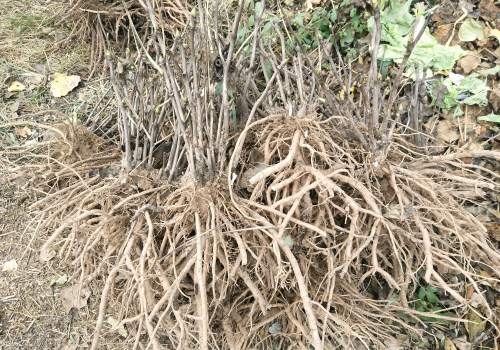
I. How much does an oil peony seedling cost per plant?
There is no unified national standard for the price of oil peony seedlings. Prices differ depending on the place of origin, variety and specification, so you need to check the local market for specifics. The following prices for oil peony seedlings were compiled from information found online and are for reference only.
1. Heze peony seedling planting base: the wholesale price of one-year Fengdan peony seedlings is 0.3 yuan/plant, two-year seedlings 0.7 yuan/plant, three-year seedlings 1.2 yuan/plant, four-year seedlings 2 yuan/plant, and five-year seedlings 3.2 yuan/plant; the wholesale price of one-year Ziban peony seedlings is 2.6 yuan/plant, two-year seedlings 3.5 yuan/plant, three-year seedlings 4.8 yuan/plant, four-year seedlings 6 yuan/plant, and five-year seedlings 8 yuan/plant.
2. Bozhou Yangzhen Tian Biotechnology Co., Ltd.: the price of one-year Fengdan peony seedlings is 0.18 yuan/plant, two-year seedlings 0.26 yuan/plant, three-year seedlings 0.45 yuan/plant, and one-year Fengdan No. 1 peony seedlings 0.35 yuan/plant.
3. Minhe County Luhe Landscaping Co., Ltd.: the price of two-year and three-year Ziban peony seedlings is 4 yuan/plant.
II. Are oil peonies worth planting in 2019?
Planting oil peonies in 2019 still has good prospects. Not only has the state issued documents supporting planting, but localities have also rolled out supportive policies, and the crop has high seed yield, high oil content, excellent quality, strong resistance, a long harvest period and good economic returns.
1. On March 22, 2011, the Ministry of Health issued the Announcement on Approving Acer truncatum Seed Oil and Peony Seed Oil as New Resource Foods (Ministry of Health Announcement No. 9 of 2011), approving peony seed oil as a new resource food.
2. On December 26, 2014, the General Office of the State Council issued the Opinions on Accelerating the Development of the Woody Oil Industry (Guobanfa [2014] No. 68), setting out policies for the development of peony seed oil and striving to build 800 key counties for woody oil crops such as oil tea, walnut and oil peony by 2020.
3. Various provinces have also issued supportive policies for oil peonies, such as the Shandong Province Peony Industry Development Plan (2015-2020), the Hubei Province Oil Peony Industry Development Plan (2014-2025), and the Gansu Province Oil Peony Industry Development Plan.
4. According to statistics, China imports a huge amount of finished edible vegetable oil and per capita consumption is also large, which shows that the edible oil market in China has broad space, but not much is planted, because it has only developed in recent years. Therefore, after planting there is no need to worry about finding a market.
5. Oil peonies are highly adaptable and can be planted from south to north in China. They are not demanding and do not compete for land, and can be grown on marginal land such as well-drained sloping land, ridge land and beach land, without competing with grain for land.
6. Two-year-old oil peony seedlings can enter a high-yield and stable-yield period in the 4th year after planting, producing about 300 kg of seed per mu each year, with an oil content above 20%. One planting can generate an income of 3,000 yuan per mu, and a single planting can be harvested continuously for more than 30 years.
The above is an introduction to oil peony seedling prices and the planting prospects for 2019. We hope it is useful to everyone.
Are peony flower seedlings expensive? How much does a peony flower seedling cost per plant
As a flower with extremely high ornamental value, peonies must be strictly controlled from seedling selection to cultivation and management in order for them to bloom more luxuriantly. Today Xiao Qi will talk with everyone about peony flower seedlings. Peony flowers have such high ornamental value, so are peony flower seedlings expensive, and how much do they cost per plant?
I. Introduction to peonies
Peony is a perennial deciduous small shrub in the family Paeoniaceae, genus Paeonia. The roots are fleshy, thick and long, with a lignified center, generally 0.5-0.8 m long; the primary roots are white and later turn yellow (brown); root types include taproots, sloping roots and intermediate-type roots. The total petiole is 8-20 cm long and has grooves on the surface. Flowers are solitary, borne at the top of the current year's branches, bisexual, brightly colored and varied in form. Flower colors fall into ten major color groups, divided into white, red, yellow, pink, purplish red, purple, dark purple (black), snow blue, green and compound. Traditionally, flowers are divided into single-petal, double-petal and thousand-petal types.
II. Peony flower seedling prices
Right now is the golden season for planting peonies. This year's "high price" of peonies has brought rare prosperity to the Heze peony seedling market in recent years and has also spurred many flower growers to plant more. Mr. Han, a flower grower in Huanggang Town, Mudan District, plans to expand his planting scale but does not know how the market trend will go. Recently he called our newspaper, hoping relevant experts could help analyze it. Generally, the price of ornamental peony flower seedlings has risen from about 15 yuan per plant last year to about 20 yuan per plant now.
III. Economic value of peonies
Peonies are valued not only for their large flowers, beautiful form, brilliant color and rich fragrance, but also for their very high ornamental and medicinal value. Peony flowers not only have ornamental value; the whole peony plant is a treasure, and the flowers, seeds, roots and powder all have high economic value. As early as the Qin and Han dynasties it was recorded as a medicinal plant in the Shennong Bencao Jing. Every part of the peony is a treasure. Its processed root is the precious Chinese herbal medicine "Danpi", which has the effects of dispersing blood stasis, clearing blood, harmonizing blood, relieving pain and treating dysmenorrhea, and can also lower blood pressure and provide antibacterial and anti-inflammatory effects. Taken over the long term, it can prolong life. The flower seeds can also be pressed for oil. The petals are also edible and taste delicious.
The above ispeony flower seedling pricesand an introduction to the economic value of peonies. Peony flower seedling prices are still relatively cheap. If planting on a large scale, you need to consider carefully, since large-scale peony cultivation is still difficult.
How much does an ornamental peony flower seedling cost per plant
We all know that peony flowers have ornamental value. When peonies bloom, many people go to admire them. Because most people now live stressful urban lives, sometimes in order to relieve the pressure of life and work, they will go out to relax when they have the chance. If you want to admire peony flowers, be sure to pay attention to the peony flowering period!
How much does an ornamental peony flower seedling cost per plant
Generally speaking, the price of peonies is defined by variety, and under normal circumstances it is about 15 yuan per plant. But it has also risen from about 15 yuan per plant to about 20 yuan per plant now. Peony is a fleshy deep-rooted plant, so when choosing a site, choose a plot with high, dry terrain that drains easily.
For small-scale peony seedling raising, bed sowing can be used. After sowing and covering with soil, the bed surface should be 80-100 cm wide and 10-15 cm high, with 20-30 cm between beds. For large-scale breeding, a seeding machine should be used, with a seed rate of about 70-90 kg per mu, which saves time and labor and reduces production costs. Note that the sowing depth must not exceed 5 cm.
Peonies are valued not only for their large flowers, beautiful form, brilliant color and rich fragrance, but also for their very high ornamental and medicinal value. Peony flowers not only have ornamental value; the whole peony plant is a treasure, and the flowers, seeds, roots and powder all have high economic value.
Where is the best place in China to see peony flowers
"The soil and veins of Luoyang are most suitable for flowers, and peonies are especially wondrous under heaven." Their cultivation began in the Sui Dynasty, flourished in the Tang Dynasty, and was unsurpassed under heaven in the Song Dynasty. They are graceful and luxurious, of national beauty and heavenly fragrance, magnificent, symbolizing good fortune and wealth, prosperity and flourishing, and are a symbol of the vigorous development and happy prosperity of the Chinese nation. Luoyang peonies have huge flowers, a great many varieties and extraordinarily beautiful colors, with 9 major color groups including red, white, pink, yellow, purple, blue, green, black and compound colors, 10 flower forms and more than 1,000 varieties. When the flowers bloom, Luoyang becomes a sea of flowers and crowds of people, all racing to see the lovely appearance and graceful beauty of the peonies.
Flowering period: early April to early May. During the peony flower festival, accommodation is relatively tight.
Viewing spots: Luoyang Peony Garden, Xiyuan Park Peony Garden, Wangcheng Park Peony Garden, Mudan Park Peony Garden, Guose Peony Garden, Luoyang Binhe Park, Luoyang International Peony Garden, Shenzhou Peony Garden, China National Flower Garden, Luoyang Tulip Garden, Luoyang National Flower Garden, Xiannong Peony Garden, Baiyun Mountain Alpine Peony Garden, Jiguan Cave Alpine Peony Garden, Xiaolangdi Peony Garden, Longmen Xishan Peony Garden, etc.
The difference between herbaceous peony flowers and tree peony flowers
For the difference between herbaceous peony and tree peony, let us first observe and compare from the bottom up, starting with the stems. The stem of the tree peony is woody and of relatively good quality, and the aboveground part does not die after leaf fall. However, the stem of the herbaceous peony is herbaceous and its quality is relatively not as good. After leaf fall, the aboveground part dies. The leaf shapes of the two are also different. The leaves of the tree peony are irregular and maple-leaf shaped, while the leaves of the herbaceous peony are oval.
Having discussed the stems, let us now talk about the leaves. Leaves are a relatively obvious part for distinguishing plants. After looking at the leaves, you may feel that the difference between herbaceous peony and tree peony is completely easy. It is clear at a glance. The upper surface of tree peony leaves is green with a slight yellow tinge, has no fuzz and is very clean, while the lower surface has a white powder. The upper and lower surfaces of herbaceous peony leaves are both a deep green, and the leaves are relatively dense.
We have looked at the stems and the leaves. Now let us compare herbaceous peony flowers and tree peony flowers to make a judgment about the difference between herbaceous peony and tree peony. A tree peony plant has only one flower, and the flower form is relatively large. The flowers of the herbaceous peony are one or several, terminal and axillary, with relatively many flowers, and the flower form of the herbaceous peony is slightly smaller than that of the tree peony. It also has more flower buds than the tree peony.
Even if you cannot understand any of the previous three points, understanding this one point makes the difference between herbaceous peony and tree peony no problem at all. If you are really unclear about the difference between herbaceous peony and tree peony, just remember that tree peonies bloom in the late spring month of March, and herbaceous peonies bloom in late spring and early summer. Hence the saying "watch tree peonies three mornings after Grain Rain, watch herbaceous peonies three shines after Start of Summer." Relying on the season, you will never identify them wrongly.
Peony flower seedling propagation techniques
Peony is a precious woody flower unique to China. It is a perennial deciduous small shrub in the family Paeoniaceae, genus Paeonia, and has long been known as the "king of flowers." In May 1985 it was rated second among China's top ten famous flowers. Propagation methods include division, grafting and sowing, but division and grafting are the most common.
I. Division propagation
Dig up the whole large, luxuriantly growing peony plant and separate it from where the root veins meet. The number of daughter plants per plant depends on the size of the original plant: large ones can be divided into more, small ones into fewer. Generally every 3-4 branches form one daughter plant, with a relatively complete root system. Then mix a little sulfur powder with mud and spread and rub it evenly on the wounds on the roots, and it can be planted elsewhere. The time for division propagation is from the annual Autumn Equinox to the period of Frost's Descent, and it is best done at the right time.
II. Cutting propagation
Cutting propagation is a method of using peony branches, which readily produce adventitious roots, to propagate new plants, and is one of the asexual propagation methods. The method is to first cut off the branch to be used for cutting, detach it from the mother plant, and then insert it into soil or another substrate to make it root and become a new plant. For peony cutting propagation, choose current-year soil shoots sent up from the peony roots, or, when shaping and pruning peonies, choose branches with substantial stems, plump terminal buds and no pests or diseases as cuttings, 10-18 cm long.
III. Sowing propagation
Sowing propagation is a sexual propagation method that uses seeds to reproduce offspring or breed new varieties. Before sowing, the soil must be rather carefully prepared and disinfected. The land should be deeply plowed and finely worked, with plenty of base fertilizer. Then build small beds 70-80 cm wide; either hole sowing or drill sowing can be used. Do not sow too deep; 3-4 cm is the limit. After sowing, cover with soil level with the bed surface. Then gently firm the soil and water thoroughly immediately.
IV. Layering propagation
Peony layering propagation is a propagation method based on the principle that branches can produce adventitious roots. The branches are bent down or buried with soil while still on the plant, without being detached from the mother plant, and the soil is kept moist. The buried part of the branch takes root, and then it is cut off and planted to become a new plant. This is likewise an asexual propagation method for peonies. This method mainly includes the pot-nesting and soil-mounding layering method and the double-flat method.
V. Tissue culture
Tissue culture propagation is based on the totipotency of plant tissue cells and uses peony embryos, flower buds, stem tips, young leaves and petioles for in vitro culture. Generally, these materials are placed in 75% alcohol and soaked for 5-10 minutes, then immediately put into sterile water for washing, then soaked in 5% Antiformin solution for 7-10 minutes for surface sterilization, then rinsed 3-4 times with sterile water, and finally placed on culture medium for aseptic culture.
According to what this editor has learned, Luoyang peonies are the most famous. Every year when the peony flowering period arrives, that is, April and May each year, many tourists from all over the country come to admire them. Peony flowers are charmingly fragrant and symbolize people of noble and elegant temperament. They are one of China's top ten famous flowers and were once rated as China's "national flower."