2019 Honeysuckle Prices and High-Yield Cultivation Techniques for the Four-Season Honeysuckle Tree
Honeysuckle is a common traditional Chinese medicinal herb in daily life, usually used for brewing tea. It has the effect of clearing heat and detoxifying, and can treat diseases such as influenza and tonsillitis. So how much does honeysuckle cost per jin in 2019? Included: high-yield cultivation techniques for the four-season honeysuckle tree!
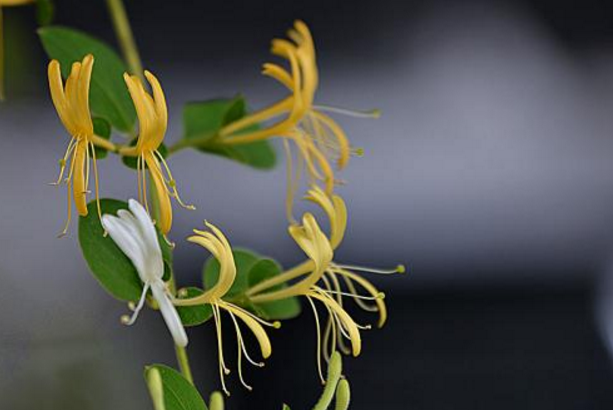
I. 2019 Honeysuckle Prices
The market price of honeysuckle varies considerably depending on quality and place of origin. Inferior honeysuckle is very cheap, with market prices ranging from 3-10 yuan/jin, while slightly better quality can sell for 40-50 yuan/jin. High-quality honeysuckle is priced at around 80-140 yuan/jin, and in some areas honeysuckle can sell for 200 yuan/jin. Based on the current general price level in the honeysuckle market, it is usually around 80-100 yuan/jin.
II. Cultivation Techniques for the Four-Season Honeysuckle Tree
1. Timely Planting
The four-season honeysuckle has wide adaptability and can be planted in wasteland, sloping land, ditch land, riverside, field edges, in front of and behind houses, and so on. It is best to plant before early spring sprouting or before the autumn-winter dormant period. On prepared planting land, dig holes with a row spacing of 1.5 m and a plant spacing of 1 m, fill the holes with evenly mixed fertile soil, and after planting the seedlings, be sure to press them down firmly and water thoroughly to set the roots. If you want to save land, you can heel in the seedlings for 1.5 mu in one mu of land, and then remove them every other row and every other plant in the second or third year, which will greatly improve the benefits.
2. Intertillage and Weeding
Weeding the four-season honeysuckle is simple and easy. Weeding can be done before and after early spring sprouting and during intertillage from May to August. Chemical weeding can be used during the season when weeds are growing, but absolutely no herbicide damage may be left on the branches and leaves of the honeysuckle. After large seedlings are 3 years old, when there are only a few weeds, chemical weeding cannot be used. During intertillage, cultivate shallowly near the plants to avoid damaging the roots, and slightly deeper between the rows.
3. Reasonable Topdressing
The four-season honeysuckle generally only needs topdressing twice a year. The first is done before and after early spring sprouting, and afterward topdressing is done after each flower bud harvest according to the vigor of the plants. Apply livestock and poultry manure or nitrogen fertilizers such as ammonium sulfate and urea, broadcast them into opened furrows, and cover with soil to conceal the fertilizer. After entering the high-yield period, winter fertilizer needs to be applied each winter. In addition, each winter, foliar spraying should be carried out according to the vigor of the plants.
4. Timely Pruning
Pruning is key to cultivating the four-season honeysuckle. It is divided into planting pruning, young-stage pruning and full-bloom pruning. The purpose is to organize the tree shape well to increase yield. Pruning at planting time can determine the basic tree shape and lay a good foundation for shaping and pruning in the first and second years.
5. Pest and Disease Control
Pest and disease control for the four-season honeysuckle is mainly preventive. Use pesticides with high efficiency, low toxicity and low residue, and try to avoid using pesticides during the flowering period. Generally, aphids and cotton bollworms harm honeysuckle, and diseases generally include powdery mildew and anthracnose. There are now many types of pesticides, and attention should be paid to the authenticity and quality of pesticides, applying them according to the instructions marked on the pesticide label.
6. Timely Harvesting
Timely harvesting can improve quality and price. If harvested after the flowers open, the quality is poor; if harvested too early, the yield is low. Therefore, it is best to harvest on the day when the flowers are about to open. It is most suitable to harvest when the upper part of the flower is swollen but not yet open and is greenish-white.
The above is Tuliu.com's introduction to the market price and cultivation techniques of honeysuckle. Honeysuckle has high medicinal value, a relatively wide range of uses, and market demand is increasing year by year, so the prospects for cultivation are still quite good.
How to plant the four-season honeysuckle tree? Cultivation techniques for the four-season honeysuckle tree
The four-season honeysuckle is one of the excellent varieties of honeysuckle. It has the characteristics of wide adaptability, strong stress resistance and a well-developed root system, grows stably, and has very high yield and medicinal value, with good economic value, thus attracting many farmers to plant it. So how do you plant the four-season honeysuckle tree? The cultivation techniques for the four-season honeysuckle tree are introduced below.
Image: Honeysuckle tree
I. Timely Planting
The four-season honeysuckle has wide adaptability and can be planted in wasteland, sloping land, ditch land, riverside, field edges, in front of and behind houses, and so on. It is best to plant before early spring sprouting or before the autumn-winter dormant period. On prepared planting land, dig holes with a row spacing of 1.5 m and a plant spacing of 1 m, fill the holes with evenly mixed fertile soil, and after planting the seedlings, be sure to press them down firmly and water thoroughly to set the roots. If you want to save land, you can heel in the seedlings for 1.5 mu in one mu of land, and then remove them every other row and every other plant in the second or third year, which will greatly improve the benefits.
II. Intertillage and Weeding
Weeding the four-season honeysuckle is simple and easy. Weeding can be done before and after early spring sprouting and during intertillage from May to August. Chemical weeding can be used during the season when weeds are growing, but absolutely no herbicide damage may be left on the branches and leaves of the honeysuckle. After large seedlings are 3 years old, when there are only a few weeds, chemical weeding cannot be used. During intertillage, cultivate shallowly near the plants to avoid damaging the roots, and slightly deeper between the rows.
Image: Honeysuckle tree
III. Reasonable Topdressing
The four-season honeysuckle generally only needs topdressing twice a year. The first is done before and after early spring sprouting, and afterward topdressing is done after each flower bud harvest according to the vigor of the plants. Apply livestock and poultry manure or nitrogen fertilizers such as ammonium sulfate and urea, broadcast them into opened furrows, and cover with soil to conceal the fertilizer. After entering the high-yield period, winter fertilizer needs to be applied each winter. In addition, each winter, foliar spraying should be carried out according to the vigor of the plants.
IV. Timely Pruning
Pruning is key to cultivating the four-season honeysuckle. It is divided into planting pruning, young-stage pruning and full-bloom pruning. The purpose is to organize the tree shape well to increase yield. Pruning at planting time can determine the basic tree shape and lay a good foundation for shaping and pruning in the first and second years. Annual pruning can be divided into winter pruning and summer pruning. The principles of winter pruning are to prune vigorous branches lightly, prune weak branches heavily, prune dead branches completely, and prune every branch, cutting back all remaining branches. The principles of summer pruning are to cut shaded branches and small weak branches, cut back vigorous branches, and remove excessive vegetative branches. For trees that have entered the high-yield period, summer pruning consists of pinching tips and clearing the interior, removing the weak and keeping the strong, picking off all soil-covered leaves, improving ventilation and light penetration, thinning branches into clumps, and shaping the tree like an umbrella. Generally, it is suitable to keep the tree height at about 1.3 m for convenient harvesting.
Image: Honeysuckle
V. Pest and Disease Control
Pest and disease control for the four-season honeysuckle is mainly preventive. Use pesticides with high efficiency, low toxicity and low residue, and try to avoid using pesticides during the flowering period. Generally, aphids and cotton bollworms harm honeysuckle, and diseases generally include powdery mildew and anthracnose. There are now many types of pesticides, and attention should be paid to the authenticity and quality of pesticides, applying them according to the instructions marked on the pesticide label.
VI. Timely Harvesting
Timely harvesting can improve quality and price. If harvested after the flowers open, the quality is poor; if harvested too early, the yield is low. Therefore, it is best to harvest on the day when the flowers are about to open. It is most suitable to harvest when the upper part of the flower is swollen but not yet open and is greenish-white.
[Editor's Conclusion]The four-season honeysuckle tree grows quickly and has a wide range of uses, with very high economic value. The cultivation techniques for the four-season honeysuckle tree were introduced above. Have you all learned them?
Four-Season Honeysuckle Cultivation Techniques_How Much Is the Latest Price per Four-Season Honeysuckle Plant
Honeysuckle is a very common flowering plant. It often grows on hillsides, in forests, gardens and other places. Its vitality is very tenacious, and its ability to adapt to the environment is also very strong. It is a flowering plant very popular among people, and it often appears in people's courtyards, roadsides, flower pots and other locations. It not only has very good ornamental value, but also particularly strong medicinal value, making it a very good flowering plant. However, many people do not know much about cultivating high-quality, high-yield four-season honeysuckle. Below, the editor will introduce to you the cultivation techniques for four-season honeysuckle, as well as how much the latest price per four-season honeysuckle plant is.
[Introduction to Four-Season Honeysuckle]
Four-season honeysuckle is also called Japanese honeysuckle by people. When it first opens, it is white, and during the blooming process it slowly turns yellow, so people call it honeysuckle. It belongs to the dried flower buds or newly opened flowers of Lonicera japonica and plants of the same genus in the Caprifoliaceae family, Lonicera genus. It blooms in March and can be enjoyed in May, with a faint fragrance. Its base is red, and its two stamens are displayed on the outside. When open, the flowers appear in pairs, giving people a feeling of being inseparable. It comes from the Compendium of Materia Medica and has the effect of clearing heat and detoxifying. Its nature and flavor are sweet, with a faint delicate fragrance. It has the effect of clearing heat and does not cause any harm to the stomach, and its flavor has the effect of dispelling pathogenic factors. It has very good therapeutic effects on dispersing wind-heat, clearing heat and detoxifying, and on various heat diseases, rashes, spots, sore throat and other symptoms. Four-season honeysuckle is a variety bred by relevant experts from the Shandong Province Four-Season Honeysuckle Professional Cooperative after long-term cooperation. It grows very stably and has very high yield and medicinal value, greatly improving the economic value of four-season honeysuckle.
[Cultivation Techniques for Four-Season Honeysuckle]
1. Propagation methods: There are relatively many propagation methods for four-season honeysuckle, generally using sowing, cuttings, root division and other methods. It generally buds and blooms on new branches, and its requirements for soil are not particularly strict. It is suitable for growing in acidic and saline-alkaline soils. Its root system is particularly well developed, and its rooting ability is also particularly strong, making it a plant that fixes soil and conserves water.
2. Production environment: The growing environment for four-season honeysuckle is very adaptable. During growth, its requirements for soil and climate are not strict. It grows best in sandy soil with relatively thick soil layers, and can be planted on dams, dikes, terraced fields, hillsides and barren hills.
3. Planting method: When planting four-season honeysuckle, it is generally done on rainy days, especially in the rainy weather of summer, which is very suitable. When planting, choose healthy 1-2 year old branches free of pests and diseases and cut them into 30-35 cm lengths, then remove the leaves on the lower half for use as cuttings. Begin by digging holes, insert the root cuttings, and bury them diagonally in the soil in a dispersed manner, exposing 7-10 cm, then cover with soil and press firmly. When planting, a shaded place is needed; if exposed to direct sunlight, the branches will dry up.
[Latest Prices for Four-Season Honeysuckle]
Many people, when choosing to plant four-season honeysuckle, will certainly learn about its price. In the market, it is generally a few tenths of a yuan per plant, and when purchasing, generally more than one hundred plants are required. If you buy more, the price is relatively more affordable; if you buy less, the price is slightly more expensive. In pharmacies, honeysuckle is generally more than 100 yuan per kilogram, which is relatively expensive. You can buy a small amount, which is easier to store.
Summary: Four-season honeysuckle is suitable for planting in spring and autumn. It must be introduced in the same year so that you can enjoy the flowers. The above is the editor's introduction to the cultivation techniques for four-season honeysuckle, as well as how much the latest price per four-season honeysuckle plant is. I hope those who drink honeysuckle tea can grow it at home themselves, which will be better.
[More Related Information] What varieties of Hypericum are there Rhododendron mucronatum images Blackberry lily images Poinciana images How to plant black-eyed Susan