How much is ginkgo seed per jin, and how should it be planted?
The ginkgo tree is the long-lived elder among trees, with an extremely long lifespan, and the seeds it produces are also called white nuts, so ginkgo is also called the white nut tree. Because ginkgo has ornamental, economic and medicinal value, and the ginkgo nuts it produces have relatively high nutritional and medicinal value, many growers also want to plant it. So how much is ginkgo seed per jin? How should it be planted?
I. How much is ginkgo seed per jin?
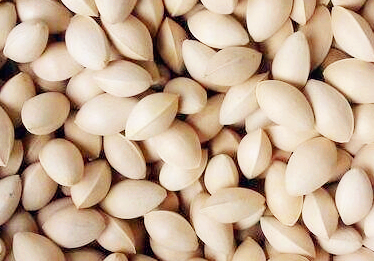
The price of ginkgo seed varies. Because ginkgo seed quality, variety, place of origin, market and purchase quantity differ, the price difference is also relatively large. But under normal circumstances, the price of ginkgo seed is about 5-8 yuan per jin, so this price is only for reference, and the specific price should be based on the actual price. In addition, ginkgo is mostly propagated in production by cuttings, grafting or division, while seed propagation is mostly used for large-scale landscaping seedlings or for making clump-style bonsai. After harvesting the seeds in autumn, remove the outer seed coat, dry the seeds with the fruit coat in the sun, and they can be sown in winter of the same year or in spring of the next year. If sown in spring, they must first be stratified with sand to promote germination.
II. How are ginkgo seeds planted?
1. Time for promoting germination
The time for promoting germination should be determined according to the sowing time, and the sowing time should be based on the late frost period, because ginkgo buds are prone to freezing damage below 0 degrees C, so generally starting germination promotion 30-40 days before the sowing period is sufficient.
2. Seedbed preparation
The plot should be chosen in a place sheltered from the wind, facing the sun and with flat ground, and a ditch running east-west with a depth of 30 cm * width of 120 cm should be dug, and the length of the ditch should depend on the amount of seed. Spread about 5 cm of fine sand at the bottom, add a 10 cm soil ridge around the ditch, and the north side can be appropriately higher to prevent rainwater from flowing in.
3. Seed treatment
Take out the seeds stored dry in winter and first put them into a vat or other water-holding container, soak them in clean water for 36-48 hours and separate out the shriveled grains, then remove them, wash them clean, and mix them evenly with wet sand at a ratio of 1 part seeds to 3 parts wet sand, then put them on the bed to promote germination. For seeds stored in cellars, they can be placed directly into the seedbed to promote germination.
4. Putting seeds on the bed
First evenly spread the seeds mixed with sand on the seedbed, then place about 5 cm of fine sand on top of the seeds, then put a thin layer of fine soil or grass matting on top to maintain the temperature in the seedbed, and finally cover the seedbed with plastic film about 2 m wide, and press the edges of the film firmly with soil.
5. Transplanting and planting
Seedlings propagated from ginkgo seeds can grow to 15-25 cm high in the same year, and can be transplanted after leaf fall in autumn. But note that the seedbed should choose a section with good drainage to prevent water accumulation from causing the part of the seedlings near the ground to rot. It can grow well in both acidic soil and calcareous soil, but neutral or slightly acidic soil is most suitable. It is not tolerant of waterlogged places and is relatively drought-tolerant, but in overly dry places, stony hillsides or low wet places, it grows poorly.
Summary: The above is the relevant introduction about ginkgo seed prices and planting methods. Note that the above ginkgo seed prices are only for reference, and the specific ones should be based on actual prices. Growers can refer to the above ginkgo seed prices and planting methods when planting. I hope it helps friends in need!
How much is a ginkgo tree, the "living fossil of the biological world," per tree? How are the planting benefits?
The ginkgo tree is also called the white nut tree. Because its lifespan is very long, and its ornamental value, medicinal value and use value are all high, it is also called the “living fossil of the biological world“, thus becoming an object that many growers want to plant. So how much is a ginkgo tree per tree? How are the planting benefits?
I. How much is a ginkgo tree per tree?
The price of ginkgo trees varies. Because variety, region, specification and planting method and other factors differ, their market prices also differ to a certain extent. Seedling ginkgo trees cultivated from seeds are about 3-9 yuan each for 2-3 cm, and 25-40 yuan each for 4-5 cm. As the ginkgo tree slowly grows larger, the price also slowly rises. The most expensive is generally a seedling ginkgo tree of about 50 cm, whose price can reach about 65,000 yuan each. Ginkgo saplings cultivated by grafting start at a specification of about 12 cm, with a price generally around 260-350, while 15 cm ones are generally around 450-650. Of course, at present the most expensive grafted ginkgo trees are not much different from seedling ginkgo trees, also around 65,000. Therefore the above prices are only for reference, and the specific prices should be based on actual prices.
II. How are the planting benefits of ginkgo trees?
At present, urban greenery and beautification have a relatively large demand for ginkgo trees. Ginkgo trees can not only be used for beautification, but ginkgo nuts and ginkgo leaves also have high medicinal value. Ginkgo leaves can promote blood circulation and remove blood stasis, and have a great effect on treating stroke paralysis and reducing fat and relieving cough, with high market value.
If the plan is to trade small saplings and ginkgo seeds are used for planting and cultivation, about 1000 plants can be planted per mu, and the seeds needed for 1000 plants are about 50 jin. Calculated at the market seed price of 6 yuan per jin, planting one mu requires 300 yuan. At the market price, 1000 3 cm ginkgo trees can be sold for 8000 yuan. If planting saplings and raising them to sell when large, about 500 plants can be planted per mu. At market prices, the cost per mu is about 2000-4000 yuan, and raising them to 20 cm can sell for 75,000 yuan. If directly planting 15 cm medium-sized trees, the specification can be about 15 cm, the planting row spacing is about 2-4 m, about 100 plants can be planted per mu, and the cost is 10,000 yuan. When they grow to 25-30 cm, they can be sold for 200,000-700,000. Seen this way, as long as the ginkgo trees can be sold, the benefits are still good.
As cities expand in the future, the demand for greenery will also grow larger and larger, and people will increasingly pursue enjoying life and will also become clearer about the benefits of ginkgo. Moreover, naturally growing ginkgo in the wild is prohibited from being transplanted, so artificially planting ginkgo trees still has great prospects.
Summary: The above is the relevant introduction about ginkgo tree prices and planting benefits. Note that the above ginkgo tree prices and planting benefits are for reference only, and the specific ones should be based on actual prices and benefits. I hope it helps friends in need!
Ginkgo seed seedling-raising techniques
Using ginkgo seeds to raise seedlings is the most basic method of cultivating ginkgo seedlings. The ginkgo seed seedling-raising techniques are introduced as follows:I. Seed collection and seed selection. The mother trees for seed collection must be of excellent quality, bear many seeds, and have robust trunks. It is best to collect them on the ground after the fruits naturally mature and fall off. Pile and ferment the collected fruits for 2 to 3 days, then soak them in water and rub off the outer skin, dry them, and carry out cold storage or low-temperature sand storage. For seed selection, choose large seeds for raising seedlings, because large seeds contain more endosperm and can fully meet the needs of early seedling growth, especially within 50 to 60 days after the seeds germinate.
II. Land preparation and germination promotion. Choose nursery land that is flat, sheltered from the wind, facing the sun and convenient for irrigation, carry out deep plowing in autumn, and shallow plowing in early March of the following spring. Apply 4000 kg to 6000 kg of farmyard manure per mu, and carry out soil disinfection treatment. When promoting germination, soak the dry-stored seeds in 40 degrees C warm water for 5 to 7 days, changing the water once every two days. After the seeds absorb water, carry out high-temperature germination promotion. Build a plastic shed over the seedling bed, with layered racks inside, spread straw mats or wet burlap pieces on each layer of rack, then spread mats, evenly spread the water-saturated seeds on the mats at a thickness of about 5 cm, and cover them with wet burlap pieces. Uncover the burlap pieces every morning and evening and spray once with wet water. The temperature inside the shed should be controlled at 30 degrees C to 35 degrees C. When 2/3 of the seeds have cracked open and shown white, they can be sown.
III. Sowing and seedling raising. Generally sow by dibbling in early spring, with wide rows of 40 cm, plant spacing of 15 cm, sowing depth of 3 to 4 cm, and covering soil 3 to 4 cm thick; drilling can also be used, with row spacing of 25 to 30 cm, sowing one seed every 10 cm, pressing lightly after covering with soil, and covering with plastic film. Use 50 kg of seed per mu.
IV. Seedling-stage management. 1. Loosen the soil and weed in time. During the ginkgo seedling stage, the shaded surface is small and weeds are likely to grow, so loosen the soil and weed 6 to 8 times throughout the year. 2. Fertilize reasonably. After the seedlings emerge, apply 20 kg to 30 kg of urea per mu in mid-May, 30 kg of compound fertilizer per mu in mid-June, and 30 kg of potassium dihydrogen phosphate per mu in early August. When topdressing, stay 5 cm to 10 cm away from the seedlings to avoid burning them. 3. Water at the right time. Before mid-May, watering is generally not suitable, and during the flood season attention should be paid to drainage. 4. Control underground pests. During the seedling stage, they often suffer from underground pests such as cutworms and grubs. A 1000-fold solution of 90% trichlorfon can be mixed with poisoned bait to trap and kill them. 5. The initial seedling density is relatively large. Starting from the second year, remove rows or thin plants every year, and retain an appropriate density according to the different specifications required for afforestation.
V. Field planting. Generally plant in early spring, with the density depending on the use, female-to-male plant ratio 25:1, plant and row spacing 2 m x 3 m. They bear fruit in 3 to 5 years. For timber forests, plant and row spacing 3 m x 4 m; for leaf-use forests, plant and row spacing 0.4 m x 1 m. For fruit-and-timber forests, seedling trees can be used for field planting, with plant and row spacing 3 m x 4 m, high-branch grafting, and as the crown expands, finally retaining about 20 plants per mu. When ginkgo is interplanted with crops, 3 to 5 plants per mu, row spacing 40 m, plant spacing 5 m.
VI. Grafting. Grafting is generally carried out around Qingming Festival. Through grafting, quality can be improved, growth accelerated and fruiting advanced. For grafting, choose 1-year-old to 2-year-old seedling trees of excellent varieties as rootstock. Cut 1-year-old to 3-year-old robust fruiting branches from the middle and upper part outside the crown as scions, leave 2 plump buds on each scion, and cut the lower end of the scion into a wedge shape 2.5 cm to 3 cm long, thin on the inside and thick on the outside. The rootstock stump is 10 cm to 15 cm high, cut off at the upper end, choose a smooth surface, split downward with a knife to the same depth as the cut surface of the scion, insert the scion downward tightly aligned with the cambium, smear on wet mud, then wrap tightly with plastic film. Grafting can be done in the nursery, or after field planting, by high-branch grafting.
Latest information
Techniques for improving the survival rate of ginkgo cutting propagation Comprehensive techniques for dwarfing potted chrysanthemums How to propagate and cultivate ornamental plants of the genus Anthurium
Give foliage flowers a "bath" with beer