How to grow miracle fruit? A detailed guide to cultivating this nationally treasured plant
Miracle fruit is a nationally treasured plant. It gets its name because its flesh is sour and astringent and contains miraculin; within half an hour of eating a miracle fruit, other acidic fruits taste sweet. Its place of origin is Africa, and artificial cultivation of miracle fruit has now begun in China. So let me introduce the cultivation method for miracle fruit:
I. Site selection
Miracle fruit originated in the tropics and prefers fertile soil with high organic content and strong moisture-retention capacity. The soil should preferably be acidic or neutral. It is suitable for planting in low-altitude subtropical areas. As a tropical plant, it also has relatively high temperature requirements: the average daily temperature must reach around 25°C, and in winter it must also reach above 10°C, with the minimum not lower than 5°C, otherwise frost damage will occur. The site should be far from noisy places such as urban areas, main traffic routes and factories. The water source should be ample and clean. It is best to build the orchard on a wind-sheltered hillside facing south or southeast.
II. Transplanting seedlings
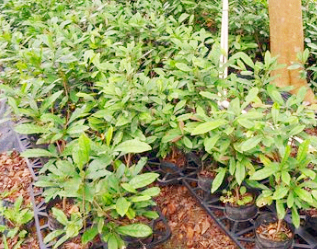
Miracle fruit seedlings need to be transplanted in spring or autumn. Pay attention to the density at transplanting; the row spacing between plants should be determined according to plant size, with an average spacing of 150*200cm per plant. The planting hole should be 40*40*40cm in height, depth and width. Before transplanting, apply base fertilizer to the planting hole according to soil fertility and soil conditions. Generally, compound fertilizer, organic fertilizer and topsoil are mixed and stirred together, then placed into the planting hole, and about 10 cm of soil is placed on top of the base fertilizer to prevent the seedling roots from touching the base fertilizer and rotting. After transplanting, pile a planting mound at the base of the tree and firm it with your foot. Within ten days after transplanting, keep the soil moist; afterward, decide whether to water based on humidity.
III. Fertilizer and water management
Miracle fruit is a perennial fruit that can flower and bear fruit multiple times a year, so its fertilizer demand is also relatively high. During the seedling stage, compound fertilizer should be used scientifically, following the principle of applying more frequently and in small amounts, together with foliar fertilizer to effectively promote the development of the fruit seedlings. For mature fruit trees, organic fertilizer and compound fertilizer should be used together, and nitrogen fertilizer should be used reasonably to promote shoot growth. Never apply nitrogen fertilizer indiscriminately. Use compound fertilizer together with monopotassium phosphate to protect and strengthen the fruit. Miracle fruit also has a relatively high water demand. After transplanting, keep the soil moist and also spray the branches and leaves with water to keep them moist. To prevent water evaporation due to excessively high summer temperatures, certain moisture-retention work should also be done to strengthen water management.
IV. Shaping and pruning
Before miracle fruit enters its vigorous growth period, it needs to be pruned. Be careful not to prune heavily, because at this time the main focus is still on promoting growth and shaping. Generally, the natural open-center form is used for pruning. When pruning, combine work such as bud rubbing and shoot fixing to distribute the branches reasonably. Select strong-growing and robust buds with different growth directions as side branches. Removing the dense branches and leggy branches of the fruit tree is beneficial for the outer short-cutting work. After harvest in winter, promptly remove all undesirable branches such as diseased and pest-infested branches and overly dense branches.
Summary: The above is a related introduction to miracle fruit cultivation methods. Growers can refer to the above cultivation methods when planting. I hope it is helpful to friends in need!
When does miracle fruit ripen? An introduction to miracle fruit's market season
Miracle fruit is a nationally treasured plant. It is a tropical evergreen shrub in the Sapotaceae family, also called miracle berry. It is now cultivated as a garden ornamental plant in many areas of China and has relatively high cultivation prospects. It is suitable for planting in high-temperature, high-humidity subtropical and tropical areas. Now let us take a look at when miracle fruit ripens!
When does miracle fruit ripen?
Miracle fruit's fruit ripening period is not uniform. The peak fruiting periods are usually March, June and October. The fruit is small and oval; when ripe, the fruit is bright red, and the flesh is white and juicy. It is pollinated by insects such as ants. Miracle fruit was introduced to China in the 1960s and is now cultivated as a garden ornamental plant in many areas. It produces small white flowers in September each year, bears fruit in October, and in November the fruit turns from green to red and ripens.
Where is miracle fruit produced?
Miracle fruit is a typical tropical evergreen shrub, native to the West Africa, Ghana and Congo regions. In the 1960s, when Premier Zhou Enlai visited West Africa, the Republic of Ghana gave miracle fruit to Premier Zhou as a national gift. After that, cultivation began in China, with the main production areas being Guangdong, Guangxi, Yunnan, Hainan and other places. Whether in West African countries or in China, it is protected and prohibited from export.
Environmental conditions for growing miracle fruit
Miracle fruit prefers slightly acidic or neutral soil and grows best in well-drained sandy loam. It is suitable for cultivation in tropical and southern subtropical low-altitude areas of China. The plant prefers a high-temperature, high-humidity climate environment and has a certain drought tolerance and cold tolerance. At 3-5°C in winter, young branches and leaves will suffer cold damage but will not die; at 8-10°C it can overwinter safely. It likes light. During the seedling stage it can receive direct sunlight, but it can also flower and bear fruit normally under slight shade.
How much does one jin of miracle fruit cost in 2019? What are the cultivation prospects?
Miracle fruit was introduced to China for cultivation in the 1960s. Its fruit is sweet and sour and delicious; after eating miracle fruit, everything tastes sweet. In recent years it has gradually become known to people. So, how much does one jin of miracle fruit cost in 2019? What are the cultivation prospects? What is the price trend? What selection methods are there? Let us learn about it together!
1. Market price
Miracle fruit is currently in short supply on the market, and relatively few people grow it, so the price is also relatively high. Generally, the market price is 500-700 yuan per jin. If for some reason the annual output is relatively low, the price may soar. However, we can also buy it online, generally one or two hundred for a box, with 100g per box. If the quality is better, the price will be higher. So overall, the market price of miracle fruit is around 600 yuan per jin.
2. Cultivation prospects
Miracle fruit is native to Africa and is a typical tropical fruit. It can only be grown in a small number of areas in China. It is a nationally treasured plant, and its market price is also relatively expensive. Miracle fruit can flower and bear fruit only 3-4 years after transplanting. After more than 7 years of cultivation, it can bear thousands of fruits, and it can bear fruit 2-3 times each year. The yield is also not bad. Moreover, miracle fruit has the function of regulating the three highs and can treat gout, uric acid, headaches, etc. Its juice has anti-inflammatory and swelling-reducing effects, and its seeds have analgesic effects. It has extremely wide uses and is a fruit tree that combines ornamental, edible and medicinal uses. In recent years, as people have gradually become familiar with its special functions, it has become even more popular, and its cultivation prospects are excellent.
3. Price trend
The cultivation area of miracle fruit is extremely small, and many are imported. Since it appeared on the market, its price has been rising steadily. Its price is determined by its output. Miracle fruit is in great market demand, and its storage time is not long, so there is no situation of backlog or surplus. Under normal circumstances, price fluctuations are relatively small. Unless there is market speculation, the price may rise.
4. Selection methods
When selecting, carefully observe the appearance of the fruit to see whether there is water loss and whether the fruit is plump. Also pay attention to the color of the peel and whether it is fully mature. After miracle fruit is fully mature, it is red all over. When purchasing, pinch it with your hand to see whether the fruit's elasticity is normal; this can also help judge its water content. Check whether the surface has wounds and scars and whether it has already wilted. Do not choose miracle fruit like that.
The above is the little knowledge about miracle fruit compiled for you by the Tuliu.com editor. The editor reminds you that investment requires caution. If you are interested, you may as well look up more information about it before deciding whether to invest in growing it.