How much is a jin of strawberry seeds, and how do you grow them?
Strawberry, also known as the pineapple strawberry and other names, is a perennial herbaceous fruit. Because of its high nutritional value and its effects such as strengthening the gums and preventing constipation, it is loved by many people, and many growers also want to grow it. So how much is a jin of strawberry seeds? How do you grow them?
I. How much is a jin of strawberry seeds?
The price of strawberry seeds varies, but overall some people think it is rather expensive. Generally, the market price of strawberry seeds is about 800-1200 yuan per jin, but each jin contains about 100,000 seeds, and usually only one jin of seeds is needed per mu of land. Calculated this way, the price of strawberry seeds is actually not that expensive. In practice, propagating strawberries from seed is mostly used for long-distance introduction of varieties or for growing strawberry seedlings to breed new varieties, but it is also often used for courtyard landscaping with dual-purpose fresh-eating planting. Sowing strawberry seeds to raise seedlings is mostly done the following spring, but it can also be done in July-August of the same year the seeds are collected.
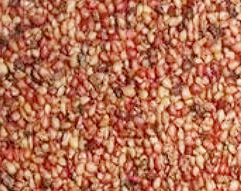
II. How do you grow strawberry seeds?
1. Seed collection
When harvesting the fruit in May-June, select well-developed and fully ripe strawberries for seed collection. Cut off the skin, put it in water, wash away the pulp, scoop it out and dry it. Or dry the cut skin directly and then rub it apart, and the skin and seeds will separate.
2. Seed treatment
Pour the strawberry seeds into warm water at 60-70°C and soak and wash them, stirring constantly until the water temperature drops to about 25°C, then stop. Continue soaking for 2-3 hours, then scoop them out and rub them with your hands until the seed coat is clean and glossy. Then rinse them clean with clear water, cover them with several layers of wet gauze, and keep them at 25-30°C to promote sprouting. Every day in the morning, at noon and in the evening, wet the gauze with warm water three times to keep the seeds in a moist environment. Once 60-70% of the seeds have sprouted white, they can be sown.
3. Sowing method
Before sowing strawberry seeds, first flood the seedbed lightly, then rake the bed surface level. When the water in the bed has seeped down, the seeds can be sown. Strawberry seeds are small, so broadcasting is best. The sowing rate is suitably 2.5-4.5 grams per sq m. After broadcasting, immediately spread the prepared covering soil evenly over the bed surface, with a covering thickness of 0.3-0.5 cm, and shade it with straw mats, then remove them once the seedlings have emerged evenly.
4. Seedbed site preparation
For the strawberry seedling-raising site, choose fertile loam soil and apply plenty of base fertilizer. For the base fertilizer, use barnyard manure, dry it in the sun, then crush it and apply it to the seedling land still to be plowed. The application rate is 5-10 jin per sq m, and compound fertilizer should also be added appropriately. After spreading the fertilizer, plow carefully to a depth of about 33 cm. After plowing, harrow it fine and level, and build ridges and make beds at a size of 0.8-1 m wide by 8-10 m long, keeping the bed level to facilitate drainage, irrigation and management.
5. Seedling-stage management
During the strawberry seedling stage, flood irrigation is not suitable, but sprinkler irrigation can be used to meet the water supply. After 6 true leaves, light flood irrigation can be used. During the strawberry seedling stage, weeds should be pulled promptly and often. Once the strawberry seedlings grow 3-5 true leaves, they can be transplanted, thinning where dense and filling in where sparse. When the strawberry seedlings reach 6 true leaves, the first topdressing can be done, and applying urea is suitable.
Summary: The above is the relevant introduction to the price of strawberry seeds and the planting method. Note that the above strawberry seed prices are for reference only, and the actual price should prevail. I hope it is helpful to friends in need!
Collection, treatment and sowing methods of strawberry seeds
Strawberry is a perennial herbaceous plant of the genus Fragaria in the rose family. Its propagation methods include seed propagation and division propagation. In production, division propagation is mostly used. Seed propagation is mostly used for long-distance introduction of varieties or for growing strawberry seedlings to breed new varieties, and can also be used for courtyard landscaping with dual-purpose fresh-eating planting. Let us take a look below at the planting method for strawberry seeds!
Seed collection
When harvesting the fruit in May-June, select well-developed and fully ripe strawberries for seed collection. Cut off the skin, put it in water, wash away the pulp, scoop it out and dry it. Or dry the cut skin directly and then rub it apart, and the skin and seeds will separate.
Seed treatment
Pour the strawberry seeds into warm water at 60-70°C and soak and wash them, stirring constantly until the water temperature drops to about 25°C, then stop. Continue soaking for 2-3 hours, then scoop them out and rub them with your hands until the seed coat is clean and glossy. Then rinse them clean with clear water and cover them with several layers of wet gauze. Keep them at 25-30°C to promote sprouting. Three times a day (morning, noon and evening), wet the gauze with warm water to keep the seeds in a moist environment. Once 60-70% of the seeds have sprouted white, they can be sown.
Sowing method
Before sowing strawberry seeds, first flood the seedbed lightly, then rake the bed surface level. When the water in the bed has seeped down, the seeds can be sown. Strawberry seeds are small, so broadcasting is best. The sowing rate is suitably 2.5-4.5 grams per sq m. After broadcasting, immediately spread the prepared covering soil evenly over the bed surface, with a covering thickness of 0.3-0.5 cm, and shade it with straw mats, then remove them once the seedlings have emerged evenly.
Seedbed site preparation
For the strawberry seedling-raising site, choose fertile loam soil and apply plenty of base fertilizer. For the base fertilizer, use barnyard manure, dry it in the sun, then crush it and apply it to the seedling land still to be plowed. The application rate is 5-10 jin per sq m, and compound fertilizer should also be added appropriately. After spreading the fertilizer, plow carefully to a depth of about 33 cm. After plowing, harrow it fine and level, and build ridges and make beds at a size of 0.8-1 m wide and 8-10 m long, keeping the bed level to facilitate drainage, irrigation and management.
Seedling-stage management
1. Watering: During the strawberry seedling stage, flood irrigation is not suitable; sprinkler irrigation can be used to meet the water supply. After 6 true leaves, light flood irrigation can be used.
2. Weeding: During the strawberry seedling stage, weeds should be pulled promptly and often.
3. Filling in seedlings: Once the strawberry seedlings grow 3-5 true leaves, they can be transplanted, thinning where dense and filling in where sparse.
4. Topdressing: When the strawberry seedlings reach 6 true leaves, the first topdressing can be done, and applying urea is suitable.
How are strawberries grown?
How are strawberries grown? Are they grown from seed?
A friend asked whether the little seeds on strawberries can be planted. Yes, they can, but only ripe strawberry seeds will do; you can buy strawberry seeds from the market.
Generally, strawberries can be grown without seeds. Dividing the roots works, and so do the runners that strawberries produce. Moreover, strawberries propagate fairly quickly; one strawberry plant can spread over several sq m in a year.
General planting
1. Strawberries are suitable for planting in soil with plenty of sunlight and good drainage. The soil depth should be about 8-10 inches.
2. For large strawberry plants, the row spacing should be 12 inches and the plant spacing about 18 inches. Remove the runners from the plants promptly to help the strawberries bear fruit. Strawberry yields are cyclical, so it is best to cultivate some new plants in the first few years of planting.
3. If you do not like managing strawberries, you can plant one strawberry every 18-24 inches, so the strawberries can spread freely. Of course, it will look a bit messy, and the strawberries will not be large. If you want to avoid this, you can remove some runners appropriately.
4. In autumn, spread a layer of soil over the plants to prevent frost damage. After the soil freezes, you can spread 3-4 inches of dry grass over the plants. By the following spring, when new leaves grow, remove the dry grass. Once the weather turns warm and stable, remove the covering soil from the surface of the plants. But leave some dry grass between the rows to prevent weed growth and maintain soil moisture.
Greenhouse planting techniques
In world small-berry production, strawberry ranks first. Strawberry is an economic crop that fruits quickly, ripens early, propagates easily, has a short cycle and gives high returns.
I. Preparation of the propagation seedling site
1. Choose paddy fields with convenient drainage and irrigation, not prone to waterlogging, and relatively high fertility, or vegetable garden soil (soil whose previous crop and use have not involved chlorsulfuron herbicide). Apply plenty of base fertilizer (cake fertilizer, household manure, night soil, phosphate fertilizer) after it is rotted, and spread it. At the same time, use 1 jin of 50% phoxim or 3 jin of 3% carbofuran per mu, mix with 25 jin of fine soil, spread it, then turn the soil and make beds. The beds are 1.5-1.8 m wide, turtle-back shaped to prevent waterlogging, and the soil should be fine.
2. Selection and field planting of each plant. Choose plants with new leaves developing normally, symmetrical leaflets, deep green leaf color, thick petioles, large leaves, robust growth and good yield potential, and remove diseased and old leaves. In our city, field planting in the propagation site is generally done in April of the Gregorian calendar (daily average temperature above 12°C). Plant two rows per bed, planting 30 cm from the edge of the bed surface, with a plant spacing of 60-80 cm. After planting, water immediately to settle the roots.
3. Fertilizer and water management. The principle of fertilizing the seedling site is: moderate nitrogen, heavy phosphorus and potassium. Use 200 jin of rotted vegetable cake plus 7-8 jin of urea, 50 jin of phosphate fertilizer and 10 jin of potassium fertilizer per mu, dissolve them in water and irrigate once every 20 days. Night soil can also be used instead.
4. After each plant has survived field planting (one week later), spray gibberellin (920), that is, each gram of "920" mixed with 40-50 jin of water ("920" should first be dissolved with high-concentration
white liquor in a clean bowl) and sprayed. Spray twice in a row, with an interval of one week to 10 days. In August, strictly control nitrogen fertilizer application and let the plants dry out appropriately, but not excessively.
II. Timely transplanting and preparation and specifications of the transplanting site
1. Field preparation: Choose fertile fields or soil with convenient drainage and irrigation as the field site. Strawberries need a fairly large amount of fertilizer, and since later (during the fruit-picking period) fertilizer is generally applied less, the base fertilizer must be sufficient and mainly organic fertilizer. Generally, per mu: 1500 kg of organic fertilizer, 50 kg of cake fertilizer, 25-30 kg of compound fertilizer, 7.5 kg of urea, 40 kg of superphosphate and 10 kg of potassium fertilizer. Except for the urea and compound fertilizer, mix the other fertilizers well, let them rot, then mix them evenly with the urea and compound fertilizer, spread them over the soil surface, and then turn the soil and make ridges. Generally the ridges are 25-30 cm high, 90 cm wide at the base and 60 cm wide at the top. The furrow is 30 cm wide, and the ridge base plus furrow is about 100-120 cm wide, with a certain slope from the ridge surface to the bottom of the furrow.
2. Field-planting time and method: In our city, protected cultivation is generally transplanted from late September to early October. The planting density should be handled according to seedling condition and whether the land is fertile or poor. Strong seedlings, dry seedlings and fertile land are suitable for sparser planting. Otherwise, denser planting is suitable. Generally, 7-9 thousand plants are planted per mu. After the ridges are made, plant 5 cm inward from the edge of the ridge, with a plant spacing of 12-15 cm. The ridge length generally does not exceed 30 m.
When transplanting, note the following: First, directional transplanting: with the curved back facing outward, which helps the inflorescences emerge later. Second, planting in a double-row triangle (pin-shaped) arrangement, which helps ventilation, light penetration and rooting. Third, grasp the depth, so that the roots are not exposed below and the crown is not buried above, which helps tillering. Fourth, transplant with soil, which helps survival. Fifth, plant on sunny afternoons and all day on cloudy days. Sixth, strengthen water and fertilizer management, water thoroughly with rooting water immediately after planting, and when watering, add thiophanate-methyl at 800 times dilution. Seventh, check for and fill in missing seedlings promptly.
III. Field management
1. Management before winter: from surviving field planting to mid-to-late November, note three points: first, apply thin fertilizer frequently, mainly nitrogen fertilizer, preferably dilute manure water; second, keep the soil moist; third, weed, loosen the soil and remove old and diseased leaves.
2. Management before and after flowering: use thiophanate, procymidone, dimethoate and so on to control pests and diseases.
3. Overwintering management: before the cold winter arrives, water thoroughly to protect against the cold.
IV. Timely film covering
Covering with film can multiply yields and reduce fruit loss and prevent contamination. Films include greenhouse film and plastic mulch. The time for covering film should be when the daily average temperature drops to about 8°C, then begin covering. Cover the greenhouse film first, then the plastic mulch. Before covering the film, first weed, cultivate, fertilize and control pests and diseases. (Greenhouse construction and film purchase models) Due to limited space, these will not be introduced; those interested please contact the agricultural science institute. After covering the film, the temperature inside the greenhouse at night should be kept at 8°C and around 20°C during the day. On sunny days at noon, the film should be lifted, and re-covered at 3 p.m. If the temperature is too high, the pollen dies; if the temperature is too low, the pollen is not active enough and pollination is difficult.