Introduction to the Cultivation Methods of Forest Cream Avocado
Avocado is also called oil pear and so on. Because of its good taste and high nutritional value, and its certain effects of strengthening the stomach and clearing the intestines and lowering cholesterol, it is liked by some people. Its planting prospects are very promising, and many growers also want to plant it. So the editor will introduce the avocado cultivation methods to everyone:
I. Seedling raising
For avocado cultivation, there are actually specialized saplings for purchase and direct planting, which is much simpler than before. However, cultivation starting from seedling raising requires purchasing plump avocado seeds, then after treatment, placing the seeds evenly in the soil with the pointed ends facing up, and then gently covering the seeds with soil. The sowing site must be chosen in a place with sufficient light, and water should be given about once every seven hours. Usually, they will sprout and grow seedlings in about two weeks.
II. Transplanting
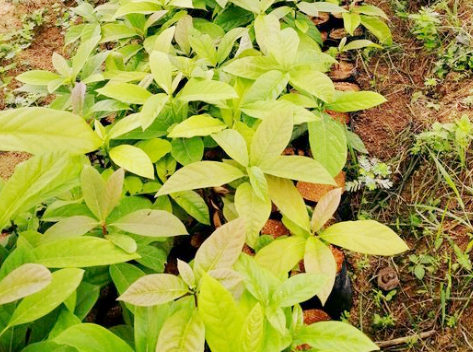
When the seedlings grow to about 40 cm, they can be transplanted. Before planting, holes need to be dug according to a spacing of 4-5 m between rows and about 3-4 m between plants, and sufficient base fertilizer should be scattered in. When transplanting, be sure to transplant as much of the soil from the seedbed together with the avocado roots as possible, so that it can adapt more quickly to the environment after transplanting. After transplanting, it needs to be watered immediately, which can improve its survival rate.
III. Light
Avocado is a tropical fruit, so its requirements for light and temperature are relatively high. Therefore, it cannot be planted in many places in China, because the seasonal and temperature changes in most areas of China are relatively large. During its growth process, we must ensure that it has at least 8 hours of sunlight per day, otherwise it will be difficult for it to survive, let alone bear fruit.
IV. Management
The growth period of avocado is relatively long, and it usually does not bear fruit until the 5th year. Management work during its growth period is very important, including fertilization, watering, loosening the soil, and pruning. The avocado tree has a relatively large nutrient requirement for growth. During the young tree stage, potassium fertilizer and phosphorus fertilizer are usually the main fertilizers, with an appropriate amount of nitrogen fertilizer. This is because avocado trees are particularly sensitive to nitrogen fertilizer, especially because it causes great damage to their roots, so the amount of nitrogen fertilizer used is generally relatively small. Then, as the tree age increases, the amount of fertilizer used gradually increases. Avocado growth requires sufficient water, so watering should be carried out frequently, keeping the soil moisture at around 60% as much as possible. It is best to combine watering, fertilization, and soil loosening each time, as this is beneficial to plant growth. Finally, when necessary, properly prune the avocado tree to ensure the light it needs.
V. Pollination
Avocado pollination is the key to avocado yield. It requires two plants to pollinate each other. When planting, they are usually planted in a V shape, so that when the wind blows, the success rate of pollination is much higher. Secondly, artificial assisted pollination can also be used. Generally, pollen is collected on sunny days, and after artificial treatment, it is sprayed manually in the morning. In this way, the probability of pollination is also relatively high.
Summary: The above is the relevant introduction to avocado cultivation methods. Growers can refer to the above cultivation methods when planting. I hope it is helpful to friends in need!
Is butter fruit avocado? Introduction to the main production areas of avocado
Avocado is a fruit that everyone loves very much. It is rich in nutritional value and has long been known by the laudatory name of “forest cream”, and is deeply loved by consumers. So, everyone has heard of avocado, but have you also heard of butter fruit? Is butter fruit avocado? In fact, butter fruit and avocado are the same fruit. Avocado is also called oil pear, alligator pear, butter fruit, cream fruit, etc. The main production areas of avocado are introduced as follows.
Image: Avocado
Introduction to the main production areas of avocado
Avocado originated in Mexico and Central America, and was later widely planted in California, so California became the world's largest avocado production area. It is planted in tropical and subtropical regions around the world, but it is cultivated most in the southern United States, Guatemala, Mexico, and Cuba, and has formed three major groups: the Mexican race, the Guatemalan race, and the West Indian race. In China, Guangdong, Hainan, Fujian, Guangxi, Taiwan, Yunnan, Sichuan, and other places all have a small amount of cultivation.
Image: Butter fruit
[Editor's concluding remarks]Avocado is a fruit with very high nutritional value. It can be eaten fresh, and can also be made into dishes and canned food. It has very high value. The above has introduced the main production areas of avocado for everyone. I hope it can help everyone!
Avocado, avocado pictures, avocado cultivation methods
1 Morphological characteristicsThe avocado tree is about 10 m tall, with a broad crown. Leaves are alternate, leathery, elliptical or ovate, 7.5-40 cm long. Panicles are terminal, and flowers are pale green. The drupe is pear-shaped or ovate, 10-18 cm long, yellow-green or brownish-red, and the flesh is soft.
In southern China, it blooms in March, and the fruit matures from August to September. Generally, it bears fruit after 3-4 years of planting. Avocado is a fleshy drupe. When mature, the peel ranges from yellow-green, reddish-brown to brown. The fruit is 5-20 cm long and 3-14 cm in diameter. After ripening, the peel becomes yellow-green, milky yellow, brown, or dark green; the flesh is slightly soft, and the flesh color is milky white, pale yellow, or milky yellow, with an extremely fine texture; the flesh has an egg-yolk flavor and is slightly sweet. A single fruit weighs 150-1500 g; the seed is large, 1 in number, round or oblong-elliptical, generally accounting for 10%-30% of the fruit weight; the flesh is relatively thin, but the edible rate still reaches 70%-80%.
2 Ecological habits
Due to different varieties, avocado has great differences in adaptability to temperature. The Mexican race has relatively strong cold resistance, while the Guatemalan race and West Indian race have weaker cold resistance. Most of those introduced to China are of the Mexican race, which originated in the tropical highlands.
Avocado requires annual rainfall of more than 1000 mm. Its roots are shallow, and its branches are fragile. It cannot tolerate strong winds, and strong winds can lead to reduced yield. It has relatively strong adaptability to soil.
It is mostly propagated by seeds, and can also be propagated by bud grafting and layering. When sowing, the seed coat should be removed and the seeds should be germinated in a sand bed. Choose a place with deep soil layers, good drainage, and shelter from wind for planting. A plant spacing of 5 m x (6-7) m is more suitable. Mixed planting of varieties can ensure pollination.
3 Cultivation techniques
Mulching
Avocado is a fruit tree that grows under tropical rainforest conditions and in competition for sunlight. A high-temperature and high-humidity environment makes it grow quickly; if environmental conditions are not available, it grows slowly. Therefore, avocado cultivation abroad mostly emphasizes growing grass or green manure near the plants in the early stage, and applying large amounts of mulch near the rhizosphere. Through mulching, the organic matter of the topsoil is increased, forming a rainforest rhizosphere environment similar to that of its place of origin, stabilizing rhizosphere ecological conditions, and promoting the reproduction of microorganisms that can inhibit root rot activity. Therefore, from the young tree stage until the tree itself can form a mulch layer through fallen leaves and before root rot occurs, carrying out mulching around the tree disk for young trees is particularly important. Start mulching in winter, replenish the thickness in spring, and by summer a very good mulch layer can be formed. Rhizosphere mulching can also reduce soil moisture evaporation, alleviate the damage of dry heat to avocado, lower soil temperature in summer, raise soil temperature in winter, increase soil organic matter, reduce weeds, and prevent soil erosion on sloping land. However, during the rainy season, prevent the mulched soil from becoming too wet.
Fertilization
The young tree stage from 1-4 years after avocado planting is the period for laying the foundation for high-yield and high-quality avocado cultivation. Fertilization should be reasonable to promote rapid growth of young trees. The sign of fertilizer deficiency in avocado trees is severe leaf drop and branch dieback. Reasonable fertilization for young and fruiting avocado trees should determine the type and amount of fertilizer according to soil fertility, tree age, plant growth, or growth and fruiting conditions. Generally, complete fertilizers such as nitrogen, phosphorus, and potassium should be applied in a balanced way. It is best to guide fertilization through nutritional analysis of soil and leaves. In the red soil hills of South China, organic matter is lacking, and available potassium and available phosphorus are deficient, so more attention should be paid to the application of potassium and phosphorus fertilizers.
The root system of young oil pear trees is easily damaged by nitrogen fertilizer, and applying too much nitrogen fertilizer easily causes excessive vegetative growth of branches and leaves and delays fruiting, so attention should be paid to nitrogen fertilizer application. Abroad, 110-450 g of pure nitrogen is applied per tree per year, increasing year by year with tree age, with half of it using organic fertilizer as the nitrogen source. In the first year after planting, it should be applied in small amounts and frequently. In areas with frost, nitrogen fertilizer should be stopped in autumn and winter, and more phosphorus and potassium fertilizers should be applied to avoid cold damage from winter shoots. Superphosphate is applied at 900 g per tree per year. Potassium sulfate is applied at 1.8-2.2 kg per tree per year.
Drainage and irrigation
Avocado is evergreen year-round and needs to keep the rhizosphere soil moist throughout the year. It is very sensitive to soil drought. Once there is a water shortage, physiological functions are hindered, tree vigor weakens, causing leaf drop and fruit drop, and cold resistance in winter decreases. Therefore, appropriate irrigation is needed during drought. From fruit set to fruit maturity, maintaining soil moisture is crucial. If drought occurs in the first month after fruit set, young fruits drop severely. In Hainan Island, the dry and hot weather in April-May causes severe fruit drop in oil pear. Therefore, if there are 10-20 consecutive sunny days and the orchard soil begins to crack slightly, irrigation should be carried out in time; if rainfall is lower than transpiration and evaporation for a long time, supplementary irrigation should also be provided. However, irrigation should be just right, both sufficient and absolutely not excessive. Generally, moistening the soil thoroughly is appropriate. If too wet, it will aggravate root rot and also reduce the content of soluble solids in the fruit. It is best to use sprinkler irrigation or drip irrigation. Flood irrigation may cause root rot. Drip irrigation can save 50%-60% of water. If drought causes leaves to begin curling, canopy spraying can also be carried out. In the rainy season, attention should be paid to drainage, especially in flatland orchards.
4 Propagation methods
Propagate by seeds and grafting.
It is best to use container seedling raising. Grafting can be done when the seedling diameter is 0.8-1 cm thick, mostly by bud grafting or side grafting. Seedlings can be planted when 50-60 cm tall, with a planting spacing of 5-6 m. Grafted seedlings flower and bear fruit after 3-4 years of planting, or seedling trees after 4-6 years. Adult trees yield 25-50 kg per tree, and high-yielding ones yield 100-150 kg.
5 Disease control
Oil pear root rot (phytophthora cinnamomi rands) is the most important destructive disease. The main pests include leaf miners, scarab beetles, aphids, etc.
6 Variety classification
Avocado (Butyrospermum parkii), also called butter fruit, alligator pear, or oil pear, has a very large seed. Its flesh is yellow-green and tastes like butter, so it is called "butter of the forest." It originated in Mexico and Central America, and was later widely planted in California, so California became the world's largest avocado production area.
The cultivation history of avocado is not long, but it has already been widely planted in the tropics and subtropics, with the most cultivation in the United States, Guatemala, Mexico, and Cuba. World avocado varieties are usually divided into three major groups: the Mexican race (M), the Guatemalan race (G), and the West Indian race (W).
Varieties
Hass, G race, selected and bred in California, United States, can be stored on the tree for as long as 2-3 months;
Lula, G x M race, selected and bred in Florida, United States, high-yielding, large fruit, oil content 12%-16%, one of the best varieties;
Pollock, W race, selected and bred in Florida, United States, extra-large fruit, 400-680 g; early-maturing, good taste;
Bonn 7, G x M race, oil content 10%-14%, fragrant, smooth, and refreshing, good flavor.
China introduced it in 1918, mainly the Mexican race, with only a small amount of cultivation in Guangdong, Fujian, Taiwan, and Yunnan. China has introduced more than 70 commercial varieties, mainly including Hass, Lula, Pollock, Bonn 7, and Bonn 8, etc.
7 Distribution areas
Main production areas: United States, Chile, New Zealand.
China began introducing and cultivating avocado in the 1920s. Hainan, Taiwan, Guangdong, Guangxi, Fujian, Zhejiang, Jiangxi, Yunnan, Sichuan, and other provinces (autonomous regions) all have cultivation and distribution. Guangxi has built an important national avocado production base.
It is mostly propagated by seeds, but can also be propagated by bud grafting or layering.
8 Dietary or medicinal value
Edible value
Because avocado is rich in nutrients and suitable for consumption, countries and regions such as the United States, Japan, and Europe regard it as a rare fruit.
Nutritional components
Avocado flesh is rich in nutrients. Every 100 grams of flesh contains 23.49 grams of fat, 5.6 grams of sugar, 1.25 grams of protein, 1.8 grams of fiber, 0.7 grams of ash, and 8 mg of vitamin C. It is a high-calorie fruit, and its nutritional value is comparable to cream. It is also rich in various vitamins, minerals, healthy fats, and phytochemicals. The kernel contains 8%-29% oil. The oil is a non-drying oil, non-irritating, low in acidity, and can be preserved for a long time after emulsification.
Unsaturated fatty acids
Avocado contains fat, but it is all beneficial monounsaturated fat, which can reduce low-density lipoprotein cholesterol and lower the risk of heart disease. Among them, oleic acid is a monounsaturated fat contained in butter fruit, which can replace saturated fat in the diet and lower cholesterol levels.
Fiber
Avocado has a very high fiber content (the dietary fiber provided by one avocado is 34% of the daily intake), because soluble fiber can remove excess cholesterol from the body, while insoluble fiber helps maintain the normal function of the digestive system and prevents constipation.
Folate
Avocado is a good source of folate (one avocado provides 57 micrograms of folate, which is 28% of the daily intake). This important vitamin can prevent congenital neural tube defects in fetuses and reduce the probability of adults developing cancer and heart disease.
Magnesium
Magnesium, this mineral, helps relieve premenstrual syndrome, migraines, anxiety, and other discomforts.
9 Effects and uses
Economic value
Avocado trees bear fruit after 3-4 years of planting, and the yield becomes relatively stable from the 6th year. The investment capital is relatively small. Avocado trees have very high yields, averaging 60-70 kg per tree, and some trees reach a yield of 200 kg, with high economic value.
Health benefits
Avocado flesh has an extremely low sugar content, 1/5 of the sugar content of bananas. It is a rare high-fat, low-sugar food for diabetic patients. Soaking the peel in water and drinking it can also relieve diabetes.
Beauty benefits
Avocado flesh has good compatibility with human skin and is easily absorbed by the skin. It also has strong absorption of ultraviolet rays. In addition, it is rich in vitamin E and carotene, so it has good skin care, sunscreen, and health care effects. Countries such as the United States and Japan have widely used it in more than 240 kinds of cosmetics, including skin creams, facial cleansers, masks, shampoos, and sunscreens.
Avocado is rich in glyoxylic acid, protein, and vitamins. It is moisturizing but not greasy, and is a natural antioxidant. It can not only soften and moisturize the skin, but also shrink enlarged pores.
Storage techniques
Imported oil pear can extend the fruit supply period and obtain relatively high benefits by regulating market demand through on-tree storage and low-temperature storage after harvest.
On-tree storage
After the oil pear fruit reaches physiological maturity, it can be kept on the tree for a period before harvesting, that is, delayed harvesting. In California, United States, after the fruits of the Hass variety and the Fuerte variety mature, they can be kept on the tree for half a year or more than half a year; in Florida, after the fruits of various varieties mature, they can also be kept on the tree for 3 weeks to 3 months. Generally, the fruits of West Indian race varieties can be kept on the tree for a shorter time after ripening. Oil pear fruit will never soften and ripen on the tree, because the respiratory peak only appears after the fruit is harvested. Of course, the length of time the fruit is kept on the tree also depends on local climate conditions and whether management is convenient. Storing fruit on the tree is the most convenient. [2]
Postharvest storage
After oil pear fruit is picked, various life activities are still going on, among which the most obvious is respiration. The key to successful storage is to reduce respiration to the lowest level, thereby delaying fruit aging and physiological deterioration.
The most widely used method is low-temperature storage, which can reduce the respiration intensity of oil pear to about 1/3 of the original and inhibit the growth of pathogens, thereby reducing nutrient consumption and rot loss. However, the response of oil pear to low temperature varies by variety. Some varieties can be stored at 6°C for a relatively long time, while other varieties develop chilling injury at 13°C, soften unevenly, and have an off odor.
The recommended storage temperatures are: West Indian race varieties 12.8°C, Guatemalan race varieties 8°C, Mexican race varieties 4°C. The recommended relative humidity for storage time is 80%-90%. In Australia, the Hass variety is stored at 5°C, and other varieties at 7°C, and can be stored for 4 weeks. After being taken out of cold storage, the fruit begins to soften in 1-3 days. Fruit that has begun to soften can be stored at 2°C for 5 days.
In addition, controlled atmosphere storage can be used. The ripening process of oil pear fruit is initially caused by endogenous ethylene. 0.000 01%-0.0001% ethylene will cause a respiratory peak. After the respiratory peak, the fruit softens in 1-3 days and reaches edible maturity. If ethylene is continuously removed, the storage time can be doubled. In addition, reducing the oxygen concentration and increasing the carbon dioxide concentration in the storage environment can also extend the storage time. At 7.2°C, with an oxygen concentration of 2% and a carbon dioxide concentration of 10%, the storage life can be doubled, and the storage time can be as long as 6-8 weeks.