Introduction to sugarcane cultivation techniques: which varieties are good to plant in 2019?
Sugarcane is a plant of the genus Saccharum in the grass family. The stem is cylindrical, with nodes, and the internodes are solid. The color can be purple, red, or yellow-green, among others. It can be eaten fresh and tastes sweet, and many people like to eat it. So, how is sugarcane grown? Here we introduce sugarcane cultivation techniques.
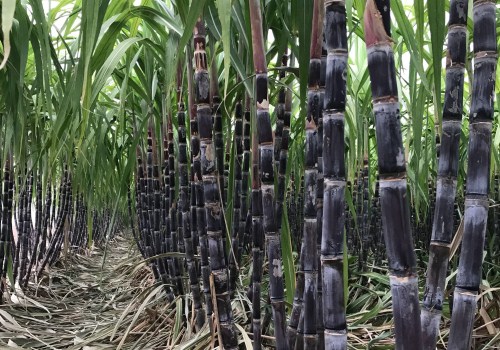
I. Introduction to sugarcane!
1. Is sugarcane a fruit?
Fruit refers to the fruit of a plant, while sugarcane is the stem of a plant. From a botanical perspective, sugarcane is not a fruit; but fruit also refers to juicy foods whose main tastes are sweetness and sourness. Although sugarcane is not a fruit, it is also a juicy sweet food, so it counts as a special fruit.
2. Does eating sugarcane cause internal heat?
Eating sugarcane will not cause internal heat, because it is a cooling fruit and has a heat-clearing and detoxifying effect after consumption. In addition, it also has effects such as promoting body fluid and quenching thirst, harmonizing the stomach and stopping vomiting, and nourishing yin and moistening dryness. Most people can eat it, but those with deficiency-cold of the spleen and stomach or cold pain in the stomach and abdomen should not eat it.
II. Introduction to sugarcane cultivation techniques!
1. Land preparation
The plot for planting sugarcane should have deep, loose, and fertile soil conditions. After selecting the plot, plow deeply about 30 cm, then broadcast base fertilizer; then open planting furrows about 20 cm deep and 20-25 cm wide, with a furrow center distance of 100 cm, and the furrow bottom should be flat.
2. Seed selection
Choose newly planted sugarcane that grew well in the field and has no pest or disease damage as seed. If there is not enough seed cane, ratoon sugarcane can also be kept as seed; in order to improve the germination rate, speed up germination, and reduce pests and diseases, the seed cane needs to be treated by sun-drying, soaking and disinfection, and germination promotion.
3. Planting
Generally, planting can begin when the temperature within 10 cm of the topsoil is stable above 10°C. The density should be reasonable. If planting is too sparse, the number of effective stalks will be small and the yield will not be high; if too dense, the plants will be weak and the stalks thin, dead stalks will increase, sucrose content will be low, and sugar yield per mu will also not be high. When the temperature is high and water and fertilizer conditions are good, the planting rate can be somewhat lower; otherwise, somewhat higher. Varieties with thin, upright stalks can be planted more densely; otherwise, more sparsely.
4. Replanting, thinning, and final spacing
When germination has basically ended and sugarcane seedlings have grown 3-5 true leaves, check whether any seedlings are missing and replant missing ones promptly; in addition to checking for missing seedlings, thinning should also be carried out, removing excessive tillers to reduce nutrient consumption; determine the number of effective stalks per mu and keep an appropriate number of seedlings per mu.
5. Weeding, intertillage, and earthing up
Before sugarcane rows close, weeds tend to grow, consume nutrients, and shade the sugarcane seedlings, so weeding should be done promptly, generally combined with intertillage and earthing up; when seedlings have 6-7 true leaves and tillering appears, earth up to a height of about 3 cm; at the peak tillering stage, when sugarcane plants begin to close rows, earth up to a height of about 6 cm; at the early elongation stage, earth up to a height of 20-30 cm.
6. Fertilization
Sugarcane has a high fertilizer demand, so base fertilizer should be applied heavily and topdressing should be applied in stages at the right times. The application principles for topdressing can be summarized as “three attacks and one supplement, light at both ends, heavy in the middle.” The “three attacks” are fertilizer for seedlings, fertilizer for tillering, and fertilizer for stalk growth; the “one supplement” is supplemental tail-strengthening fertilizer applied later; “light at both ends” means the amount of fertilizer applied at the seedling stage and late elongation stage should be small; “heavy in the middle” means the amount of fertilizer applied at the early elongation stage should be large.
7. Watering
Sugarcane has a high water requirement throughout its life but is not tolerant of waterlogging. The overall water demand trend is “less at both ends, more in the middle.” The germination stage, tillering stage, and maturity stage require little water, while the elongation stage requires a lot. The sugarcane field should respectively maintain a “moist--wet--moist” state, and water must not accumulate, otherwise root rot will be caused.
8. Leaf stripping
As the sugarcane stalk elongates, the basal leaves gradually turn yellow and wither. The withered yellow lower leaves should be removed, especially in hot and humid sugarcane areas where leaf stripping must be carried out; in arid areas, it is not suitable to remove the lower leaves, so as to help retain water and prevent drought; if it is a seed field, it is not suitable to remove the lower leaves, to ensure that the sugarcane buds are not damaged.
9. Pests and diseases
Sugarcane diseases include pineapple disease, red rot, smut, white leaf disease, mosaic disease, leaf blight, and others. Once infected, there is no medicine that can cure it, and the whole plant can only be pulled out and burned. Therefore, prevention should be strengthened, or disease-resistant varieties should be bred. Pests include borers, cotton aphids, mealybugs, sugarcane beetles, thrips, and others, which can be controlled with pesticides.
III. What sugarcane varieties are good to plant in 2019?
Sugarcane can be divided by use into chewing cane and sugar cane:
1. Chewing cane: specially for fresh eating, with many varieties, such as Guangdong's Tanzhou large cane and Haifeng wax cane, Fujian's Fuzhou white eyebrow cane and Tong'an chewing cane, Zhejiang's Hangzhou green skin cane and Rui'an Taoshan cane, Sichuan's crisp skin foreign cane, Dahongpao crisp skin cane, and white wax cane, Guangxi's red skin chewing cane, and others.
2. Sugar cane: used for making sugar, with many varieties, such as Guitang No. 1, Guitang No. 2, Guitang No. 3, Guitang No. 7, Guitang No. 10, Guitang No. 11, Taitang No. 20, Taitang No. 22, Taitang No. 24, Taitang No. 26, and others.
The above is an introduction to sugarcane cultivation techniques and varieties to plant in 2019, and we hope it is useful to everyone.
When is sugarcane planted? Sugarcane planting time and planting methods
Sugarcane planting time
Under normal conditions, sugarcane is suitable for planting between late February and early April.
Small knowledge about sugarcane planting
Land selection and preparation: choose a field with deep soil, fertile soil, loose texture, good drainage and irrigation, convenient transportation, and sufficient sunlight, preferably sandy loam, and require rotation once every 2-3 years. For land preparation and soil-bedding in continuous cropping fields, after the previous crop is harvested, the residues should be burned promptly, and at the same time the field should be flooded for more than a week to eliminate pests in the residues and soil. After the water dries, plow again, with a depth requirement of more than 30 cm.
Planting management: the planting time for sugarcane should be controlled from September of the current year to February of the following year. If too early, there is no seed cane; if too late, yield and quality are affected. Before planting, the base fertilizer should be applied into the bottom of the furrow while loosening the furrow bottom, and planting should be carried out after the base fertilizer is applied. Before planting, spray new high-lipid film on the stem segments to greatly increase the germination rate. Planting density is generally controlled at about 20 buds per meter, ensuring no fewer than 4,500 effective stalks per mu.
Intertillage management: after emergence, carry out together with the first weeding, applying 15 kg of urea per mu. Fertilization during the growing period should be carried out together with each earthing up, and foliar fertilizer and balanced fertilizer should be applied at the right times. Sugarcane has a high water requirement, so timely irrigation should be noted, but large-flow irrigation should be avoided. Light irrigation is advocated, keeping the soil alternately dry and moist, mainly moist, and spraying new high-lipid film at the right times to preserve fertilizer and soil moisture. Stripping bract leaves: after sugarcane plants elongate, begin stripping leaves, 3—4 leaves each time. Stripping too many leaves affects plant growth, and stripping too late affects powdering. Spraying strong-stalk spirit can make plant stalks thick and strong and greatly increase yield.
Where is sugarcane produced_Detailed explanation of sugarcane cultivation techniques in the south
Content summary: sugarcane, recorded in "Grass Family," is a common plant, edible, mainly used for sugar production. According to the color of the sugarcane outer skin, it can be divided into purple and green types. It is understood that so far more than a hundred countries can produce sugarcane, showing the degree of market demand. This article mainly brings you the producing areas of sugarcane and its cultivation techniques.
[Where is sugarcane produced]
Sugarcane is a light-loving plant, so the planting areas have strict requirements for climate and precipitation, requiring an annual accumulated temperature of about 5500-8500°C, an average annual precipitation of about 800-**** mm, and annual sunshine hours of more than 1195 hours.
Foreign producing areas distribution: sugarcane is mainly needed for sugar production and fruit consumption. Abroad, it is mostly distributed in tropical and subtropical regions. The largest sugarcane producing area abroad is Brazil, the second is India, and then Cuba, Mexico, the United States, Thailand, Australia, and other regions are also major sugarcane producing areas.
Domestic producing areas distribution: China is called the world's third-largest sugarcane planting country, so in most parts of the country, sugarcane is a common plant. The main domestic sugarcane producing areas are mostly concentrated in subtropical regions, such as Guangdong, Fujian, Guizhou, Zhejiang, and others. In addition, it is also planted in Sichuan, Yunnan, Hunan, Hainan, and other areas in southern China, while Henan, Shandong, and other provinces are scattered sugarcane planting areas.
[Detailed explanation of sugarcane cultivation techniques in the south]
Sugarcane is a light-loving plant, while southern China is a warm-hot region. Its climate adaptability is not strong, but considering the mild temperatures in the south, open-field planting is recommended.
①Land preparation
For the selection of sugarcane land, deep plowing should be carried out, and large machinery is recommended for plowing the field, because sugarcane itself is a deep-rooted plant and the field must be deep-plowed. There are no special requirements for soil selection; just clear weeds and stones from the field.
②Opening planting furrows
First type: for the preparation of conventional sugarcane furrows, only a spacing of 20 cm needs to be retained, the furrow bottom is parallel, and the width is about 25 cm.
Second type: the second kind of sugarcane furrow can be called a central-channel furrow. Following the land preparation method for sweet potato, the furrow depth is about 40 cm and the bottom width is 25 cm, then use soil-turning and compaction.
③Fertilization
Fertilizer requirement: sugarcane has a high fertilizer demand. According to experts, for each ton of finished sugarcane, about 100 kg of fertilizer is required for cultivation.
Fertilization principle: topdressing is not recommended for sugarcane fertilization, so sufficient fertilizer should be applied at one time. Sufficient base fertilizer should be applied after land preparation, which can avoid uneven sugarcane growth.
Fertilizer selection: the nutrients sugarcane needs include nitrogen fertilizer, potassium fertilizer, organic fertilizer, and others.
④Planting
For sugarcane seed, sugarcane stalks can be selected as the main material. When harvesting sugarcane, collect stalks that have not flowered, about 30 cm in length. It is generally recommended to cut starting from the position below the sugarcane bud, and it is recommended to use a sharp knife and not damage the seed cane.
Peel off the slightly older outer leaf sheaths and place them under the hot sun to dry for about two days; then soak them in clean water, or add an appropriate amount of lime powder to the clean water, soak for two days, then take them out and peel off the leaves;
When planting, the spacing between each plant is about 10 cm. In areas with relatively high temperatures and good water and fertilizer conditions, it is recommended to appropriately increase the spacing. Conversely, for sugarcane varieties that are more slender and not easy to grow, the planting spacing is recommended to be somewhat denser.
⑤Field management
Watering: sugarcane only needs watering in the hot summer season, once a week. In the normal rainy season, no watering is needed. On the contrary, when there is standing water in the field, it needs to be drained promptly.
Leaf stripping: after sugarcane enters the growth period, as the nodes elongate, manual leaf stripping is needed. The principle of leaf stripping is mainly to remove withered yellow leaves.
Earthing up: sugarcane grows very quickly. In order to prevent sugarcane from falling over, about three manual earthings up are needed throughout the entire growth period.
Thinning: about one month after sugarcane planting, thinning and replanting can be carried out, so that overly dense sugarcane seedlings can be loosened.
Hoeing: sugarcane has a relatively high nutrient demand, so once weeds appear, they should be cleared promptly. Manual hoeing is generally recommended; secondly, herbicides such as “Simazine” and “Atrazine” can also be chosen, avoiding contact with the sugarcane roots.