A Detailed Guide to the Income per Mu from Oil Peony Cultivation and High-Yield Cultivation Techniques
Since the Tang Dynasty, the peony has been regarded as the national flower, and it can be used medicinally, ornamentally, or as food. Among them, the oil peony is widely planted as an oilseed crop. So what is the income from planting one mu of oil peonies? What are the high-yield cultivation techniques?
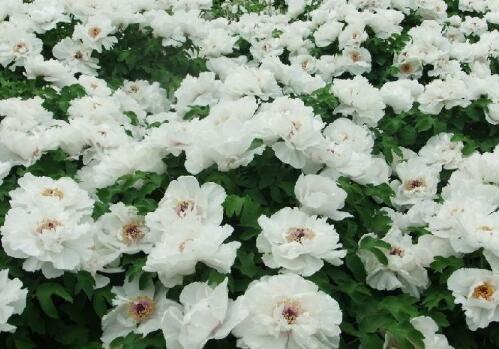
I. Basic facts about the oil peony
1. Distribution of the oil peony
Oil peony refers to the oilseed peony. It is mainly distributed in the northwest region, such as Taibai Mountain in Shaanxi, Wanhua Mountain in Yan'an, and Lanzhou in Gansu. In addition, there is also considerable oil peony cultivation in Heze, Shandong and Luoyang, Henan.
2. Value of the oil peony
The oil peony is mainly pressed for oil for consumption. Peony oil is a golden-yellow transparent oily liquid produced from peony seeds through pressing, refining, and other processes. Regular consumption of peony oil also has effects such as sun protection, radiation protection, promoting liver cell regeneration, and hair care; it can improve dry, split ends and make hair smooth and shiny. In everyday use, it can be used in cold salads, cold dishes, or added to porridge, soup, and so on.
3. Price of peony oil
The price of peony oil is much higher than that of ordinary cooking oil. At present, the price of pure peony oil on the market is 600-800 yuan/jin. However, the prices of peony oil from different manufacturers, packaging, places of origin, quality, and specifications on the market are all different, so consumers should base purchases on local market prices.
II. What is the income from planting one mu of oil peonies?
The price of peony seedlings is 0.3 yuan/plant, with 3000 plants planted per mu; the seedling cost is 900 yuan. Adding chemical fertilizers, pesticides, and other inputs of about 1000 yuan, the total is 1900 yuan. Each mu produces 350 kg of seeds, at 20 yuan per kg, for an income of 7000 yuan. After subtracting the investment cost, the income per mu is 5100 yuan.
The above prices and income calculations are for reference only.
III. What are the high-yield cultivation techniques for oil peonies?
To obtain high profits from planting oil peonies, high yield is the top priority, and to achieve high yield, you can refer to the cultivation techniques introduced below:
1. Selection of the planting environment for oil peonies
The oil peony is a plant with fleshy roots, so you should choose sandy soil land that is high and dry, easy to drain, and sunny. Avoid heavy clay, saline-alkali, and low-lying plots. The soil pH should be 6.5-7.5, and there must be certain irrigation and drainage conditions. Before planting, plow the soil, apply farmyard manure and compound fertilizer, and at the same time apply an appropriate amount of insecticide and fungicide to the planting plot.
2. Planting techniques for oil peonies
For planting, generally choose 2-3 year old seedlings. Before planting, soak them in a thiram solution for 15-20 minutes, and after they dry, they can be planted. The best planting time for oil peonies is autumn (early September to early October). The planting density is preferably 40×50/20×50/20×25 cm; the specific planting density should be determined according to actual conditions.
3. Management techniques for oil peonies
During the growth of oil peonies, pay attention to field weeding. Before flowering, deep hoeing should also be carried out and a certain amount of nitrogen fertilizer applied; after flowering, hoe shallowly. During relatively dry periods, water appropriately.
4. Pest and disease control for oil peonies
The main pests and diseases of oil peonies include leaf spot (June-July), root rot, damping-off, wireworms, mole crickets, cutworms, and so on. Everyone should use different pesticides according to different conditions. Of course, doing a good job of prevention in advance is best.
In addition, the seed maturity time of oil peonies varies by region, so growers should harvest at the appropriate time according to actual conditions and place the seeds indoors in a cool, ventilated place.
High-Yield Cultivation Techniques for Medicinal Peonies
Peony (Latin scientific name: Paeonia suffruticosa Andr.) is a plant in the family Paeoniaceae and genus Paeonia, and is a perennial deciduous small shrub. Its flowers are brilliantly colored, jade-like and pearl-fragrant, elegant and unrestrained, magnificent and splendid, and it has long had the reputation of the “king of flowers.” Among cultivated types, it can be divided into hundreds of varieties mainly according to flower color. ” There are many peony varieties and also many colors. Yellow, green, flesh-red, deep red, and silver red are considered superior, with yellow and green especially prized. Peony flowers are large and fragrant, hence they are also known as “national beauty and heavenly fragrance.”
Liu Yuxi of the Tang Dynasty wrote in a poem: “In the courtyard, the herbaceous peony is bewitching but lacks rank; on the pond, the lotus is pure but short on feeling. Only the peony is truly of national beauty; when it blooms, the whole capital is stirred.” In the late Qing Dynasty, the peony was once regarded as China's national flower. In May 1985, the peony was rated second among China's top ten famous flowers. It is a rare woody ornamental flower unique to China, with thousands of years of natural growth and more than 1500 years of artificial cultivation history. It is widely cultivated in China and was long ago introduced around the world. The peony flower is hailed as the king of flowers, and the related culture and painting works are very rich.
Peony is a deciduous small shrub in the family Ranunculaceae, and is a commonly used traditional Chinese medicine, with the root bark used medicinally. Peony has strong adaptability, high yield, and good quality, and each mu can harvest 500 kg of dried peony bark. Its key cultivation techniques are as follows.I. Land selection and land preparation
Choose a place with sufficient sunlight and good drainage for planting; both flat land and sloping land are acceptable. The soil layer should be deep, fertile, and loose. Sandy loam soil is best; avoid saline. Alkali land and dead clay soil. The previous crop is best as sesame, corn, and the like. The soil should be deeply plowed 60 cm, land preparation must be meticulous, and drainage must be unobstructed.
II. Seed propagation
From sowing to harvesting the medicinal material, peony takes 5 years. In the first year, grow seedlings from seed in autumn; transplant in the second year in autumn; harvest in the fifth year in autumn.
1. Seed selection and treatment. To collect seeds, choose plants that are more than 4 years old, growing vigorously, growing in a sunny place, and free of pests and diseases. In July, when the seeds are mature but the seed pods have not split open, pick them early, spread them on the floor indoors at a thickness of about 10 cm, and turn them once every few days. By August, when the seed pods split open, sweep them up, discard the pod shells, and store the seeds in cloth bags. Before sowing, remove shriveled seeds and those with poor color, choose fresh seeds that are large, plump, and glossy, and soak them in 50°C warm water for a day and a night so that the seed coat softens and the gum is removed and the seeds absorb water and swell, making germination easier.
2. Sowing. For peony, use fresh seeds for sowing; do not dry the seeds in the sun, otherwise they will not easily emerge after sowing. The sowing time is mid-August to early September. Use drill sowing, with a row spacing of 20 cm, a furrow depth of 5 cm, and a seed spacing of 3 cm. After sowing the seeds, cover with soil and level it, then press lightly.
3. Seedling stage management. After sowing, to prevent winter drought and frost damage, cover the seedbed surface with grass. From February to March of the following year, before the seedlings emerge, remove the covering grass in time. If the soil moisture is insufficient or the winter is severely dry, water once. During the seedling stage, loosen the soil, weed, and water frequently. To make the seedlings grow quickly and robustly, topdress once in early April and once in early June.
4. Transplanting and field planting. After one year of seedling cultivation, the seedlings are about 15 cm tall, and are transplanted in autumn after leaf fall (September-October). The transplanting site needs sufficient base fertilizer. Dig holes at a row spacing of 50 cm × 40 cm and a depth of 30 cm, and plant 1 large seedling per hole. When filling with soil, keep the roots straight, with the root crown slightly 1-2 cm below the ground surface, and firm the soil by treading. If the soil moisture is insufficient, irrigate thoroughly to settle the roots.
III. Medicinal field management
1. Loosening soil and weeding. During the growing period, loosen the soil and weed 10 times each year to keep the field free of weeds and the soil loose.
2. Fertilization. In early winter or early spring, dig holes around the plants and apply a mixture of 1 kg of farmyard manure and 50 g of chemical fertilizer per plant. Apply topdressing 1-2 more times before and after flowering. Be careful to avoid splashing fertilizer or mud onto the stems and leaves.
3. Watering and drainage. Combine watering with each fertilization. Water once when buds sprout in spring, water again during summer drought, and water once more before winter begins. Drain promptly in case of waterlogging.
4. Bud removal and pruning. Except when keeping seeds and selling flowers, remove the flower buds as soon as they appear in spring to reduce nutrient consumption. Bud removal should be done on a sunny morning. From October to November, cut off dead branches and leggy branches, clear away fallen leaves, and burn them in a centralized manner.
IV. Pest and disease control
1. Leaf spot disease. It is a fungal disease. The lesions on the leaves are round, 2-3 mm in diameter, yellow-brown in the center, purplish-red at the edges, with small black dots on them. Control: ① Remove diseased branches and fallen leaves; ② Before and in the early stage of the disease, spray 1:1:100 Bordeaux mixture. Once every 10 days, for several times in succession.
2. White grubs and mole crickets. They bite and feed on young roots and root bark, causing missing plants or poor growth. Control methods: ① Manually capture and kill them near the damaged plants; ② From early April to mid-May, during the peak damage period, drench with 90% trichlorfon 800-1000 times dilution; ③ Must use fully decomposed organic fertilizer as base fertilizer.
V. Harvesting and processing
1. Harvesting. Harvest in September-October of the 4th-5th year after transplanting. Digging should be done on sunny days, and all roots should be dug out. In combination with propagation by division, cut off the large roots and medium-sized roots at the base and transport them back for timely processing.
2. Processing. For the dug-up peony roots, first pinch off the fibrous roots and dry them in the sun to obtain peony fibrous root. Wash the thick roots, gently scrape off the coarse bark with a porcelain shard, and dry them in the sun until soft. Then use a blade to cut a straight slit along the root, peel open the root bark, remove the woody core, then pinch the bark tightly, close the cut slit, cut into 10 cm short sections, and dry by baking or in the sun. Pick out the woody residue cleanly, grade, package, store, and sell.
Oil Peony Planting and Management Techniques
Today I will introduce a new type of crop to everyone--the oil peony. Planting oil peonies can not only achieve ornamental value, but also achieve a double harvest of economic benefits.
The oil peony is an emerging woody oilseed crop with outstanding “three highs and one low” characteristics: high output, high oil content, high quality, and low cost. The oil peony is drought-tolerant and barren-tolerant, suitable for afforestation and greening of barren hills and under-forest planting, planted once and harvested for a hundred years.
The oil peony is a shrub plant. It is distributed in Heze, Shandong Province, China; Luoyang, Henan Province; the Taibai Mountain area of Shaanxi Province; Bozhou City, Anhui Province; Fenghuang Mountain in Tongling City; Gansu Province; and Xiangxi, Hunan, among other places.
Through analysis of pressed peony seed oil, the Chinese Academy of Forestry found that this golden-yellow transparent oily liquid, made from peony seed kernels as raw material through pressing, refining, and other processes, has an unsaturated fatty acid content of up to more than 92%, of which alpha-linolenic acid accounts for 42%, and it is called “the best edible oil in the world.”
It is best to plant oil peonies by considering both economic benefits and tourism and ornamental economic benefits. This is because after oil peonies are planted, there is no income in the first three years, but afterward 30-60 years of continuous income can be achieved without changing crops. Before planting, it is best to carry out reasonable planning and layout of the land.
Below is an introduction to the key points of oil peony planting:
1. Selection of planting site. For oil peony planting, it is advisable to choose dry, sunny, acidic plots, with sandy loam soil being best. The soil is required to be loose, breathable, and well-drained.
2. Variety selection. For oil peonies, the main variety is “Fengdan,” which has the largest seeds, high oil yield, wide adaptability, and strong growth; “Purple Spot Peony” can also be chosen.
3. Land preparation. Deeply plow the soil 40-50 cm, and apply 150-200 kg of cake fertilizer or 1000-1500 kg of decomposed barnyard manure, 80 kg of phosphate fertilizer, and 40-50 kg of compound fertilizer per mu as base fertilizer. Apply 10-15 kg of phoxim granules and 4N5 kg of carbendazim, etc. per mu as soil insecticide and fungicide, and at the same time add a closed-type herbicide.
4. Planting techniques. When planting, insert a shovel 40 cm wide into the ground, open a gap 5-10 cm wide and 25-30 cm deep, place the peony seedling into the gap, make the root crown 2-3 cm below the ground surface, be sure to keep the roots spread out, then tread firmly so that the roots and soil are in close contact.
5. Field management. First, hoeing: during the growing period of oil peonies, hoe frequently, first to eliminate weeds, and second to increase temperature and preserve soil moisture. Second, topdressing: in the first year after planting peonies, generally no topdressing is applied. Starting from the second year, topdress 2 times each year. Third, pest and disease control: in early to mid-February, spray 500 times dilution of carbendazim, covering the entire ground when spraying. In early March, broadcast 10-15 kg of phoxim granules per mu: in early April, 7-10 days before the flowering period, spray 70% thiophanate-methyl 600-800 times dilution; starting in late May, every 15-20 days, spray once with carbendazim or thiophanate-methyl, chlorothalonil, or other fungicides at 600-800 times dilution. Fourth, watering: peony has fleshy roots and is not tolerant of waterlogging, so drainage should be kept unobstructed and water accumulation avoided. Do not water frequently, but still water appropriately during especially dry periods. Fifth, clearing fallen leaves: after the leaves dry up in late October, promptly sweep up the fallen leaves and burn or deeply bury them in a centralized manner to reduce the occurrence of pests and diseases the following year.
Peony seeds are black, hard-coated, bitter, irregularly round, and slightly larger than soybeans. The two peony varieties Fengdan and Purple Spot produce many seeds and grow quickly, and are suitable for medicinal use. In high-yield trials, peony seeds have reached 1980 jin per mu, and at present ordinary Fengdan can generally reach 800 to 1000 jin of flower seeds per mu. The yield of one mu of soybeans is only about 300 jin. Under the same oil extraction rate, the output rate of peony seeds is three times that of soybeans; one mu of peonies equals three mu of soybeans. This does not even count that while peonies produce seeds, they can also simultaneously produce peony bark. If the peony flower stamens are further utilized to produce peony tea and other health foods, the economic benefit of one mu of Fengdan is far higher than that of soybeans and other cash crops, with an output value reaching more than 10,000 yuan. Peony is a woody plant and perennial, and does not need to be sown every year like soybeans. Apart from having no yield in the first three years, the yield will remain very stable for the following 30-60 years. Just how great the benefit of planting oil peonies is can be imagined.