How much is dandelion seed per jin? With planting methods
Dandelion, also known as "popoding" and other names, is a perennial herbaceous plant of the Asteraceae family. Because it is rich in nutrients and has extremely powerful medicinal effects, along with good economic value, many growers also want to cultivate it. So how much is dandelion seed per jin? How do you plant it?
I. How much is dandelion seed per jin?
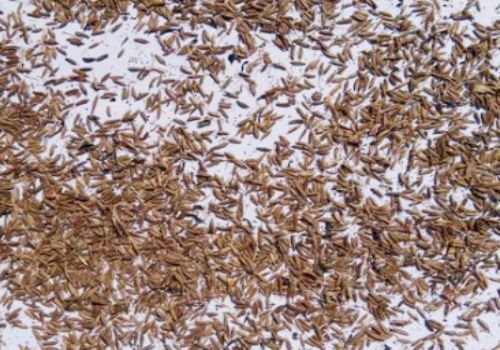
The price of dandelion seed varies, but under normal circumstances the price of dandelion seed is around 50-100 yuan per jin. Under wild conditions, a biennial dandelion plant can bloom and set seed. After flowering, the seeds mature in 13-15 days. When the outer shell of the flower head turns from green to yellow-green and the seeds turn from milky white to brown, they can be harvested. Do not wait until the flower head splits open to harvest, otherwise the seeds are easily scattered and lost, causing relatively large losses. Generally, each capitulum has more than 100 seeds. The thousand-seed weight of large-leaf type dandelion seed is about 2 grams, and the thousand-seed weight of small-leaf type dandelion seed is about 0.8-1.2 grams.
II. How do you plant dandelion seed?
1. Sowing methods
Dandelion propagation uses seed propagation. The seeds have no dormancy period, and after mature harvest the seeds can be sown at any time from spring to autumn. According to demand, they can also be sown in a greenhouse in winter. For direct seeding in the open field, drill sowing is used. On the seedbed surface, open shallow transverse furrows at a row spacing of 25-30 cm, with a sowing width of about 10 cm. After the seeds are sown, cover with 1 cm of soil and then press lightly. The sowing rate is 0.5-0.75 kg per mu. For broadcast sowing on a level seedbed, use 1.5-2.0 kg of seed per mu. For high-quality improved dandelion seed, the sowing rate per mu is only 25-50 grams. After sowing, cover with grass to keep warm, and remove the covering grass when seedlings emerge. Seedlings can emerge in about 6 days.
2. Fertilizer and water management
Dandelion has very strong resistance to disease, drought and insects, and generally does not need pest and disease control. The main things that can be used are fertilizer and water. Although dandelion is not strict about soil conditions, it still prefers fertile, moist, loose soil with high organic matter content. Therefore, when planting dandelion, apply ammonium nitrate as a base fertilizer. After sowing, always maintain appropriate moisture in the soil. During the growing season, apply topdressing 1-2 times.
3. Harvesting methods
When harvesting dandelion, you can use a hook knife or a small knife to dig it up, cutting parallel along 1-1.5 cm above the ground surface, keeping the underground root so it can grow new shoots. First harvest the large plants, leaving the medium and small plants to continue growing. It can also be harvested like the way some places in Northeast China harvest celery leaves by snapping them off, but the leaves are scattered and do not form leaf bunches. For open-field cultivation, the average yield is 0.8-1.0 kg per sq m. For greenhouse cultivation, the average yield is 1.2-1.7 kg per sq m. For hothouse cultivation, the average yield is 1.5-2.4 kg per sq m.
Summary: The above is the relevant introduction to dandelion seed prices and planting methods. Please note that the above dandelion seed prices are for reference only, and the specific price should be based on the actual price. I hope this is helpful to friends in need!
How much is dandelion seed per jin? What are the sowing methods?
Dandelion is a perennial herbaceous plant of the Asteraceae family, with capitula. The seeds have a fluffy ball formed by white pappus, and after the flowers bloom they drift with the wind, then take root and sprout wherever they land. Its distribution range is very wide, and it can be seen on hillside grasslands, roadsides, fields, riverbanks and other places in low-altitude areas. So how much is dandelion seed per jin?
The price of dandelion seed:
The price of dandelion seed is generally around 50-100 yuan per jin. Under wild conditions, a biennial dandelion plant can bloom and set seed. After flowering, the seeds mature in 13-15 days. When the outer shell of the flower head turns from green to yellow-green and the seeds turn from milky white to brown, they can be harvested. Do not wait until the flower head splits open to harvest, otherwise the seeds are easily scattered and lost, causing relatively large losses. Generally, each capitulum has more than 100 seeds. The thousand-seed weight of large-leaf type dandelion seed is about 2 grams, and the thousand-seed weight of small-leaf type dandelion seed is about 0.8-1.2 grams.
Dandelion sowing methods:
Dandelion propagation uses seed propagation. The seeds have no dormancy period, and after mature harvest the seeds can be sown at any time from spring to autumn. According to market demand, they can also be sown in a greenhouse in winter. For direct seeding in the open field, drill sowing is used. On the seedbed surface, open shallow transverse furrows at a row spacing of 25-30 cm, with a sowing width of about 10 cm. After the seeds are sown, cover with 1 cm of soil and then press lightly. The sowing rate is 0.5-0.75 kg per mu. For broadcast sowing on a level seedbed, use 1.5-2.0 kg of seed per mu. For high-quality dandelion improved seed, the sowing rate per mu is only 25-50 grams. After sowing, cover with grass to keep warm, and remove the covering grass when seedlings emerge. Seedlings can emerge in about 6 days.
Dandelion fertilizer and water management:
Dandelion has very strong resistance to disease, drought and insects, and generally does not need pest and disease control. The main things are fertilizer and water. Although dandelion is not strict about soil conditions, it still prefers fertile, moist, loose soil with high organic matter content. Therefore, when planting dandelion, apply ammonium nitrate as a base fertilizer. After sowing, always maintain appropriate moisture in the soil. During the growing season, apply topdressing 1-2 times.
Dandelion harvesting methods:
When harvesting dandelion, you can use a hook knife or a small knife to dig it up, cutting parallel along 1-1.5 cm above the ground surface, keeping the underground root so it can grow new shoots. First harvest the large plants, leaving the medium and small plants to continue growing. It can also be harvested like the way some places in Northeast China harvest celery leaves by snapping them off, but the leaves are scattered and do not form leaf bunches. For open-field cultivation, the average yield is 0.8-1.0 kg per sq m. For greenhouse cultivation, the average yield is 1.2-1.7 kg per sq m. For hothouse cultivation, the average yield is 1.5-2.4 kg per sq m.
How to grow dandelion: dandelion planting methods
As a purely green, natural and pollution-free food, dandelion is deeply welcomed by people. How do you grow dandelion? Today I will share dandelion planting methods with everyone.
How to grow dandelion
To plant dandelion, you first need to obtain dandelion seeds. Everyone knows that dandelion seeds are like fluff and will drift away with the wind with a gentle blow, so the timing of dandelion seed collection is very important. Generally, dandelion seeds mature 13-15 days after flowering. When the outer shell of the dandelion flower head turns from green to yellow-green and the seeds turn from milky white to brown, they can be harvested. Do not wait until the flower head splits open to harvest, otherwise the seeds are easily scattered and lost.
When collecting seeds, you can pick off the dandelion flower head and keep it indoors for one day of after-ripening. Wait until the flower head has fully opened, then dry it in the shade for 1-2 days until the seeds are half-dry, then rub off the fluff at the tip of the seeds with your hands, and then dry the seeds in the sun.
In places where wild dandelion resources are abundant, you can also dig up roots and plant them. Usually in October, after digging up dandelion roots, cultivate them in a greenhouse at a plant spacing of 8 cm x 3 cm. After planting, water thoroughly, and by February of the following year they can sprout. At this time, apply organic fertilizer once more, and then the leaves can be harvested.
Dandelion planting methods
Mature dandelion seeds have no dormancy period and can be sown from early spring to midsummer. On a sunny day (around 28°C), mix the seeds with soil, water thoroughly, expose them to the sun until the soil is slightly moist, then water appropriately and keep moist. The next day the seed coat will turn green, and after a few hours they can take root and sprout.
Before sowing dandelion, the land should first be turned and beds made. The bed width is 80-90 cm. Open shallow furrows in the bed, with a furrow spacing of 12 cm and a furrow width of 10 cm. Then sow the seeds in the furrows and cover with soil after sowing, with a soil thickness of 0.3-0.5 cm. When sowing dandelion, the soil is required to be moist. If the soil is dry, water thoroughly two days before sowing. For spring sowing, it is best to use plastic film mulching. For summer sowing, there is sufficient rain, so mulching may be omitted.
Dandelion has very strong resistance to disease, drought and insects, and generally does not need pest and disease control. The focus of field management is mainly watering and fertilizing. Po fertilization and watering. Although dandelion is not strict about soil conditions, it is suitable for growing in fertile, moist, loose soil with high organic matter content. Therefore, when planting dandelion, 17-20 kg of ammonium nitrate per mu should also be applied as a base fertilizer. After sowing, always maintain appropriate moisture in the soil. During the dandelion growing season, apply topdressing 1-2 times.
In the year dandelion is sown, leaves are generally not harvested, in order to promote lush growth, so that in the early spring of the following year the new shoots of the plants are thick and strong, producing tender leaves of good quality and high yield.
More information