When is the best time to plant and harvest peanuts?
Peanuts are one of the common foods in our daily lives. They can be eaten raw or used as a side dish, and they have a fairly wide range of uses. Growing peanuts is also quite common in rural areas; basically every household grows a few, since eating food you have grown yourself gives peace of mind. So when is the best time to plant and harvest peanuts?
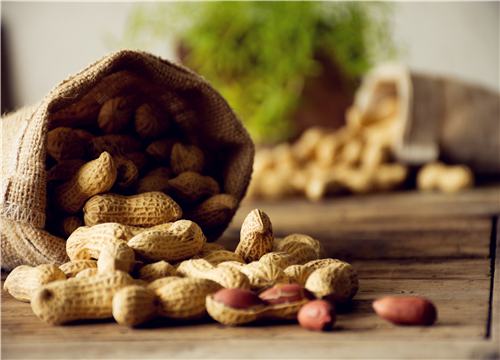
I. A brief introduction to peanuts
1. When were peanuts introduced to China?
Peanuts were introduced to China around the 1530s. The spread from the coastal areas to the inland areas was very slow, and until the late years of the Qianlong Emperor's reign, peanuts were still a rare banquet food.
2. Where are the main peanut-producing areas in China?
Peanuts are grown in every part of China, mainly distributed across Liaoning, Shandong, Hebei, Hunan, Henan, Jiangsu, Fujian, Guangdong, Guangxi, Sichuan, Jilin and other provinces. Among them, Shandong Province has the largest planting area and also the highest output.
3. What peanut varieties are there in China?
Chinese peanut varieties can be divided into 4 main types: the common type, the dragon-seed type, the pearl-bean type and the multi-seed type.
II. When is the best time to plant peanuts?
In the south, peanut sowing is mainly divided into two crops, spring and autumn, and the suitable sowing time is February to March each year; in the Yangtze River basin, spring and summer peanuts are the main crops, and the suitable sowing time is March to April; in the northern peanut region and peanut-producing areas, the best suitable sowing period is mostly April to May.
When sowing peanuts, deep ploughing is suddenly needed, and the soil temperature should remain at 15 degrees for 5 days before sowing. Never sow when the temperature is below 11 degrees, as this will cause rotten seed and dead seedling phenomena; even if the peanuts can emerge, the peanut seedlings will not be robust and the yield will be affected. In summer peanut growing areas, intercropping can be chosen and sowing can be done earlier to increase yield.
III. When is the best time to harvest peanuts?
The best harvest time for peanuts needs to be calculated according to your planting time; generally the harvest time is August to October. In the Northern Hemisphere, the peanut harvest time is July to September, and in the Southern Hemisphere the peanut harvest time is January to March. In northern regions, the best peanut harvest time is September; in the Jianghuai region, the best peanut harvest time is between August and September. In northern regions, sowing is a little later, so the harvest time is also a little later. To see whether peanuts can be harvested, you can directly dig up one plant and try.
The suitable harvest period for peanuts is generally determined according to the appearance of the plant and the external standards of pod maturity. From the appearance of the plant, the upper leaves turn yellow, the middle and lower leaves turn from green to yellow and gradually fall off, and the stems and branches turn yellow-green; the external standards of pod maturity are that the outer skin of the pod turns bluish and hardens, the reticulate veins deepen and become clear, the sponge tissue inside the pod is shiny dark brown, the kernels are plump and full, and the seed coat is bright in color.
Summary: The above content is an introduction to peanut planting and harvest times, and we hope it can help those who need it. This article is compiled from the internet.
When is the best time to plant peanuts? Peanut planting time and methods
Peanut, also known as groundnut, earth bean, longevity fruit, etc., is an annual herbaceous plant of the genus Arachis in the Fabaceae family. Peanut is an important oil crop in China. The peanut oil pressed from it has a natural rich fragrance, meets the Chinese people's demand for green quality, is deeply welcomed by the market, and has high planting value. So when is the best time to plant peanuts? How do you plant them? The planting time and methods of peanuts are introduced below.
I. Peanut planting time
The suitable sowing period for the spring-autumn double-crop peanut area in the south is February to mid-March; the suitable sowing period for the spring-summer peanut alternating area in the Yangtze River basin is March to late April; the suitable sowing period for the northern large peanut area and peanut-producing areas is mostly late April to early May. When sowing peanuts, sowing can be done once the soil temperature at a depth of 10 cm has remained stable above 15 degrees for 5 consecutive days. Remember, never sow when the temperature is below 11 degrees, to prevent rotten seed and dead seedling phenomena; even if the peanuts can emerge, the peanut seedlings will not be robust and the yield will be affected. In summer peanut growing areas, intercropping can be chosen and sowing can be done earlier to increase yield.
Image: Peanut planting
II. Peanut planting methods
1. Leveling the land:Peanut is an economic crop that flowers above ground and, after forming pegs, drills into the soil to set fruit. It is suitable for planting in loose sandy soil and oil sandy soil. The plot for planting peanuts should be deeply ploughed, and together with ploughing, 30-40 tonnes of high-quality farmyard manure should be applied per hectare, then pressed 1-2 times after ploughing. Where conditions permit, water can be applied first, then farmyard manure and chemical fertilizer mixed and applied into the furrow, ridged and pressed, ready for timely sowing.
2. Cultivated varieties:For high peanut yield, good seed is the foundation. The peanut varieties suitable for planting mainly include the Fuhua series and the Jifu series (commonly known as Silhong), with a growth period of about 110-120 days. Choose pods that are large, plump, uniform in shape and unbroken as seed. Before shelling, dry them in the sun for 1-3 days; after shelling, further select the seeds, choosing kernels with pure color and uniform shape as seed.
3. Scientific fertilization:Peanuts are relatively tolerant of poor soil, and fertilization should be mainly base fertilizer, applying 30 tonnes of farmyard manure per hectare. Chemical fertilizer should be mainly phosphate fertilizer, applying 300-400 jin of diammonium phosphate per hectare. For planting peanuts in poor soil, apply an additional 200-300 jin of urea per hectare.
4. Replanting and thinning:For peanuts, from late May to early June, work to investigate seedling conditions should be carried out as early as possible. For fields with obvious gaps in seedlings, replanting should be done early. Replanting can use the method of pre-germinating seeds and planting in water, and the work of thinning and final thinning should also be completed.
Image: Peanut planting
5. Clearing the crown and hardening seedlings:After the peanut seedlings have all emerged, use a small hand hoe to dig a ring of soil around the seedlings at a distance of 2 cm, then gently pull the two cotyledons out of the ground by hand. Clearing the crown and hardening seedlings is generally done three days after the first hoeing and ridging.
6. Timely hoeing and ridging:After the peanut seedlings emerge, start hoeing. Three days after hoeing, do the first ridging; after 15-20 days, do the second hoeing and ridging. Be careful not to press the seedlings when earthing up. At the end of the full flowering period, finish the third hoeing and ridging. When closing the rows, ridge the four-sided head rows to help the pegs penetrate the soil, and at the same time be careful to pull out large weeds.
7. Reasonable topdressing:During the pod-setting and pod-filling period of peanuts, according to growth conditions, targeted foliar spraying can be used to topdress fertilizers such as potassium dihydrogen phosphate (suitable concentration 0.3%) and plant growth regulators such as Lufeng 95, in order to promote kernel formation.
8. Harvest at the right time:When the peanut leaves turn yellow and some stems and leaves dry up, they can be harvested, generally in mid-September. After harvest, dry them in the sun to reduce moisture, promote after-ripening and improve seed maturity. Peanuts kept for seed must be harvested and dried before frost.
[Editor's concluding remarks]Peanuts are suitable for sandy soil areas with a warm climate, a long growing season and moderate rainfall, and special attention is needed during the planting process. The above has introduced the planting time and methods of peanuts for everyone, and we hope it can help you!
When are peanuts planted? Peanut planting time and key cultivation management points
Peanut is a nut with abundant output and widespread consumption in China, also known as groundnut, longevity fruit, mud bean, foreign bean, earth bean, etc. It is an annual herbaceous plant of the genus Arachis in the Fabaceae family under the order Rosales. Its producing areas are mainly distributed in Brazil, China, Egypt and other places. It is suitable for planting in sandy soil areas with a warm climate and moderate rainfall, and it has a long growing season. Let us take a look at the peanut planting time below!
Peanut planting time
The suitable sowing period for the spring-autumn double-crop peanut area in the south is February to mid-March; the suitable sowing period for the spring-summer peanut alternating area in the Yangtze River basin is March to late April; the suitable sowing period for the northern large peanut area and peanut-producing areas is mostly late April to early May. When sowing peanuts, sowing can be done once the soil temperature at a depth of 10 cm has remained stable above 15 degrees for 5 consecutive days. Remember, never sow when the temperature is below 11 degrees, to prevent rotten seed and dead seedling phenomena; even if the peanuts can emerge, the peanut seedlings will not be robust and the yield will be affected. In summer peanut growing areas, intercropping can be chosen and sowing can be done earlier to increase yield.
Peanut sowing methods
1. Sowing method: Peanut sowing methods are divided by cultivation method into open-field sowing and film-mulch sowing, and by operation method into manual dibbling and mechanical sowing.
2. Sowing density: The planting density of peanuts is determined by plant height, fruiting range and leaf area size. The suitable planting density depends on climate characteristics, soil fertility, selected varieties and cultivation conditions.
3. Sowing depth: Generally, peanut sowing is best at about 5 cm. Grasp the principles of "do not sow deep when dry, do not sow shallow when wet" and "sow shallow in clay soil, sow deep in sandy soil or plots with a high sand content." For open-field cultivation, the deepest must not exceed 7 cm, and the shallowest must not be less than 3 cm.
4. Pressing after sowing: Pressing after sowing is a successful experience for drought-resistant peanut sowing and ensuring a full stand. Pressing not only reduces soil moisture evaporation, but also brings the seeds into close contact with the soil, promotes the rise of moisture from lower soil layers, prevents the seeds from drying out, and facilitates seed germination and emergence.
Peanut planting techniques
1. Leveling the land: Peanut is an economic crop that flowers above ground and, after forming pegs, drills into the soil to set fruit. It is suitable for planting in loose sandy soil and oil sandy soil. The plot for planting peanuts should be deeply ploughed, and together with ploughing, 30-40 tonnes of high-quality farmyard manure should be applied per hectare, then pressed 1-2 times after ploughing. Where conditions permit, water can be applied first, then farmyard manure and chemical fertilizer mixed and applied into the furrow, ridged and pressed, ready for timely sowing.
2. Cultivated varieties: For high peanut yield, good seed is the foundation. The peanut varieties suitable for planting mainly include the Fuhua series and the Jifu series (commonly known as Silhong), with a growth period of about 110-120 days. Choose pods that are large, plump, uniform in shape and unbroken as seed. Before shelling, dry them in the sun for 1-3 days; after shelling, further select the seeds, choosing kernels with pure color and uniform shape as seed.
3. Scientific fertilization: Peanuts are relatively tolerant of poor soil, and fertilization should be mainly base fertilizer, applying 30 tonnes of farmyard manure per hectare. Chemical fertilizer should be mainly phosphate fertilizer, applying 300-400 jin of diammonium phosphate per hectare. For planting peanuts in poor soil, apply an additional 200-300 jin of urea per hectare.
4. Replanting and thinning: For peanuts, from late May to early June, work to investigate seedling conditions should be carried out as early as possible. For fields with obvious gaps in seedlings, replanting should be done early. Replanting can use the method of pre-germinating seeds and planting in water, and the work of thinning and final thinning should also be completed.
5. Clearing the crown and hardening seedlings: After the peanut seedlings have all emerged, use a small hand hoe to dig a ring of soil around the seedlings at a distance of 2 cm, then gently pull the two cotyledons out of the ground by hand. Clearing the crown and hardening seedlings is generally done three days after the first hoeing and ridging.
6. Timely hoeing and ridging: After the peanut seedlings emerge, start hoeing. Three days after hoeing, do the first ridging; after 15-20 days, do the second hoeing and ridging. Be careful not to press the seedlings when earthing up. At the end of the full flowering period, finish the third hoeing and ridging. When closing the rows, ridge the four-sided head rows to help the pegs penetrate the soil, and at the same time be careful to pull out large weeds.
7. Reasonable topdressing: During the pod-setting and pod-filling period of peanuts, according to growth conditions, targeted foliar spraying can be used to topdress fertilizers such as potassium dihydrogen phosphate (suitable concentration 0.3%) and plant growth regulators such as Lufeng 95, in order to promote kernel formation.
8. Harvest at the right time: When the peanut leaves turn yellow and some stems and leaves dry up, they can be harvested, generally in mid-September. After harvest, dry them in the sun to reduce moisture, promote after-ripening and improve seed maturity. Peanuts kept for seed must be harvested and dried before frost.
Well, the editor has introduced the peanut planting time and planting techniques for everyone here. Next, let us take a look at peanut pest and disease control techniques!
Stem rot
[Symptoms] At the seedling stage, the cotyledons are dark brown and dry-rotten, then the disease spreads along the petiole to the stem base, forming yellow-brown water-soaked lesions, and finally becomes dark brown rot. In the later stage of the disease, water-soaked lesions first appear at the stem base or main and lateral branches, turning yellow-brown and then dark brown, and the aboveground part wilts and dies. Peanut stem rot occurs severely, with about 80% of the area affected. The general incidence rate is 60-70%, and in severely affected bacterial blocks it is as high as 80-90%. Some severely diseased plants have died entirely.
[Control] Before sowing, dress seeds with 50% carbendazim wettable powder (dosage 0.3-0.5% of seed weight), or use 0.5 kg of 50% carbendazim wettable powder plus 50-60 kg of water to cold-soak 100 kg of seeds for 24 hours before sowing, with significant control effect. In the early stage of the disease, choose 50% carbendazim wettable powder or 65% zineb wettable powder at 500-600 times liquid, or 70% thiophanate-methyl wettable powder at 800 times liquid for spraying, once every 7 days, for 2-3 consecutive sprays.
Root rot
[Symptoms] This disease can occur throughout the entire growth period of peanuts. Infected plants are short, and the leaves turn yellow from bottom to top in sequence, dry up and fall off; the outer skin of the main root turns black and rots, until the whole plant dies. This disease mainly spreads through rainwater and in the field. Water accumulation in the field at the seedling stage, low soil temperature, or sowing too early or too deep can all easily trigger this disease.
[Control] ① Level the land and improve the soil, apply more decomposed organic fertilizer, prevent waterlogging and drain water, and strengthen field management. ② Dress seeds with 50% carbendazim wettable powder at 0.3% of seed weight. In the early stage of the disease, spray the whole field with 50% carbendazim at 1000 times liquid.
Leaf spot
[Symptoms] Brown spot lesions are round and dark brown, relatively large, with a yellow halo at the outer edge of the lesion, and later gray mold-like material. Black spot lesions are round and dark brown, with no yellow halo around the lesion, and the lesions are smaller than those of brown spot.
[Control] In the early stage of the disease, when the rate of diseased leaves in the field reaches 10-15%, the first spraying should begin. The pesticide can be 50% carbendazim wettable powder at 1500 times liquid, or 50% thiophanate-methyl wettable powder at 2000 times liquid, or 80% zineb wettable powder at 400 times liquid, or 80% mancozeb at 400 times liquid, 75% chlorothalonil wettable powder at 600-800 times liquid, or Kangkuining at 700 times liquid, or lime sulfur mixture at 0.3-0.5 degrees Baume, etc. After that, spray once every 10-15 days, for 2-3 consecutive sprays, spraying 50-75 kg of liquid per mu each time.
Peanut rust
[Symptoms] The bottom leaves are affected first, and the leaves produce yellow blister spots, small in size, surrounded by a very narrow yellow halo. After the epidermis cracks, rust-colored powder spills out. In severe cases, the leaves turn yellow, dry up and fall off.
[Control] When the rate of diseased plants in the field reaches 10-20%, choose 50% colloidal sulfur at 150 times liquid, or dinocap-sodium at 600-800 times liquid, or 75% chlorothalonil at 800 times liquid, or Bordeaux mixture at 1:2:200 (copper sulfate: quicklime: water), or 25% triadimefon wettable powder at 3000-5000 times. Spray once every 10 days or so, for 3-4 consecutive sprays. Dinocap-sodium should not be used continuously and should be alternated with other pesticides, spraying 60-75 kg of liquid per mu each time.
Peanut net blotch
[Symptoms] Natural occurrence in the field generally starts from the leaves at the bottom of the plant. At first, needle-sized small brown spots appear on the upper surface of the leaves, gradually becoming brown starburst-shaped spots, then expanding into a net-veined pattern with gray-green edges. As the lesions gradually expand, they finally form round, oval or irregular brown to chestnut-brown large spots, with the lesion edges light green-brown and the boundaries indistinct, causing the leaves to fall off prematurely. The underside of the leaves has no symptoms in the early stage, and in the later stage shows light brown lesions with unclear edges.
[Control] In addition to the pathogen falling into the field on diseased peanut leaves and residual leaves, practicing crop rotation and selecting disease-resistant varieties, when the rate of diseased plants in the field reaches more than 5%, choose Kangkuining at 700 times liquid, 80% mancozeb at 400 times liquid, or "Nongkang 120" (0.5 kg per mu) at 200 times liquid, using 75-100 kg of liquid per mu each time, spraying once every 10-15 days, for 2-4 consecutive sprays.
Peanut bacterial wilt
[Symptoms] Peanuts are generally most susceptible to this disease at the early flowering stage. In the initial stage of the diseased plant, the first and second leaves at the top of the main stem first lose water and wilt, delaying leaf opening in the morning and closing leaves early in the afternoon. After 1-2 days, the whole plant or the leaves on one side wilt rapidly from top to bottom, with a dull color and a bluish dirty-green appearance; in the later stage, the diseased leaves turn brown and scorched. Diseased plants are easy to pull up, and the tip of the main root, fruit stalks and pods are dark brown and wet-rotten, while the root nodules are dark green. When the diseased stem is cut lengthwise, the vascular bundles are dark brown; when the cross-section is kept moist and slightly squeezed, white mucus can be seen overflowing.
[Control] Before sowing, soak seeds in 1000 times 32% Kete solution for 8-12 hours for disinfection and sterilization. In the early stage of the disease, spray 2500-3000 times agricultural streptomycin or new streptomycin, or 1500-2000 times 32% Kete solution, once every 7-10 days, for 3-4 consecutive sprays for control. In addition, spraying Baode biological foliar fertilizer at the early flowering stage can promote beneficial microbial activity in the root system and also plays a certain role in inhibiting the development of the pathogen.
Black mold
[Symptoms] Black mold mainly occurs in the early stage of peanut growth. The pathogen first infects the cotyledons and makes them black and rotten, then infects the root and stem of the seedlings. When moist, many moldy substances grow on the diseased part and cover the stem base, and the stems and leaves lose water, wilt and die.
[Control] Level the land and improve the soil, apply more decomposed organic fertilizer, prevent waterlogging and drain water, and strengthen field management. Dress seeds with 50% carbendazim wettable powder at 0.3% of seed weight.
Southern blight
[Symptoms] After peanut roots, pods and stem bases are infected, they initially show brown soft rot. At the root-stem area of the aboveground part, white silky mycelium appears (hence called southern blight), along with rapeseed-like sclerotia; the stems and leaves turn yellow, gradually die, and the peanut pods rot. The pathogen begins to germinate under high temperature and high humidity conditions and infects peanuts. It occurs more severely in sandy soil, continuous cropping, and overly dense, poorly ventilated fields, and on rainy days.
[Control] At the peanut sowing stage, apply 1 kg of quintozene plus 20 kg of fine moist soil per mu, applying it in the sowing furrow and covering the seed. At the same time, pay attention to using pesticides such as Shennongdan and phorate to prevent underground pests. At the early pod-setting stage of peanuts, spray 20% triadimefon emulsifiable concentrate at 1000 times liquid or iprodione at 1000 times liquid for control. During the disease period, triadimefon, root rot spirit, thiophanate and other pesticides can also be used to drench the roots, with very obvious control effect.
Peanut pest control
1. Reasonable crop rotation: Good preceding crops for peanuts are gramineous crops such as corn and millet, and continuous cropping should be avoided.
2. Deep ploughing in autumn: Deep ploughing in autumn can turn pests up to the ground surface, causing them to die from exposure or be pecked by birds, reducing pest sources.
3. Seed coating: Coat seeds with seed coating agent before sowing; this method can also effectively prevent rodent damage.
4. Soil treatment: When preparing the land before sowing, apply 22.5-30 kg of 3% granular carbofuran per hectare or 22.5-30 kg of 3% phorate granules evenly on the field surface, then shallow-plough into the soil; or apply carbofuran or phorate granules in the sowing furrow before sowing; or mix insecticide into organic fertilizer and use it as base fertilizer.
6. Control of larvae: In late June and late July, during the peak hatching period and young larval stage of scarab beetles, apply 35-45 kg of phoxim granules plus 250-300 kg of fine soil per hectare around the peanut root zone, and shallow hoe into the soil. You can also drench the roots with 50% phoxim or 90% trichlorfon at 1000 times liquid.