Is avocado farming profitable in 2019? Prospect analysis
Avocado is a fruit with very high nutritional value, known as "forest butter", and has become very popular in China in recent years. So, is growing avocados profitable in 2019? What are the prospects for avocado farming? Let's find out together!
1. Current growing situation in China
Avocados are also grown in China, mostly concentrated in the southern coastal areas, with a relatively small growing volume that is completely unable to meet China's current demand; most are imported. However, in recent years, large-scale cultivation has begun in Yuanjiang, Yunnan. At present, with the avocado market booming, many people have seen a business opportunity and are preparing to join the ranks of avocado growers. But due to rainfall and temperature, there are relatively few suitable places to grow them. The current situation is basically that some farmers who want to grow them do not have suitable conditions, while those with suitable conditions have not yet truly mastered scientific growing methods. Still, those who want to grow them can go to Hainan, Guangdong and other places to investigate.
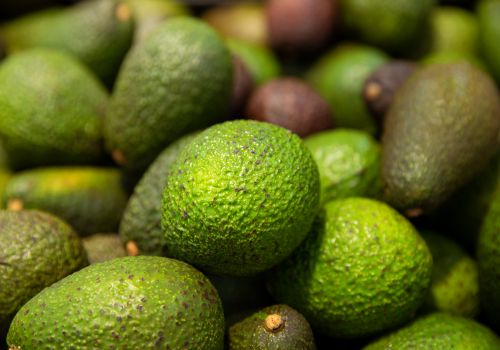
2. Market demand
Avocado is also a multi-purpose fruit. In daily life, it is a top choice for weight loss in many first-tier cities, and demand exceeds supply. In many Western restaurants, avocado is also a premium fruit, and its demand cannot be underestimated. Some restaurants also use it as a dish that is widely sought after. At present, avocado is also very popular in the juice sector; many juice shops have launched avocado milkshakes, mixed juices of avocado and other fruits, and other varieties. Sales of some beverages made with avocado as a raw material are also extremely optimistic. In many places abroad, it is also used as a raw material for skincare products. Overall, the market demand for avocado is diversified, and all of it is in a state of demand exceeding supply, so sales channels are very broad.
3. Economic benefits
Avocado is a fruit tree with relatively high yield. In normal periods, the yield is about 100 jin per tree, and individual high-yielding trees can reach about 150 jin. At present, the market retail price starts at 30 yuan, but the wholesale price is relatively much lower, around 15 yuan. The planting area per mu depends on local conditions, generally fluctuating around 80 plants, and the total profit per mu is around 100,000 yuan. As for costs, it depends on each person's budget when selecting seedlings. With better seedlings, the profit is around 30,000 yuan; with poorer seedlings, the profit is around 40,000 yuan. Everyone can consider it comprehensively according to their own situation.
4. Avocado's effects and functions
Avocado has many nutritional values, and in many respects this can bring it broad market demand. Glyceric acid is one of the more abundant components in avocado and has a good effect on preserving youth. Many skincare products now add avocado. Infants are currently an area to which everyone attaches great importance. According to expert research, eating avocado can not only protect women's uterus but also allow infants to have better room for growth. In this way, sales channels are naturally broad, and sales volume naturally rises, not to mention that avocado also has the two aspects of value in weight loss and beauty.
Therefore, in summary, growing avocados in 2019 is profitable. As long as you master scientific growing methods, you will certainly gain something!
What effects and functions does avocado have? Avocado growing techniques
[Common questions]What effects and functions does avocado have? How should it be grown?
[Expert answer]Avocado, also known as alligator pear, oil pear, camphor pear, etc., has very high nutritional value and is rich in various vitamins, protein, etc. It is a rare fruit, deeply favored by consumers, with a broad market and high growing benefits. The effects, functions and growing techniques of avocado are introduced as follows:
Image: Avocado growing
I. Avocado's effects and functions
1. Antioxidant and anti-aging:Avocado is rich in glyceric acid, protein and vitamins. It is moisturizing without being greasy and is a natural antioxidant and anti-aging agent. It can not only soften and moisturize the skin, but also tighten pores. A milky isolation layer can form on the skin surface, effectively resisting sunlight and preventing tanning and sunburn. The avocado oil extracted from the kernel is rich in nutrients, containing abundant vitamin E, magnesium, linoleic acid and essential fatty acids, which help strengthen cell membranes and delay the aging rate of epidermal cells.
2. Breast enhancement:The abundant unsaturated fatty acids in avocado can increase the elasticity of breast tissue. The vitamin A it contains can promote female hormone secretion, vitamin C can prevent breast deformation, and vitamin E helps breast development.
3. Protecting the liver:Research has found that avocado contains effective chemical components that may protect the liver. This discovery will help people invent new drugs for treating liver diseases.
4. Beauty:Avocado flesh has good affinity with human skin and is very easily absorbed by the skin. It also has strong absorption of ultraviolet rays. In addition, it is rich in vitamin E and carotene, etc., so it has good skincare, sunscreen and health-care effects.
5. Relieving diabetes symptoms:Avocado flesh has an extremely low sugar content, 1/5 of the sugar content of banana. It is a rare high-fat, low-sugar food for diabetic patients, and soaking the peel in water for drinking has a relieving effect on diabetes.
6. Protecting uterine health:Avocado can protect women's uterus and cervical health. Women who eat one avocado per week can balance estrogen, reduce excess weight gained from childbirth, and prevent cervical cancer.
7. Baby complementary food:Avocado is one of the good complementary foods for babies.
Image: Avocado growing
II. Avocado growing techniques
Cultivation conditions:Avocado prefers light and a warm, humid climate, and is not cold-tolerant. Only a few varieties can endure short-term low temperatures of 0 degrees. It is cultivated between 40°S and 40°N in the world. The suitable average annual temperature is 20-25°C. Cold resistance varies by variety (the Mexican race has relatively strong cold resistance, while the Guatemalan race and West Indian race have weaker cold resistance). Cold-resistant varieties can endure low temperatures of -6°C, while varieties with low cold resistance wither when encountering low temperatures of 0°C. It needs annual rainfall of more than 1000 mm. Its roots are shallow and its branches are fragile, so it cannot withstand strong winds; strong winds can lead to reduced yield. It has relatively strong adaptability to soil.
Propagation methods:Avocado is mostly propagated by seed, and can also be propagated by grafting. When sowing, the seed coat should be peeled off and the seeds sprouted in a sand bed. Choose a place with deep soil layers, good drainage and shelter from wind for planting. A plant-row spacing of 5*(6-7) m is more suitable. Mixed planting of varieties can ensure pollination. For grafting, it is best to use container seedlings. Grafting can be done when the seedling diameter is 0.8-1 cm thick. Bud grafting or side grafting is mostly used. Seedlings can be planted out at 50-60 cm. The planting row spacing is 5-6 m. Grafted seedlings planted out for 3-4 years or seedling trees for 4-6 years will flower and bear fruit. Mature trees yield 25-50 kg per tree, with high yields of 100-150 kg.
Planting out: plant out when seedlings are 50-60 cm apart, with planting row spacing of 5-6 m. Grafted seedlings planted out for 3-4 years or seedling trees for 4-6 years will flower and bear fruit.
Mulching: Avocado is a fruit tree that grows under tropical rainforest conditions and in competition for sunlight. A high-temperature, high-humidity environment makes it grow quickly; if environmental conditions are not available, it grows slowly. Therefore, avocado cultivation abroad mostly emphasizes growing grass or green manure near the plants in the early stage, and applying large amounts of mulch near the rhizosphere. Through mulching, surface soil organic matter is increased, a rainforest rhizosphere environment similar to the place of origin is formed, rhizosphere ecological conditions are stabilized, and the reproduction of microorganisms that can inhibit root rot activity is promoted. Therefore, from the young tree stage until the tree itself can form a mulch layer through fallen leaves and before root rot occurs, carrying out tree-disk mulching for young trees is especially important. Start mulching in winter, supplement the thickness in spring, and by summer a very good mulch layer can be formed. Rhizosphere mulching can also reduce soil moisture evaporation, alleviate the damage of dry heat to avocado, lower soil temperature in summer and raise soil temperature in winter, increase soil organic matter, reduce weeds, and prevent soil erosion on slopes. However, during the rainy season, guard against the mulched soil becoming too wet.
Fertilization: (1) Conventionally apply nitrogen fertilizer more than 4 times each year, usually by broadcasting or applying through the irrigation system. For adult trees, apply 50 kg of organic fertilizer and 50 g of compound fertilizer per tree during the young fruit stage, and apply once more after harvest with the amount doubled; (2) Apply phosphorus and potassium fertilizers when leaf analysis indicates low phosphorus and potassium content. On some types of soil, zinc-containing fertilizers can be applied or zinc can be sprayed on the leaves; spraying is most effective when new leaves unfold in spring. For crops growing on calcareous soil or soil with low oxygen content, the most effective method is to inject chelated iron solution into the root zone; (3) When nitrogen is present in certain soils and irrigation water, the amount of nitrogen used should be reduced. If few new leaves are seen growing on the tree and the leaf color is grayish-white or there is a lot of fruit set, then nitrogen fertilizer should be increased.
Drainage: Avocado is evergreen year-round and needs the rhizosphere soil to remain moist throughout the year. It is very sensitive to soil drought. Once short of water, its physiological functions are hindered, tree vigor declines, causing leaf drop and fruit drop, and cold resistance decreases in winter. Therefore, appropriate irrigation is needed during drought. From fruit set to fruit maturity, maintaining soil moisture is crucial. If drought occurs in the first month after fruit set, young fruit will drop severely. In Hainan Island, the dry and hot weather in April-May causes severe fruit drop in avocado. Therefore, if there are 10-20 consecutive sunny days and the orchard soil begins to crack slightly, irrigation should be carried out in time; if rainfall is below transpiration and evaporation for a long time, supplemental irrigation should also be provided. But irrigation should be just right: both sufficient and absolutely not excessive. Generally, wetting the soil thoroughly is appropriate. If too wet, it will aggravate root rot and also reduce the soluble solids content of the fruit. It is best to use sprinkler irrigation or drip irrigation; flood irrigation may cause root rot, while drip irrigation can save 50%-60% of water. If drought causes leaves to begin curling, the tree canopy can also be sprayed with water. In the rainy season, pay attention to drainage, especially in flatland orchards.
Image: Avocado growing
Harvesting: The fruit harvesting season is generally from August to September. The traditional harvesting method is to directly knock them down with a long tree pole. Although this is easy, the fruit obtained in this way is very unfavorable for storage and will soon rot. To ensure quality, one must carefully climb into the several-meter-high canopy, cut them one by one and put them into baskets, then slowly send them down to the ground.
[Editor's concluding remarks]Avocado is rich in nutritional value. Besides being eaten as fresh fruit, it can also be used in dishes and canned foods, and has high growing value. The above has introduced avocado's effects, functions and growing techniques for everyone. We hope it will be helpful to everyone!
Avocado growing methods: how to grow seeds by water culture
Everyone knows avocado is very delicious, and its nutritional value is by no means ordinary. If you want to grow it at home yourself, what are the methods for growing avocado? How do you water-culture the seed?
Tools needed to grow avocado: a glass cup and a few toothpicks.
Seed preparation. This step is very critical. Carefully remove the flesh, and be careful not to damage the top and bottom seed covers of the pit, and clearly distinguish top from bottom. Do not make a low-level mistake.
Grow the seed in water, keeping the seed facing up. Carefully insert 3-4 toothpicks into the pit, not too deep. After about half of it is immersed in the glass of water, place it in a sunny place, but do not expose it to scorching sun. Change the water every 5-7 days to avoid too much bacteria in the water causing deterioration and damaging the seed.
Persist for 4-8 weeks and observe the seed's germination state. If cracks appear at the top and the seed's outer skin begins to loosen and fall off, this shows that the hard work of the past month or so has not been in vain, and the cultivation has basically succeeded.
After a few more weeks, the seed's root system continues to grow. At this time, note that the water must cover the roots. Wait until the main trunk of the sapling grows out and the branches and leaves gradually become lush, then prepare to transplant it into a pot.
When potting, the soil should be loose, with high water-holding capacity but not saturated. Do not water too frequently. If the leaves begin to turn yellow, it indicates excessive water, so watering must be stopped and observed for a few days. Avocado trees like sun and need to be placed in a sunny place where they can absorb sufficient sunlight. When it grows to about 30 cm, the topmost branches and leaves must be pruned to make the sapling grow more luxuriantly.
Precautions: Avocado trees are fragile and prone to pests and diseases, so pay attention to prevention and timely pest control; lower temperatures in winter are a nightmare for saplings, so be sure to take measures to keep them warm; generally they will bear fruit in 3-4 years.
Avocado contains extremely rich unsaturated fatty acids, which can improve the elasticity of breast tissue. It also contains vitamins A, C and E, whose functions are respectively to promote female hormone secretion, prevent breast deformation and help breast development.
The avocado growing methods are introduced here. In the future, you no longer need to worry that your breasts are too small and that nothing looks good on you.