How to Grow Rosa roxburghii? Introduction to Cultivation Methods of a Medicinal and Edible Plant
Rosa roxburghii, also known as the chestnut rose, is a typical medicinal and edible plant. Its fruit is crisp-fleshed, sweet and sour, and has extremely high medicinal value, with effects that help strengthen the body's resistance and provide nourishment and health benefits. Some growers are also interested in cultivating it, so let me introduce the cultivation methods of Rosa roxburghii:
I. Growing Conditions
Rosa roxburghii prefers a warm and humid climate. It generally thrives in climates with an annual average temperature of around 12-16, and can be planted in areas with annual rainfall of more than 1000 ml. It is not demanding about soil, but it is best to use fertile, loose, and well-drained acidic or slightly acidic soil, as this is most conducive to its growth and development as well as its yield and quality.
II. Propagation Methods
The main propagation methods for Rosa roxburghii are sowing and cuttings. For sowing, both autumn sowing and spring sowing can be used. Its seeds have no obvious dormant period and can be sown immediately after maturity, generally with a survival rate of over 90%. Before sowing, soak the seeds in warm water for 12-24 hours before sowing. This can both speed up germination and increase the germination rate. Cuttings can be done in all seasons except winter. Cut the current year's branches from robustly growing plants into sections of 10-12 cm. Cut the lower end diagonally below a bud and the upper end diagonally above a bud, then insert the branch into the soil with one bud exposed. Firm the soil and it can take root in about one month. You can also apply rooting powder to the inserted portion to increase the survival rate.
III. Planting Time
The planting time should preferably be from December to February. Before planting, the planting site should first be prepared by tilling and applying fertilizer, then planting holes should be dug at a spacing of 1.5*2 m between plants and rows. Generally, the holes should measure 50 cm in length, width, and depth. Before planting, apply base fertilizer and a small amount of calcium, magnesium, and phosphorus fertilizer to each hole. When planting, spread the root system out and do not let it twist together. When filling with soil, you can generally lift the seedling slightly upward so the roots spread out, then cover with soil, firm it, and water thoroughly with planting water.
IV. Field Management
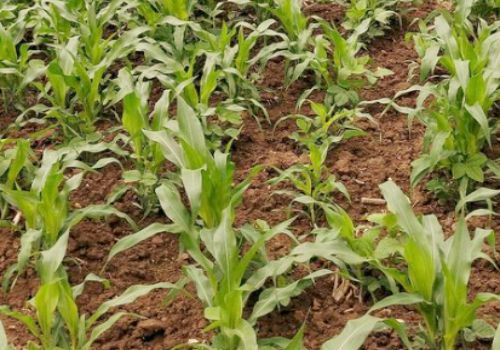
After planting, water and fertilize reasonably according to the plant's growth condition. Water promptly during drought, but remember to drain during the rainy season to prevent excessive water accumulation from affecting the root system. Also do a good job of cultivating and weeding to keep the plants growing robustly. In addition, pay attention to pests and diseases. The main pests and diseases of Rosa roxburghii include powdery mildew, aphids, nettle caterpillars, bagworms, black spiny whiteflies, and fruit borers. These diseases and pests all affect plant growth, ranging from weak growth in mild cases to death in severe cases, so pest and disease control must be done well.
Summary: The above is the relevant introduction to the cultivation methods of Rosa roxburghii. Growers can refer to the above cultivation methods when planting Rosa roxburghii. I hope this is helpful to those who need it!
Rosa roxburghii Pictures and Related Introduction
Have you ever heard of Rosa roxburghii? I heard that this plant is a wild specialty of the Guizhou Plateau and is called the "King of Vitamin C." It can be eaten raw, decocted in soup, brewed as tea, soaked in liquor, or made into a paste for consumption. It is very nutritious, but it also has some side effects. So what exactly does this Rosa roxburghii look like, mainly in which regions is it distributed, how should it be cultivated, and what are its main values? Today, let me introduce Rosa roxburghii to everyone.
Geographical Distribution:
Rosa roxburghii: It is a wild resource unique to the Yunnan-Guizhou Plateau and the western Sichuan Plateau, with Guizhou and western Hunan as the main producing areas, followed by Yunnan. It is also distributed in the Liangshan region of western Sichuan, northern Sichuan, and eastern Sichuan. In addition, Guilin Town in Tongnan County, Chongqing, also has a long history of propagation and is still widely distributed in mountainous areas, where local people call it "thorn plum" or "thorn pineapple." This green resource has not been well developed and utilized, which is a great neglect of nature's selfless gift.
The distribution and development are roughly as follows:
Bijie, Liupanshui, and Tongren in Guizhou are the areas richest in Rosa roxburghii resources. Anshun currently cultivates a seedless Rosa roxburghii, which is very popular among consumers. The area around the provincial capital Guiyang also has wide distribution. It can be said that Rosa roxburghii has a long history in Guizhou as a medicinal and edible variety. People eating it as a fruit or using it to make wine has become a habit. In the new harvest season from August to September each year, dried and fresh Rosa roxburghii fruits can be seen for sale in the streets and alleys, and some manufacturers regard it as a "sacred fruit of Yanhuang" for development, producing beverages that enter supermarkets. Rosa roxburghii is both good and inexpensive.
Kaifeng in Henan began planting Rosa roxburghii in the old Yellow River course area in 1993. Compared with the southwestern planting areas, the harvest season for Rosa roxburghii is about one month earlier, harvested during the dog days of July-August. It is a main producing area for dried Rosa roxburghii fruit.
Western Hunan also has relatively rich wild Rosa roxburghii resources, mainly distributed in some townships of Fenghuang, Baojing, Jishou, Guzhang, Yongshun, Longshan, and other counties and cities. According to statistics before 2000, the whole prefecture had about 4 million plants, with an annual output of more than 500,000 kg. Because of its rich vitamin C content and unique flavor, Rosa roxburghii is mainly used to produce various types of Rosa roxburghii beverages such as Rosa roxburghii raw juice, Rosa roxburghii royal jelly, Rosa roxburghii wine, Rosa roxburghii cola, and Rosa roxburghii soda, and can also be used to produce Rosa roxburghii preserved fruit, Rosa roxburghii canned food, Rosa roxburghii jam, and so on. The Liangshan region of Sichuan has always had a history of using Rosa roxburghii in dishes (remove the thorns, wash clean, remove the seeds, pound into juice, add a little salt, and it tastes delicious) and soaking it in liquor. Some areas of Xichang and Mianning have already developed local specialty enterprises mainly focused on Rosa roxburghii drinks, juice, and Rosa roxburghii wine.
It is also distributed in the river valley areas of the Enshi Autonomous Prefecture in Hubei.
Cultivation Techniques:
Nursery stock propagation is divided into two methods: seed propagation and vegetative propagation.
Seed Propagation
It is divided into spring sowing and autumn sowing. Rosa roxburghii seeds have no obvious dormant period. If sown immediately after the seeds mature in autumn, the germination rate and seedling emergence rate can reach over 90%. For autumn sowing, collect seeds after the fruit matures in early to mid-September and sow them immediately in the seedbed. Seedlings emerge in mid-to-late October. They are transplanted to the nursery in March of the following year and can leave the nursery by the end of the year. However, in severely cold winter areas, plastic film covering is needed to prevent freezing. Spring sowing is best from late February to early March. Seedlings emerge in early April and are transplanted to the nursery from late May to early June. The day before sowing, place the seeds in warm water at 50°C-60°C and soak for 12 hours-24 hours. Take them out, wash them, and sow. This can advance germination by 5 days and increase the germination rate.
Vegetative Propagation
The branches of Rosa roxburghii readily produce adventitious roots, and the roots readily form adventitious buds. Propagation and seedling raising can use cuttings, division, and layering.
Distinguishing Good from Poor Quality:
Look at Appearance
Finished Rosa roxburghii dried in sunlight should have a yellow or brown appearance, with little surface damage and a hard outer shell. Conversely, inferior products have a murky, dim color, many impurities, and excessive color difference.
Observe the Liquor Color
When good tea is brewed with boiling water, the liquor color should be yellow-brown or black tea colored, and clear and transparent. Conversely, cloudy color indicates an inferior product.
Taste the Tea
Good Rosa roxburghii tea brewed with boiling water has a unique fresh, sweet-and-sour taste. When brewed with warm boiled water, the sourness is more prominent (warm boiled water can reduce the loss of vitamin C, thus retaining more sourness). Tea brewed from inferior fruit has an odd taste, and sulfur-fumigated Rosa roxburghii tea has an astringent and bitter feeling.
Smell the Aroma
Take a handful of loose fruit, cover it for a while, then put it under your nose and smell it. If you can smell a pungent, irritating odor, then it can be certain that it has been fumigated with sulfur. For Rosa roxburghii that has already been packaged and sealed, when opening the package for the first time, you should immediately smell the unique fresh fragrance of Rosa roxburghii. Conversely, an odd smell or pungent smell indicates an inferior product or sulfur-fumigated fruit.
Main Values:
Rosa roxburghii has very high medicinal value. Its flowers, leaves, fruit, and seeds can be used as medicine, with effects of strengthening the stomach, promoting digestion, nourishing, and stopping diarrhea. In particular, Rosa roxburghii is rich in superoxide dismutase (SOD). SOD is internationally recognized as an active substance with anti-aging and anti-cancer effects, and it also has antiviral and anti-radiation effects. It is widely used in the prevention and treatment of cardiovascular, digestive system, and various tumor diseases.
The fruit of Rosa roxburghii is also a top-grade raw material for processing health foods. The mature fruit is thick-fleshed and sweet-and-sour, and the fruit is rich in sugar, vitamins, carotene, organic acids, more than 20 kinds of amino acids, more than 10 kinds of trace elements beneficial to the human body, and superoxide dismutase. In particular, its vitamin C content is extremely high, the highest among current fruits, with 841.58 mg to 3541.13 mg per 100 grams of fresh fruit, 50 times that of citrus and 10 times that of kiwi fruit, earning it the reputation of "King of Vitamin C."
The fruit of Rosa roxburghii has very high nutritional value and medical value. Its taste is sour, astringent, and neutral; it promotes digestion and strengthens the spleen, and astringes to stop diarrhea; it is used to treat indigestion and abdominal distension, dysentery, enteritis, vitamin C deficiency, and so on. Rosa roxburghii juice also has the effect of blocking the synthesis of N-nitroso compounds in the human body and has an anti-cancer effect; it has special efficacy in treating human lead poisoning. The effective component in Rosa roxburghii extract, vitamin C, has effects such as anti-aging and prolonging female adolescence! The fruit of Rosa roxburghii can be processed into juice, jam, fruit wine, preserved fruit, candy, pastries, and so on. Rosa roxburghii is also a very good ornamental flower and hedge plant. In 1996 in the last century, the price of Rosa roxburghii fruit once soared. The main reason was that Sanzhu Oral Liquid, which was popular in the medical field at the time, also used Rosa roxburghii extract as an ingredient!
The above is some related introduction to Rosa roxburghii. I hope it is helpful to everyone. I hope everyone can master the methods for distinguishing the quality of Rosa roxburghii to avoid buying poor-quality ones. Although Rosa roxburghii is very nutritious, I would like to remind all friends here that no nutritional product can be eaten too much, and the same goes for Rosa roxburghii. For example, dried Rosa roxburghii is cool in nature, and eating it every day may cause diarrhea. So when we eat it, we need to pay attention to controlling the amount. In addition, remember that Rosa roxburghii cannot be eaten together with shellfish aquatic products.