Introduction to daylily cultivation methods: growing this precious wild vegetable
Daylily is also called “brain-boosting vegetable” and other names. It is a relatively precious wild vegetable in China. Because of its high nutritional value and its effects such as reducing inflammation, clearing heat, improving eyesight and calming the mind, it is loved by many people. In addition, its high survival rate, promising cultivation prospects and relatively high economic profit have made many growers want to cultivate it too. So let me introduce the cultivation methods of daylily to everyone:
I. Planting time
Daylily is currently a seasonal vegetable on the market. Daylily is only produced in a certain season, generally from June to August. Daylily can generally be planted in both spring and autumn. Its growth period is divided into seven stages: the sprouting stage, the leaf-unfolding stage, the bolting stage, the flowering stage, the leaf-withering stage, the leaf-unfolding stage of the following year and the dormant stage. This also shows that planting daylily can continue to be harvested for several years, and it is very economical.
II. Land selection and land preparation
Daylily is not very strict about soil requirements. Its ability to resist poor soil and drought is extremely strong, and its lifespan is also relatively long. It can generally grow for 5-8 years, so it is more suitable for being planted alone in areas such as hillsides and mountainous land. However, if it can be planted in places with relatively loose and fertile soil, it will grow better and the yield will be higher. At the same time, it can also extend its service life. When preparing the land, try to plow deeply, as this can avoid the threat of some pests and diseases as much as possible and also prevent lodging.
III. Planting methods
There are 2 planting methods for daylily. The first is raising seedlings by sowing. Put the daylily seeds into a seedbed to raise seedlings, and transplant them after the seedlings grow. However, this method has 2 disadvantages: the yield is not high and the quality is not good. Secondly, after planting, it only blooms in the 3rd year, and only in the 4th year can it reach normal yield. So the first method is generally not recommended. The second method is propagation by division. After harvesting daylily in autumn or after dormancy, separate the young roots newly grown from the old plants and plant them. After planting in this way, they can bloom the following year, and the harvesting efficiency will be much higher. If there are no old plants, you can also buy them from others.
IV. Field management
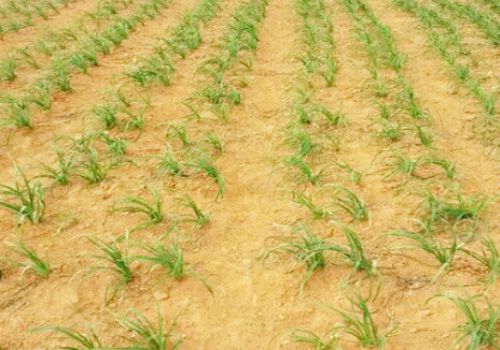
Daylily should be planted at a reasonable density, generally with a spacing of 35-40 cm per plant. The most suitable temperature for daylily growth is around 15-20 degrees, so temperature regulation is needed during its flowering period. This can promote flowering and improve quality and yield. The most important thing for daylily is fertilizer management. Generally, fertilizer should be applied three times. The first fertilization is at the time of sprouting, applying a mixed fertilizer of nitrogen fertilizer, phosphate fertilizer, potassium fertilizer and urea to promote sprouting and shorten the sprouting period. The second fertilization generally uses urea and potassium fertilizer to promote the growth of new branches. The last fertilization is at the time of flowering, which helps shorten the flowering period for harvesting.
V. Disease prevention
Daylily has relatively few diseases, that is, sometimes some aphids or leaf spot disease appear. So when few aphids are found, insects can be removed manually. If there are many, dimethoate emulsifiable concentrate should be sprayed. After spraying, harvesting cannot be carried out within half a month. Next is leaf spot disease, for which chlorothalonil is generally enough.
VI. Harvesting and processing
Daylily generally blooms at night, so it is generally harvested every morning. Once noon comes, it withers. If there is rainy weather, try to harvest one day in advance, because at that time its growth speed is very fast. If you still follow the previous timing, it will be useless. After harvesting, daylily needs to be processed. Generally, first steam it dry, then sun-dry it, and finally pack it well.
Summary: The above is the relevant introduction to daylily cultivation methods. Growers can refer to the above daylily cultivation methods when planting. I hope it is helpful to friends in need!
The flower language and plant culture of daylily
The flower language of daylily
The flower language of daylily is hidden love, dispelling sorrow and forgetting worries. In China, daylily has the same meaning as today's carnation; both are mother's flowers.
The plant culture of daylily
As mentioned above, it is also called the forget-worry grass. In one piece in the Classic of Poetry, there is a story: after a woman married, her husband went on a distant military expedition. The woman planted daylily at home to forget worries and dispel sorrow, relieving her longing. So it was called "forget-worry grass" by people.
In ancient times, there was also a related story about daylily. It is said that before Chen Sheng's uprising, he was poor and destitute, and his body was swollen from hunger. One day, he went to a household surnamed Huang to beg for food. The old woman gave him three bowls of daylily to eat. Chen Sheng felt at the time that it was very fragrant and sweet, better than any delicacy, and before long Chen Sheng's swelling also healed. Later, after Chen Sheng became king, he invited the Huang mother and daughter into the palace. The old woman again brought some daylily for him to eat, but Chen Sheng felt it was no longer so delicious. The old woman told Chen Sheng that it was because he had eaten too much fine wine and good food, so the wild vegetable naturally tasted bad. After hearing this, Chen Sheng felt very ashamed. Later, the mother and daughter stayed in the palace to plant daylily. After a physician discovered its value, it became a Chinese herbal medicine.
In ancient times, daylily was also often cited by poets and had high literary value. For example, Su Dongpo, Gao Qi, Su Zhe and others all wrote "Daylily". There are also many other poems in which daylily appears.
What wild vegetables are suitable for artificial cultivation?
Introduction: Wild vegetables can be planted all year round. The cultivation method used should be determined according to the season and the characteristics of the wild vegetables. As early as the 1998 International Symposium on Mountain Resource Development and Ecological Protection, experts predicted that mountain wild vegetables would become green food on the dining table in the next century. Nowadays, wild vegetables are getting closer and closer to people's lives and have gradually become a green and healthy dietary trend. So, what wild vegetables are suitable for artificial cultivation?
Common wild vegetable varieties suitable for artificial cultivation include: large-leaf dandelion, ginseng vegetable, chrysanthemum greens, common Lycium chinense, high-yield Lycium chinense, giant Lycium chinense, Chinese artichoke, Gynura bicolor, Gynura divaricata, Lysimachia clethroides, water celery, vegetable wolfberry, Anredera cordifolia, green heart-calming vegetable, red heart-calming vegetable, Panax notoginseng vegetable, Artemisia selengensis, fern, Indian aster, Houttuynia cordata, daylily, mint, small-leaf chicory, Allium macrostemon, wild chive, Chinese toon, lemon balm, Rosa roxburghii, etc.
Mountain wild vegetable cultivation
In cold seasons, winter warm sheds can be used. In spring and autumn, arched sheds or open-field cultivation can be used. For wild vegetables that do not like strong light when planted in hot summer, shade nets should be used for cultivation.
Common cold-resistant varieties include: shepherd's purse, noodle vegetable, Yin Chen, wild large-leaf dandelion, common wild dandelion, vegetable Isatis indigotica, water celery, Indian aster, Houttuynia cordata, Lysimachia clethroides, Artemisia selengensis, heart-calming vegetable, Allium macrostemon, Lycium chinense, Chinese artichoke, chrysanthemum greens, Shanmuzha, chicory, Daqingye, lemon balm, Chinese toon, etc., wild chive, fern, chicory, vegetable wolfberry, mint.
Perennial wild vegetable varieties mainly include: Lycium chinense, Chinese artichoke, wild dandelion, large-leaf dandelion, Yin Chen, vegetable Isatis indigotica, ginseng vegetable, chrysanthemum greens, Shanmuzha, bitter vegetable, small-leaf chicory, water celery, green heart-calming vegetable, red heart-calming vegetable, Gynostemma pentaphyllum, watercress, Gynura divaricata, Gynura bicolor, Lysimachia clethroides, vegetable wolfberry, Anredera cordifolia, Artemisia selengensis, Houttuynia cordata, Indian aster, fern, plantain, mint, Chinese toon, Qingqing vegetable, Daqingye, Allium macrostemon, wild chive, Panax notoginseng vegetable, lemon balm, etc.
The remaining varieties are annual or biennial.