How much is the latest price of seedless head lettuce per jin? Keep this high-yield cultivation technique
Lettuce is a vegetable native to the Mediterranean coast of Europe. After being introduced to our country, it became a widely cultivated and eaten vegetable, and one type of it, head lettuce, can be eaten raw. So what is the latest price of head lettuce per jin? What are the high-yield cultivation techniques? Be sure to keep the content introduced below.
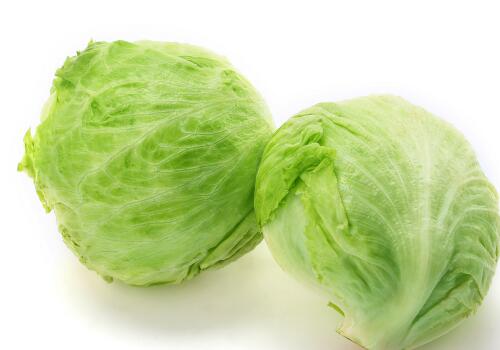
I. Basic information about head lettuce
1. The origin of head lettuce
Lettuce is an annual or biennial herbaceous plant, domesticated from wild species. The earliest people in the world to use this vegetable were the ancient Greeks and Romans. Head lettuce (also called ball lettuce, cabbage lettuce, curled lettuce, cabbage lettuce, cabbage lettuce) was gradually introduced and developed in our country only after the 1970s. It originated in the inland Near East of Asia Minor or the Mediterranean coast. Many countries and regions such as North America, South America, Western Europe, Australia, New Zealand, and Japan all regard it as an indispensable important household vegetable in fast food, and it is cultivated in most areas of our country.
2. The value of head lettuce
Head lettuce is a vegetable low in sugar and fat and rich in vitamins, minerals, and organic substances. It has effects such as improving appetite, relieving pain, lowering cholesterol, opening the chest and diaphragm, promoting qi, strengthening bones and muscles, removing bad breath, whitening teeth, improving eyesight, promoting lactation, calming, inducing sleep, dispelling cold, reducing inflammation, and treating anemia and neurasthenia through diuresis. It is suitable for people with high blood pressure, heart disease, anemia, and weak patients, but people with eye diseases should not eat it.
II. What is the latest price of head lettuce per jin?
1. Fresh head lettuce price
The price of head lettuce varies depending on the place of origin, transportation cost, variety, etc. For example, at present the price of head lettuce at the Beijing Dayanglu Agricultural and Sideline Products Wholesale Market is 3.5 yuan/jin, and the price of 0.3 kg head lettuce in Baiyun District, Guangzhou City is 3.9 yuan/jin.
2. Head lettuce seed price
At present, the price of Ruili head lettuce seeds in Hejian City, Cangzhou City, Hebei Province: buy one piece or more for 1 yuan/piece, buy 20 pieces or more for 0.8 yuan/piece, buy 50 pieces or more for 0.5 yuan/piece.
III. What are the high-yield cultivation techniques for head lettuce?
Good cultivation techniques can not only improve crop quality but also increase yield. Let us learn below about the high-yield cultivation techniques for head lettuce.
1. Planting time of head lettuce and selection of varieties
Head lettuce is suitable for open-field or protected cultivation in spring and autumn. New varieties that can also be planted in early summer include: Jingyou No. 1, Huangdi, etc. New varieties with broad seasonal adaptation and planting range include: Lülei, Lümeng, etc.
2. Seedling-raising techniques for head lettuce
Before planting head lettuce, prepare the soil and apply sufficient organic fertilizer. The sowing period is calculated according to the harvest period and growth period. In Kunming and central Yunnan, it can be sown almost all year round, but quality is good and yield is high when marketed from October to April of the following year. Early-maturing varieties are sown in spring and summer, and mid- to late-maturing varieties in autumn and winter. In addition, before sowing, water thoroughly to ensure bottom moisture and broadcast evenly, keep the soil moist, and after thinning apply one application of diluted human feces and urine; for topdressing, add a certain amount of phosphate fertilizer.
3. Transplanting techniques for head lettuce
Before transplanting, apply sufficient basal fertilizer. In the rainy season, the bed width is 1 m and the bed height is 20-25 cm, with double-row transplanting; in the dry season, the bed width is 2-3 m and 6-9 rows are planted.
4. Watering, fertilizing, and intertillage weeding management for head lettuce
Fertilizer: From transplanting to the seedling recovery stage, keep the soil moist. Generally, the transplanting water should be watered sufficiently, then water again after about seven days and then cultivate to preserve soil moisture. During the vigorous growth stage and early head-forming stage, lettuce needs more water, so keep it moist frequently. During the rosette stage, apply one nitrogen fertilizer with water. After transplanting, water 2-3 times. After seedling recovery, in order to promote root development, carry out intertillage in time to loosen the surface soil and increase aeration. Before the rows close, carry out the third intertillage and weed in time. Intertillage should not be too deep.
5. Pest and disease control for head lettuce
During the growth period, head lettuce is easily attacked by pests and diseases such as aphids, cabbage caterpillars, cotton bollworms, downy mildew, soft rot, and tipburn. Preventive measures should be taken in advance, selecting high-efficiency and low-toxicity pesticides, and harvesting head lettuce with moderate firmness in time.
In addition, when harvesting head lettuce, cut it off from the ground and keep 2-3 outer leaves to facilitate long-distance transportation.
How much are oriental raisin tree seeds per jin? Oriental raisin tree seed prices and planting methods
Oriental raisin tree, also known as chicken-claw lian, golden hook pear, guaizao'er, etc., is a deciduous tree plant of the genus Hovenia in the Rhamnaceae family. The fruit stalk contains a large amount of glucose and potassium malate. After frost, it tastes sweet and can be eaten raw or used to make wine. The wood has moderate hardness and beautiful grain and is used for construction, furniture, and arts and crafts. Let us take a look below at oriental raisin tree seed prices and planting methods!
How much are oriental raisin tree seeds per jin?
The price of oriental raisin tree seeds is about 25-40 yuan per jin, but prices vary depending on seed quality, variety, place of origin, and market. Oriental raisin trees are distributed in various places in China's Yellow River basin and Yangtze River basin. In production, they are mainly propagated by seed, and can also be propagated by layering and root division. Generally, planting begins to bear fruit only after 5 to 6 years. The flowering period is June, and the fruiting period is August-October. According to modern dwarfing and branch-pulling techniques, fruiting can be advanced to 3-4 years.
Growing conditions for oriental raisin trees
Oriental raisin trees have a long history of cultivation and use in our country. The tree can reach more than 10 m in height and has strong environmental adaptability. It is drought-resistant, cold-resistant, and tolerant of relatively barren soil. It likes sunlight and mostly grows below 1000 m altitude in valleys, beside streams, roadsides, or relatively moist hillsides and hills. It is often cultivated beside courtyards and houses and often grows mixed with other evergreen and deciduous broadleaf tree species. If the soil is deep, fertile, and moist, it can grow rapidly.
How are oriental raisin tree seeds propagated?
1. Seed collection: Oriental raisin tree seeds are collected when they mature in November. The seed coat is reddish brown. One fruit contains 3 seeds. The seed coat is leathery, and the embryo is yellow-white and not easy to absorb water.
2. Seed germination: After collection, oriental raisin tree seeds are germinated by the wet sand stratification method, stored in layers of one layer of seeds and one layer of wet sand. After 50-60 days, raised radicles can appear.
3. Sowing method: Oriental raisin tree seeds can be sown in holes or drills. Before sowing, prepare the seedbed (small bed) well, 2 to 3 cm deep, then cover the bed surface with rice straw, water thoroughly, and sow about 10 jin per mu.
4. Seedling management: During the seedling stage, oriental raisin trees should be watered and fertilized frequently to promote growth. When 3 to 5 true leaves have grown, thin the seedlings, keeping the strong and removing the weak. When they grow to 70-100 cm, they can be transplanted.
Planting methods for oriental raisin trees
1. Land selection and preparation: The oriental raisin tree has strong adaptability and likes to grow in sunny, moist, fertile soil with good drainage and neutral pH. After selecting the land, dig pits 1 m deep and 1 m wide. On sloping land, dig fish-scale pits to prevent soil erosion, and apply more fallen branches and leaves in the pits for planting trees.
2. Post-planting management: Oriental raisin tree seedlings grow slowly, so management of young trees should be strengthened. Every year in spring and summer when weeds grow, loosen the soil and weed. Water in time during drought. Apply fertilizer three times in March of spring, June of summer, and November of winter to promote growth.
3. Shaping and branch pulling: After planting, in the second year when the young tree grows to 1-1.5 m, bend the main trunk to let it produce secondary branches, then use the same method to pull the branches so they spread in all directions. This can lead to earlier fruiting and more fruit, thereby increasing economic income.
4. Pest and disease control: The oriental raisin tree has relatively strong vitality and good disease resistance. During the seedling stage, leaf blight and aphid damage are common. For leaf blight, use 1:1:400 Bordeaux mixture before and at the early stage of the disease. For aphids, spray with a 2000-fold aqueous solution of 40% dimethoate.
5. Harvest and processing: In winter after Frost's Descent in November, after several frosts, when the fruit stalk turns reddish brown, pick the oriental raisin tree. Cut off the fruit branches and store them in a cool place. After 7 to 10 days of after-ripening, they can be sold fresh, or dried in the shade and pressed for juice for sale.
How much is hardy kiwifruit per jin
Kiwifruit is a relatively familiar fruit for us, with many varieties, including red-fleshed, yellow-fleshed, and green-fleshed ones. Hardy kiwifruit is a type of kiwifruit, similar in appearance to kiwifruit, with very high nutritional value and rich in vitamins. So about how much is this hardy kiwifruit per jin?
How much is hardy kiwifruit per jin
The market price of hardy kiwifruit is relatively high, generally about 50 yuan per jin. Hardy kiwifruit is one of the most successfully artificially domesticated and cultivated wild fruit tree varieties. Its vitamin C content is 80-100 times that of apples and pears and 5-10 times that of citrus. It also contains multiple nutrients such as amino acids, Vc, carotenoids, and magnesium, iron, potassium, and sodium, and has effects such as nourishing and strengthening the body and promoting fluid production and moistening the lungs.
What benefits does hardy kiwifruit have?
1. Stabilizing mood: Hardy kiwifruit can regulate hormone and nerve transmission effects within cells and can effectively help patients with depression stabilize mood and calm the mind. The natural inositol it contains can help brain activity and further promote the effect of stabilizing mood on a basic level.
2. Preventing and fighting cancer: Hardy kiwifruit contains a substance called anti-mutagenic glutathione, which helps inhibit cancer-inducing gene mutations and has a certain inhibitory effect on cancer cell lesions such as liver cancer, lung cancer, skin cancer, and prostate cancer.
3. Strengthening physique: Hardy kiwifruit is also a tonic and strengthening product. The nutrients in it can significantly improve body activity, promote metabolism, coordinate body functions, block carcinogenic substances, strengthen physique, delay aging, and also prevent cardiovascular diseases.
4. Beauty and skin care: The vitamin C rich in hardy kiwifruit has antioxidant functions and has a positive effect on eliminating human wrinkles and fine lines. In addition, kiwifruit is rich in vitamins and dietary fiber but low in fat, and has certain effects on weight loss, fitness, and beauty and skin care.
5. Detoxifying and clearing the intestines: Hardy kiwifruit contains very rich dietary fiber. These dietary fibers not only have the effects of lowering cholesterol and promoting heart health, but also help digestion, remove toxins, and prevent constipation, and can effectively remove and prevent harmful metabolites accumulated in the body.
What is hardy kiwifruit
Hardy kiwifruit is a large deciduous vine plant of the genus Actinidia in the Actinidiaceae family; branchlets are basically hairless or, when young, sparsely covered with soft villi or down; leaves are membranous or papery, ovate, oblong, broadly ovate to nearly round, apex acute and shortly pointed, base rounded to shallowly cordate, green on the back; inflorescences are axillary or extra-axillary, bracts linear, flowers green-white or yellow-green, fragrant, sepals ovate to oblong, petals wedge-shaped obovate or ladle-shaped broadly obovate, filaments filiform, anthers black or dark purple, oblong arrow-shaped, fruit spherical to columnar oblong, 2-3 cm long, green-yellow or purplish red when mature. Seeds are about 2.5 mm in longitudinal diameter.
This species is strongly differentiated and widely distributed. In China, it is distributed from the northernmost Heilongjiang bank to the Wuling mountain area in Guangxi in the south. It grows in mixed forests or mixed woods with sufficient moisture.
The fruit is used medicinally as a tonic, antipyretic, and astringent; it is also a food with very high nutritional value. The fruit can be eaten raw and can also be made into jam, candied fruit, canned food, wine, etc. The flowers are a honey source and can also yield aromatic oil. This species can serve both as an ornamental tree species and as a fruit tree.
Precautions for eating kiwifruit
First, we should pay attention to the contraindications of kiwifruit and what foods it cannot be eaten with. We have already answered above that milk, crab, carrot, animal liver, cucumber, etc. are best not eaten together with kiwifruit to avoid physical discomfort.
Second, because kiwifruit is a cold-natured food, it should also be eaten in moderation during menstruation and pregnancy. Do not eat too much, and expectant mothers with threatened miscarriage should pay even more attention and eat less of this kind of cold-natured food.
In addition, after eating pickled vegetables such as sauerkraut, it is recommended that everyone eat kiwifruit. Why is that? Because after pickling, the vitamin C in sauerkraut is almost completely lost, while kiwifruit is rich in vitamin C. One kiwifruit can almost meet the vitamin C needed by the human body for a day, so it is a good choice!
Finally, giving kiwifruit to babies also requires attention, because according to a British scientific study, among 300 respondents there were 80 children, and 2/3 of the children had adverse reactions when eating kiwifruit for the first time, especially babies within one year old, whose reactions were strong. Therefore, when mothers give kiwifruit to babies, it is best to first dip some juice for the baby to taste, and only after confirming there is no problem give it to the baby, so as to avoid allergies.
As mentioned above, hardy kiwifruit is not much different from ordinary kiwifruit, but hardy kiwifruit has low yield, tastes sweeter and more delicious, and has higher nutritional content, so its price is much higher than ordinary kiwifruit. As the saying goes, things are precious when they are rare, which also makes some sense.