A guide to growing flowers on a north-facing balcony: which flowers are suitable?
It is generally called a shaded balcony, usually close to the kitchen or bathroom, and is generally used for storing odds and ends. It is not suitable for planting too many flowers, but you should still choose some of the following shade-tolerant plants, such as asparagus fern (Asparagus densiflorus) and gardenia (Gardenia jasminoides), to add beauty to the home.
In addition, you can also choose some plants resistant to harmful gases such as sulfur dioxide for planting, and replace them according to the different seasons. They can be enjoyed for their beauty and also have functions such as catching dust, resisting pollution, and purifying the environment. Such as bigleaf hydrangea (Hydrangea macrophylla), four o'clock flower (Mirabilis jalapa), French marigold (Tagetes patula), wax begonia (Begonia semperflorens), Japanese honeysuckle (Lonicera japonica), and split-leaf philodendron (Monstera deliciosa), etc.
Set up planting troughs along the outer edge of the balcony. You can plant sun-loving plants such as asparagus fern (Asparagus densiflorus) and purple spiderwort (Tradescantia pallida), letting their slender, soft green leaves hang down, forming a natural "green curtain" for the balcony.
Tulip balcony cultivation methods and care
Tulip, also known as foreign lotus and Caochaxiang, is a plant of the genus Tulipa in the lily family. It is a perennial herbaceous bulbous flower. The bulb has a brown outer membrane. The flowering period is from March to May. The flowers are cup-shaped, solitary at the top of the stem, opening during the day and closing in the evening. There are many horticultural cultivars, and flower color and flower shape vary by cultivar. It is native to the Mediterranean coast, Turkey, China, and other places, and prefers a cool, humid climate and sufficient light. The optimum growth temperature is 15-25°C.
1. Arrangement
Tulips have gorgeous flower colors and a brilliant appearance. For potted cultivation, dwarf cultivars should be chosen. When in bloom, they can be arranged in groups in a corner, or arranged along the edge of the balcony, or placed alone on a coffee table.
2. Four-season care
(1) Autumn is suitable for placement on east-, south-, west-, and north-facing balconies. From late October to November each year (when the temperature is below 9°C), select plump, well-developed tulip bulbs, soak them in an 800-fold carbendazim or chlorothalonil solution for 30 minutes, and then plant them. The pot should preferably use well-drained sandy loam soil. Since the bulbs already store sufficient nutrients, the soil fertility requirement is not high. The planting depth should preferably cover the top of the bulb with 3-4 cm of soil. After planting, water thoroughly and place in a cool location for cultivation. If planting tulips that have not undergone low-temperature treatment, they should be placed in a low-temperature environment throughout autumn and winter for cultivation. In a low-temperature environment, tulips only grow roots and do not sprout. They only grow leaves and bloom after the temperature rises the following spring. In the early stage after planting, they should be placed in an environment of about 5-9°C for cultivation, to inhibit leaf growth and promote root development. After the root system has finished growing (about 3 weeks or so), move them to an enclosed balcony, raise the temperature to above 10°C, and let them grow leaves. During the growth period after leaf growth, keep the soil moist and provide sufficient light, but do not water too much. If moved into a high-temperature environment at the early stage after planting, the leaves will grow faster while the root system develops poorly, affecting the roots' absorption of water. Due to lack of water, the nutrients in the bulb cannot be converted and utilized in time, which will affect the later growth and flowering of the tulip.
(2) Winter is suitable for placement on east-, south-, and west-facing balconies. Tulips are relatively cold-tolerant and can overwinter outdoors under natural conditions at around -5°C. If the temperature is too low, attention should be paid to cold protection. Tulips that have not undergone low-temperature treatment should overwinter at low temperature. At home, they can be placed on a balcony with sufficient light at -5-0°C for cultivation. In winter, tulips grow slowly, so keeping the soil moist is sufficient, and not much management is needed. Tulips forced for flowering in winter can have the temperature raised after the potted plants grow leaves, and they can bloom during the Spring Festival. After flowering, placing them in a cool place helps prolong the flowering period. Tulips grown for forcing have no cultivation value after the flowers fade and can be discarded.
(3) Spring is suitable for placement on east-, south-, and west-facing balconies. Tulips that have not undergone low-temperature treatment begin to grow after the temperature rises in spring, and the soil should be kept moist. When the temperature rises to 8-10°C, the young shoots begin to emerge from the soil. Apply fertilizer once at the bud stage. If seeds are to be kept, pay attention to water and fertilizer management after flowering, which is beneficial for the enlargement of the underground bulbs; if seeds are not to be kept, they can be discarded after the flowers fade. In early June, after the aboveground stems of tulips kept for seed have withered and died, the underground bulbs can be dug up, dried in the shade, and hung in a mesh bag for storage in a ventilated, dry, cool place.
(4) Summer is the dormant period in summer. It should be noted that in the early stage of dry storage, the temperature should be around 20°C, and freshly dug tulip bulbs must not be placed in a low-temperature refrigerator for storage.
3. Flowering-period pruning
Remove the tulips with yellowed and withered leaves from the pot, take the large bulbs and place them at 34°C for 1 week, then store them at 20°C for 1 month, then move them to 17-20°C for storage for 1-2 weeks, and then refrigerate them at 9°C until planting (called 9°C bulbs). They can also be refrigerated at 13-15°C for 3 weeks, then refrigerated at 2-5°C for 6 weeks before planting (called 5°C bulbs). Treated 5°C tulip bulbs bloom about 2 months after planting, while 9°C bulbs bloom slightly later.
How to grow cymbidium orchids in balcony pots, and management methods for balcony-potted cymbidium orchids
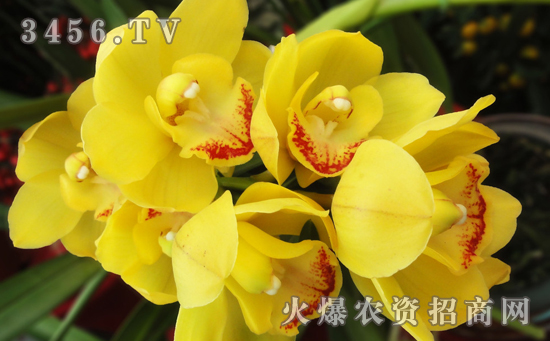
Cymbidium orchid flowers are delicate and beautiful, with elegant colors and overflowing fragrance. They are one of the common indoor flower plants, so cymbidium orchids are deeply loved by people, and naturally many people grow them. So how do you grow cymbidium orchids in balcony pots? Below is an introduction to management methods for balcony-potted cymbidium orchids.
1. Balcony arrangement
Cymbidium orchids have both the elegance of Chinese orchids and the colors of Western orchids, and are a relatively popular and best-selling flower internationally. Their flower posture is bold, the colors are bright, the flower shape is neat and the texture is firm, and they do not fade for a long time, making them quite suitable for home display and viewing. When in bloom, they can be placed on a balcony with light, or placed in a bright spot on the balcony.
2. Management methods for balcony-potted cymbidium orchids
(1) Spring is suitable for placement on east-, south-, and west-facing balconies. Repot in April-May. The potting soil is generally made by crushing pine bark to 1-1.5 cm in size, steaming off the oils, and mixing in a small amount of peat as the growing medium (available from horticultural companies). When planting, it should not be too shallow, and the pseudobulb heads should not be buried in the soil.
After repotting, attention should be paid to shading. In spring, cymbidium orchids can be placed in a sunny place for cultivation. When the outdoor temperature is stable above 15°C, they can be moved outdoors for cultivation. Spring is the peak growth season for cymbidium orchids. Water once a day, and tap water must be left in an open container for 3-5 days before use. Fertilizer application depends on their size: small and medium seedlings require high-potassium fertilizer, while medium and large seedlings require high-phosphorus fertilizer. High-potassium or high-phosphorus formula Osmocote slow-release granular fertilizer can be applied as needed (available in flower markets).
(2) Summer is suitable for placement on east- and north-facing balconies. Cymbidium orchids are not tolerant of high temperatures and prefer a cool climate. Direct sunlight will scorch the leaves, so in summer they can be placed on a north-facing balcony for cultivation. In hot weather, water should be sprayed on the ground around the plant and on the plant to increase air humidity, while maintaining good ventilation to lower the temperature.
(3) Autumn is suitable for placement on east-, south-, and west-facing balconies. Autumn temperatures are suitable, and cymbidium orchids grow relatively well. In autumn, light can be gradually increased, and in late autumn they should be cultivated under full-light conditions. Pay attention to water and fertilizer management. A day-night temperature difference above 10°C is beneficial to the growth of cymbidium orchids and flower bud differentiation. During cultivation, try to create a certain temperature-difference environment.
(4) Winter is suitable for placement on east-, south-, and west-facing balconies. Winter is the season when cymbidium orchids send up scapes and bloom (January-March). Cymbidium orchids are not cold-tolerant, so attention should be paid to cold protection in winter. If the temperature is below 5°C, the leaves turn yellow and the flower stems also grow poorly. Ensure that the minimum nighttime temperature in winter is around 10°C, place them in a lighted place for cultivation, and pay attention to water and fertilizer management to promote flower bud growth.
If placed in an air-conditioned environment, attention must also be paid to replenishing air humidity in time. During flower bud growth, attention should be paid to controlling the nighttime temperature. A day-night temperature difference greater than 10°C is beneficial for scape emergence and flowering. It is best to control the nighttime temperature at 10°C and the daytime temperature at 25°C. The nighttime temperature must not be lower than 10°C, nor higher than 15°C, otherwise the flower buds will suddenly elongate. If the nighttime temperature reaches as high as 20°C, the leaves will be lush, while the flower buds will shrivel and turn yellow due to lack of nutrients.