What flowers are suitable for growing on an east- or west-facing balcony?
① Varieties of potted flowers placed on the balcony railing
Winter and spring flowers include: Milan (Aglaia odorata), wintersweet, tulip, clivia, daisy, etc. Summer flowers include: Lycoris aurea, tuberose, Tradescantia zebrina, banana shrub, hibiscus, canna, amaryllis, white michelia, daylily, etc. Foliage plants suitable for all four seasons include: sago palm, Buddhist pine, five-needle pine, Norfolk Island pine, etc.
② Arrangement at both ends of the balcony
The choice of varieties is roughly the same as for a south-facing balcony, and semi-shade-tolerant roses can also be used.
③ Arrangement on the balcony side close to the room
The method is the same as for a south-facing balcony, and neutral flowers such as azalea, winter jasmine, cyclamen and clearweed can also be placed there.
④ Balcony top
Hanging baskets of four-colour Tradescantia zebrina, a perennial herb. The stems are trailing or creeping, with long ovate leaves that have pointed tips, are green with purple-red and silvery-white longitudinal stripes, and have purple-red undersides. It bears small white and rose-coloured flowers. Grown in a small pot and hung in a hanging basket, its trailing branches are graceful and charming. Sedum morganianum, also known as blue grape. A succulent evergreen herb, short in stature and grape-like in form. Its long spindle-shaped fleshy leaves grow densely, and its thick, verdant, crystal-clear glossy stems and leaves curve downward like an animal's tail in a spike; used as a trailing hanging basket on a balcony, it is very elegant.
⑤ East- and west-facing planting trough
Choice of plants: winter jasmine has golden-yellow flowers and leafs out first; when it blooms from February to April it is known, together with plum blossom, narcissus and camellia, as one of the Four Friends in the Snow. Planted in a flower trough, its branches droop softly and are easy to train and shape; as a potted specimen it is even more full of antique charm. Scutellaria indica has numerous flowers in rich, brilliant colours, blooming from June to August. Planted in a flower trough, rows of dense flowers form a beautiful ribbon of bloom that is sure to delight the eye.
What flowers are suitable for growing on a south-facing balcony?
What flowers are suitable for growing on a south-facing balcony?
① Arrangement outside the balcony
Place potted flowers on the railing ledge outside the balcony. Generally choose upright varieties, with a few trailing varieties with softer branches spaced among them, letting their branches hang down to add beauty to the outdoor view. Winter and spring flowers for cultivation on a south-facing balcony include: calla lily, pansy, Calendula officinalis, Chaenomeles speciosa, narcissus, chrysanthemum, carnation, rose, osmanthus, kumquat, pomegranate flower, jasmine, cactus, gladiolus, dahlia, ornamental pepper with coloured leaves and fruits, etc.
② Arrangement at both ends of the balcony
At one end a ladder rack can be set up to place flower pots at different levels; the varieties of potted flowers can be chosen from the above according to the size of the ladder rack and their degree of shade or sun preference. At the other end set up a wind-blocking trellis and plant trailing climbing plants, such as bougainvillea, Tecomaria capensis, wisteria and other evergreen or semi-evergreen vines, which are suitable all year round.
③ Arrangement on the balcony side close to the room
A flower stand can be set up to hold some shade-tolerant small potted flowers, such as Christmas cactus, Epiphyllum, asparagus fern, enkianthus, Cymbidium goeringii, ferns, maidenhair fern, African violet, etc.
④ Arrangement on the balcony top
Hanging baskets are one way of arranging plants in three dimensions. They can be hung on walls or suspended in the air, and their planting and care methods are roughly the same.
When choosing soil for hanging baskets, consider their ventilation, tendency to dry out easily and indoor characteristics; it must be a lightweight special potting mix with good drainage and strong water- and fertiliser-retaining ability. Because a hanging basket is suspended in the air, it has good air circulation and dries out easily, so it is better to choose drought-tolerant plants, and in terms of form choose trailing vine plants so as to create a three-dimensional effect.
For hanging baskets, choose coloured flower pots or lightweight plastic flower pots that harmonise with the colour tone of your balcony; use special potting mix, evenly scatter slow-release fertiliser into the soil, and then plant the flowers and plants. After planting, place the hanging basket in a shaded spot for management, watering carefully so the soil does not dry out. Trailing plants begin to grow upward after 2 to 3 days, grow luxuriantly after 1 week, and after 2 weeks the plant can cover the surrounding soil completely.
Wall-mounted hanging baskets, being against a wall, cannot have plants planted at the rear of the basket, so planting is done in a semicircular shape. Spring hanging basket: primrose. The plant is not large, the flower colours are vivid and the form is graceful; it blooms around the Spring Festival and is a traditional indoor flower in our country; it prefers shade and fears strong light, likes warmth and humidity, requires cool conditions in summer, and has extremely strong vitality; planting a clump of flowers in a hanging basket makes the colour tone appear especially vivid and unusually luxuriant.
Summer hanging basket: Impatiens walleriana. Plant a mix of varieties in different colours; the leaves are emerald green. The flowers are large, with a diameter of up to 4 to 5 cm, and the colours are gorgeous: white, pink, carmine, rose red, purple-red, vermilion and bicolour. With suitable temperature and good management it can bloom all year round, and it tolerates high temperatures and drought. Planting a mix of impatiens of various colours in a hanging basket, when the flowers of all colours bloom together they are dazzling and the scene is full of splendour. The leaves fear strong summer sunlight, so it should be hung in a shaded spot at the top.
⑤ A planting trough is set below the edge of the balcony
The planting trough is generally 20 cm wide and 40 cm deep, planted with various flowers and green plants to form a ribbon of bloom, as beautiful as an inlaid decorative facing on the house. In the planting trough you can choose various annual, biennial or perennial flowers, such as Impatiens walleriana, petunia, marigold, azalea, gardenia, geranium and other flowers with long bloom periods, vivid colours and graceful flower forms, as well as year-round green spider plant, asparagus fern and ferns such as Nephrolepis auriculata, Pteris vittata, maidenhair fern, Boston fern and bird's-nest fern. Full-of-vitality potted or trailing plants, planted singly or mixed, form colourful decorative borders that dress the entire exterior of the house beautifully and in many forms.
Points to note when growing potted flowers on a balcony
Cities are densely populated, and most residents live in buildings; high-rise residents who grow flowers can only use a balcony or windowsill. If there is no planting trough, set aside a special area for growing flowers, or make your own flower pot stand, which can have several tiers, with light-loving plants on the upper tier and shade-tolerant flowers on the lower tier. You can also extend a board out from the balcony, fixed firmly with rebar or angle iron, with baffles or railings around the board to prevent flower pots from falling; you can also install several iron hooks on the balcony and eaves and put flower pots into baskets woven from rattan, bamboo or willow. This method uses space without occupying the usable area of the balcony, both achieving the result of three-dimensional greening and being very attractive.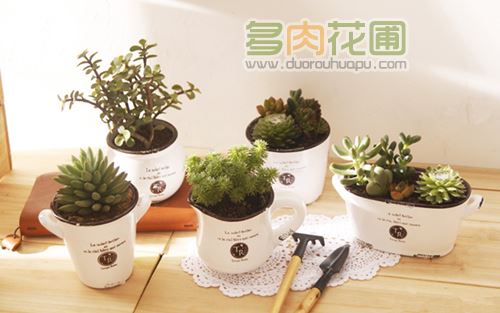 Points to note when growing potted flowers on a balcony
For some suspended balcony installations, regular inspections must be carried out to ensure safety. The planting trough can be made yourself from wooden boards, etc., and the flowers planted directly in the trough. The trough can also hang outwards. On the balcony you can build a small trellis and plant climbing plants such as cypress vine and morning glory, which can both block the scorching summer sun and beautify and green the balcony. Compared with growing flowers in a ground-level courtyard, growing flowers on a balcony has many differences, and to grow them well you must pay attention to the following points:
Points to note when growing potted flowers on a balcony
1、Light
What affects balcony light is the orientation of the balcony. Which flowers and trees are best to grow on a balcony should be decided according to the balcony's orientation, as well as the local climate conditions and the habits of the flower varieties. A south-facing balcony has strong light, plants absorb more heat and transpire more, so it is suitable for sun-loving, drought-tolerant flowers, such as the succulents cactus, cactus ball, and Echeveria, as well as petunia, nasturtium, Scutellaria indica, night-blooming cestrum, Chinese rose, pomegranate, Serissa japonica, scarlet sage, sago cycad, etc. A north-facing balcony, including corridors, because it cannot get direct sunlight, is not suitable for sun-loving flowers and can only grow shade-loving and neutral flowers, such as begonia, asparagus fern, asparagus, Tradescantia zebrina, Commelina communis, turtle-back plant, spider plant, ivy, etc.
Points to note when growing potted flowers on a balcony
2、Water and humidity
Because a balcony has good ventilation and the air is dry, watering is key. Pay attention to watering frequently and spraying water on the leaves and the ground. Flower pots should be large, because with more soil they hold more water and do not dry out easily; or put the flower pot into a shallow basin of water, so that water can be supplied continuously to the flowers' needs by capillary action. You can also place a basin of water around the potted flowers so that it evaporates naturally and improves the local microclimate. For potted flowers arranged on a balcony, pay attention to appropriate density; a slightly denser arrangement is better, because more potted flowers evaporating water together can increase the surrounding air humidity.
Points to note when growing potted flowers on a balcony
3、Temperature
A balcony generally has a cement floor and walls; when sunlight shines on them, the temperature rises due to the reflection from the cement, especially on a west-facing balcony, where in the afternoon when the sun slants the balcony is full of sunlight and the temperature rises noticeably. This radiation is unfavourable for growth, so you can sprinkle water on the balcony; when the water evaporates it can carry away some of the heat.
Points to note when growing potted flowers on a balcony
4、Wind
Wind is moving air, and plant growth needs this environment; however, excessively strong wind is harmful to plants and often causes damage. When the wind is too strong, windbreak boards can be appropriately added.
Points to note when growing potted flowers on a balcony
5、Other
For example, when buying flowers and trees, pay attention to the capacity of the balcony, and match the size of the plants well with the orientation and colour of the balcony. I sincerely hope your balcony can bring you infinite pleasure.
Points to note when growing potted flowers on a balcony