Autumn Care Methods and Daily Management Tips for Household Potted Flowers
1. Water and fertilizer supply should be moderate
After the beginning of autumn, water and fertilizer management should be handled differently according to the habits of different flowers. For osmanthus, camellia, rhododendron and others that bloom once a year, apply 2 to 3 times of liquid fertilizer mainly based on phosphorus fertilizer in a timely manner to promote flower bud differentiation and the formation of flower buds, so as to achieve more flowers, larger flowers and brighter colors. Otherwise, not only will there be fewer and smaller flowers, but bud drop may also occur; for rose, Aglaia odorata, jasmine and others that bloom multiple times a year, continue to supply relatively sufficient nitrogen, phosphorus and potassium water and fertilizer to promote continuous blooming. In northern regions, after entering October, for flowers that do not bloom in autumn and winter and enter dormancy, generally no more fertilizer should be applied, and the amount of watering should be gradually reduced to help them overwinter. For flowers that bloom in autumn, winter or early spring, continue normal fertilization and watering according to the actual needs of each type of flower, but avoid excessive water and fertilizer causing leggy growth, which would affect bud formation and blooming.
2. Move indoors at the right time
After entering October, most potted flowers in northern regions should be moved indoors for care one after another according to their cold resistance, so as to avoid cold damage. The specific time to move them indoors should be determined according to the type of flower. Do not rush to move them indoors, because moving them indoors too early will affect nutrient accumulation and is not good for growth the following year. Therefore, on the premise of not suffering cold damage, it is better to move them indoors a little later.
Care Methods and Daily Management Tips for Household Potted Forget-me-not
Forget-me-not is a common ornamental flower with extremely high ornamental value and a certain decorative effect. It is often used to decorate living rooms, studies and offices, and is deeply loved by many flower lovers. So, do you know what the cultivation techniques and care methods for household forget-me-not are? Today, the editor will introduce the relevant knowledge to you in detail.
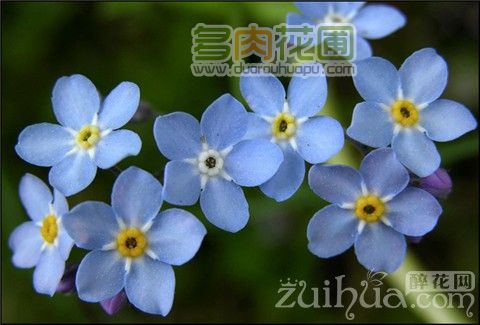
When cultivating forget-me-not in the open field, choose a ventilated, sunny section with higher terrain and sandy loam rich in organic matter to make raised beds, and apply decomposed organic fertilizer. When the seedlings grow 1 to 2 true leaves, transplant them once; if transplanted too late, they are not easy to survive. When 4 to 6 true leaves have grown, plant them in place. After planting, water a little more appropriately in the early growth stage, and apply 1 to 2 times of liquid fertilizer mainly based on nitrogen fertilizer. After the flower scape is drawn out, water less to help increase the firmness of the flower stem. At this time, apply 1 to 2 times of liquid fertilizer mainly based on phosphorus and potassium fertilizer to help the flowers be brightly colored and the plants robust. When the plants grow to about 20 cm tall, set up netting and supports to prevent lodging.
When growing forget-me-not in pots, a medium flower pot is suitable for planting 2 to 3 plants per pot. The soil used for potting is the same as that used for seedling raising. Before planting, apply decomposed soybean cake and other materials as base fertilizer. After planting, place them in a sunny place for cultivation. In spring and autumn, generally water once a day. In summer, when the temperature is high, water once in the morning and once in the evening every day to maintain the moisture of the potting soil and also lower the potting soil temperature. During the growth period, there is no need to apply too much topdressing; generally, applying dilute decomposed soybean cake water or compound fertilizer 1 to 2 times a month is enough. When applying liquid fertilizer, never let the fertilizer liquid splash onto the leaves.
The above is all the content I have learned today about forget-me-not. I hope flower lovers will find it helpful after reading this article. If you want to learn more about forget-me-not, please continue to follow Duorou Huapu, and we will provide you with more related knowledge.
Care Methods and Daily Management Tips for Household Potted Buddhist Pine
Buddhist pine is a common ornamental flower with extremely high ornamental value and a certain decorative effect. It is often used to decorate living rooms, studies and offices, and is deeply loved by many flower lovers. So, do you know what the cultivation techniques and care methods for household Buddhist pine are? Today, the editor will introduce the relevant knowledge to you in detail.
1. Soil: Japanese Buddhist pine has strong adaptability and is not strict about soil. It likes to grow in loose, fertile and well-drained sandy soil.
2. Watering: Buddhist pine is not a plant of the Pinaceae family and is not drought-tolerant. On the contrary, Buddhist pine is tolerant of shade and moisture, and during the growth period it should be watered regularly, but it should not be waterlogged. In the Shunde area, on sunny days in summer, pay attention to regular watering. Generally, water once in the morning and once in the evening. In addition, frequently spray water on the leaf surface so that the leaf color stays fresh green and growth is good. Summer rainfall is usually relatively high, and Buddhist pine is not tolerant of waterlogging, so pay attention to preventing prolonged standing water.
3. Light: Buddhist pine is a tree species that is neutral and somewhat shade-loving. It can accept relatively strong light and can also grow in a more shaded environment. Although summer temperatures are high and sunlight is strong, because large Buddhist pine trees are helped in maintaining their tree posture and leaf shape under high temperature and strong light conditions, there is no need to shade large Buddhist pine trees in summer. However, because Buddhist pine seedlings have tender tissues, they should not be exposed to strong light for a long time. It is recommended to place them under tree shade for care.
4. Fertilization: Buddhist pine likes fertilizer, so apply thin fertilizer frequently. The fertilizer should mainly be nitrogen fertilizer, and an appropriate amount of black alum can be added and fermented into alum fertilizer water. During the growth period, fertilize once every 1 to 2 months. Fertilization can be carried out together with watering (water-to-fertilizer ratio of 9:1). For Buddhist pine planted in large areas, the semicircular furrow application method can be used, applying 300 to 500 grams of quick-soluble compound fertilizer each time. For potted plants, spray water fertilizer containing 0.5% to 1.0% compound fertilizer or dilute cake liquid water fertilizer each time.
5. Pests and diseases: Leaf spot disease and sooty mold disease are common. For leaf spot disease, 50% carbendazim or thiophanate-methyl wettable powder diluted 600 to 800 times can be sprayed for control; for sooty mold disease, soapy water or clean water can be used to rinse it off. Common pests include bagworms, scale insects, white wax insects and others, which can be killed by spraying 40% omethoate emulsifiable concentrate diluted 1000 times or 80% dichlorvos emulsifiable concentrate diluted 1000 times.
6. Pruning: For Japanese Buddhist pine bonsai that have already been shaped, attention must be paid to pinching and pruning to prevent branches and leaves from growing leggy and to maintain the original posture. Pruning and pinching work is best carried out during the spring and autumn growth periods.
The above is all the content I have learned today about Buddhist pine. I hope flower lovers will find it helpful after reading this article. If you want to learn more about Buddhist pine, please continue to follow Duorou Huapu, and we will provide you with more related knowledge!