What are the spring care methods for household potted flowers?
In spring, all things revive and flourish. The whole year's work depends on a good start in spring. Spring is a good season for flower growth and propagation. For flower lovers, they should not miss the opportunity to do a good job in flower propagation, but also do a good job in flower care.
1. Timely propagation
Spring is a good time for flower propagation. Generally, flowers are suitable for sowing, division, cuttings, layering, grafting and other propagation in spring.
Herbaceous potted flowers, such as asparagus fern, begonia, gloxinia, primrose, etc., are mostly sown indoors in pots in early spring for seedlings; annual herbaceous flowers, such as garden balsam, China aster, scarlet sage, etc., can be sown in pots around Qingming.
For some flowers with dense clumps and many root suckers, or flowers with stolons or underground stems such as hosta, orchid, spider plant, agave, clivia, Japanese evergreen, asparagus fern, etc., division propagation can be carried out in early spring. Most potted flowers, such as Chinese hibiscus, Chinese rose, jasmine, pomegranate, geranium, monstera, etc., can be propagated in early spring by taking healthy branches or stems for cuttings; some potted flower species, such as rex begonia, snake plant, gloxinia, etc., can be propagated by leaf cuttings. Some flowers such as wintersweet, ornamental peach, osmanthus, magnolia, etc., can be propagated by stem grafting. Stem grafting is generally suitable in early spring when the sap just begins to flow (i.e., before budding).
For some flowers with softer branches, such as oleander, hydrangea, nandina, etc., the bending layering method can be used; for some flowering trees whose branches are not easy to bend, such as rubber tree, schefflera, white orchid, michelia, etc., the air layering method can be used for propagation.
2. Moving outdoors at the right time
Moving outdoors in spring should not be too early. If moved out too early, they are prone to damage from dry winds or late frost, causing young leaves and shoots to dry up and even leading to the death of the whole plant. Therefore, the time for moving spring flowers outdoors should be later rather than earlier. In northern regions, indoor overwintering flowers are generally moved outdoors from about early April to mid-May. They should be moved outdoors successively according to their cold resistance. For example, winter jasmine, plum blossom, wintersweet, Chinese rose, etc., can be moved outdoors in early April; while jasmine, Chinese hibiscus, bougainvillea, Aglaia odorata, white orchid, kumquat, osmanthus, cactus, etc., are safer to move outdoors in mid-May.
In order not to affect the normal growth of potted flowers, before moving outdoors, they should first go through a period of adaptation to the outdoor environment, and then be moved outdoors for full-day care. The specific method is: about 10 days before moving outdoors, choose a sunny noon to open windows for ventilation, lower the room temperature, and increase direct sunlight so that the potted flowers gradually adapt to the outside temperature; or use sunny days from 9 a.m. to 3 p.m. to move them outdoors, and move them back indoors for the rest of the time. After moving outdoors, spray and wash the branches and leaves with clean water once every noon, and keep the pot soil moist. At this time, if there is cold wave, strong wind or other bad weather, move them back indoors in time.
3. Repotting and soil changing
As potted flowers continue to grow and develop, the plants keep growing larger, and the nutrients in the culture soil in the pot gradually become deficient and insufficient. Therefore, it is necessary to repot and change soil every year to improve nutritional conditions so that potted flowers can grow vigorously.
(1) Number of times and timing of repotting The number of repottings should be based on the plant's growth condition, gradually changing to larger pots, so that the plant size is proportional to the pot. Herbaceous flowers generally need repotting and soil changing once a year; woody flowers and some slow-growing perennial herbaceous flowers (such as orchids, etc.) can be repotted once every 1 to 2 years, but the culture soil should be changed once a year. Repotting is generally suitable during the dormant period and before new buds sprout in early spring, while flowers that bloom in early spring are suitable for repotting after the flowers fade.
(2) Repotting and soil changing method If the plant is large and the pot is small, change to a pot of matching size. Knock the flower plant out of the original pot, remove about 2/3 of the old soil, and cut off dead roots, curled roots and some old roots. If using the original pot, scrape off the old pot soil, cover the drainage hole at the bottom of the new pot or original pot with a tile, fill in a small amount of new culture soil, then place the plant with root-protecting soil in the center of the pot, then continue adding new culture soil to 2 to 3 cm from the pot rim, water thoroughly and place in a shady place for 5 to 7 days, then gradually return to normal care.
4. Careful pruning
Pruning can not only make flowers neat in shape and beautiful in posture, but also help promote more flowering. Spring pruning mainly involves thinning branches, heading back and pinching, and is generally suitable when the sap begins to flow and the buds have not yet sprouted. There are many kinds of flowers, and different kinds of flowering trees have different pruning times. For the pruning time and methods of various flowers, see the previous section "Shaping and Pruning of Potted Flowers."
5. Topdressing and watering
(1) Spring topdressing for potted flowers Potted flowers should not be heavily topdressed in spring, because the root system in early spring is delicate and easily damaged by strong fertilizer or organic fertilizer that is not fully decomposed. In spring topdressing, thin decomposed liquid fertilizer should be applied, following the principle of "thin fertilizer and frequent application, gradually increasing." At the beginning, apply once every 10 to 15 days. As the temperature rises, growth and development accelerate, and the plant keeps growing, the number of topdressings should gradually increase. After June, apply once every 10 days. Spring topdressing is suitable in the evening on sunny days. The type of topdressing should differ according to the type of flower. Fragrant flowers should be given more phosphorus and potassium fertilizer when entering the flowering period, which can promote a stronger fragrance; foliage-oriented flowers can be given fertilizer mainly based on nitrogen fertilizer; flowers mainly for viewing flowers and fruits should be given fertilizer mainly based on phosphorus before flowering, etc.
(2) Spring watering for potted flowers As the temperature rises in spring, the amount of watering should gradually increase, but note that the amount of watering should not be too large, as too much can easily cause root rot or cause flower buds to drop; insufficient water can also cause yellow leaves, leaf drop and even wilting and death. Therefore, watering should follow the principle of "water when dry, stop when wet," and never water "half-way water" (that is, the pot soil is wet on top and dry below). Watering in early spring should be done in the morning, and at the same time spray and wash the branches and leaves with clean water once every noon, which is more conducive to healthy plant growth.
Key points for spring care of household potted flowers
Spring has arrived, and potted flowers and trees that endured a whole winter indoors can finally "hold their heads high" and enjoy the spring sunshine. Because spring weather is changeable, the management and care of household potted flowers in spring is very important. The Municipal Urban Greening Management Office reminds the general public to do the following aspects well in spring flower care:
First, propagate seedlings well. Chinese rose, geranium, pomegranate, winter jasmine, etc., can be propagated in spring by taking healthy branches for cuttings. Rhododendron and jasmine prefer acidic soil. You can cut 5-10 cm strong new branches, remove the lower leaves, and keep 3-4 top leaves for cuttings. For cuttings, black mountain soil and yellow sand can be used as the medium. Spray the cuttings moderately to maintain a certain humidity. Generally, they can take root after about 1 month. Orchids, agave and spider plants can be propagated in early spring by division or stolons respectively.
Spring-sown herbaceous plants grown from seed, such as asparagus fern, five-color pepper, mimosa, garden balsam, scarlet sage, morning glory, and Tagetes species, can be broadcast or sown in spots. Sowing method: first fill the pot with soil, press it slightly firm, then sow the seeds, and then cover with fine soil. For watering after sowing, generally place the flower pot in a water basin and let the water slowly seep in from the bottom of the pot. Most will germinate 1-3 weeks after sowing. After germination, move the pot to a sunny place. After the seedlings grow 2-3 leaves, they can be separated and transplanted. When transplanting, be careful not to damage the roots or break the stems.
Second, repot and change soil. This is a method of supplementing fertilizer for potted flowers in spring. Generally, small pots are repotted once a year, large pots once every 3-4 years, and tall plants need larger pots. Some plants whose root systems are too dense or have dead or rotten roots need appropriate pruning. After repotting, generally the first watering should be thorough, then place in a cool place, and water again when the pot soil is seen to be dry. Generally, after new roots grow, resume normal watering and move to a sunny place.
Finally, pruning. It should be done according to different plants. Rhododendron and winter jasmine should not be pruned excessively. For pomegranate, Chinese rose, etc., dead branches, injured branches or overly dense branches can be cut off in early spring to promote abundant flowers and lush leaves. Jasmine should have old leaves removed when repotting to encourage more new branches to sprout. Climbing vines such as Boston ivy, banks rose, wisteria, and rose can be trained so that the leaf surface receives as much sunlight as possible and grows vigorously.
There are three taboos in spring care of potted flowers: avoid spring cold, do not move potted flowers outdoors too early when the outdoor temperature has not exceeded 10°C; avoid spring wind, since spring winds are strong, flowers that have been moved outdoors should be placed in a wind-sheltered place; avoid staying out overnight, early spring flowers should not be left outdoors overnight. In addition, watering should be moderate and can increase as the temperature rises, as long as dry and wet are kept balanced.
Essentials of spring care and management for household potted plants
In spring, all things flourish and are full of life. In order to enjoy this greenery, many people living in cities move "green" into their homes, but which plants are suitable for growing indoors in spring is particular. Now let's talk together about the key points of spring care and management for household potted plants.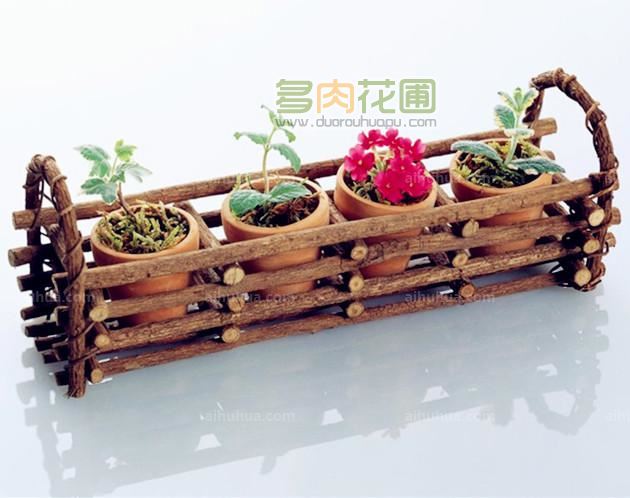 Key points for spring care and management of household potted plants
One,Propagate seedlings well
Chinese rose, geranium, pomegranate, winter jasmine, etc., can be propagated in spring by taking healthy branches for cuttings. Rhododendron and jasmine prefer acidic soil. You can cut 5-10 cm strong new branches, remove the lower leaves, and keep 3-4 top leaves for cuttings. For cuttings, black mountain soil, vermiculite or yellow sand can be used as the medium. Spray the cuttings moderately to maintain a certain humidity. Generally, they can take root after about 1 month. Orchids, agave and spider plants can be propagated in early spring by division or stolons respectively.
Spring-sown herbaceous plants grown from seed, such as asparagus fern, five-color pepper, mimosa, garden balsam, scarlet sage, morning glory, and Tagetes species, can be broadcast or sown in spots. Sowing method: first fill the pot with soil, press it slightly firm, then sow the seeds, and then cover with fine soil. For watering after sowing, generally place the flower pot in a water basin and let the water slowly seep in from the bottom of the pot. Most will germinate 1-3 weeks after sowing. After germination, move the pot to a sunny place. After the seedlings grow 2-3 leaves, they can be separated and transplanted. When transplanting, be careful not to damage the roots or break the stems.
Key points for spring care and management of household potted plants
Two,Repot and change soil
This is a method of supplementing fertilizer for potted flowers in spring. Generally, small pots are repotted once a year, large pots once every 3-4 years, and tall plants need larger pots. Some plants whose root systems are too dense or have dead or rotten roots need appropriate pruning. After repotting, generally the first watering should be thorough, then place in a cool place, and water again when the pot soil is seen to be dry. Generally, after new roots grow, resume normal watering and move to a sunny place.
Three,Pruning
It should be done according to different plants. Rhododendron and winter jasmine should not be pruned excessively. For pomegranate, Chinese rose, etc., dead branches, injured branches or overly dense branches can all be cut off in early spring to promote abundant flowers and lush leaves. Jasmine should have old leaves removed when repotting to encourage more new branches to sprout. Climbing vines such as Boston ivy, banks rose, wisteria, and rose can be trained so that the leaf surface receives as much sunlight as possible and grows vigorously.
Note that potted flowers in early spring should not be moved outdoors too early, so as to avoid cold air invasion and frost damage. Watering can increase as the temperature rises, and keep dry and wet balanced.
Key points for spring care and management of household potted plants
Four,Move pots according to variety
When flowers and plants appear very crowded in the original flower pot, you can consider moving them to another pot, so as to give them more growing space and sufficient nutrients. Ye Hongyan, manager of the market publicity department of Laitai Flower Mall, introduced that the vast majority of flowers and plants are suitable for moving pots in spring. When moving pots, pay attention to soil fertilization and water thoroughly.
The method of moving pots should also be determined according to the type of flower. For example, for Chinese rose, when moving the pot, attention should be paid to knocking off two-thirds of the soil on the root system, leaving only the soil wrapping the root system. But for Cymbidium hyacinth, the process is just the opposite, because the root systems are different, and when moving the pot, the soil wrapping the root system should be removed.
Five,Fertilize without watering the roots
Generally, everyone thinks that when spring arrives, more fertilizer should be given to flowers and plants. But Ye Hongyan introduced that currently it is only necessary to "water heavily and fertilize heavily" for flowers about to bloom; other flowers and plants can be treated as usual. For example, the flowering period of Chinese rose is around May. In order to make the buds fuller, attention should be paid to fertilization now.
There are also many particular points in the specific fertilization method. Still taking Chinese rose as an example, if base fertilizer is added when moving the pot, the base fertilizer should account for 20% of the flower pot volume, above the base fertilizer should be soil plus plant (note that the root system should not contact the base fertilizer) accounting for 60%, and the remaining part should be filled by watering. If it is still the original pot, liquid fertilizer should be applied, and the specific amount needs to be determined according to the fertilizer concentration, plant size and other actual conditions. Liquid fertilizer should be poured slowly along the edge of the pot, penetrating into the soil, and should not touch the plant's leaves and stems, so as not to burn the plant.
Water should ensure thorough watering. But experts also remind that in spring, watering does not need to be more frequent. Too frequent watering will instead cause root rot. It should be watered thoroughly. "After watering, it is enough to see water leaking out under the pot. You can also insert chopsticks into the soil. If they can be inserted easily, it means it has been watered thoroughly. Before the next watering, you can insert the chopsticks again. If they cannot be inserted, it means it is time to water."
Key points for spring care and management of household potted plants
Six,Ventilation should be frequent
As the weather gradually warms, many people cannot wait to take their flowers and plants out to the balcony to breathe fresh air, but it is still too early. Ye Hongyan said that only when the nighttime temperature reaches about 10°C can flowers and plants go out to "get some air."
Some netizens suggested that before flowers and plants are placed outdoors, windows should be opened every day for ventilation to "train" them to adapt to the environment. Ye Hongyan said this is a misunderstanding. "Opening windows for ventilation should be something done every day, even in winter." She explained that flowers and plants also need indoor air circulation, and ensuring indoor and outdoor air exchange every day is very necessary.