Detailed Explanation of Flower Cutting Propagation Methods and Steps
Leaf cuttings use plant leaves for propagation; for example, inserting an African violet leaf into soil or soaking it in water will produce roots at the petiole. Leaf-bud cuttings use a single leaf attached to a leaf bud and a small piece of stem. The stem can be cut near above the bud, leaving a longer section below the bud, so that growth is vigorous and rooting is strong. Generally, a cutting length of 3 cm is suitable. Rubber plant, dumb cane, camellia and others can be propagated by this method.
Stem cuttings - hardwood cuttings: after leaf fall or before bud break the following spring, select the middle portion of mature, vigorous, well-developed, pest-free one- to two-year-old branches, cut them into cuttings about 10 cm long with 3 to 4 nodes, with the cut close to the node, and the upper end cut at a slant to aid drainage, then insert into soil.
Softwood cuttings: use current-year soft shoots. Cut branches 7 to 8 cm long, remove the lower leaves, keep a few upper leaves, then insert, such as chrysanthemum, poinsettia, geranium, begonia and others.
Semi-hardwood cuttings: take current-year semi-mature shoot tips about 8 cm long, remove the lower leaves and keep 2 upper leaves, and insert 1/2 to 2/3 into soil, such as osmanthus, Chinese rose and others. Root cuttings: when using root cuttings, the larger the root, the stronger its regeneration ability; roots can be cut into 5 to 10 cm lengths and inserted at a slant or buried horizontally to induce adventitious buds and fibrous roots, such as peony, wintersweet, tree peony, gerbera, snow willow, persimmon tree, walnut tree, round-leaf crabapple and others can all be propagated by root cuttings.
Management after cuttings mainly means not exposing them to strong light too early, shading and watering, and keeping them moist. Root cuttings and hardwood cuttings are relatively simple to manage; just do not let them freeze. Softwood and semi-hardwood cuttings should be carefully managed, keeping the pot soil moist to prevent water loss from affecting survival. After rooting, gradually reduce watering and increase light; after new shoots grow, apply liquid fertilizer once, and only transplant after the plants have grown. In addition, during trimming and management, pay attention to pest and disease control and weeding and loosening the soil.
How do flowers propagate by cuttings? Detailed explanation of the basic methods of flower cutting propagation
In the previous article we talked about layering propagation of flowers. Experienced flower growers know that, besides layering propagation, cuttings are also a very common flower propagation method. Cuttings, that is, cuttings, involve cutting the stems, roots, leaves, buds, etc. of flowers, inserting them into soil or soaking them in water, and after rooting they can be planted and grow into new plants, but different flowers have different conditions for cuttings. Below, let's look at a detailed explanation of flower cutting methods together with the editor of Huinong.com.
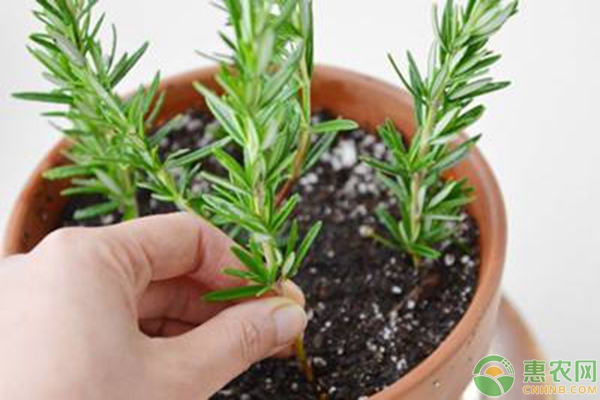
1. Types of cuttings
There are 3 types of cuttings: leaf cuttings, stem cuttings, and root cuttings. This classification is based on the maturity of the cuttings and the different flower organs. In addition, according to differences in cutting time and method, they can also be divided into split cuttings, heel cuttings, etc.
(1) Leaf cuttings
Flowers that can be propagated by leaf cuttings have thick petioles, veins, or fleshy leaves. The leaves used for leaf cuttings should be well developed; for better results, this is generally done in a propagation bed. Leaf cuttings are further divided into 3 types: whole-leaf cuttings, partial-leaf cuttings, and bud-leaf cuttings:
(2) Stem cuttings
The location is not limited; depending on the season and type, for the sake of survival rate, a plastic tunnel can be used for insulation or a shade frame for shading. Stem cuttings are further divided into 3 types: softwood cuttings, semi-softwood cuttings, and hardwood cuttings.
(3) Root cuttings
Some herbaceous perennials can produce adventitious buds from the roots to form young plants; this situation is suitable for root cutting propagation. The roots of such flowers are very thick, not less than 2 mm, and for the same kind of flower, thicker and longer roots are easier to root. It can be done in early spring or late autumn, or the mother plant can be dug up in autumn, the root system stored over winter, and cuttings taken the following spring.
2. Keys to survival
To ensure the survival of cuttings, attention must be paid to the following key issues.
(1) Selection and treatment of cuttings
The branches used for cuttings should be healthy. Softwood cuttings should be inserted immediately after collection. For succulents, after cutting, place them in a ventilated place to dry for a few days, and insert after the cut has shrunk and dried. To prevent rot, the cut can be lightly scorched with fire, or dipped in freshly burned plant ash.
(2) Temperature for cuttings
The best temperature for cuttings is 20 to 25 °C. Too low or too high a temperature affects growth. Therefore, if the temperature can be controlled, cuttings can be taken in all four seasons. Under natural conditions, it is best to choose spring and autumn.
(3) Humidity for cuttings
The cutting medium should be kept in a moderately moist state. Air humidity must also be ensured, such as by covering with plastic film, but ventilation must be provided.
The above is the detailed explanation of the basic methods of flower cutting propagation compiled by the editor of Huinong.com. Have you learned it?
How do flowers propagate by cuttings?
Flower cutting propagation is a propagation method that uses the regeneration ability of a plant's branches, leaves, buds, and roots to sprout new branches and leaves and develop into an independent new plant. This method belongs to asexual propagation. Spring and autumn are the best seasons for flower cutting propagation; cutting propagation at this time has a very high survival rate. Although the temperature and humidity in the seasons vary by region, as long as the temperature is 13-25 °C, cuttings can be taken. Tropical xerophytes such as cacti can be propagated by cuttings under higher temperature conditions.Flower cuttings are roughly divided into two types: one is softwood cuttings, which use semi-lignified branches from the growing period as cutting material; the other is hardwood cuttings, which use branches, buds, and roots from after leaf fall in autumn to bud break in spring as cutting material. Since softwood cuttings can be taken all year round, people use them more often.
In softwood cuttings, for herbaceous flowers such as chrysanthemum, scarlet sage, glass begonia, and dahlia, the cuttings should be current-year hardened shoot tips; for woody flowers such as Chinese rose, lilac, gardenia, rhododendron, hanging bell flower, hibiscus, and pomegranate, the cuttings should be current-year woody or semi-lignified branches, and it is best to use semi-lignified cuttings from near the lower part of the shoot tip after flowering.
The specific method of cutting propagation is: first select well-grown branches free of pests and diseases, each segment 5-10 cm long, with about 4-6 leaf nodes. Then at 2-3 cm below the lower leaf node of the branch, cut a horseshoe-shaped incision to increase the area for absorbing nutrients, and cut off the leaves on the cutting, leaving only one or two leaves at the top shoot. Some plants will exude sap from the cut on the cutting, such as oleander, poinsettia, cacti and other succulents; the wound must be allowed to dry and heal before insertion, otherwise the cut will rot quickly after insertion. Other flowers and trees should generally be inserted immediately after cutting to maintain their fresh state. If conditions permit, the cutting can be dipped in a vitamin B solution, taken out, and inserted into soil after two minutes to promote wound healing and rooting. Under normal circumstances, the cutting is inserted into clean river sand. However, practice has proved that using zeolite powder (also called aquarium stone, a natural aluminum-magnesium mixture, a mineral with a thin flake shape like mica) as the cutting bed gives the best results, because it contains multiple trace elements and has good aeration, and can maintain a certain amount of moisture; after insertion, the cutting can root relatively quickly and the survival rate is relatively high. The depth of insertion is two-thirds of the cutting in spring and autumn, and one-half in summer. If the cutting bed can be illuminated by light at night, it is even more conducive to early rooting of the cutting and improving the survival rate.