How to Propagate Flowers by Seed? Detailed Methods and Steps
Sowing time is mostly in spring and autumn; spring sowing is usually from February to April, and autumn sowing from August to October. Annual flowers are mostly sown in spring from April to May, while biennial flowers are mostly sown in autumn from August to September.
Home growers mostly use pot sowing; those with the conditions can also sow by broadcasting, dibbling or drilling in the open ground, and transplant after the seedlings emerge. For pot sowing, wash the pot clean before sowing, cover the drainage hole with a tile, spread coarse sand or another coarse drainage layer in the pot, then fill in sieved fine sandy loam, firm the soil and scrape it level, and sowing can begin. For larger seeds such as garden balsam seeds, they can be dibbled evenly one by one, pressed firm and then covered with a layer of fine soil.
For small seeds such as cockscomb seeds, broadcast them in the pot, press the soil lightly, then cover with a thin layer of fine soil, and spray water with a fine-rose watering can, or use the soaking method so that water seeps upward from the bottom until the soil surface is moist, so that the seeds can fully absorb water. Cover the pot surface with glass or plastic film to reduce water evaporation. For broadcasting, choose small seeds and scatter them evenly over the soil surface; this method can be used for both open-ground and potted flowers. Its feature is a high seedling yield per unit area, but because the seedlings are too crowded, they may grow spindly or become prone to pests and diseases. For drilling, sow the seeds in rows on the soil surface, keeping a certain distance between rows; it is mainly used for open-ground planting.
Its features are good light and ventilation and sturdy seedlings, but the seedling yield per unit area is lower than with broadcasting. It is generally used when there are many varieties but only a small amount of seed. Dibbling, also called hole sowing, means sowing seeds into holes dug at a certain row and plant spacing, with 2-3 seeds per hole; after germination, select and keep 1 plant. Its features are ample sunlight and air circulation, but low yield. It is generally mostly used for propagating large seeds and valuable flowers. After sowing, the soil surface should be slightly pressed with a wooden board or the like so that the seeds and soil are pressed closely together. For open-ground sowing, it is advisable to spread a thin layer of rice straw over the bed surface to prevent the soil from being washed away when watering or raining. Water immediately after sowing.
From sowing to emergence, the soil should be kept moist. Lift the covering for a few minutes in the morning and evening to let air in, and cover it again during the day. After the seeds emerge, remove the covering immediately so they gradually receive light, but do not expose them to strong light at once, to prevent the seedlings from suddenly dying. Also thin the seedlings in time, removing the weak and keeping the strong, so that the remaining seedlings can get sufficient sunlight and nutrients. Water immediately after each thinning to stabilize the roots of the remaining seedlings. When the seedlings grow 1-2 true leaves, transplant them.
How to Propagate Home Flowers by Seed? Methods and Tips for Propagating Flowers by Seed
Sowing flowers is mainly for better propagation of flowers. Generally, the seeds sown are the seeds of the flowers. Seedlings grown from sowing have well-developed root systems, a longer lifespan and strong viability. Generally, flower sowing includes both open-ground flower seed propagation and potted flower seed propagation. Below, let's take a look with the editor of Huinong Net at what methods and tips there are for these two kinds of flower seed propagation.
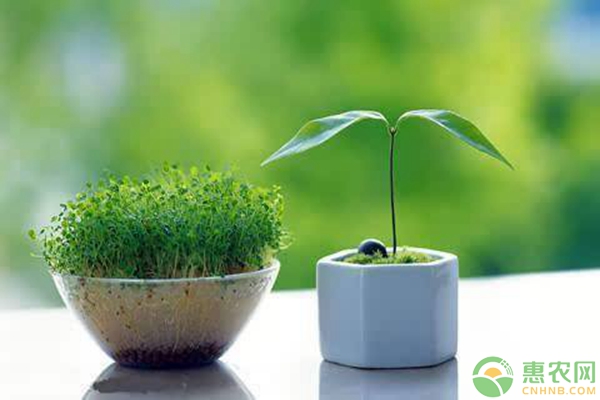
1. Open-ground flower seed propagation
The general open-ground sowing method is as follows.
(1) Requirements for the sandy soil of the sowing bed: loose and fertile, rich in humus; the environment should ensure air circulation, ample sunlight and good drainage.
(2) Soil preparation and fertilizing. Requirements for the soil of the sowing bed: plow 30cm deep, remove debris, cover with about 12cm of soil, mix in barnyard manure or fully decomposed and finely broken compost as base fertilizer, and level the bed surface. At sowing time, mix in superphosphate to promote growth. After the sowing bed is leveled, it should be pressed, then the bed surface leveled again.
(3) Seeds of different sizes require different soil-covering depths. Generally, the soil-covering depth for large seeds is 3 times the thickness of the seed; for small seeds, cover only until the seeds are no longer visible, and if conditions permit, a sieve with 0.3cm apertures can be used.
(4) After covering with soil, evenly cover with a layer of rice straw, then water with a fine-holed watering can. In dry seasons, irrigate before sowing; after the water seeps in, sow and cover with soil to keep it moist. In the rainy season, rain-proof facilities are needed. Remove the covering when the seeds germinate and emerge.
2. Potted flower seed propagation
Potted plants are generally kept indoors, so the sowing period is not closely related to the season; it is generally determined according to the flowering period.
(1) Prepare the pot and soil for sowing. Use a shallow pot 10cm deep; the sandy soil should be rich in humus. The ratios are as follows.
① Fine seeds. Garden soil 2 : river sand 3 : leaf mold 5.
② Medium seeds. River sand 2 : leaf mold 4 : garden soil 4.
③ Large seeds. River sand 1 : garden soil 4 : leaf mold 5.
(2) Cover the drainage hole at the bottom of the pot, fill with broken pot pieces or coarse gravel to 1/3 of the pot depth, above that put the sieved coarse culture soil to 1/3 of the depth, and put the sowing soil on the top layer to 1/3 of the depth. Firm and scrape the soil surface level so that it is 1cm below the pot rim. Immerse the shallow pot in water, but do not submerge it. After the soil is soaked, take the pot out; once excess water has seeped out, sowing can begin.
(3) Management after sowing. Keep the pot soil moist; after the seedlings emerge, gradually move them to a place with ample sunlight.
The above is the methods and tips on flower seed propagation compiled by the editor of Huinong Net. Have you all learned them?
Flower Seed Propagation Techniques
Flower Seed Propagation Techniques
1. Definition
Seed propagation uses seeds for propagation and is also called sexual reproduction. Seedlings from sexual reproduction are called seedling plants or seedling-grown plants, while seedlings from asexual reproduction are called vegetative plants.
Advantages: a large propagation quantity, simple and easy methods, complete root systems and robust growth. Disadvantages: some flowers pollinated by cross-pollination are prone to variation and it is not easy to maintain the excellent characteristics of the original variety.
2. Methods
(1) Seed collection. For most flower seeds, harvesting must wait until the grains are fully mature.
For a small number of seeds that easily burst and scatter, such as those of garden balsam and pansy, or water lily seeds that are easily washed away by water, you can put a gauze bag over them when they are about to mature, so that when the seeds mature they fall into the bag. If not bagged, it is best to harvest before dehiscence in the early morning when air humidity is relatively high.
On the same plant, seeds set from early-opening flowers should be selected, and among these, seeds borne on the main stem or main branches are best. Seeds set from late-opening flowers after the full flowering period and from flowers on weak branches are generally not suitable to keep for seed use.
(2) Seed storage. Common seed storage methods include the following:
① Dry storage method: after annual and biennial herbaceous flower seeds that tolerate drying are fully dried, put them in paper bags or cardboard boxes for storage.
② Dry sealed method: after annual and biennial herbaceous flower seeds that tolerate drying are fully dried, put them into containers such as jars or bottles, seal them and store them in a cool place.
③ Low-temperature storage method: place fully dried seeds under low-temperature conditions of 1-5°C for storage.
④ Stratification storage method: some flower seeds easily lose germination ability when stored under dry conditions for a long time, so the stratification method can be used, that is, stacking the seeds and moist sand layer by layer. After dormant seeds are treated by this method, germination can be promoted. Peony and herbaceous peony seeds can be stored by this method after harvest.
⑤ Water storage method: some aquatic flower seeds, such as water lily and royal water lily, must be stored in water to maintain their germination ability. Their seeds differ from lotus seeds in that the seed coat is relatively thin and under dry conditions they relatively easily lose water, which affects the germination ability of the seeds.
(3) Sowing
① Seed selection: the success or failure of seed propagation depends on the vitality of the seeds. Various flower seeds all have a certain storage life; beyond this period, the germination rate clearly decreases, or germination ability is even lost, and such seeds cannot be sown. For example, the storage life of African daisy seeds is only 3-6 months; another example is clivia, whose seed coat has poor water-retention performance, and if stored for a long time the seed kernel will shrivel and die, so it should be sown immediately after collection. Among flower seeds, the longest-lived are lotus seeds; in the 1950s, ancient lotus seeds from 900 years ago were unearthed in the Xinjin area of Liaoning Province, and after sowing in Dalian they not only were able to sprout and grow, but had also already flowered and set seed.
② Disinfection: to prevent flower seedlings from being infected by diseases during sowing and germination, seeds need to be disinfected before sowing. The main methods are: soaking seeds in 60°C warm water or 1% copper sulfate solution for 30 minutes; soaking seeds in 1% formalin solution for 15 minutes; mixing 40 grams of thiram into 1 kilogram of seeds.
③ Sowing methods: there are roughly 3 sowing methods: broadcasting, drilling and dibbling.
When sowing very fine seeds such as calceolaria and wax begonia, the broadcasting method is often used, that is, evenly scattering the seeds over the seedling bed. When sowing small seeds such as garden balsam and cypress vine, the drilling method is often used, that is, sowing the seeds in rows. When sowing large seeds such as clivia and cyclamen, the dibbling method is often used, that is, digging holes at a certain row and plant spacing and sowing point by point.