What soil disinfection methods are there for flower cultivation?
Common soil disinfection methods for household use include the boiling sterilization method, the formalin disinfection method and the carbon disulfide disinfection method, etc.
① The boiling sterilization method is to put the already mixed cultivation soil into a suitable container and steam it over water in a pot to disinfect it. This method is limited to use when cultivating a small amount of soil on a small scale. Steam can also be passed into the soil for disinfection; the steam temperature is required to be 100-120°C, and the disinfection time 40-60 minutes. This is the most effective disinfection method.
② The formalin disinfection method is to evenly sprinkle 400-500 ml of 40% formalin into each cubic meter of cultivation soil, then pile up the soil and cover it with plastic film. After 48 hours, the formalin turns into gas; remove the film covering the pile, spread out the soil pile, and wait until the formalin has all turned into gas, and the disinfection is complete.
③ The carbon disulfide disinfection method is to first pile up the culture soil, pierce several holes in the top of the soil pile, use about 350 g of carbon disulfide per 100 cubic meters of soil, and after injecting it, tightly cover the openings of the holes with straw, etc. After 48-72 hours, remove the straw covers, spread out the soil pile, and let all the carbon disulfide dissipate.
Common disinfection methods for nursery soil include:
① Formalin disinfection method: spray 50 ml of formalin mixed with 20 L of water onto the ground surface per square meter of nursery land, then cover it with plastic film and keep it sealed for about 10 days; remove the cover and leave it open for 2-3 days to let the gas dissipate before use.
② Ferrous sulfate disinfection method: disinfect with 1 L of 3% ferrous sulfate solution per square meter of nursery land, and use it after the odor has evaporated.
③ Bordeaux mixture disinfection method: use 5 L of equal-part Bordeaux mixture (copper sulfate: lime: water = 1:1:100) per square meter of soil, add 10 g of Ceresan, and spray it onto the ground surface; use it after the soil has dried.
④ Carbendazim disinfection method: use 1.5 g of 50% wettable powder per square meter of nursery soil, or mix it with soil at a ratio of 1:20 to make disinfected soil and spread it on the seedbed, which can effectively carry out disinfection treatment.
⑤ Amobam disinfection method: irrigate each square meter of nursery soil with a 350-fold dilution of 50% water-soluble amobam, and use it only after the soil has dried slightly.
Flower cultivation requires choosing good soil; nutrient soil has a great influence on flower cultivation
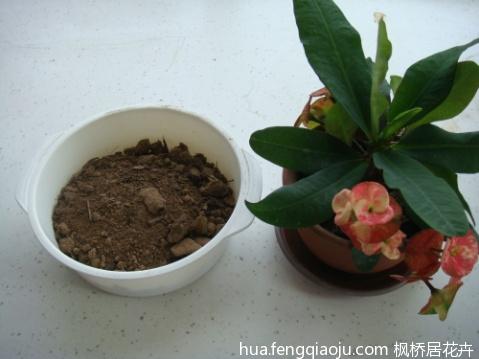
The most basic requirement of flowers for soil is that it be fertile, that is, the soil should be relatively loose, have a certain degree of air permeability and water retention, contain a certain amount of organic matter, not crack when dry, not clump tightly when wet, have sufficient nutrients, a moderate pH, and no latent pests or diseases. The above are only the general requirements of flowers for soil. Specifically, different flowers require different soils. For example, flowers such as jasmine, rhododendron and camellia all like acidic soil with a pH value no greater than 6.5, while cactus and ball cactus type flowering plants like slightly alkaline soil; when planting such plants, mix a certain amount of old wall soil (calcareous) into the potting soil. If the soil does not meet the requirements of the flowers, the flowers will not grow well and may even turn yellow and die.
Generally, we call lightweight nutrient substrates light soil, artificial lightweight culture soil, nutrient soil, etc. The requirements for nutrient soil are high organic matter content, complete nutrients, reasonable soil structure, and active beneficial microorganisms. Its characteristics are: first, the soil is nutritious and has a good soil ecological environment, which can meet the healthy growth of crops; second, it has strong water and fertilizer retention capacity, which can increase the survival rate of plants; third, it simplifies operations and facilitates management. The detailed preparation methods of nutrient soil:
Different nutrient soils can be prepared according to different conditions; there is no very fixed preparation method. The following mainly briefly introduces several preparation methods for reference.
Nutrient soil preparation method one: 65% fertile garden soil, 10% fine sand, 25% burned soil, sift, add 0.4% calcium magnesium phosphate fertilizer and mix well, then put into nutrient bags or nutrient pots.
Nutrient soil preparation method two: prepare sifted sandy loam soil and decomposed cake fertilizer at a ratio of 7:3;
Nutrient soil preparation method three: prepare sifted decomposed farmyard manure with clay, peat soil and sandy loam soil at a ratio of 1:3:3:3. Nutrient soil can also be prepared with sifted decomposed farmyard manure, clay, sandy loam soil and sawdust at a ratio of 1:3:3:3. After the nutrient soil is prepared, spray water and stir it into a moist state for later use
(1) Conditions that nutrient soil should have
1. The material of the nutrient soil must be dense and uniform in texture, able to hold seeds and seedlings firmly, and its volume should not change much whether dry or wet. If the texture is too loose, the soil ball is easy to scatter; if too sticky, it is easy to harden.
2. The nutrient soil should have good water and fertilizer retention performance: because the container is small and there is little nutrient soil, the water and nutrients needed for seedling growth must be replenished frequently, so the nutrient soil must have good water and fertilizer retention performance.
3. The nutrient soil should have good permeability, sufficient porosity, and good aeration and water permeability. It should meet the needs of seed germination and seedling growth for water and air.
4. The material of the nutrient soil should be light in weight, rich in resources, and low in price. If the nutrient soil is too heavy, it is extremely unfavorable for handling and transportation.
5. The nutrient soil should not carry disease, insects or weed seeds. In container seedling raising, if there are many weeds, weeding is extremely inconvenient; if diseases and insects occur, it will cause the death of a large number of container seedlings.
6. Low salt content. If the nutrient soil has a high salt content, it is easy to cause seedling death.
(2) Materials and formulas of nutrient soil
1. Materials of nutrient soil: sand, nursery surface soil, peat soil, sphagnum peat, compost, vermiculite, perlite, turf soil, yellow subsoil, burned soil, forest humus soil, bark powder, rice husk ash, uncultivated mountain soil, pond mud, etc.
(1) Peat soil A commonly used nutrient soil material abroad. Peat is composed of the remains of various aquatic and hygrophytic marsh plants preserved below the water line in a semi-decomposed state. Moss peat is formed from sphagnum, hypnum moss or other mosses, and is suitable for container seedling raising. Sphagnum peat has strong water-holding capacity and relatively high cation exchange capacity, which is beneficial to plant nutrient absorption.
(2) Vermiculite It is an inert substrate with stable properties, has good aeration, water permeability and water-holding performance; its texture is light, making it easy to handle; high-temperature disinfection means there are no pests or diseases; its cation exchange capacity is very high, and it contains relatively more nutrient elements such as potassium, calcium and magnesium, and these nutrients can be absorbed and used by plants. In the past twenty years, it has begun to be used as a substrate in cutting beds. Vermiculite is made from natural mica rock expanded by heating. In the natural ore of vermiculite, there are many thin layers, and there is a small amount of water between the layers. When the ore is baked at a high temperature of 1000°C, the water between the layers turns into steam, and after expansion it separates the thin layers, becoming porous sponge-like particles. Through the high temperature, the vermiculite is also thoroughly disinfected. Expanded vermiculite is very light in weight, generally only 100-140 Kg per cubic meter, is neutral and has good buffering performance, and can absorb a large amount of water, able to absorb 400-500 Kg of water per cubic meter. Vermiculite has a very strong cation exchange capacity, so it can store nutrients and release them gradually.
(3) Perlite Perlite is made by crushing raw rock, screening it, and then baking it at a furnace temperature of 760°C, causing the small amount of water contained in the rock fragments to turn into steam, thereby making the perlite into very small sponge-like particles. It can be used as a cutting substrate and a covering material for sowing. The chemical properties of perlite are basically neutral, but it has no buffering effect. It weighs only 70-120 kg per cubic meter, has strong water absorption capacity, and its water-holding capacity is about 3-4 times its own weight. The difference between perlite and vermiculite is that perlite has no cation exchange capacity and contains no mineral nutrients. Its role in container seedling raising is to increase the aeration of the culture medium and prevent the nutrient soil from hardening.
2. Inoculation To cultivate pine seedlings, mycorrhizal fungi should be inoculated. Dig soil from within 20 cm in a pine forest, mix 10% mycorrhizal soil into the substrate, then fill the containers and sow and transplant seedlings. 3. Formula of nutrient soil In the preparation of nutrient soil, generally 1-2 materials are used as the main substrate, and then some other materials are added to adjust the performance of the nutrient soil (with focus on considering four aspects: water-holding capacity, aeration, bulk density and cation exchange capacity of the nutrient soil). In addition, some organic or inorganic fertilizers can also be mixed in. Commonly used formulas abroad: ① Peat soil Vermiculite 1
Methods of flower cultivation? Materials needed for cultivating flowers
Flower cultivation generally includes two forms: sexual cultivation and asexual cultivation.After plants mate through male and female, fertilize and set fruit, they form seeds. The method of cultivating the seeds into new plants is called sexual cultivation, or seed cultivation. Sexual cultivation has unstable heredity and is prone to variation. People often use this law of variation, through hybridization between different varieties, to breed new varieties. In flower cultivation, this method is mostly used for annual and biennial herbaceous flowers and for flower variety breeding work.
According to the growth habits of plants, the method of cutting or separating a part of the tissue from the mother plant for cultivation is called asexual cultivation. In household flower growing, people mostly use the roots, stems, leaves and buds of plants for cultivation. Asexual cultivation can maintain the original excellent traits and original characteristics of the vast majority of flowers, so it is widely used. The main methods used in household flower growing through asexual cultivation are: division, separate planting, cutting, layering and grafting, etc.
What materials and tools are essential when sowing?
The essential materials before flower sowing mainly include soil and pots (trays).
The soil used for sowing should preferably be a culture soil that is loose, fine, and able to both retain water and drain water. Adding a small amount of phosphorus fertilizer and potassium fertilizer to the soil can better promote strong seedling growth. It is best to disinfect the culture soil before use. The method is: put the culture soil into an oven or baking
oven, place a sweet potato or potato in the oven, heat to 150°C, and after the potato is cooked, the culture soil disinfection is complete. Disinfected culture soil is beneficial for sowing seeds or spores and for preventing the breeding of diseases, insects and algae.
The pots used for sowing should preferably be shallow rather than deep (some palm family seeds are exceptions), because the seeds do not remain in the pot for long. The size of the pot can be determined according to the number of seeds. A small flower pot can be used for a small number of seeds, and a large flower pot or a multi-holed
plastic pot can be used for many seeds. Their advantage is that they are easy to move. If conditions permit, a cultivation box can be used for sowing. The bottom of the cultivation box is equipped with a ring-shaped small soil resistance wire to control soil temperature. It can generally reach 20°C--30°C. The box has a glass cover, which can keep warmth, retain moisture, and prevent rat damage. When shading is needed, a layer of newspaper can be added. Cultivation boxes are mostly placed beside a sunny window; when the temperature is high, electricity can be saved. This kind of cultivation box used for flower sowing can be used both for sowing and for cutting propagation. When encountering plants that are difficult to root or seeds that need high temperatures to germinate, the bottom temperature can be raised to 35°C.