Detailed Explanation of Osmanthus Grafting Methods and Operation Steps
How to graft osmanthus. Osmanthus is one of the ten most famous flowers in China. It stays evergreen through all four seasons, with a rich fragrance that carries far and clear, making it the finest of all flowers. Osmanthus is not only a garden tree species for greening, beautifying and perfuming the environment, but also an economic tree species specially used for supplying spices, food, winemaking and medicine. At present, cities such as Hangzhou, Suzhou, Guilin and Hefei across the country have adopted osmanthus as their city flower, and the demand for nursery stock exceeds supply. There are many propagation methods for osmanthus. In the past, seed propagation was mainly used, but the offspring varied greatly and flowered very late. Using grafting propagation allows the development of fine varieties, brings flowering 6 to 8 years earlier than seedlings, and can improve stress resistance and expand the planting range of osmanthus.
Cultivation and Selection of Rootstock and Scion
There are many types of osmanthus rootstock. Currently the commonly used rootstocks include small-leaf privet (Ligustrum quihoui), glossy privet (Ligustrum lucidum), fringetree (Chionanthus retusus), small-leaf ash and osmanthus seedlings. Among them, small-leaf privet grafting has a high survival rate and fast early growth, but later the rootstock growth shows a "small foot" phenomenon. When grafting, the graft union should be positioned lower, and when planting, the soil should be mounded deeply so that the plant produces its own roots. Fringetree rootstock can improve cold tolerance and saline-alkali resistance. Osmanthus seedling rootstock has the best grafting compatibility. Rootstock is raised in the nursery, and grafting is generally carried out on 1-year-old seedlings. For scions, use fresh, thick, strong branches, grafting immediately after collecting them.
Grafting Methods
Spring branch grafting is generally used, and bark grafting and cut grafting can be applied. To promote the scion to produce its own roots, the basal side-grafting method is preferable. Insert the scion at 3 to 4 cm above the ground on the rootstock; the scion may be left without leaves, or 1 to 2 leaves may be retained. However, after inserting it into the rootstock cut, it should be wrapped with ultra-thin plastic film, and then the lower part of the film should be twisted into a cord to tie the union tightly. When grafting, pinch out the growing tip of the rootstock to control growth, keep the other leaves, and after the scion sprouts and grows, cut off the rootstock above the union. The above is the method for how to graft osmanthus.
How to Graft Osmanthus
Many people have heard of grafting plants, but may not have actually practiced it. In fact, grafting is not as difficult as everyone thinks. We only need to understand the whole process, and then we can fully grasp its essentials. Below we introduce how to graft osmanthus.
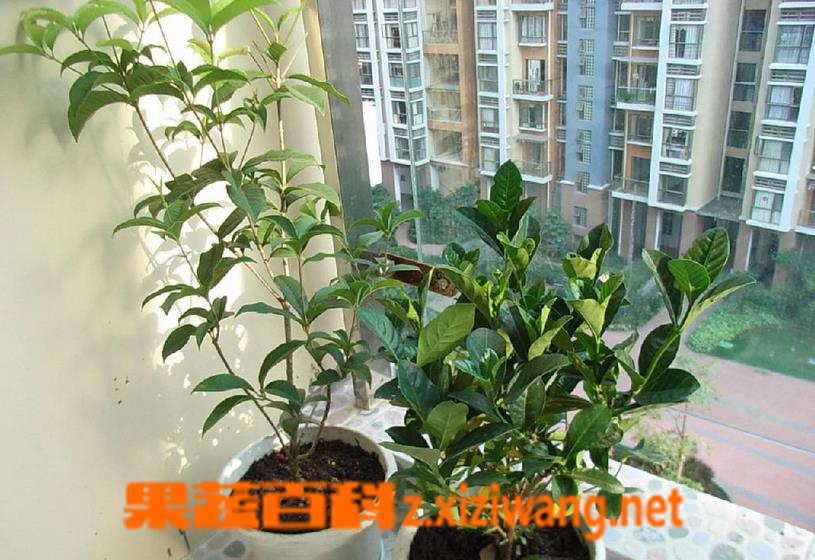
I. How to Graft Osmanthus——Time
Grafting osmanthus requires choosing the right time. Osmanthus is in a vigorous growth stage from March to June, or in a stable period from September to October, and grafting can be carried out during either period. Overall, it is recommended to choose warm times for grafting osmanthus. Osmanthus grafts more smoothly in a warm environment, and there is no need to worry about rotting or freeze damage.
II. How to Graft Osmanthus——Process
First choose the stock; cactus can be used as the stock. The main stem of the cactus is relatively firm and has good supporting strength, and at the same time osmanthus and cactus match each other and look attractive together. After cutting off a section of osmanthus branch, insert it into the sand bed where the cactus is planted. When cutting the branch, you can wait until the cut has dried slightly and there is no sticky sap before inserting the cutting, which will make it more stable.
III. How to Graft Osmanthus——Care
After grafting osmanthus, attention must be paid to follow-up care. At first, maintain a ventilated and breathable environment, and later, once roots have formed, watering can begin, but be careful not to touch the graft union.
[Fringetree Grafting Osmanthus] Fringetree grafting osmanthus pictures_price
...
When it comes to osmanthus, many people are quite familiar with it. Osmanthus propagation mainly relies on grafting, so choosing a good grafting rootstock is very important. Do you know about fringetree grafting osmanthus? Today the editor will briefly introduce the price and appreciation of fringetree grafting osmanthus.
All kinds of decorative flower ornaments! Highlight a high-end lifestyle taste! Click to view>>
.....
Osmanthus trees can bloom in autumn with fragrance filling the whole tree, and osmanthus cultivation is now increasingly loved by people. A large part of osmanthus saplings are grown by grafting, and many choose fringetree grafting osmanthus to propagate osmanthus. The price of fringetree grafting osmanthus is not very expensive; small saplings cost 8 to 9 yuan, and larger saplings cost only a little over ten yuan.
.....
.....
There are many methods for grafting osmanthus, among which approach grafting is a commonly used one. In China, potted osmanthus mostly uses approach grafting. Its advantages are: a long suitable grafting time, easy survival, quick shaping and early flowering. The key points of osmanthus approach grafting are introduced below:
1. Cultivating rootstock. The rootstock tree species used for grafting osmanthus include glossy privet, fringetree (fringetree grafting osmanthus), etc. The rootstock used for grafting needs to grow robustly, be free of pest and disease damage, and be 2- to 3-year-old saplings with a thickness of more than 1 cm, or 2- to 3-year-old branches on a perennial tree.
.....
.....
2. Selecting scions. Osmanthus has varieties such as golden osmanthus, silver osmanthus, orange osmanthus and four-season osmanthus. First, choose the osmanthus variety according to preferences, needs and resource conditions, then from the selected osmanthus tree choose 2- to 3-year-old branches that grow robustly, are well developed, free of pest and disease damage, and moderate in size as scions.
.....
.....
1. Fringetree grafting osmanthus is a common method of grafting osmanthus. Now the editor will take everyone to briefly understand that to bring the scion close to the rootstock, methods such as propping, padding, framing, hanging and tying can be used to place the selected osmanthus scion branch close to the rootstock branch in the same direction. Then specifically determine the suitable grafting position of the rootstock and scion, and fix the position well.
2. Cutting the interface slope. Cut the interface slope respectively at the determined grafting positions of the rootstock and scion. The slope is oval in shape, 3 to 5 cm long, and the depth of the slope generally does not exceed half the thickness of the branch.
.....
.....
3. Cutting the rootstock. After the grafting and binding are completed, cut off the rootstock branch 1 cm above the union.
4. Removal. After grafting, if branches sprout from the part of the rootstock below the union, they should be removed promptly. 31 to 35 days after grafting, cut off the scion from below the union and let it separate from the mother plant.
5. Checking survival. 3 to 5 days after cutting off the scion, if the scion's branches and leaves grow normally, it has survived; if the leaves appear wilted, then supplementary grafting is needed.
.....
.....
Having finished talking about fringetree grafting osmanthus, let us talk about osmanthus in the garden. Osmanthus blooms in autumn, with fragrance spreading in all directions, and can be called “dominating the three autumns and overpowering all flowers.” It is widely used in gardens, often as a landscape tree, planted singly, in pairs, or in clumps and groves. In Chinese classical gardens, osmanthus is often combined with buildings, rocks and stones, with clump-forming shrub-type plants placed near pavilions, terraces, towers and chambers. Old-style courtyards often use paired planting, anciently called “double osmanthus facing the courtyard” or “double osmanthus leaving fragrance.”
.....
Osmanthus is evergreen all year round, with luxuriant branches and leaves. Osmanthus has a striking fragrance and contains a variety of aromatic substances, and can be used for food or for extracting spices. Today the editor's introduction to the price of fringetree grafting osmanthus ends here. Thank you all for reading.