How to plant osmanthus seeds? Detailed planting methods and techniques
How to plant osmanthus seeds: sowing propagation is often used for osmanthus when strict retention of the mother plant's characteristics is not required.
(1) Seed cleaning and disinfection
To reduce disease and improve the germination rate, seeds should be cleaned and disinfected before sowing. First wash the seeds with clean water, then soak them in 0.5% potassium permanganate or 1% bleaching powder solution for 20 minutes, remove them, rinse them again with clean water and let them dry.
(2) Seed germination stimulation
To improve the germination rate and the uniformity of germination, the disinfected seeds must be pre-germinated. The seeds can be placed in warm water at about 50°C and soaked for 4 hours. After draining the water, put them into a ventilated container such as a bamboo basket, cover with a wet cloth or dry straw, and place them in an environment of 18-24°C to stimulate germination. When the layered seeds have a certain thickness, the seeds should be turned frequently to keep the temperature and humidity of the upper and lower layers consistent. When half of the seeds have cracked open and the radicle begins to show, they can be sown.
(3) Sowing time
Because osmanthus seeds have strong vitality and a high germination rate, they can generally be sown in autumn in October of the same year or in spring of the following year.
(4) Sowing method
Osmanthus sowing generally uses the drill method. The seedbed furrow is 12 cm wide and 3 cm deep, with a row spacing of about 20 cm. Sow and cover with soil immediately, and the soil cover thickness should not exceed 2 times the diameter of the seed. Then cover the soil with a thin layer of straw, and use a watering can to water until the soil is thoroughly wet. These are the methods for how to plant osmanthus seeds.
How to plant osmanthus seeds? Planting methods for osmanthus seeds
Osmanthus is an important landscaping plant in China, combining greening, beautification and fragrance. The osmanthus tree stays green all year round, with lush branches and leaves; osmanthus can be pure enough to remove dust and strong enough to spread far, and has very good ornamental value. In the process of planting osmanthus, seed propagation is usually used. So, how do you plant osmanthus seeds? The planting methods for osmanthus seeds are introduced below.
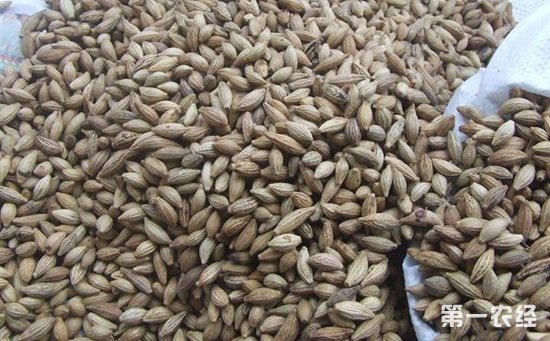
Image: Osmanthus seeds
I. Pre-sowing treatment of osmanthus seeds
1. Seed preparation:After the osmanthus seeds are collected, they must be prepared immediately. The outer seed coat of mature fruit is relatively soft, so it can be washed immediately with water. Wash the fruit skin clean, remove the empty and small seeds floating on the water surface, pick out impurities, and then place them indoors to dry in the shade. Be careful not to dry them in the sun, because there is no waxy layer on the seed coat of osmanthus seeds, and they easily lose water and shrivel, thereby losing physiological activity.
2. Seed storage:Osmanthus seeds have the characteristic of physiological after-ripening, and must undergo proper storage and germination stimulation before they can be sown and raised as seedlings. Osmanthus seed storage generally has two methods: sand storage and water storage. 1 Sand storage means covering them layer by layer with wet sand. The place for sand storage of seeds should preferably be a cool and ventilated area first, and they should be piled on soil or sandy soil, not on concrete ground; 2 Water storage means putting the seeds in a bag that is breathable but not easily rotted, tying the bag mouth tightly, and placing it in cold water, preferably running water. Check frequently to see whether the seeds have lost water or become moldy and deteriorated. The seed bag for water storage should not be exposed above the water surface. In summer, the seed bag should be kept away from the high-temperature water layer near the water surface, so as to avoid seed germination and rotting from heat.
3. Seed inspection and disinfection:1 Inspection. Seed inspection should be carried out before sowing, and empty-shell seeds and deteriorated seeds should be removed. Then use a small knife to randomly cut open several plump seeds and observe whether the kernel is fresh and whether it has viability. Generally, the kernel of good seeds is milky white; 2 Disinfection. First wash the seeds with clean water, then put them into 0.5% potassium permanganate or 1% bleaching powder solution and soak for 15-20 minutes, then filter out the residual disinfectant liquid and residue. After the seeds are rinsed with clean water, dry them and sow; or soak the seeds in 0.5% formalin solution for 15 minutes, pour off the liquid, seal and fumigate the seeds for half an hour, then rinse with clean water, dry and sow.
4. Germination stimulation treatment:In order to make the seeds germinate quickly and uniformly, the disinfected seeds can be placed in warm water at about 50°C and soaked for 4 hours, then taken out and put into a bamboo basket, covered with a wet cloth or straw, and placed under a temperature condition of 18-24°C to stimulate germination. When half of the seeds have cracked seed coats or slightly exposed radicles, they can be sown. During the germination process, the seeds should be turned frequently so that the temperature and humidity of the upper and lower layers remain consistent, so that germination is uniform.
Image: Osmanthus
II. Sowing methods for osmanthus seeds
From early February to April of the following year, when the seeds crack open and show white, sowing and seedling raising can be carried out. The drill method is generally used, that is, making horizontal or vertical furrows on the seedbed, with a furrow width of 12 cm and a furrow depth of 3 cm; sow 1 pre-germinated seed every 6-8 cm in the furrow. When sowing, place the seed hilum facing sideways, so as to prevent the radicle and young stem from bending and affecting the growth of the seedlings. In the Guilin area, wide-row drilling is usually used, with a row spacing of 20-25 cm and a bed width of 10-12 cm, sowing 20 kg per mu, which can produce 25,000-30,000 seedlings. After sowing, cover immediately with fine soil, and the soil cover thickness should preferably not exceed 2-3 times the transverse diameter of the seed; after covering with soil, level the bed surface to avoid water accumulation; then cover with a thin layer of straw, to the extent that the soil is not visible, and press it down with ropes to prevent the covering straw from being blown away by the wind; then use a fine-hole watering pot to spray water fully until the soil is thoroughly wet. Covering with straw and spraying water can keep the soil moist, avoid soil compaction, and promote early seed germination and early emergence.
Image: Osmanthus
III. Post-sowing management of osmanthus seeds
After the seeds germinate, management work should keep up in a timely manner in order to cultivate robust seedlings. For the growth and development of the seedlings, the following six tasks should be done well in specific operations:
1. Removing the straw and shading:After the seeds germinate and emerge from the soil, the straw should be removed appropriately on cloudy days or in the evening. Removing the straw too early fails to achieve the purpose of covering with straw; removing it too late may break the young shoots or form leggy seedlings. Straw removal should be carried out in stages, and part of the covering straw can be left between the seedling rows to keep the seedbed moist, reduce water evaporation, and prevent weed growth. After removing the straw, as the high-temperature summer season begins, shade frames should be built in time, keeping the light transmittance of the shade frame at about 40%. The daily shading time is generally covering in the morning and uncovering in the evening; covering on sunny days and uncovering on cloudy and rainy days. By early to mid-September, the reed curtains used for shading can be collected and stored.
2. Loosening the soil and weeding:Soil loosening should be carried out in time, with a depth of 2-3 cm. It should be shallow rather than deep to prevent root damage. Weeding can be combined with soil loosening, and every effort should be made to remove weeds early, when small, and completely. In addition, weeds along ditches, paths and field ridges should also be removed completely, so as to clean the nursery land and eliminate breeding places for pests and diseases.
3. Thinning and filling in seedlings:Osmanthus seedlings are relatively shade-tolerant and slow-growing, so thinning is generally unnecessary; appropriately moving dense seedlings to fill sparse areas is sufficient. When moving seedlings, do not damage the root system of the retained seedlings. After moving seedlings, irrigate once so that the seedling roots and soil are closely combined.
4. Irrigation, drainage and fertilization:In dry summer and autumn seasons, attention must be paid to drought resistance and seedling protection. Irrigation is best carried out in the morning or evening. Use the method of rapid irrigation and rapid drainage, and water thoroughly and evenly. In the rainy season, strengthen ditch clearing and drainage to avoid waterlogging damage to the seedlings. One month after the seedlings emerge, they enter a period of vigorous growth. Apply once a month a fully decomposed dilute barnyard manure liquid or nitrogen fertilizer. The concentration is 10 kg of barnyard manure liquid per 100 kg of water, or 150-200 g of urea, or 300-400 g of ammonium sulfate. As the seedlings grow, the fertilization concentration can be appropriately increased. After autumn begins, stop topdressing to prevent excessive vegetative growth of the seedlings and damage from freezing. When topdressing, do not let the fertilizer liquid adhere to the seedlings, so as to avoid injuring the seedlings.
5. Pest and disease control:Continuous cropping nurseries of osmanthus are prone to brown spot disease and damping-off, causing a large number of leaves to turn yellow and fall off, or the root crown and root cortex of the seedlings to rot, resulting in the death of the whole plant. At the same time, aphid damage is also likely to occur during the seedling stage. Therefore, pest and disease control work cannot be ignored.
6. Timely transplanting:One-year-old sown osmanthus seedlings are 20-30 cm tall and are transplanted in early spring of the following year. Two-year-old seedlings are about 60 cm tall, and when three-year-old seedlings are about 1 m tall, transplanting is required again. For use as courtyard shade trees or trunk-road trees, cultivation is generally required for 8-10 years, with a height of 2-3 m and a diameter of 8-10 cm, before it is beneficial for maintenance and management after planting.
[Editor's concluding remarks]Doing a good job in the seed propagation of osmanthus is the foundation for successfully planting osmanthus, and attention should be paid to it. The above has introduced the planting methods for osmanthus seeds. Do you all understand them now?
How to plant osmanthus seeds_Planting techniques for osmanthus seeds
Osmanthus, an evergreen shrub or small tree of the genus Osmanthus in the family Oleaceae, 1.5-8 m tall. The crown is round-headed, semicircular or elliptical, and the crown can cover 600 sq m. However, as for how to plant osmanthus seeds, the following is our compilation for you, and we hope it is useful to you.
Characteristics of osmanthus
Osmanthus originated in southwestern China, the eastern section of the Himalayas, India, Nepal, and Cambodia. In southwestern China, Sichuan, Shaanxi (southern part), Yunnan, Guangxi, Guangdong, Hunan, Hubei, Jiangxi, Anhui and other places, wild osmanthus grows, and it is now widely cultivated in the Huai River basin and areas to the south. Its suitable growing area can reach as far north as the lower reaches of the Yellow River and as far south as Guangdong and Guangxi and Hainan.
It prefers a warm and humid climate, is tolerant of high temperatures but not very cold-tolerant, and is a subtropical tree species. Osmanthus has lush leaves and is evergreen, has a long tree age, blooms in autumn, and is full of fragrance. It is an ornamental flowering plant and aromatic tree unique to China. The areas where Chinese osmanthus is concentrated and cultivated are mainly the vast tropical and northern subtropical regions from south of the Nanling Mountains to north of the Qinling Mountains and the Huai River, roughly equivalent to 24°-33° north latitude. This area has good water and heat conditions, suitable precipitation, soil mostly yellow-brown soil or yellow-cinnamon soil, and vegetation mainly of the subtropical broad-leaved forest type. Nurtured and influenced by the above conditions, osmanthus grows well, and five nationally famous osmanthus commercial production bases have been formed: Xianning in Hubei, Suzhou in Jiangsu, Guilin in Guangxi, Hangzhou in Zhejiang and Chengdu in Sichuan.
Osmanthus does not have very strict soil requirements. Except for alkaline soil and low-lying land or soil that is too clayey and poorly drained, it can generally grow, but deep, loose and fertile slightly acidic sandy loam with good drainage is more suitable.
Types of osmanthus
Jingui
Osmanthus fragrans var. thunbergii. Jingui flowers are golden yellow, have a relatively strong fragrance, and the leaves are relatively thick.
Jingui cultivar group: blooms in autumn, flowers range from light lemon yellow to golden yellow, with cultivars such as 'Dahua Jingui', 'Daye Huang', 'Huangchuan Jingui', 'Wan Jingui', 'Yuanye Jingui' and 'Jinqiu Gui'.
Yingui
Osmanthus fragrans var. latifolius. Yingui flowers are relatively white, slightly tinged with pale yellow, have a relatively strong fragrance, and the leaves are relatively thin.
Yingui cultivar group: blooms in autumn, flower colors are pure white, milky white, yellow-white and light yellow, with cultivars such as 'Zi Yingui' (seed-bearing), 'Jiulong Gui', 'Zao Yingui', 'Wan Yingui' and 'Baijie'.
Dangui
Osmanthus fragrans var. aurantiacus. Dangui flowers are orange-yellow, have a moderate fragrance, and the leaves are thick and dark in color.
Dangui cultivar group: blooms in autumn, flower colors are relatively deep, from orange-yellow and orange-red to vermilion, with cultivars such as 'Dahua Dangui', 'Chi Dangui', 'Zhusha Dangui' and 'Kuanye Hong'.
Osmanthus fragrans var. semperflorens, Sijigui, also known as Yueyue Gui. The flowers are slightly white or pale yellow, the fragrance is relatively light, and the leaves are thin. It blooms all year round.
Sijigui
Sijigui cultivar group: blooms in all four seasons, with cultivars such as 'Yueyue Gui', 'Rixiang Gui', 'Daye Fodingzhu' and 'Chiye Sijigui'.
Each cultivar group contains some cultivars worthy of promotion and application. For example, 'Rixiang Gui' and 'Daye Fodingzhu' in the Sijigui cultivar group are both small shrubs, 0.5-1.5 m tall. 'Rixiang Gui' has pale yellow flowers, and the nodes of the same branch bloom successively, with flowers almost every day, hence the name. At present, there are a large number of mother plants in Cangxi, Sichuan. 'Daye Fodingzhu' has milky white to pure white flowers, dense inflorescences, and a unique terminal inflorescence, with a flowering period continuous from spring to autumn. They have very high ornamental value and can be potted indoors or planted in large areas in the open field.
Different regions can choose different species or cultivars for propagation according to different needs. For example, for the purpose of flower harvesting, it is advisable to choose high-yield types with abundant and dense flowers, such as 'Huangchuan Jingui', 'Jingui', 'Zi Yingui', 'Dahua Dangui' and 'Chenghong Dangui', which bloom and drop flowers uniformly. For the purpose of viewing flowers and enjoying fragrance, it is advisable to choose 'Dahua Dangui', 'Zi Dangui', 'Zhusha Dangui', 'Dahua Jingui' and 'Yuanban Jingui'. For use as shrubs, potted plants or bonsai, it is advisable to choose 'Rixiang Gui', 'Daye Fodingzhu', 'Yueyue Gui', 'Sijigui', 'Jiulong Gui' and 'Liuye Gui'. For use as trees or as the main landscape in courtyards, it is advisable to choose 'Daye Huang Yingui', 'Jingui', 'Daye Dangui', 'Dadan Jingui' and 'Chenghong Dangui'.
Planting techniques for osmanthus seeds
First soak the osmanthus seeds in warm water for 24 hours or in cold water for 48 hours, then take them out. Choose loose soil with good drainage in a wind-sheltered, sunny garden plot, sow them in the potting soil by the spot-sowing method, and after sowing surround them with a layer of 2-3 cm fine sandy soil. Spray once thoroughly with water, then cover with glass or another covering material (such as straw). After the osmanthus seeds germinate, remove the covering material to allow ventilation. Also guard against direct sunlight.
When osmanthus seeds begin to germinate, the soil temperature should be 18-30°C. If the soil temperature is too low, or if sowing is done for a long time and the soil is too wet, osmanthus seeds may fail to germinate and the attempt may fail.
If soil moisture is uneven, sometimes too wet and sometimes too dry, especially after osmanthus seeds have already begun to germinate and the root system has extended out of the seed coat, insufficient soil water content means the root system cannot absorb enough water, causing root hairs to dry out and die, and the osmanthus seedlings fail in the soil. At this time, if the soil water content is too high, the air content will inevitably be insufficient, causing new roots to be unable to breathe, and after a long time this causes rot and death, and failure to emerge.
Improper substrate selection: the sowing substrate should use loose, permeable, well-drained substrates such as fine sandy soil, humus soil, unfertilized leaf mold, vermiculite and perlite. If the sowing substrate is too dense and too clayey, osmanthus seeds will find it difficult to emerge after germination, and after a long time they will also suffocate and die.
Osmanthus seeds stored too long are also called second-year seeds or old osmanthus seeds. Visually, osmanthus seeds have already entered dormancy after drying. In reality, they are still slowly consuming their own stored nutrients and water in physiological activity, but once these are exhausted, they can no longer germinate.