How to grow water lilies? Detailed guide to cultivation methods and precautions
Water lily cultivation methods and precautions:
(1) Water lilies love light, prefer high-temperature environments, and love fertilizer. They are not very demanding about their environment and can grow well in water with a pH of 6 to 8.
(2) In the Yangtze River basin, they sprout from late March to early April, June to August is the peak blooming period for water lilies, the leaves turn yellow from October to November, and after November they enter the dormant period.
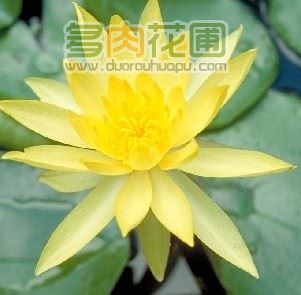
1. Morphological characteristics
Leaves are round or ovate, with inconspicuous wavy margins. The upper surface is dark green with brown markings, and the underside is reddish-brown with small black spots. Flowers are yellow, about 10 cm in diameter.2. Origin and distribution
China and Japan, Korea, India, the Soviet Union, Siberia and Europe.How to grow water lilies, water lily cultivation methods and precautions
When water lilies are mentioned, is the first thing that comes to mind the lotus? Because their appearance is somewhat similar. Water lilies and lotuses are both common flowers, so how should water lilies be grown, and what are the cultivation methods and precautions for water lilies?
Water lily cultivation methods and precautions:
1. Water level control: Whether using pot cultivation, tub cultivation, pond cultivation or field cultivation, the water level should not be too deep at the beginning, and should be gradually increased as the plant grows. For water lilies grown in ponds, pay attention to drainage during the rainy season; they must not be submerged by large amounts of water. However, 1-2 days will not cause the water lilies to die.
2. Topdressing: Water lilies need a relatively large amount of fertilizer. During the growing period, if the leaves are yellow and thin and the growth is weak, topdressing is needed. For potted plants, urea, potassium dihydrogen phosphate, etc. can be used as topdressing. For pond planting, cake fertilizer, farmyard manure, urea, etc. can be used as topdressing (cake fertilizer and farmyard manure are also quite good as base fertilizer).
3. Pest and disease control: The main pests harming water lilies are snails, which can be killed with molluscicides or captured by hand. For disease control, refer to the control methods for lotus.
4. Overwintering management: Hardy water lilies can overwinter naturally in ponds. However, they must not be dehydrated throughout the winter, and a certain water layer must be maintained. If potted water lilies are placed outdoors, when the lowest winter temperature is below -8°C, they should be covered with weeds or agricultural film to prevent the tubers from freezing. Placed indoors, they can overwinter safely. Tropical water lilies should be moved into a greenhouse kept at no less than 15°C for storage. In May of the following year, move them out again for cultivation
After reading the water lily cultivation methods and precautions shared above, you should have a rough understanding! Here, the editor hopes you can grow better and more beautiful water lilies!