A Complete Guide to Pest and Disease Control Methods and Techniques for Mock Lime (Aglaia odorata)
Pest and disease control for mock lime. During the growing period, mock lime suffers from the following diseases: stem rot and anthracnose; and the following pests: the white wax cicada (Lawana imitata), aphids, red spider mites, brown soft scale, and other pests.
Mock lime stem rot
This disease occurs on the stems of mock lime plants. In the early stage of the disease, small black spots appear, which after expanding become streak-shaped and dark brown. The lesions mostly merge into one mass, and after encircling the stem for 1 full turn, they cause the plant to die. The leaves generally do not fall off. Later the plant withers and dies, and a black-gray sticky substance appears on the stem. This disease can occur year-round in greenhouses, and is especially severe in spring.
Control methods: 1. Promptly clean up and burn diseased and dead plants. 2. In the early stage of the disease, apply 0.5-1% Bordeaux mixture to the trunk, or apply 1-2 degree lime sulfur mixture or 70% thiophanate (Topsin) 800-fold solution; all have relatively good control effects.
Mock lime anthracnose
The disease occurs most from June to October. This disease is one of the main diseases of mock lime. Mock lime is prone to this disease in poorly ventilated locations and when the plant grows poorly. It can occur on the leaves, petioles, young shoots and stems of the plant. In the early stage of leaf disease, the lesions invade from the leaf tip and leaf margin; after infection, the leaf tip turns brown, and the lesion can reach half of the leaf surface, forming semicircular, irregular gray-brown lesions.
Control methods: Provide careful care; when diseased leaves or diseased petioles are found, promptly remove them; improve ventilation and light conditions. A 1000-1200-fold aqueous solution of potassium permanganate can also be sprayed.
White wax cicada (Lawana imitata)
The damage white wax cicadas cause to mock lime is that adults and nymphs suck sap on the branches and tender shoots, affecting plant growth. In severe cases, the branches dry up, and their excrement can also cause sooty mold.
Control methods: When adult and nymph damage occurs, spray 90% trichlorfon technical material 1000-fold solution (or 50% phosphamidon emulsifiable concentrate 1000-fold solution) for control, with relatively good results.
Aphids and red spider mites harming mock lime
Spray 40% dimethoate diluted with 1000-1500 times water for control. The above is an introduction to pest and disease control for mock lime.
What to do when mock lime gets bugs: pest and disease control for mock lime / 3 pests, 2 diseases
Among the effects and functions of mock lime, its ornamental value is relatively well known, but if this ornamental flower is not cultivated correctly, it is very prone to certain pests and diseases. So what should be done when mock lime gets bugs? And how should pest and disease control for mock lime be carried out? Below, the editor will walk everyone through it.
I. What to do when mock lime gets bugs / targeted treatment
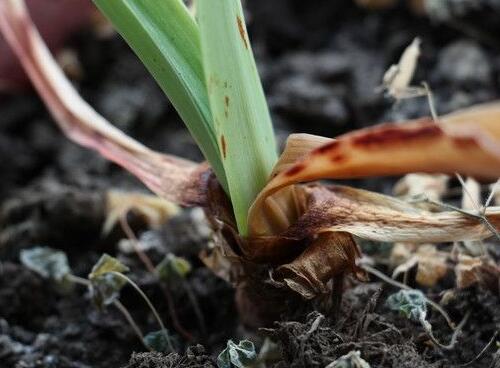
II. Pest and disease control for mock lime
Pest 1: Scale insects
Symptoms: This pest mainly harms the branches and leaves of mock lime, gradually sucking the sap from the branches and leaves. If not treated for a long time, it will cause mock lime to lose too many nutrients and wither and die.
Control methods: For scale insects, we can use 40% omethoate 1000-fold solution for spraying and killing. Generally spray once every 7-10 days or so, and after 1-2 times this pest can basically be eliminated.
Pest 2: Aphids
Symptoms: In pest and disease control for mock lime, aphids are a relatively common pest. They mainly harm the leaves of mock lime, gradually sucking the sap from the leaves, and also form some dead spots on the leaves, eventually causing mock lime to gradually wither and die.
Control methods: This pest has an extremely strong reproductive capacity, so once found it must be treated as soon as possible. When treating it, we can use 40% imidacloprid water-soluble solution 1500-2000-fold solution for direct spraying and killing.
Pest 3: Red spider mites
Symptoms: Red spider mites are an omnivorous pest, with a peak period in July-August each year, so special attention must be paid during this time period. They mainly harm the branches and leaves of the plant, gradually absorbing the sap within, thereby causing mock lime to lose nutrients and show signs of withering.
Control methods: When controlling this pest, we can use 15% pyridaben emulsifiable concentrate 2000-fold solution for spraying and killing. Generally once every 10-15 days, and after 1-2 times this pest can basically be eliminated.
Disease 1: Anthracnose
Symptoms: Among pest and disease control for mock lime, anthracnose is a relatively common disease. It harms the entire mock lime plant. In the early stage of the disease, some brown lesions appear on the leaves, and as time goes on they gradually spread to the whole plant, eventually causing the entire mock lime to wither and die.
Control methods: When this disease appears, we must carry out control in the early stage. If too much time passes, it will be very difficult to cure. When controlling it, we can use 50% captan 500-fold solution to spray the diseased plant.
Disease 2: Sooty mold
Symptoms: This disease mainly harms the leaves of mock lime. When it occurs, many small black mold spots appear on the leaves, and they gradually cover the entire leaf, affecting photosynthesis, and eventually causing mock lime to gradually move toward death.
Control methods: When controlling this disease, we can use 70% thiophanate-methyl 1000-fold solution to spray mock lime. Generally spray once every 7-12 days, and after 2-3 times it can basically be cured.
Control of common pests and diseases of mock lime
Mock lime, (Latin name: Aglaia odorata Lour), alias: four-season mock lime, broken mock lime, an evergreen shrub or small tree of the Meliaceae family and the genus Aglaia; it adapts to warm and humid climate conditions, and adult plants need sufficient sunlight. Its branches and leaves are dense, the leaf color is verdant and glossy, and it blooms multiple times within a year, most abundantly in summer and autumn. When in bloom, it gives off a clear fragrance, with a scent like that of orchids. The tips of the small branches often have star-shaped rusty-colored small scales.
Pinnately compound leaves are alternate; the flowers are yellow, extremely fragrant, and about 2 mm in diameter. The bisexual flower stalks are slightly short and thick, the calyx is 5-lobed, and the petals are 5 in number, oblong; the berry is nearly spherical, 10-12 mm long, and the flowering period is between summer and autumn.
Control of common pests and diseases of mock lime
Spray the plant with cigarette butt or chili pepper water. Spraying with 800-fold aphid-killing solution also works. If the number is small, they can be removed manually with a small brush.
2. Scale insects
Spray with 1500-fold scale-killing solution. When the number is small, they can be removed manually with a brush.
3. Red spider mites
Spray the plant with 1000-fold dichlorvos solution or 2000-fold dimethoate solution.
4. Sooty mold
This disease is prone to occur under high temperature and high humidity and poor ventilation.
Control methods: Improve the environment, wash the leaves and branches with water, or spray with 70% thiophanate-methyl 1000-fold solution.