Causes and Solutions for Leaf Drop in Potted Mock Lime (Aglaia odorata)
What to do when a potted mock lime drops its leaves? The mock lime blooms on the new shoots of the current year, so you cannot reduce the crown by heavy pruning and cutting back every year, otherwise cutting off the shoot tips will prevent it from blooming. This causes the flowering part to move upward year by year, so the leaves at the base receive less and less light, and over time the basal leaves will fall off, ultimately making the whole plant look top-heavy and greatly reducing its ornamental value. To keep the lower leaves of the mock lime crown from falling off, you must do the following:
① Try to let the lower leaves of the plant see as much sunlight as possible. You can raise the flower pot, or lay reflective film on the ground to reflect light upward.
② To prevent leggy growth and encourage branching, for one-year-old plants, be sure to remove the overly vigorous terminal leaf buds. For mature plants over two years old, branching is generally already fairly abundant. If the growth of the main branches is unbalanced, in early spring before the buds sprout, you can thin out part of the side branches on the strong main branches, and at the same time tie the remaining side branches with string and pull them downward to control their growth. For weak main branches, pinch out the growing tips, and when appropriate, you can also cut them back a little to encourage new branches. In this way, the whole crown can be kept neat and uniform, evenly distributed, well ventilated and able to receive light, and at the same time it prevents the leaf-bearing part from moving upward year by year.
③ When the plant has too many flower buds, you can appropriately thin out some of the flower clusters. Removing some flower clusters relatively reduces the consumption of nutrients, so that sufficient nutrients are supplied to the growth of the leaves. This accordingly prevents the lower leaves of the plant from falling off. The above is an introduction to what to do when a potted mock lime drops its leaves.
What to do when a potted mock lime drops its leaves? Causes and solutions
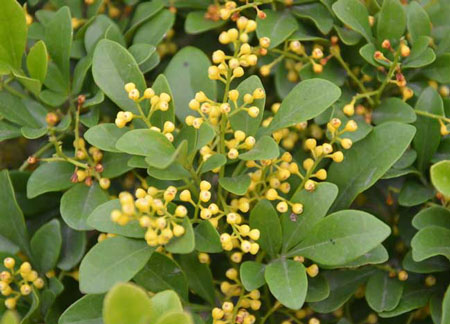
The mock lime likes a ventilated, airy, humid, warm and sunny environment. Mock limes that come on the market in spring are mostly transported from the south to the north. The climate difference between the two places is enormous, which poses a great threat to the survival of the mock lime. Especially in early spring, even for varieties cultivated locally, improper management such as moving them outdoors too early can still cause massive leaf drop or even death, let alone varieties from other regions.
Why does the mock lime keep dropping its leaves?
1. The mock lime is afraid of wind and cold. Once exposed to wind and cold, its leaves will suddenly drop in large numbers within a short period. During indoor care, if it is exposed to wind and cold, leaf drop often also occurs. Therefore, in spring you must protect it from wind and cold.
2. When the mock lime is kept at low room temperature and with long-term insufficient light, excessive watering damages the roots and leaves, causing the green leaves to fall off. For a mock lime that has dropped its leaves, you should immediately stop watering, spraying water and applying fertilizer, and adopt the methods of "loosening the soil to disperse moisture" and "changing the soil to absorb moisture." Place it in warm sunlight, and wait until the potting soil is dry and loose before watering again, moistening it gradually until it slowly recovers.
3. The mock lime easily drops a large number of leaves over winter. Judging from the signs, blackish-brown wilted leaves are a sign of freezing, and you should increase the temperature in time or move it to a warmer place so that it gradually revives. Yellowing and falling leaves are caused by poor ventilation or overly dry soil. Falling green leaves are caused by overly wet soil. In winter, the physiological activity of the mock lime is weak, so at this time avoid low temperature with high humidity, or dry air. Continuous low temperatures below 5°C, draughts in passageways, and long-term insufficient light can all also cause leaf drop.
4. Direct cold wind in spring also easily causes leaf drop. Move it outdoors only after Qingming when the temperature is stable; this is all beneficial for protecting the leaves.
5. Fertilizer burn and improper fertilization can cause fertilizer burn and leaf drop. Fertilizer must be fully fermented and decomposed. If you apply raw fertilizer, not only will it fail to make the mock lime grow robustly, but the heat produced when the raw fertilizer ferments will burn the root system. If you apply inorganic fertilizer, applying too much at one time or direct contact with chemical fertilizer can also damage the roots and cause leaf drop.
How can you keep the mock lime from dropping its leaves?
1. Fertilizing: Generally, fertilize once a month, mainly with organic fertilizer and high-efficiency phosphorus-potassium fertilizer, and never apply nitrogen fertilizer alone. Each time, for each pot, apply 25-30 grams of composted, decomposed and deodorized peanut cake fertilizer, rapeseed cake fertilizer or tea seed cake fertilizer, and 15-20 grams of monopotassium phosphate or high-efficiency biological phosphorus-potassium fertilizer, mixed with 2-3 kg of clear water or composted, decomposed and deodorized human and livestock manure water, then pour it on.
2. Watering: Throughout the year, keep the potting soil in a moist state. Never let it become so dry that it cracks, but do not let it stay overly wet for a long time either, otherwise it will cause root suffocation, root rot and yellow leaves. Generally, in summer and autumn, water once a day with clear water; in winter and spring, water once every 2-3 days with clear water, so that the water can quickly penetrate into the potting soil and does not accumulate on top. At the same time, frequently spray clear water on the branches and leaves, especially during the high temperatures of summer and the dry periods of winter, evenly moistening all the branches and leaves until water droplets begin to drip down, so as to keep the branches and leaves moist.
3. Spraying: Potted mock limes are quite severely harmed by pests and diseases such as powdery mildew, leaf spot, anthracnose, red spider mites, scale insects, aphids and rust mites, which cause the branches and leaves to yellow and die. Every 15-20 days, spray the leaves once with a clarified liquid made by soaking a 25-30 times dilution of dry, clean plant ash mixed with superphosphate, or a 0.1% clarified limewater, for pollution-free control, so as to protect the branches and leaves and prevent various pests and diseases.
What to do when the mock lime drops its leaves: causes of leaf drop in mock lime and solutions
Many friends who grow mock lime find that it drops its leaves. What to do when the mock lime drops its leaves? Let us take a look together below at the causes of leaf drop in mock lime and the solutions.
Causes of leaf drop in mock lime:
1. The mock lime is afraid of wind and cold. Once exposed to wind and cold, its leaves will suddenly drop in large numbers within a short period. During indoor care, if it is exposed to wind and cold, leaf drop often also occurs. Therefore, in spring you must protect it from wind and cold.
2. When the mock lime is kept at low room temperature and with long-term insufficient light, excessive watering damages the roots and leaves, causing the green leaves to fall off. For a mock lime that has dropped its leaves, you should immediately stop watering, spraying water and applying fertilizer, and adopt the methods of "loosening the soil to disperse moisture" and "changing the soil to absorb moisture." Place it in warm sunlight, and wait until the potting soil is dry and loose before watering again, moistening it gradually until it slowly recovers.
3. The mock lime easily drops a large number of leaves over winter. Judging from the signs, blackish-brown wilted leaves are a sign of freezing, and you should increase the temperature in time or move it to a warmer place so that it gradually revives. Yellowing and falling leaves are caused by poor ventilation or overly dry soil. Falling green leaves are caused by overly wet soil. In winter, the physiological activity of the mock lime is weak, so at this time avoid low temperature with high humidity, or dry air. Continuous low temperatures below 5°C, draughts in passageways, and long-term insufficient light can all also cause leaf drop.
4. Direct cold wind in spring also easily causes leaf drop. Move it outdoors only after Qingming when the temperature is stable; this is all beneficial for protecting the leaves.
5. Fertilizer burn and improper fertilization can cause fertilizer burn and leaf drop. Fertilizer must be fully fermented and decomposed. If you apply raw fertilizer, not only will it fail to make the mock lime grow robustly, but the heat produced when the raw fertilizer ferments will burn the root system. If you apply inorganic fertilizer, applying too much at one time or direct contact with chemical fertilizer can also damage the roots and cause leaf drop.
Solutions for leaf drop in mock lime:
1. Fertilizing: Generally, fertilize once a month, mainly with organic fertilizer and high-efficiency phosphorus-potassium fertilizer, and never apply nitrogen fertilizer alone. Each time, for each pot, apply 25-30 grams of composted, decomposed and deodorized peanut cake fertilizer, rapeseed cake fertilizer or tea seed cake fertilizer, and 15-20 grams of monopotassium phosphate or high-efficiency biological phosphorus-potassium fertilizer, mixed with 2-3 kg of clear water or composted, decomposed and deodorized human and livestock manure water, then pour it on.
2. Watering: Throughout the year, keep the potting soil in a moist state. Never let it become so dry that it cracks, but do not let it stay overly wet for a long time either, otherwise it will cause root suffocation, root rot and yellow leaves. Generally, in summer and autumn, water once a day with clear water; in winter and spring, water once every 2-3 days with clear water, so that the water can quickly penetrate into the potting soil and does not accumulate on top. At the same time, frequently spray clear water on the branches and leaves, especially during the high temperatures of summer and the dry periods of winter, evenly moistening all the branches and leaves until water droplets begin to drip down, so as to keep the branches and leaves moist.
3. Spraying: Potted mock limes are quite severely harmed by pests and diseases such as powdery mildew, leaf spot, anthracnose, red spider mites, scale insects, aphids and rust mites, which cause the branches and leaves to yellow and die. Every 15-20 days, spray the leaves once with a clarified liquid made by soaking a 25-30 times dilution of dry, clean plant ash mixed with superphosphate, or a 0.1% clarified limewater, for pollution-free control, so as to protect the branches and leaves and prevent various pests and diseases.
More information