How to prevent Aglaia odorata from dropping leaves in winter
To prevent Aglaia odorata from dropping leaves in winter: Aglaia odorata has an elegant plant shape and a very long flowering period, but it tends to drop a large number of leaves in winter. To prevent winter leaf drop, protect it from wind and cold, and also water and fertilize it reasonably. In winter, the room temperature should be kept at 10-12°C, and it is best if the terminal buds of Aglaia odorata do not sprout.
If the temperature is too high, it will sprout new leaves, and after being moved outdoors in early spring it is prone to dry tips from being buffeted by dry wind, which affects flowering. In winter, place it in a sunny spot with ample light and provide appropriate ventilation, but do not let cold wind blow directly on it, otherwise it will drop a large number of leaves; the room temperature should not be lower than 5°C. Stop fertilizing, control watering, and keep the potting soil in a half-moist state. Generally, about every 20 days, give one thorough watering at noon on a sunny day, and frequently spray the leaves with clean water at a temperature close to room temperature. If the room temperature cannot reach 10-12°C, it can be overwintered in a room at 5-7°C; below 5°C it will suffer cold damage.
If leaf drop occurs, you can knock the plant out of the pot, peel off 1/3 of the soil around the main root ball, remove rotten roots, and cut off 1/2 of the branches, then repot and water it, place it in a sunny spot with a room temperature above 10°C, cover it with a plastic bag, and keep it moist; it will then grow new branches again. In winter, indoor light is rather poor; if light is insufficient, artificial supplemental lighting can be used. A 100-300W white fluorescent lamp can be used to supplement light, generally about 1 meter away from the plant, adding 3-4 hours of light per day. Insufficient light easily causes leaf drop and likewise affects flowering the following year.
How to prevent and treat the loss of all leaves on the lower part of Aglaia odorata
The phenomenon in which the lower (1/2-2/3) leaves of Aglaia odorata fall off and the branches are left bare is commonly called "bare legs." The leaves of Aglaia odorata have high ornamental value. A bare-legged Aglaia odorata has a non-rounded crown shape, with fewer and smaller leaves, and little ornamental value.The reason Aglaia odorata develops bare legs is excessive watering during overwintering, insufficient light, cold wind, spraying water at low temperatures, or suffering short-term cold damage below 5°C, which causes a large number of green leaves to fall off. Therefore, the measure to prevent bare legs in Aglaia odorata is to prevent the loss of green leaves. If bare legs occur in Aglaia odorata, the main remedy is to take comprehensive measures to preserve leaves and promote new growth on the lower part. With good cultivation, significant results can be seen in one year.
(1) Pinch off the growing tips to promote new branches. Before the growing tips start growing in spring, according to shaping requirements, pinch off most of the growing tips on the upper branches. This can limit height growth and promote new growth on the lower part. Afterwards, depending on how new branches emerge, pinch or keep them and adjust appropriately. Within 1 year, do not prune branches that bear leaves, to avoid further reduction of leaves.
(2) Provide ample sunlight and prevent shading. Aglaia odorata likes sunlight, and regardless of the season it should receive as much sunlight as possible. Even in midsummer, to prevent the inhibitory effect on its growth from direct blazing sun around midday, it is best to place it at the edge of a shade shed or move it indoors temporarily from 11 a.m. to 3 p.m. During the flowering and fragrant period, it can also be placed indoors only for a period around midday.
(3) Guard strictly against cold damage. Aglaia odorata likes warmth and fears cold. In spring, it can be moved outdoors only after Qingming; in autumn, it should be moved indoors early before Frost's Descent. After being moved outdoors and before being moved indoors, if there is a sudden temperature drop or the nighttime temperature may fall below 15°C, it should be moved indoors promptly to avoid cold. In severe cold seasons, beware of cold wind. In winter, spraying or watering should be done at noon on sunny, warm days, and warm water should be used to prevent too great a temperature drop from causing cold damage.
Aglaia odorata: Aglaia odorata illustrated guide: how to grow Aglaia odorata / how to propagate Aglaia odorata
Aglaia odorata profileAglaia odorata
Aliases: Shulan, Four Seasons Aglaia, Sui Aglaia, Aglaia odorata
Category: Shrub flowers
Family and genus: Plantae, Angiosperms, Dicotyledoneae, Sapindales, Meliaceae, Aglaia
Full bloom period: Spring and autumn
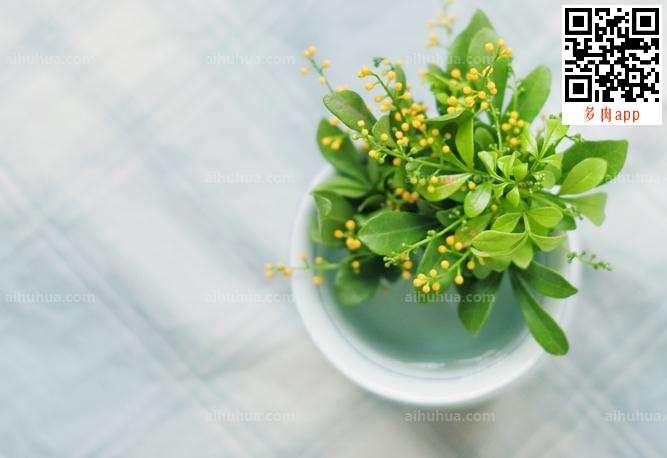
Aglaia odorata, also known as Shulan, Four Seasons Aglaia, and Sui Aglaia, belongs to the genus Aglaia in the Meliaceae family. It is an evergreen shrub or small tree; the tips of the branchlets are often covered with stellate rusty scales; the pinnately compound leaves are alternate, 5-12 cm long, with 3-7 leaflets, the common leaf axis has narrow wings, the leaflets have short stalks, are obovate to oblong, 2-7 cm long, 1-3 cm wide, with obtuse apex and wedge-shaped base, hairless on both sides; the panicles are axillary, 5-10 cm long, slightly loose. The flowers are orange-yellow, extremely fragrant, about 2 mm in diameter. The bisexual pedicels are slightly short and thick, the calyx is 5-lobed, and there are 5 petals, oblong; the berry is nearly spherical, 10-12 mm long, and the flowering period is between summer and autumn.
How to grow and care for Aglaia odorata: cultivation methods and precautions, and an introduction to Aglaia odorata
Aglaia odorata, also known as Shulan, Four Seasons Aglaia, and Sui Aglaia, belongs to the genus Aglaia in the Meliaceae family. It is an evergreen shrub or small tree; the tips of the branchlets are often covered with stellate rusty scales; the pinnately compound leaves are alternate, 5-12 cm long, with 3-7 leaflets, the common leaf axis has narrow wings, the leaflets have short stalks, are obovate to oblong, 2-7 cm long, 1-3 cm wide, with obtuse apex and wedge-shaped base, hairless on both sides; the panicles are axillary, 5-10 cm long, slightly loose. The flowers are orange-yellow, extremely fragrant, about 2 mm in diameter. The bisexual pedicels are slightly short and thick, the calyx is 5-lobed, and there are 5 petals, oblong; the berry is nearly spherical, 10-12 mm long, and the flowering period is between summer and autumn.
Morphological characteristics of Aglaia odorata
Aglaia odorata is an evergreen shrub or small tree with many branches. The tips of young branches have stellate rusty scales, which later fall off. The odd-pinnately compound leaves are alternate, the leaf axis has narrow wings, and there are 3-5 leaflets, opposite, obovate to long elliptic, with obtuse apex and wedge-shaped base, hairless on both sides, entire margins, and obvious veins.
The panicles of Aglaia odorata are axillary. The flowers are yellow and extremely fragrant. The calyx is 5-lobed, with rounded lobes. The corolla has 5 petals, oblong or nearly round, longer than the calyx. The staminal filaments are united into a tube, shorter than the petals. The pistil ovary is ovate, densely covered with yellow coarse hairs. The berry is ovate or spherical, with stellate scales. The seeds have a fleshy aril.
The flowering period of Aglaia odorata is July-August, or it flowers throughout the year.
Ecological habits of Aglaia odorata
Aglaia odorata likes warm, humid, and sunny environments. It is not cold-tolerant and is slightly shade-tolerant. The best soil is loose, fertile, slightly acidic soil, and the winter temperature should not be lower than 10°C.
Aglaia odorata likes warmth, sunlight, and fertilizer. The suitable growing temperature is 20°C-25°C. Under normal circumstances, with ample sunlight and relatively high temperature (around 30°C), the flowers produced have a strong fragrance. If it is placed in a shaded spot in summer and at the same time given a large amount of nitrogen fertilizer, this is one of the main reasons Aglaia odorata fails to bloom or blooms little and has a faint fragrance. Therefore, during the growth and development period, Aglaia odorata needs to be kept outdoors in a sunny place for care, and attention should be paid to appropriately applying more liquid fertilizer containing more phosphorus. It is best to apply fully decomposed alum fertilizer water made by soaking crushed bone meal, fish bones, chicken bones, etc., and often supplement with chemical fertilizers containing more phosphorus or fermented rice-washing water, etc.; all of these help bud formation, and also result in more flowers, golden-yellow color, and a fresh, fragrant scent.
Aglaia odorata likes moisture, and watering during the growing period should be moderate. If watered too much, it easily causes root rot, and leaves turn yellow and fall off; if watered too much during the flowering period, it easily causes flowers and buds to drop; if watered too little, it causes dry leaf edges and withered buds. Therefore, in summer when the temperature is high, in addition to watering 1-2 times a day, frequently spray and wash the branches and leaves with clean water and sprinkle water on the ground where it is placed to increase air humidity. At the same time, fertilization should also be moderate. Because Aglaia odorata blooms many times within a year, after each flowering, 2-3 applications of fully decomposed dilute liquid fertilizer should be given in time, so that it can bloom continuously with a rich fragrance. Aglaia odorata likes acidic soil, and for pot cultivation a growing medium based mainly on leaf mold should be chosen. During the vigorous growth period, spraying once a week with 0.2% ferrous sulfate solution results in green leaves and abundant flowers.
Cultivation techniques for Aglaia odorata: cultivation environment
For potted Aglaia odorata seedlings, pay attention to shading and never expose them to strong sunlight. After the seedlings grow new leaves, fertilize once every 2 weeks, but the amount of watering must be controlled and it should not be too wet. Apart from shading at midday in midsummer, it should receive plenty of sunlight; this way Aglaia odorata not only blooms many times but also has a rich fragrance. In areas north of the Yangtze River, it must be moved indoors for care in winter.
For potting, use loose soil with good drainage and aeration. Repot once every 1-2 years, and fertilize once every 1-2 weeks during the growing period. In the south it is mostly planted in courtyards; in the north it is potted, and in spring, summer, and autumn it should be placed outdoors in a place where it can receive direct sunlight. In winter, move it indoors to a place with direct sunlight, with an overwintering temperature above 10°C.
After flowering, mature mother plants produce small red fruits that are oval and resemble the fruit of the Chinaberry tree. When the fruits turn reddish-brown, pick them, soften them by soaking in warm water, peel off the fleshy skin, and then sow the seeds promptly in a pot of sandy soil; sown in summer and autumn, they germinate in about one month. Seedlings must grow for two or three years before they can bloom, unlike young plants propagated by air layering, which can fill the branches with wonderful fragrance in the same year.
Overwintering management
Aglaia odorata is native to the tropics and is not tolerant of low temperatures. Generally, from Frost's Descent to the Beginning of Winter it should be moved indoors, placed on a sunny windowsill or tabletop, and the room temperature kept at 8-10°C, preferably not lower than 5°C. If the temperature is too high, it will grow tender shoots, reducing its adaptability and cold resistance. The plant should not be placed near a stove or the side of a kitchen range; using a plastic cover can regulate temperature and humidity, but one or two slits need to be cut at the top of the cover to avoid excessive temperature and humidity that would affect normal growth.
When the potting soil is dry, water it a little, but do not fertilize. If the weather changes suddenly and the indoor temperature drops below 5°C, special warming measures should be taken, such as moving the potted flower under a table at night, hanging a cloth curtain over the table, and placing a straw mat underneath for warmth; you can also put a plastic bag over the pot, and after the sun comes out the next day remove the covering curtain and move the potted flower back from under the table to its original place. In the place where Aglaia odorata is kept, do not open windows for ventilation, to avoid cold wind harming the plant.
Propagation methods of Aglaia odorata
Aglaia odorata is propagated by cuttings, air layering, or sowing, and likes warmth and ample sunlight.
Layering
Air layering is the main method. In the plum rain season, select a one-year-old woody branch, make a ring cut 1 cm wide at 20 cm from the base, apply moss or peat to the ringed area, then tie it tightly above and below with plastic film; it can take root in 2-3 months.
Cuttings
From June to August, cut about 10 cm of tender terminal shoots and insert them into peat; they begin to take root after 2 months.
Disease and pest control of Aglaia odorata
1. Aphids: spray the plant with cigarette butt or chili water. Spraying with 800 times diluted Mieyaling is also acceptable. If there are few, they can be removed manually with a small brush. For other control methods, refer to Chinese rose.
2. Scale insects: spray with 1,500 times diluted Jiesha. If there are few, they can be removed manually with a brush. For other control methods, refer to Clivia.
3. Red spider mites: spray the plant with 1,000 times diluted dichlorvos or 2,000 times diluted dimethoate. For other control methods, refer to crabapple.
4. Sooty mold: this disease occurs easily under high temperature and high humidity with poor ventilation.
[Control methods]: Improve the environment, wash the leaves and branches with water, or spray with 1,000 times diluted 70% thiophanate-methyl. For other control methods, refer to Chinese rose.
How to grow Aglaia odorata: daily care
Aglaia odorata is native to China's Fujian, Guangdong, Sichuan, and Yunnan, as well as Southeast Asia and other places, and belongs to a subtropical tree species. It likes a mild and humid climate. Because Aglaia odorata is a southern plant, cultivating it in Beijing, especially indoors, is somewhat difficult. It needs careful care. Your Aglaia odorata is dropping leaves; since I am not on site, the causes may be many, such as soil pH, water pH, and fertilizer problems.
Here are some technical points for growing Aglaia odorata in the north: In the north, Aglaia odorata is mostly planted using peat, leaf mold plus coarse sandy soil. At home, you can use half (old) Clivia soil and half plain coarse sandy soil mixed as the growing medium. Do not use too large a pot, and do not add alkaline fertilizer to the soil; place a good drainage layer at the bottom of the pot. After the seedlings are planted, first keep them under deep shade. In dry weather, spray water daily on the leaves and the ground around them to keep the environment moist. After new leaves grow, move it to a place with dappled shade, and later gradually adapt it to strong light; then the flowers will be more fragrant.
For flower seedlings potted in spring, start topdressing around the Beginning of Autumn, preferably with dilute organic liquid fertilizer. From the second year on, during the peak growing season, apply organic liquid fertilizer once every 20 days. If it can be applied alternately with a mixed solution of 0.1% urea and 0.2% potassium dihydrogen phosphate, the flowers and leaves will appear even more luxuriant.
The potting soil should be kept moist at all times; do not miss watering and let it dry out, but it also must not remain waterlogged and wet for a long time. If placed indoors, increase ventilation and rotate it outdoors about every 15 days. In winter, when moved indoors, it needs ample sunlight, and the minimum room temperature must not be lower than 8°C. Control water and stop fertilizer, and at the same time pay attention to opening and closing doors and windows to avoid direct cold wind and smoke and dust pollution. Prevent damage from scale insects and sooty mold. In North China, after the dry winds from late April to early May have passed, move it outdoors for care. Aglaia odorata can be repotted once every two years.
Aglaia odorata should be pruned and shaped starting from the seedling stage, keeping a section of main trunk 15 cm to 20 cm high; do not let the main branches grow in a cluster from the soil surface, but instead prune and branch above the 15 cm high main trunk, so that the plant shape is full. The lower branches of perennial old plants often age and die. Therefore, in the north it is advisable to shorten-prune once every other year during the hot season, to promote the sprouting of adventitious buds on the lower part of the main branches and the growth of new lateral branches, thereby maintaining a well-proportioned tree shape, strong tree vigor, and abundant leaves and flowers.
Variety classification of Aglaia odorata: four kinds are commonly cultivated
Aglaia odorata (Aglaia odorata)
An evergreen small tree or shrub, much branched, the branchlet tips often covered with fine brown stellate scales, panicles axillary at the tips, flowers golden-yellow, small, with a rich fragrance.
Taiwan Aglaia (A. taiwaniana)
The leaves are relatively larger, and the flowers are slightly smaller; its flowers often bloom along with the growth of new branches.
Large-leaved Aglaia (A. elliptifolia)
An evergreen large shrub, the young branches often covered with brown stellate scales, and the leaves are relatively large.
Four Seasons Aglaia (A. duperreana)
It blooms in all four seasons, with the most abundant flowering in summer. For home potting, it is advisable to choose ordinary Aglaia odorata, which has a long flowering period, dense inflorescences, and a fragrance like an elegant orchid, and is relatively commonly cultivated. Under home cultivation conditions, generally as long as the minimum indoor temperature in winter can be maintained at no lower than 5°C, it can overwinter safely; even if some leaves fall from the branch tips, after pruning and repotting in early spring and strengthening water and fertilizer management, it can quickly send out new leaves and bloom again. Or on nights of particularly cold weather, put two layers of plastic bags over the plant to keep it warm, and after the temperature rises at noon the next day, open the bags for ventilation. If conditions permit, you can also install an electric heater indoors to warm the Aglaia odorata kept indoors, with especially good results.
Distribution area of Aglaia odorata
Aglaia odorata is native to southern Asia and is widely planted throughout the tropical regions of the world.
In China, Aglaia odorata is distributed in Fujian, Guangdong, Guangxi, Sichuan, and Yunnan, and is also often potted in the north.
The role and uses of Aglaia odorata: value in daily life
Aglaia odorata is a flowering plant beloved by people, and when the flowers bloom the fragrance is striking. As an edible flower, it can be used to extract essence. For example, Aglaia odorata flower tea.
Pot cultivation uses
Potted Aglaia odorata can be displayed in the living room, study, and doorway, fresh and elegant, soothing to body and mind. In southern courtyards, Aglaia odorata is also an excellent landscape tree.
Cultural background and legends of Aglaia odorata
Aglaia odorata is a symbol of bravery and passion, and about this there is also a legendary story.
In an ancient legend, there was a flower that for half of the year bloomed red flowers and for the other half bloomed blue flowers. When the sun rose, it would burst forth with fiery red radiance, and when the moonlight shone everywhere, its light was wrapped in a faint blue halo. It was so magical that people gave it the title of the flower of warriors, and it became synonymous with bravery and aspiration. Before going to battle, warriors would wear it to show bravery, and its name was passed down from generation to generation. But one day, people discovered that it had changed, and on the same stem it actually bloomed both blue and red flowers at the same time; these two flowers shone together in the sunlight and rippled together in the moonlight, equally profound and deeply affectionate. So people began to argue about who was the true flower of bravery, but every time warriors went to battle, they still wore it, only some liked to wear the blue flower and some liked to wear the red flower. And these two colors of flowers always appeared together in sunlight and moonlight, on the heads of brave warriors, and in any place that needed courage and passion. This flower is called Aglaia odorata.
The flower language of Aglaia odorata
The flower language of Aglaia odorata: With love, life will bloom.
Pictures of Aglaia odorata