What to Do When Michelia (Orange Jasmine) Leaves Turn Yellow? Causes and Solutions
When Michelia is kept indoors, leaf yellowing and leaf drop often occur. The main causes of yellowing leaves in Michelia are the following.
1. Low temperature
Michelia likes warmth. If the temperature stays below 5°C for a long time during winter, cold damage occurs, causing the leaves to yellow and fall off.
2. Improper watering
Michelia likes moisture. If the physical and chemical properties of the soil deteriorate and it stays too wet for a long time after watering, the respiration of the root system is inhibited, and part of the root system will die, causing the leaves to yellow and fall off. In addition, during hot seasons, if watering is not timely and the potting soil becomes too dry, the leaves can also yellow and fall off in large numbers within a short time.
3. Insufficient light
Michelia likes plenty of sunlight. If it is placed in a shaded indoor spot for a long time, the nutrients it synthesizes are often reduced, causing the leaves to yellow and fall off.
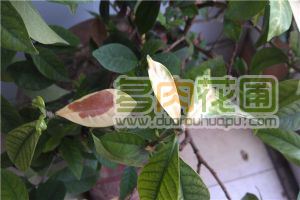
Cause of yellowing Michelia leaves: Low temperature
Yellowing Michelia leaves often appear in winter, and the main cause is temperature being too low. Michelia likes a warm environment. When the wintering temperature is below 5°C, it will suffer cold injury. The early stage of cold injury shows as the leaves gradually turning yellow and then falling off. Another point is that when exposed to cold wind, Michelia can turn yellow overnight.
Once the plant suffers cold injury or is exposed to cold wind, it is very difficult to save, and it will affect flowering the following year, so attention must be paid to keeping it warm when winter begins.
Cause of yellowing Michelia leaves: Improper watering
Michelia likes moisture. If it has not been repotted for a long time, the nutrients in the soil decrease and oxygen is low. After watering, the root system remains wet for a long time, respiration is inhibited, and part of the root system dies, causing the leaves to yellow and fall off. At this point, watering must be stopped immediately. If the potting soil is too wet, the plant can be taken out of the pot and replanted.
In addition, during hot seasons, if watering is not timely and the potting soil stays too dry for a long time, the leaves will also turn yellow within a short time. At this point, do not water thoroughly all at once; proceed gradually so the plant can slowly recover.
Cause of yellowing Michelia leaves: Insufficient light
Michelia needs plenty of sunlight to grow. If it is placed in a shaded environment for a long time, photosynthesis accumulates fewer nutrients, causing the leaves to yellow and fall off. At this point, immediately move Michelia into the sunlight, and rotate the direction every month so Michelia receives even light. Even if the leaves have turned yellow, it will slowly recover.
Cause of yellowing Michelia leaves: Soil pH
Michelia likes slightly acidic soil. If the soil is alkaline, the leaves will turn yellow. Most soil in the north is alkaline, and this situation is hard to avoid. The simplest method is to try to change the soil's pH. In the north, apply alum fertilizer water 3~5 times each year to reduce the soil's alkalinity; repot once each year, and for the growing medium use field soil, pine needle soil plus a small amount of river sand. Most soil in the south is weakly acidic, so it can be grown directly with pond mud, repotting once every 1~2 years.
Cause of yellowing Michelia leaves: Poor ventilation
The growth of any plant requires good air quality and normal air movement. If Michelia grows for a long time in a place without air circulation, it is also prone to yellowing leaves. Usually pay attention to opening windows for ventilation, and promptly prune away overly dense inner branches and leggy branches to ensure good light and ventilation.
What to Do When Michelia Leaves Turn Yellow: Introduction to the Causes of Yellowing Leaves
Michelia likes a warm, humid environment with plenty of sunlight. It is not cold-tolerant and is slightly shade-tolerant. It adapts to a fairly wide range of soils, but does best in deep, loose, fertile, slightly acidic sandy soil, and the winter temperature should not be below 10°C. So what should be done when Michelia leaves turn yellow? Today, the editor of wed114 wedding website brings you an introduction to the causes of yellowing leaves. Let's take a look at the details.
Introduction to the Causes of Yellowing Michelia Leaves
1. Low temperature
Yellowing Michelia leaves often appear in winter, and the main cause is temperature being too low. Michelia likes a warm environment. When the wintering temperature is below 5°C, it will suffer cold injury. The early stage of cold injury shows as the leaves gradually turning yellow and then falling off. Another point is that when exposed to cold wind, Michelia can turn yellow overnight.
Once the plant suffers cold injury or is exposed to cold wind, it is very difficult to save, and it will affect flowering the following year, so attention must be paid to keeping it warm when winter begins.
2. Improper watering
Michelia likes moisture. If it has not been repotted for a long time, the nutrients in the soil decrease and oxygen is low. After watering, the root system remains wet for a long time, respiration is inhibited, and part of the root system dies, causing the leaves to yellow and fall off. At this point, watering must be stopped immediately. If the potting soil is too wet, the plant can be taken out of the pot and replanted.
In addition, during hot seasons, if watering is not timely and the potting soil stays too dry for a long time, the leaves will also turn yellow within a short time. At this point, do not water thoroughly all at once; proceed gradually so the plant can slowly recover.
3. Insufficient light
Michelia needs plenty of sunlight to grow. If it is placed in a shaded environment for a long time, photosynthesis accumulates fewer nutrients, causing the leaves to yellow and fall off. At this point, immediately move Michelia into the sunlight, and rotate the direction every month so Michelia receives even light. Even if the leaves have turned yellow, it will slowly recover.
4. Soil pH
Michelia likes slightly acidic soil. If the soil is alkaline, the leaves will turn yellow. Most soil in the north is alkaline, and this situation is hard to avoid. The simplest method is to try to change the soil's pH. In the north, apply alum fertilizer water 3~5 times each year to reduce the soil's alkalinity; repot once each year, and for the growing medium use field soil, pine needle soil plus a small amount of river sand. Most soil in the south is weakly acidic, so it can be grown directly with pond mud, repotting once every 1~2 years.
5. Poor ventilation
The growth of any plant requires good air quality and normal air movement. If Michelia grows for a long time in a place without air circulation, it is also prone to yellowing leaves. Usually pay attention to opening windows for ventilation, and promptly prune away overly dense inner branches and leggy branches to ensure good light and ventilation.
What to Do When Michelia Leaves Turn Yellow
Michelia likes moisture, so watering should be moderate during the growing period. If watered too much, it easily causes root rot, yellowing leaves, leaf drop and other problems; if watered too much during the flowering period, it easily causes flower and bud drop; if watered too little, it causes dry leaf edges and withered buds. Therefore, when summer temperatures are high, in addition to watering 1~2 times a day, also frequently spray and wash the branches and leaves with clean water and sprinkle water on the ground where it is placed to raise air humidity. At the same time, fertilizing should also be appropriate.
Because Michelia flowers many times within a year, after each flowering, promptly apply topdressing 2~3 times with fully decomposed dilute liquid fertilizer, so it can bloom continuously with a rich fragrance. Michelia likes acidic soil, so for pot culture choose a growing medium based mainly on leaf mold soil. During the vigorous growth period, spray 0.2% ferrous sulfate solution once a week, and the leaves will be green and the flowers abundant.
Michelia Growth Habits
It likes a warm, humid environment with plenty of sunlight. It is not cold-tolerant and is slightly shade-tolerant. It adapts to a fairly wide range of soils, but does best in deep, loose, fertile, slightly acidic sandy soil, and the winter temperature should not be below 10°C. It often grows in open forests or shrub forests in low-altitude mountainous areas.
Michelia likes warmth, sun, and fertilizer. The optimum growing temperature is 20°C~25°C. Under normal conditions, with plenty of sunlight and higher temperatures (around 30°C), the flowers it produces have a strong fragrance. If it is placed in a shaded spot in summer and at the same time given a large amount of nitrogen fertilizer, it will fail to bloom or bloom little with a faint fragrance. Therefore, during the growth and development period, Michelia should be kept outdoors in a sunny place, and attention should be paid to appropriately applying more liquid fertilizer containing more phosphorus. It is best to apply alum fertilizer water made by soaking crushed bone meal, fish bones, chicken bones and the like until decomposed, and often supplement with chemical fertilizers containing more phosphorus or fermented rice washing water, all of which help bud formation, making it bloom more, with golden yellow color and a fresh fragrance.
Michelia grows slowly and has a long lifespan; a hundred-year-old tree can still bloom.