How to care for a potted Serissa japonica so it grows vigorously
Common varieties of Serissa japonica:
(1) Yinmu. It is shorter and smaller than the original species, with thicker leaves; the small branches grow upright, the leaves are relatively small and densely clustered at the tips of the small branches, and the flowers are relatively sparse.
(2) Golden-edged Serissa japonica, with larger leaves and narrow golden-yellow edges along the leaf margins.
(3) Double-petaled Serissa japonica, with pointed buds that are light purple and turn white when the flowers open; the flowers are double-petaled and relatively thick in texture.
(4) Double-flowered Yinmu, with double-petaled flowers. There are two types commonly cultivated on the market: the clumping type, whose flowers are slightly reddish and trumpet-shaped, is considered inferior; the single-trunk small-tree type, whose flowers are pure white and double-petaled, is considered superior.
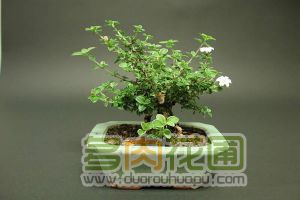
Time for potting Serissa japonica
Serissa japonica can be transplanted in all four seasons, but March and April in spring are best.
Preparation for potting Serissa japonica
The soil used for potting is best as loam rich in humus, loose and breathable, and well-drained. Generally, it can be mixed with 4 parts decomposed cow manure, 1 part decomposed cake fertilizer, 4 parts garden soil, and 1 part coal ash.
The potted plant is best if it has no dead leaves or diseased leaves, has good growth vigor, a short and sturdy plant shape, and no pests or diseases.
Care of potted Serissa japonica
After transplanting into the pot, it should be placed in a semi-shaded place, and normal care can resume after one week.
In summer during hot and dry periods, spray water on the leaves in the morning and evening to cool them and increase air humidity, so as to benefit its growth and flowering; at the same time, avoid direct sunlight, and it is best to let Serissa japonica receive scattered light.
Pay attention to keeping warm in winter. In East China, placing it indoors above 5°C in winter is enough for it to overwinter safely.
Water once every half month with 1% edible vinegar water to avoid soil alkalization and plant yellowing.
During the growing season of Serissa japonica, apply a thin liquid fertilizer about once every 10 days.
Because Serissa japonica has strong growth ability and often sprouts branches from the roots, it needs frequent pruning to maintain an attractive appearance.
Precautions for potted Serissa japonica
Just after transplanting, water should use sun-exposed tap water to maintain the water temperature.
Serissa japonica is drought-tolerant but not moisture-tolerant, so watering should follow the principle of watering when dry and not watering when not dry, and prevent water accumulation in the pot during the rainy season.
In addition to soil fertilization, foliar feeding should also be done frequently, spraying the leaves with 1% monopotassium phosphate solution to adjust the pH and increase the plant's nutrients.
In early spring, move Serissa japonica from indoors to outdoors. At this time, short pruning and pinching are needed to keep the plant full, and it is best to repot once.