A Detailed Guide to Making a Serissa Bonsai
Introduction to Serissa Bonsai
Serissa, also known as "sky full of stars," is an evergreen or semi-evergreen small dwarf shrub. It branches abundantly and densely, and the plant is low-growing, reaching only about 1 m in height when grown in the open. It prefers a shady, humid and warm climate, is not tolerant of severe cold, and is not demanding about soil. Its leaves are tiny, its branches are pliable, and its root system is well developed, making it extremely suitable for making bonsai.
Serissa is propagated by division in March in spring, and by branch cuttings or root cuttings from February to November; 2- to 3-year-old seedlings can begin to be shaped. Serissa branches are soft and easy to bend, and the process from shaping to form-setting takes a long time, requiring about 2-3 years to set the form.
Making a Serissa Bonsai
Serissa used for making bonsai can also be dug up in the wild, or divided in March, or propagated by cuttings during the plum rain season. Because Serissa has a unique quality for shaping, growers can carry out artistic work according to the branching characteristics of the plant. Besides training it into the usual formal upright, slanting, semi-cascade, and forest styles, certain characteristics of Serissa itself also allow it to be made into cascade, exposed-root, root-on-rock, or multi-trunk-connected styles, and so on.
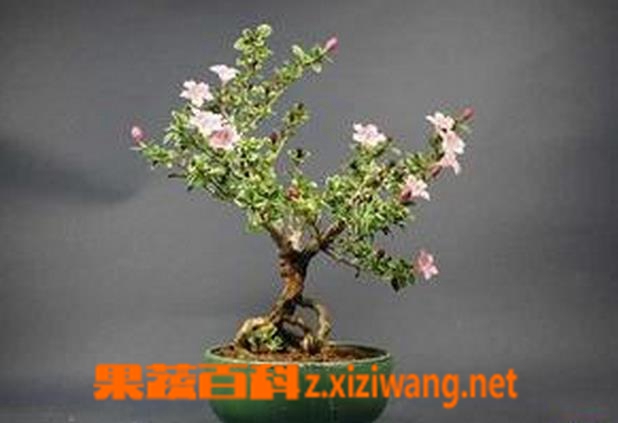
I. How to Make a Serissa Bonsai——Soil
Serissa is popular because it is the first flower to bloom after winter, bringing everyone the feeling of spring. Serissa itself loves light very much and is also suited to dry land and cool land. Because Serissa has strong vitality, it is not very demanding about soil. For a Serissa bonsai, you can choose soil mixed from leaf mold and ordinary soil; this kind of soil is beneficial for planting Serissa and helps its growth.
II. How to Make a Serissa Bonsai——Pruning
A Serissa bonsai needs its branches pruned, as this effectively helps the whole branch structure be pruned evenly, making the shape of the Serissa potted plant more even and beautiful. Pruning also helps produce new lateral buds, thereby helping increase the flowering amount of the whole bonsai. If you wait until Serissa sprouts in the New Year, then the branches should be pruned, which is even more beneficial for flowering. In autumn and winter, it is not suitable to prune Serissa, so grasping the right timing will let Serissa bloom to welcome spring.
Making and Caring for a Serissa Bonsai
Making and Caring for a Serissa Bonsai
Serissa is also known as white horse bone, sky full of stars, and daily spring flower. It is an evergreen or semi-deciduous dwarf shrub of the Rubiaceae family, named because it blooms small white flowers like snow in summer. Its tree posture is graceful, its branches and leaves are well spaced, and it is dainty and elegant. It is a beautiful flowering and foliage tree species in landscaping, and also an excellent bonsai material. It is one of the five famous trees in Lingnan bonsai, long known as one of the "eighteen scholars" of stump bonsai, and is one of the bonsai plants exported to the United States after China's entry into the WTO.
I. Growth Habits
Serissa likes a warm and humid environment, loves light, tolerates shade, tolerates drought, tolerates pruning, is slightly tolerant of cold, likes fertilizer, and is not strict about soil requirements; it can adapt to both neutral and slightly acidic soil.
II. Sources of Stump Material and Processing and Shaping
Serissa is often propagated by division in March in spring, and branch cuttings or root cuttings can be done at any time from February to October. If protected cultivation (seedbed) is used for propagation, cuttings can be taken from November to January of the following year; after cutting, attention should be paid to shading, heat preservation, and moisture retention, and the survival rate is very high. 2- to 3-year-old seedlings can begin to be processed and shaped, often after half-defoliation in winter and before budding in spring; the trunk and main branches are wired with metal wire, and the small branches are formed through fine pruning. Serissa branches are soft and easy to bend, but take a relatively long time to set, and it takes about 2-3 years before the binding material (that is, the metal wire) can be removed. It is best to use several rounds of re-binding to set the shape, to prevent wire bite from affecting plant growth and the beauty of the tree form. In the southeastern and central provinces and regions of China, you can also dig up wild old stumps or young trees in the mountains and fields, and after they survive as "nursed stock" planted in the ground, process them and pot them.
III. Key Points of Potting Technique
Serissa is best transplanted and potted in February-March, and can also be done during the plum rain season and in late autumn. Choose a relatively shallow round, square, or oval purple clay pottery pot or glazed pottery pot; the color of the pot should be slightly darker to form a contrast with the flower color. The potting soil should be sandy loam rich in organic matter, loose and fertile, and with good drainage and air permeability. It can be mixed from garden soil, humus soil, and pine needle soil with 40% sand or rice husk ash added. When potting, prune the roots appropriately. For stump material that needs root exposure processing into an exposed-root bonsai or is attached to elegant stones to make a root-on-rock bonsai, this can be done at potting time. After potting, carry out one fine pruning of the upper branches and leaves (that is, cut off branches and leaves unrelated to the shape and those affecting the beauty of the shape), and pay attention to appropriate shading and frequent misting to retain moisture, ensuring survival and normal growth.
IV. Key Points of Maintenance and Management Techniques
1. Water and fertilizer management: During the growing season, a Serissa bonsai should be watered frequently to keep the potting soil moist. In summer, spray water on the leaf surface 1-2 times a day. In the rainy season, check frequently and avoid water accumulation in the pot. In winter, appropriately reduce the frequency of watering, generally watering thoroughly once every 3-6 days (when the surface of the potting soil is slightly dry and turns slightly white). Before full bloom each year (that is, April-May), apply 2-3 times a phosphorus-potassium fertilizer solution at a concentration of 0.3%-0.5%. In the depths of winter, apply 1-2 times a dilute organic fertilizer solution; do not fertilize in other seasons. Avoid applying concentrated fertilizer.
2. Light and temperature requirements: Serissa is a subtropical tree species and should avoid strong direct sunlight; in summer it should be shaded 50%-70%. In winter, it can overwinter outdoors in the south; in the north it should be moved indoors, and the room temperature should preferably be kept at 5-12°C.
3. Repotting and pruning: Usually repot and change the soil once every 1-2 years, in February-March in spring or during late autumn. Replace all the old soil and prune the roots appropriately; root exposure can be carried out together with repotting to form hanging roots and increase ornamental value. Each year, after half-defoliation in winter and before budding the following spring, carry out one shaping and pruning session: shorten long branches and leggy branches, thin out overly dense fine weak branches, and cut off diseased and insect-damaged branches as well as other messy branches affecting the look; during the growing season, pinch tips, remove buds, and remove side branches at the right time to keep a beautiful shape. The healthy branches cut off can be used for cutting propagation.
4. Pest and disease control: A Serissa bonsai has relatively few pests and diseases, with occasional occurrences of aphids and snails. Once they occur, promptly apply the appropriate treatment. For aphids, use essential balm diluted 500-600 times, or neutral laundry detergent mixed with water at 150 times for spraying to kill them; for snails, evenly scatter an appropriate amount of 80% "Mie Wo Ling" granules on the surface of the potting soil to poison them, or spray with 58% "Feng Lei Ji" emulsifiable concentrate at 1500 times. When the potting soil becomes compacted, is too wet, or water accumulates in the pot for too long, root rot can occur, and attention should be paid to prevention and control. When the potting soil is compacted, repot and change the soil promptly, and be careful not to let the potting soil stay too wet for long periods; never allow water to accumulate in the pot. At the early stage of the disease, use 12% "Lu Ru Tong" emulsifiable concentrate at 600-1000 times, or 50% "Gen Fu Ling" at 800 times to drench the roots and spray the leaves, spraying (drenching) once every 3-5 days, for 3-4 consecutive times. For severely affected plants, take them out of the pot, replace with new culture soil, wash the roots clean, cut off the diseased roots, soak the roots in the above agents for 30 minutes, then replant in the pot, and generally the plant can be saved.
Experience Exchange:
June Cold Knife: A Serissa bonsai pruned using Lingnan bonsai techniques
Photos and text | Chunguang Bonsai Garden
Figure 1
Serissa (also called sky full of stars), of the genus Serissa in the Rubiaceae family, is an evergreen or semi-evergreen small shrub. It likes light and also tolerates shade, prefers warmth and humidity, is slightly tolerant of cold, is widely distributed across the country, and is extremely tolerant of pruning. It is an excellent material for making small bonsai, while large stump material is relatively rare. Its bonsai is mostly made by wiring branches and pruning pads (cloud pads), with attention to the overall ornamental effect of the tree form. Because its material is slender and small in size, most people believe that Serissa is not suitable for using Lingnan bonsai techniques to produce works in the Lingnan bonsai style with the distinctive prominent branch claws of Lingnan bonsai.
Figure 2
Figures 1 and 2 are both the tree appearance before pruning
The pot below is a Serissa root-on-rock bonsai that I made using Lingnan bonsai techniques. Today I pruned it, took photos, and added explanatory text for everyone to exchange ideas, and I welcome comments.
Figure 3
In the growing state, the branches and leaves of Serissa are relatively dense, and some fine branches that cannot get light and ventilation among the branches and leaves easily die back. If a Serissa bonsai is pruned by the pad-cutting method for a long time, it will inevitably increase the problem of dieback of useful young branches, affecting future shaping and form retention. In my opinion, using the Lingnan bonsai technique of "cutting cold branches," stripping off clothing and changing to brocade, is the best method to solve this problem. Moreover, while implementing this method, it is also convenient to adjust the tree form and branch form, making the tree's branch claws show the beauty of strength, which is also a basic requirement of Lingnan bonsai. To deepen everyone's impression, I gave this "cutting cold branches" method a nice name: "June Cold Knife," of course specifically for Serissa. All right, let's begin this work below:
Figure 4, the tree appearance during pruning
Serissa, height 65 cm
Figure 5
Pruning completed. In the severe heat of midsummer, although the tender green branch tips and leaves of Serissa are covered with starry white flowers like snow, bringing a trace of coolness to the heart, at this moment, stripping off clothing and changing to brocade to view the cold branches is another kind of feeling...
Some people use WeChat to chat, while others learn and grow themselves in WeChat every day. Much of our time now is fragmented. You can use it to stare blankly, or you can use it to play games, or you can follow some high-quality WeChat public accounts and grow a little every day.
Quality WeChat account: [Xin Miao Shang]
"Xin Miao Shang" integrates complete nursery stock training, nursery stock exhibitions, landscaping nursery stock, flower and tree information services, e-commerce services, and resource integration services. Since its establishment, it has been committed to providing information and business services to customers in the landscaping industry.
National unified service hotline: 150*****226 0538-****941
To publish supply and demand information, please contact↓↓
[Email]: 100372****@qq.com
[Customer service hotline]: 0538-****941
Subscription and Submission
1. Return to the top of the article and click "Xin Miao Shang" to subscribe (recommended)
2. Search the number: qlylwta0538 or search the public account "Xin Miao Shang"
3. Submission email: 137*****[email protected]
Follow the "Xin Miao Shang" WeChat public account
", read more information