What are the common reasons a white champaca (Michelia alba) does not bloom?
What are the reasons a white champaca does not bloom? When a white champaca has been grown for several years and only grows leaves without blooming, the reasons include the following:
First, excessive vegetative growth, which affects its bud formation and flowering; because the coordinated supply of nitrogen, phosphorus and potassium was not paid attention to when fertilizing, nitrogen is on the high side while phosphorus and potassium are on the low side, causing vigorous growth of branches and leaves, which suppresses the differentiation and formation of flower buds. This can be addressed by supplementing phosphorus and potassium fertilizer, cutting back excessively vigorous leggy branches, pricking the branches and side shoots with needles, and other methods, so as to inhibit the plant's vegetative growth and promote bud formation and flowering.
Second, insufficient light and poor ventilation. If there are high walls blocking on both sides, plus shade above, the white champaca plant will lack the light and ventilation it should have, which will also cause leggy branches and leaves and affect its bud formation and flowering. In summer, it is best to move it to a spot that is ventilated on all four sides with shade only on top.
Third, compacted potting soil and yellowing leaves, which affect the plant's bud formation and flowering. The white champaca has fleshy fibrous roots and requires well-aerated soil with an acidic potting mix. For this reason, loosen the soil of the potted plant regularly, and appropriately water with alum fertilizer water to adjust the pH of the potting soil into the range most suitable for white champaca growth; generally a pH of 5.5-6.5 is suitable.
In addition, you can also spray the leaves with a 0.1% potassium dihydrogen phosphate solution, and use water spraying instead of watering to raise the relative air humidity in the local area, among other methods, to meet the needs of normal growth and bud formation and flowering of the white champaca plant. Through the improvement of the above management measures, it is believed that the white champaca will surely produce more and better flowers.
Can white champaca be kept indoors? When does it bloom?
The white champaca is a famous garden ornamental tree species and a very good landscaping plant, so can white champaca be kept indoors? When does white champaca bloom?
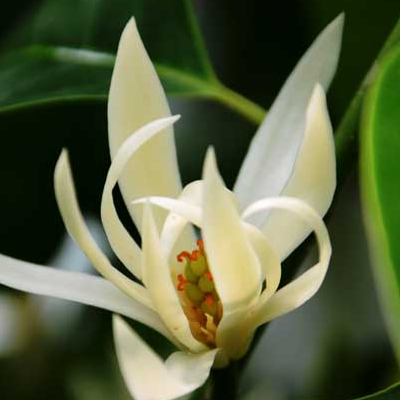
Can white champaca be kept indoors:
It cannot be kept indoors for a long time, otherwise it will grow poorly. White champaca loves light, is afraid of drought, waterlogging and severe cold, and is also afraid of scorching sun. During the hottest part of summer and the period in winter when the temperature is below 5 degrees, bring it inside, but it should still be placed on a balcony; at other times, placing it outside on the balcony will let it grow well. If you really want to keep it indoors, occasionally moving it in is also fine. Or move it out during the day and move it in at night.
When does white champaca bloom:
The white champaca is a famous garden ornamental tree species, often planted as a street tree. It is cultivated most abundantly in China's Fujian, Guangdong, Guangxi, Yunnan and other provinces and regions, and is mostly grown in pots in the provinces and regions of the Yangtze River basin. The flowering period is usually from April to September, blooming in summer, and it usually does not set fruit.
White champaca blooms every year in summer and autumn; the farther south, the earlier the flowering period. In Shenzhen it appears around midsummer, and the flowering period is relatively long, lasting almost 1 month. White magnolia blooms from April to September, cinnabar magnolia blooms from April to May, purple magnolia blooms from April to July, and round-leaved magnolia blooms in June.
Well, friends, now you all know when it blooms, right?
When does white champaca bloom? What are the care methods during the white champaca flowering period?
The white champaca is a famous garden ornamental tree species, often planted as a street tree. It is cultivated most abundantly in China's Fujian, Guangdong, Guangxi, Yunnan and other provinces and regions, so when does white champaca bloom? What are the care methods during the white champaca flowering period?
When does white champaca bloom:
White champaca blooms every year in summer and autumn; the farther south, the earlier the flowering period. In Shenzhen it appears around midsummer, and the flowering period is relatively long, lasting almost 1 month. White magnolia blooms from April to September, cinnabar magnolia blooms from April to May, purple magnolia blooms from April to July, and round-leaved magnolia blooms in June.
How to make white champaca bloom more:
1. Leaf removal and pinching: Before and after moving it outdoors, remove leaves once, taking off all the old leaves and keeping only a few leaves on the branch tips, to encourage new branches and leaves and promote flower bud formation. During the growing period, pinching needs to be done 3 times: the first pinching after the flowers fade, to promote new shoots and more flower buds; afterward, two more pinchings need to be done at intervals so that flowering is abundant and colorful and the flowers keep coming.
2. Timely fertilizing: During the peak flowering period from early May to the end of September, follow the principle of frequent application of light fertilizer and strengthen fertilizer and water management. Apply a once-fermented soybean cake fertilizer liquid once every 3-5 days, and then apply alum fertilizer water once every 7-10 days, alternating between them. Before flowering, also apply 1-2 additional applications of quick-acting phosphorus and potassium fertilizer, which can keep the white champaca blooming continuously.
3. Reasonable watering: The potting soil should not be too wet. In spring, do not water too much; keeping the potting soil moist is suitable. During the summer growing period, prevent dryness to avoid scorched leaves. In autumn, water slightly more than in spring, and each watering should soak through. Toward the end of autumn, gradually reduce watering frequency. In the rainy season, drain accumulated water to prevent root rot and yellow leaves.
Care methods during the white champaca flowering period:
1. Light should be soft: White champaca loves light. In summer, it can be placed under a shaded flower shed. Open the curtain in the morning to let it receive sunlight, and after 9 o'clock cover it well to shade it from the sun, especially avoiding direct exposure to strong midday light.
2. Water frequently: White champaca loves moisture, so in summer it should be watered often. It is best to water thoroughly once in the morning and once in the evening each day. In hot weather, also spray water twice on the leaves and surroundings in the morning and afternoon to increase humidity. Because its roots are fleshy roots, it is afraid of water accumulation, so on cloudy and rainy days it should be watered less or not at all. If it is exposed to rain, pay timely attention to drainage in the pot to prevent the roots from rotting from soaking and causing the whole plant to die. Because white champaca is a typical acid-loving flower and is afraid of alkalinity, and water in the north is relatively alkaline, long-term use can easily cause leaves to yellow and fall off, so when watering it is best to alternately use stored rainwater, and ferrous sulfate water can also be used for watering.
3. Fertilizer should be generous: During the growing period, white champaca likes heavy fertilizer and heavy watering; not only should it be watered well, it should also be fertilized well. It is best to use liquid fertilizer. Mix horseshoe slices, sesame paste and ferrous sulfate in a ratio of 1:1:0.5, soak them in water for one week, and after fermentation, dilute with clean water and apply once every 5 days for better results; the leaves and flowers will be broad and thick, and the flowers fragrant and rich.
4. Prevent pests well: In summer, white champaca is most vulnerable to red spider mites. Usually spray water on the leaf surface and the plant more often to increase humidity and prevent pest outbreaks. If an outbreak occurs and the number is small, you can use a sprayer to spray clean water to wash the leaves; if the number of pests is larger, you can spray 1000 times diluted 20% dicofol emulsifiable concentrate to kill the pests.