How to grow Cordyline fruticosa? Growing methods and precautions
How to grow Cordyline fruticosa? A good Cordyline fruticosa has an upright trunk, brilliant leaf colors, and clustered leaves shaped like an umbrella, with a very elegant posture. It is an excellent indoor foliage plant. To make Cordyline fruticosa full and well-shaped, pay attention to the following points: Cordyline fruticosa likes a warm and humid environment, but it can also tolerate shade, and it is not tolerant of cold or frost. For home care, it can be placed in a semi-shaded spot indoors, or kept outdoors for a period in spring and autumn. It needs shade at midday on sunny days and in summer, otherwise the leaves are easily scorched. If it is kept in a dark indoor place for a long time, it will grow poorly and the leaf color will fade.
During the peak growing season, apply dilute fertilizer water 1 to 2 times a month. Watering should be sufficient, and when the climate is dry, water should also be sprayed on the leaves. Lack of water can easily cause leaf drop, but water accumulating in the pot can also cause leaf drop or yellowing and drying of leaf tips. Cordyline fruticosa fears freezing, so in winter it should be moved indoors, and a room temperature kept above 10°C is enough for it to overwinter safely. Cordyline fruticosa has weak branching ability, and plants kept for many years often form a tall single-trunk tree shape. After the lower old leaves fall off, the plant shape becomes monotonous and unattractive.
To encourage more branching and a fuller tree shape, the old plant can be cut back and renewed in spring. The method is: cut its stem about 10 cm above the pot surface, replace the soil and replant. Soon 4 to 5 side branches will sprout below the cut. Place the potted plant in a semi-shaded spot, avoiding direct light and wind. The watering principle is "better wet than dry." After some time, the originally monotonous tree shape will become full and the color more fresh. At the same time, the cut stems and branches can also be used for cuttings. The above is an introduction to how to grow Cordyline fruticosa.
How to grow Cordyline fruticosa? Cordyline fruticosa growing methods
Keeping a pot of Cordyline fruticosa at home not only adds color to the home, because its plant shape is beautiful, its colors are gorgeous and elegant, and its elegant and distinctive air can better highlight the taste of the homeowner. But many people are unclear about growing it. Exactly how do you grow Cordyline fruticosa? What are the growing methods? What knowledge needs to be understood? Below, we will explain it all. Let's take a look together.
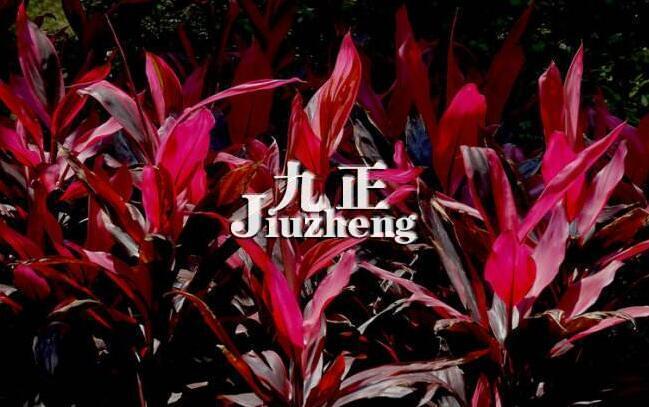
How to grow Cordyline fruticosa?
The suitable growth temperature for Cordyline fruticosa is 20 to 25°C. In summer, daytime temperatures can be 25 to 30°C, and in winter the nighttime temperature should be 7 to 10°C. It cannot be lower than 4°C, and some varieties can tolerate a low temperature of 0°C. It can be seen that Cordyline fruticosa has strong adaptability. Cordyline fruticosa is fairly shade tolerant and can be kept indoors in a semi-light spot all year, or kept outdoors under shade in spring and autumn. In winter, move the pot to a bright indoor spot, reduce watering and stop fertilizing, and a room temperature no lower than 10°C is enough for safe overwintering. If displayed indoors at home, the plant shape should not be too large and should be controlled. The fruit of Cordyline fruticosa ripens in late summer and early autumn. The seeds are relatively large. Collect them after the berries are fully ripe, wash them clean, and dry them in the shade. Put old pot soil into a wooden box or flowerpot and sow them in spots. Keep the room temperature above 24°C, and they will sprout and emerge in about 15 days. When the seedlings grow to about 5 cm, transplant them into small flowerpots, 1 plant per pot, and continue cultivating. The potting soil should always remain moist, better wet than dry. If the air is dry, spray water on the leaves every day. In spring and autumn, apply liquid fertilizer several times. Do not fertilize in summer and pay attention to preventing heat and lowering temperature. If the room is stuffy and hot, move it outdoors to a spot with dappled shade. In early October, move it indoors for overwintering (there should be heating equipment indoors), give it plenty of sunlight, and in early May of the following year it can be moved outside for care. Old perennial plants will grow taller and taller, old leaves will fall off one by one, and the stems will become bare, which harms their ornamental value. They should be cut back along with taking cuttings for propagation to encourage more side branches. After cutting back, strengthen fertilizer and water management to encourage dormant buds to sprout as soon as possible.
Cordyline fruticosa growing methods:
Soil for Cordyline fruticosa
Cordyline fruticosa should use loose, fertile, well-drained sandy loam soil, and the soil is best neutral. The soil for Cordyline fruticosa is a mixed soil of leaf mold, potting soil, and coarse sand. It is best to appropriately add a small amount of compound fertilizer to the potting soil as a base fertilizer, and the base fertilizer can be scattered into the potting soil when potting up.
Watering Cordyline fruticosa
Cordyline fruticosa is extremely sensitive to water and must maintain a certain humidity during the growing period. Lack of water will cause leaves to fall, while too much water will cause water to accumulate in the pot, leading to yellowing and dropping of leaves. During the growing period, Cordyline fruticosa needs frequent spraying, with humidity mainly at 50-60%. During the growing season, Cordyline fruticosa should be watered sufficiently. In dry seasons and when the weather is dry in summer, it needs to be watered every day. To maintain humidity, water should also be sprayed on the leaf surfaces.
Temperature for Cordyline fruticosa
The suitable growth temperature for Cordyline fruticosa should be between 20-25°C. In summer, the daytime temperature can reach 25-30°C, while in winter the temperature is lower and should be kept between 7-10°C. Remember that the temperature must not be lower than 4°C. Some varieties can tolerate a low-temperature environment of 0°C. From this it can be seen that Cordyline fruticosa has relatively strong growth adaptability.
Light for Cordyline fruticosa
Cordyline fruticosa likes light. In northern regions, it can be kept indoors in a semi-light spot all year, or kept outdoors under shade in spring and autumn. In winter, the temperature is low and light is weak, so it can be placed directly in a sunny indoor spot. Reduce watering of the plant and stop fertilizing. The overwintering temperature should be above 10°C.
Fertilizing Cordyline fruticosa
During the peak growing season, Cordyline fruticosa should be fertilized once every half month. Too little fertilizer for Cordyline fruticosa can also cause its growing leaves to become dull and thinner, and in severe cases even cause withered leaves and yellowing, thereby affecting the growth and ornamental value of Cordyline fruticosa.
Pests and diseases of Cordyline fruticosa
Cordyline fruticosa is often troubled by leaf spot disease and anthracnose. Therefore, when encountering these two problems, an antibacterial solution can be used for spraying. When encountering scale insects, use a 40% omethoate 1000 times solution for spraying and killing.
Dracaena deremensis cv. Compacta Dracaena deremensis cv. Compacta illustrated guide: how to grow Dracaena deremensis cv. Compacta / how to propagate Dracaena deremensis cv. Compacta
Dracaena deremensis cv. Compacta profileDracaena deremensis cv. Compacta
Aliases: Sun God, Green Compact Dragon Blood Tree, Apollo Millennium Tree, Compact Dragon Blood Tree
Classification: tree flower
Family and genus: Plantae, Angiosperms, Liliopsida, Liliales, Agavaceae, Dracaena
Full bloom period: spring
Dracaena deremensis cv. Compacta (Sun God) is native to China and the subtropical regions of South Asia. It likes high temperature and high humidity, high humidity and semi-shaded environments, is drought tolerant, and has strong shade tolerance. The suitable growth temperature is 22 to 28°C. It grows slowly, and the overwintering temperature is 8°C. The plant height is 25-35 cm. Sun God has an upright stem with no branching, densely whorled leaves, and long elliptical lanceolate leaves. Sun God has a compact and small plant shape and excellent emerald-green leaf color, making it a treasure for indoor greenery decoration. It can be placed on windowsills, coffee tables, and desks for viewing.
Growing methods and precautions for Dracaena deremensis cv. Compacta Introduction to Dracaena deremensis cv. Compacta
Dracaena deremensis cv. Compacta (Sun God) is native to China and the subtropical regions of South Asia. It likes high temperature and high humidity, high humidity and semi-shaded environments, is drought tolerant, and has strong shade tolerance. The suitable growth temperature is 22 to 28°C. It grows slowly, and the overwintering temperature is 8°C. The plant height is 25-35 cm. Sun God has an upright stem with no branching, densely whorled leaves, and long elliptical lanceolate leaves.
Sun God has a compact and small plant shape and excellent emerald-green leaf color, making it a treasure for indoor greenery decoration. It can be placed on windowsills, coffee tables, and desks for viewing.
Morphological characteristics of Dracaena deremensis cv. Compacta
Dracaena deremensis cv. Compacta is an evergreen small tree, a dwarf species. The stem is upright with no branching, and the leaves are densely whorled. The leaves are long elliptical lanceolate, 10 to 15 cm long and 2 to 4 cm wide, deep green.
Dracaena deremensis cv. Compacta belongs to the bamboo dracaena group and is a woody plant. Dracaena deremensis cv. Compacta can also bloom, but the ornamental value of the flowers is not high. Flowering is rarely seen in home care and can only be seen in its place of origin or in tropical regions.
Ecological habits of Dracaena deremensis cv. Compacta
Dracaena deremensis cv. Compacta likes high temperature and high humidity and semi-shaded environments, is drought tolerant, and has strong shade tolerance. The suitable growth temperature is 22 to 28°C. It grows slowly. It likes well-drained soil rich in humus.
Sun God likes scattered light and is not tolerant of direct strong light, otherwise the leaves easily turn from green to yellow and withered or yellowish brown, but during the low-temperature period in winter it can be cared for with sufficient light.
Dracaena deremensis cv. Compacta relatively likes water, but when the temperature is below 20°C, watering should alternate between dry and wet. The suitable growth temperature is between 20-35°C, and it is relatively easy to care for.
Cultivation techniques for Dracaena deremensis cv. Compacta Suitable soil
Dracaena deremensis cv. Compacta grows very slowly, growing no more than 30 cm taller per year. To speed up seedling growth, fertile soil should be chosen for cultivation. For potting soil, it is best to mix in 5% to 10% base fertilizer such as soybean meal.
Fertilizing key points
During the growing season, apply dilute liquid fertilizer once every half month to promote faster growth.
Watering key points
Dracaena deremensis cv. Compacta has strong shade tolerance, and seedlings should be cultivated in a shaded environment. Although Dracaena deremensis cv. Compacta is relatively drought tolerant, high temperature and drought weather can easily cause leaf tip scorching, so water should often be sprinkled on the leaves.
Overwintering management key points
In late autumn, it should be moved into a greenhouse for cultivation, and in winter the temperature should also be kept above 8°C so that it can overwinter safely.
Growing methods for Dracaena deremensis cv. Compacta Cultivation management
Dracaena deremensis cv. Compacta can be fertilized once a month, but a small amount is preferable. Since potted plants are mostly small and compact, loose and fertile sandy soil is best.
It is relatively tolerant of pruning. When the plant grows to a certain height, many of the lower leaves will fall off. At this time, it can be cut back at the stem, and 1-3 or 5 new shoots will emerge again from the base. This is related to growth vigor, nutrition, and so on. The more sufficient the nutrition and the better the management, the more shoots and buds will generally sprout.
The upper stems cut off can have the lower leaves removed, keeping only the leaves at the top, and then be inserted into river sand for cuttings. In about one month they will take root and can be planted separately.
Growing key points
? Likes high temperature, high humidity, and a semi-shaded environment
? Drought tolerant, strongly shade tolerant, avoids direct sunlight
? Likes semi-shade, blocked sunlight, or sufficient light passing through curtains
? Suitable growth temperature 22-28 degrees
? Can accept a minimum temperature of 13°C--maximum 28°C
? During high temperatures in summer, if the air is too dry, it will cause leaf tip scorching, so water should often be sprayed on the leaf surfaces.
? Grows slowly
Care of Dracaena deremensis cv. Compacta Care key points
Adjustment of light
Dracaena deremensis cv. Compacta needs light, but it cannot be placed in strong sunlight for too long. Each week, foliage plants should be placed outdoors for at least one day to one and a half days to "show their faces" to the sun, but not at noon. They should be sunned in the morning or in the afternoon and evening, otherwise the leaves will be scorched. For some foliage plants that need light, fluorescent lamps can be used to supplement it, such as Monstera deliciosa, Philodendron, Ficus elastica, and Dieffenbachia. If they lack light for a long time, their leaves will turn yellow or pale green. If this happens, the plant should quickly be moved to a bright spot for supplementation and rotated 90 degrees so that the leaf surfaces receive even light.
Watering
Watering foliage plants should also follow the principle of "do not water if not dry, water thoroughly when watering." But in summer, besides watering into the pot, water also needs to be sprayed on the leaves to keep them moist, which is beneficial for growth. In winter, many foliage plants come from tropical and subtropical regions and like warmth. Therefore, watering should be reduced to prevent symptoms such as yellowing leaves, poor growth, and even death caused by low water temperature and too much water.
Ventilation
Sun God is mostly cultivated and viewed indoors. Modern homes have relatively good heating equipment; however, in places with poor light, the ventilation and air exchange environment is relatively poor. If ventilation is not smooth, foliage plants will suffer from stuffiness, and it often also causes indoor humidity to be too high. Therefore, attention should be paid to ventilation and air exchange so that foliage plants grow well and are not harmed by moisture or excessive dryness. In addition, ventilation and air exchange allow circulating air to reduce the occurrence of pests and diseases.
In winter, the temperature should be kept above 8°C so that it can overwinter safely.
Propagation methods of Dracaena deremensis cv. Compacta
Dracaena deremensis cv. Compacta is propagated by cuttings. The top of the plant can be cut off as cutting material, and new stems will sprout below the cut.
Dracaena deremensis cv. Compacta is propagated by cuttings. Take a 10 cm section of stem and insert it into a sand bed; roots will develop in about 1 month; cuttings can be taken from May to October.
Treatment for blackened roots of Dracaena deremensis cv. Compacta
This Sun God may have been directly converted by a florist from soil culture to water culture, without water-culture acclimation.
Dracaena deremensis cv. Compacta is robust by nature and highly adaptable. As a water-cultured plant, it needs to be acclimated in advance, and then management must be strengthened. First, there must be a suitable growing environment. For light, aside from slightly shading it in summer (indoors, generally any sunny position except the south balcony is suitable), at other times it is best to care for it with sufficient light, especially in winter, when it must not be placed in a shady place.
Next, water must be changed frequently, because as a water-cultured plant, the roots soak in water, and the amount of oxygen in the water determines whether the roots suffocate. Therefore, the oxygen content in the water body is quite critical. Since the bottle mouth is relatively small, and the water-culture vase is made of glass, it has no breathability at all, so this can only be solved by frequently changing the water. If the water is not changed frequently, root rot is unavoidable.
For your Sun God, it is best to change from water culture to soil culture. You can also cut off all the lower roots, including the stem contained within the root system, and remove part of the lower leaves on the stem, then insert it into clean river sand or vermiculite for cuttings. When new roots grow, switch to nutrient soil for cultivation. It can also be inserted directly through floral foam into a water-culture bottle, keeping the air temperature at about 25°C and frequently changing sun-dried water, which can directly cultivate water roots. It is suitable for water culture, and during water culture, use a 500 times solution of potassium permanganate or carbendazim once a month for sterilization and disinfection treatment.
Variety classification of Dracaena deremensis cv. Compacta and differences from lucky bamboo
Dracaena deremensis cv. Compacta is often mistaken for lucky bamboo (Dracaena sanderiana) in flower markets. Both are plants of the genus Dracaena in the family Liliaceae and have many similarities in habits and morphology. Both have variegated-leaf varieties, and both are species that are easy to grow successfully in water culture. The leaves of Dracaena deremensis cv. Compacta are broader and denser, and its form somewhat resembles a feather duster. When water-cultured, its ornamental value is even better than that of lucky bamboo.
Uses and purposes of Dracaena deremensis cv. Compacta Ornamental value
Dracaena deremensis cv. Compacta is mostly cultivated and viewed indoors. Its shape is compact and small, and its leaf color is excellent emerald green, making it a treasure for indoor greenery decoration. It can be placed on windowsills, coffee tables, and desks for viewing.
Landscape uses of Dracaena deremensis cv. Compacta
Sun God has a compact and small plant shape and is a treasure for indoor greenery decoration. It is also a selected tree species for the landscaping industry.
Flower language of Dracaena deremensis cv. Compacta
Flower language of Dracaena deremensis cv. Compacta: green declaration, and it also means pride.
February is a bitterly cold month. "The lingering cold blocks the way, spring green reaches the branches." Life in the cold is especially moving - the bulb plants in the garden have begun to show their faces.
Giving green buds and white flowers gives people tenacity and strength. This color tone blending cyan and green with white is exactly the symbol of February in spring.
Dracaena deremensis cv. Compacta pictures