How to Grow Potted Roses and Points to Note
How to Grow Potted Roses: Whether potted roses grow sturdy branches and lush leaves with abundant, fragrant blooms the following year depends crucially on pruning and reshaping plus repotting with fresh soil in winter.
(1) Pruning and reshaping: For potted roses, pruning and reshaping is best done in November to December. Once the potted rose plant stops growing and begins to drop its leaves, severe pruning can begin.
First, cut off all diseased, pest-damaged, weak, dead and crossing branches from the plant right at the base, so that the whole rose bush keeps 3 to 5 healthy 1- to 2-year-old branches, evenly spaced in angle, so that a good plant shape can form next year.
Second, severely cut back the branches that are kept, leaving 10 to 20 cm at the base with about 3 to 5 node buds, and with the cut bud facing outward, so that an open-shaped crown forms the following year.
Third, when pruning, be sure to identify the graft union of the scion and rootstock; any sprouts on the rootstock must be completely removed, and the branches kept must be vigorous shoots growing from the scion, otherwise the superior variety will be lost and it will revert to an ordinary or wild variety growing from the rootstock.
Fourth, if conditions allow, the cut branches can be cut into cuttings, treated with hormones and then fully enclosed in a humidity-retaining setup for cuttings, and they can also be used as scion wood or scion buds for grafting, in order to propagate more plants.
(2) Repotting and changing the soil: Potted roses should be repotted once a year, with the pot size increased year by year. If not repotted for several years, root growth is blocked and roots become bound at the bottom or sides of the pot, which inevitably weakens the roots' ability to absorb water and nutrients, causing branches to gradually die.
The best time for repotting is before overwintering, ideally at the same time as pruning and reshaping. When repotting, wait until the potting soil is dry, take the plant out of the pot, gently pick away part of the old soil, cut off aged and dead roots, choose a flowerpot slightly larger than the original one, apply plenty of rotted base fertilizer, and replant with fertile culture soil, to ensure the plant grows vigorously and blooms for a long time the following year. Where conditions allow, the pruned and repotted rose can be buried together with its pot in the soil to overwinter; in northern regions it is best moved indoors or placed in a wind-sheltered, cold-protected spot, so that the potting soil does not freeze in winter. That is the introduction to how to grow potted roses.
How to Grow Potted Roses: Potted Rose Growing Methods
Roses are light-loving plants that bloom in all four seasons, continuously and very beautifully, so many households grow a pot of them. But growing potted roses also has certain methods and particular points; without paying extra attention, the roses may drop their buds or even wither. So today we will introduce the relevant knowledge about growing potted roses.
How to Grow Potted Roses
1. Potting up
This refers to planting newly propagated young seedlings or bare-root roses lifted from large field-grown plants before they sprout into pots. For young seedlings grown in coarse sand or water culture, as well as bare-root field-grown seedlings, it is best to plant them in plain sandy loam for a period, and once the root system has grown strong, use fertilized culture soil with base fertilizer added and move them into a pot one size larger. For young seedlings rooted in culture soil as cuttings, or small potted field-grown plants with a soil ball, ordinary culture soil can be used. When potting up, soak a new pot thoroughly with water first, wash an old pot clean, and according to the size of the pot, place 1 cm to 3 cm of coarse sand at the bottom as a drainage layer. Then add part of the soil according to the size of the plant. For bare-root potting, pile the soil into a small mound in the center of the pot, hold the plant upright and straight with the left hand, add soil with the right hand, and as you fill, gently lift the seedling upward so that the roots hang down at a 45o angle. After planting, firm the soil; for plants potted with a soil ball around the roots, also straighten out the root fibers and set the plant upright. Young seedlings can generally be potted up at any time; once they have survived and grown, they should be potted up promptly to prevent leggy, weak growth. Large field-grown plants must be potted up during the dormant period after leaf fall in early winter or before sprouting in early spring, otherwise normal growth and development will be affected, the tree's vigor will decline, and it will take a long time to recover. When potting up, the soil should be moist and loose; do not water thoroughly right after potting, and pay attention to shading and wind protection. This not only helps broken and damaged root fibers heal quickly, but also makes it easy for the plant to recover and grow vigorously.
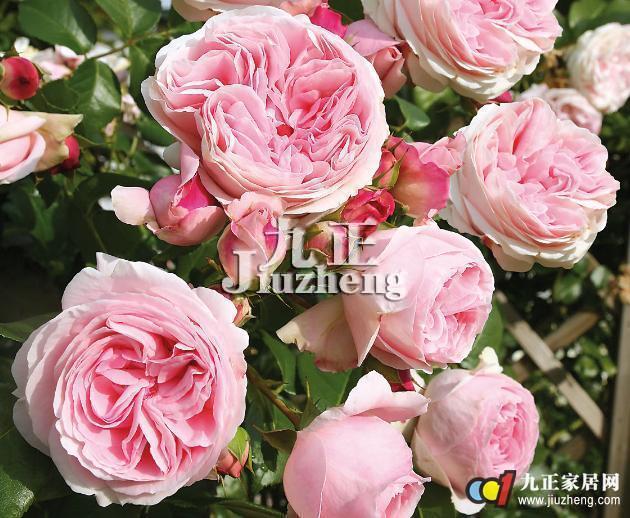
2. Repotting into a larger pot
According to the plant's growth condition and developmental needs, the whole root ball is taken out of a small pot and planted into a larger pot, including moving from plain soil culture into culture soil. Repotting into a larger pot can generally be done at any time; for example, a young seedling potted in a No. 2 pot in spring, if growing vigorously, can be moved into a No. 9 cylindrical pot between July and August. Larger plants can be moved into a pot one size bigger still. When taking the plant out of the pot, pinch the stem between the index and middle fingers of the right hand, press the palm close to the soil surface, and support the bottom of the pot with the left hand as you turn the pot over. For small seedlings, tap the rim of the pot lightly with the hand; for large pots, hold the pot with both hands and gently knock the rim against a hard surface, and the whole root ball can be taken out. The original potting soil should be watered to the right moisture beforehand; it must not be too dry or too wet when the plant is removed. For repotting into a larger pot, use culture soil. First remove the surface layer of soil (the "treasure cover") and the bottom drainage layer from the whole root ball, then slightly loosen and straighten the fibrous roots coiled around the outside of the root ball, working gently so the ball does not fall apart, then place it in the pot, add 20 g to 60 g of hoof and horn pieces as base fertilizer, fill with soil and firm it. After repotting into a larger pot, normal care can continue.
3. Changing the pot
For all kinds of potted roses that have been grown for two years and have developed their form, in order to keep the plants growing vigorously and with a well-proportioned shape, each year after leaf fall and before sprouting, combine pruning with changing the potting soil and adding base fertilizer. For changing the pot, generally the same size flowerpot is still used, with no further increase in size. For those stored sealed in a soil cellar over winter, after taking the whole root ball out of the pot, trim the roots: first remove the surface cover and bottom drainage layer of the root ball, then cut off the overly dense fibrous roots coiled around the outside of the root ball, and be sure to check and remove rotten roots and root nodules; keep the protective soil around the roots and do not let the ball fall apart. In total, no more than 1/2 of the old potting soil should be removed, and then the plant is heeled in in a cold cellar, to be potted in new soil the following spring. For those kept over winter in a cold room or a plastic-film cold frame, they can be repotted into the original pot with new soil, with the same key steps as for repotting into a larger pot. After changing the pot, water once thoroughly, and it can then be kept in a cold room or cold frame.
Care of Potted Roses
1. Choose a suitable flowerpot. The size of the flowerpot for growing roses should match the size of the plant; the pot must not be too small. When the plant grows until the roots and stems fill the pot, the pot should be replaced promptly to meet the needs of continued root and stem development.
2. Keep sufficient sunlight and air circulation. Roses like sunlight, but strong direct sunlight should be avoided; when the midday sun is too strong in summer, some shading should be provided. If the rose is kept indoors, open the doors and windows to maintain air circulation, because poor ventilation easily triggers powdery mildew.
3. Prune branches and leaves in time. After the flowers fade, promptly cut off the upper part of the branch connected to the spent flower, to encourage early new shoots and another round of blooming. If a branch is found to be growing especially strongly, it should be shortened appropriately, to avoid consuming too many nutrients and affecting the growth of other branches. In summer, when growth is too dense, it should also be pruned appropriately.
4. Fertilize more during the flowering period. Because roses bloom many times, they need relatively more fertilizer, so during the flowering period from May to October, fertilize once every ten days; when winter arrives, fertilize less, or even stop fertilizing.
5. Water more during the growing period. During the growing period the plant consumes more water, and combined with the hot summer weather and faster water evaporation, it needs watering once each morning and evening to keep enough water; if there is rainy weather, watering can be reduced appropriately. But potted roses need special attention: do not let water accumulate.
6. Prevent pests and diseases in time. The main pests and diseases of roses include black spot, powdery mildew, leaf blight, scarab beetles, stinging moths, and so on. For pests and diseases, prevention should come first; fungicides can be sprayed regularly during hot, humid, rainy seasons, and during the winter dormant period, sprays can be applied as appropriate depending on the situation.
That is the relevant knowledge about growing potted roses introduced for everyone. Is everyone clear now? For more home knowledge, please stay tuned.
Potted Rose Pictures, How to Grow Potted Roses
Roses have an indispensable value in landscaping; among garden plants in both northern and southern gardens, roses are the most frequently used flower. Roses are a major ornamental flower in spring, with a long flowering period, high ornamental value and low price, and are loved by gardens everywhere. Today let us learn about how to grow potted roses.
.....
How to Cultivate Potted Roses
First choose a suitable flowerpot. The size of the flowerpot for growing potted roses should match the size of the plant; the pot must not be too small. When the plant grows until the roots and stems fill the pot, the pot should be replaced promptly to meet the needs of continued root and stem development. Choose healthy, plump buds; simply pick them from the plant or cut them off with a sharp tool. The bud only needs to have 1 pair of leaves. Take buds in the early morning or evening to avoid dehydration.
For potted roses, insert the bud into the cutting medium; the insertion depth only needs to be 1/3 of the whole bud, which facilitates air flow and prevents rot (the same principle applies to branch cuttings, 1-3 cm is enough; shallow insertion roots faster than deep insertion, and the reason is simple: the temperature of the surface soil is relatively higher than that of the inner layer, which favors rooting). Use a sprayer to moisten the insertion point of the bud and the medium, which helps them bond.
.....
.....
Potted Rose Growing Methods
Potted plants should keep sufficient sunlight and air circulation. Roses like sunlight, but strong direct sunlight should be avoided; when the midday sun is too strong in summer, some shading should be provided. If the rose is kept indoors, open the doors and windows to maintain air circulation, because poor ventilation easily triggers powdery mildew.
Potted roses should have their branches and leaves pruned in time. After the flowers fade, promptly cut off the upper part of the branch connected to the spent flower, to encourage early new shoots and another round of blooming. If a branch is found to be growing especially strongly, it should be shortened appropriately, to avoid consuming too many nutrients and affecting the growth of other branches. In summer, when growth is too dense, it should also be pruned appropriately.
.....
.....
Care and Management of Potted Roses
Fertilize more during the flowering period. Because roses bloom many times, they need relatively more fertilizer, so during the flowering period from May to October, fertilize once every ten days; when winter arrives, fertilize less, or even stop fertilizing. Water more during the growing period. During the growing period the plant consumes more water, and combined with the hot summer weather and faster water evaporation, it needs watering once each morning and evening to keep enough water; if there is rainy weather, watering can be reduced appropriately. But potted roses need special attention: do not let water accumulate.
Potted roses should have pests and diseases prevented in time. The main pests and diseases of roses include black spot, powdery mildew, leaf blight, scarab beetles, stinging moths, and so on. For pests and diseases, prevention should come first; fungicides can be sprayed regularly during hot, humid, rainy seasons, and during the winter dormant period, sprays can be applied as appropriate depending on the situation.
.....
Editor's Summary
China is one of the places of origin of roses. Roses are beautiful and elegant, diverse in form, and bloom in all four seasons, and are deeply loved by people. In China, 52 cities have chosen it as their city flower, and in May 1985 the rose was rated fifth among China's top ten famous flowers. Today the editor's introduction to how to grow potted roses ends here. Thank you for reading.