What are the planting methods for pot marigold? A complete guide in one article
Planting methods for pot marigold. The flowers of pot marigold come in single and double forms, with colors ranging from pale yellow, yellow to golden yellow. In winter, low temperatures, short daylight hours and weak light intensity greatly affect the depth of flower color. Pale yellow or yellow flowers are affected by these conditions, and their color becomes relatively paler, even tending toward white, so winter care of pot marigold is very important.
Pot marigold is a light-loving flower. After being brought indoors, place it in a spot with plenty of sunlight. The indoor temperature must not be lower than 5°C, and 10-20°C is the most suitable temperature for growth. If the temperature is too low, growth is slow and flowering is sparse, so the indoor temperature should be kept as high as possible. Pot marigold has a long flowering period, so water thoroughly each time; apply fertilizer once every 10-15 days, mainly a thin cake liquid fertilizer, with an appropriate application of chemical fertilizer.
When pot marigold is grown indoors in winter, its environmental conditions are worse than when grown in the ground. To make it bloom more, it should not be allowed to grow freely; the plant shape must be managed. Overcrowded branches, crossing branches and weak branches should be pruned promptly. Under ordinary conditions, only 3-5 side branches should be kept per plant; if indoor temperature conditions are good, light is sufficient, and water and fertilizer are applied in time, 8-9 side branches can be kept per plant, or even a few more.
With good management, 20 flowers can open per day. Winter-grown pot marigold is mainly for enjoying the flowers, not for seed collection. For spent bare branches that have already flowered, cut them off from the base once the flowers fade, to encourage other branches to grow well, with lush foliage and continuous blooming. If you want to extend the flowering period, you can keep 1-2 buds sprouting at the base of the plant. When they grow 5-6 true leaves, cut off the original plant from the base and provide sufficient water and fertilizer; it will quickly develop into a new plant, and the flowering period can be extended into summer. The above is an introduction to the planting methods for pot marigold.
Planting methods for pot marigold and the flower language of pot marigold
Pot marigold, also known as common marigold, originated in southern Europe and along the Mediterranean coast. Below we will share the planting methods for pot marigold and the flower language of pot marigold.
Planting methods for pot marigold:
1. Soil: It is not particular about soil. Fertile, loose and well-drained sandy loam or potting mix is suitable, with a soil pH of 6-7 being best. In this way the plant has more branches and produces large, abundant flowers.
2. Sunlight: In spring, summer and autumn, it needs to be cared for under shaded conditions. When the temperature is relatively high (daytime temperature above 25°C), if it is placed in direct sunlight, the leaves will noticeably become smaller, the internodes of the branches will shorten, the lower leaves will yellow and drop, and growth will be very slow or it will enter a semi-dormant state. In winter, it should be given direct sunlight to facilitate photosynthesis and the formation of flower buds, flowering and fruiting.
3. Temperature: It likes a warm climate. The most suitable growing temperature is 15-25°C. It dislikes extreme heat, and when the summer temperature is above 34°C growth is clearly poor; it is not tolerant of frost and cold, and when the winter temperature falls below 4°C it enters dormancy or dies.
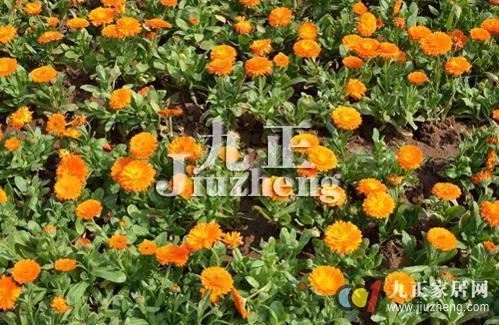
4. Fertilizing: 7-10 days after planting out, pinch off the growing tips to encourage branching, or spray the leaves 1-2 times with a 0.4% daminozide solution to control plant height. During the growing period, fertilize once every half month, or use "Huiyou" 20-20-20 general-purpose fertilizer. With sufficient fertilizer, pot marigold blooms abundantly and with large flowers. Conversely, with insufficient fertilizer, the flowers noticeably become smaller and degenerate.
5. Pests and diseases: Because of poor ventilation and high humidity in indoor cultivation, wilt disease and downy mildew often occur, and can be controlled by spraying with a 500-fold dilution of 65% zineb wettable powder. When the temperature rises in early summer, rust disease is often found on the leaves of pot marigold; spray with a 2000-fold dilution of 50% carboxin wettable powder. During the flowering period in early spring, it is susceptible to red spider mites and aphids, which can be killed by spraying with a 1000-fold dilution of 40% omethoate emulsion.
6. Pruning: Cut off branches with old and yellow leaves once every two months. As long as the temperature is suitable, it can bloom in all four seasons.
The flower language of pot marigold:
1. In Europe and America, the flower language of pot marigold signifies "sorrow", "separation" and "grief". In Greek mythology, pot marigold also carries flower meanings such as "the pain of parting" and "infatuation". In China, because pot marigold can help sober one up, it carries the meaning of "reminder". In short, be cautious when giving flowers, to avoid mistakes and unnecessary misunderstandings.
2. Pot marigold is the birthday flower for people born on August 24 and November 7.
3. In addition, because of its long flowering period, pot marigold is regarded as a symbol of "endurance" and is often used in wedding decorations to wish newlyweds to "always bathe in love".
4. When misfortune befalls relatives or friends, send a bouquet combining pot marigold, daisies and pine branches to express "I deeply sympathize with your grief." At Qingming Festival, place a bouquet of pot marigold in front of a grave to express "sorrow". When attending a memorial service, present a bouquet composed of pot marigold, azalea, yew and boxwood, meaning "the dead cannot come back to life, please restrain your grief".
5. On Valentine's Day, never give pot marigold, as at this time pot marigold expresses "disappointed love and sadness".
Pot marigold - pot marigold pictures | how to grow pot marigold
Pot marigold
Pot marigold (scientific name: Calendula officinalis), also known as marigold, longevity chrysanthemum, golden bell flower, evergreen chrysanthemum, golden cup, etc., is a plant of the genus Calendula in the Asteraceae family. An annual or overwintering herbaceous plant, it likes light and is not demanding about soil; it can grow well in dry, loose, fertile alkaline soil, is tolerant of poor soil, and is often used for flowerbed displays.How to grow pot marigold
1. Soil: It is not particular about soil. Fertile, loose and well-drained sandy loam or potting mix is suitable, with a soil pH of 6-7 being best. In this way the plant has more branches and produces large, abundant flowers.
2. Sunlight: In spring, summer and autumn, it needs to be cared for under shaded conditions. When the temperature is relatively high (daytime temperature above 25°C), if it is placed in direct sunlight, the leaves will noticeably become smaller, the internodes of the branches will shorten, the lower leaves will yellow and drop, and growth will be very slow or it will enter a semi-dormant state. In winter, it should be given direct sunlight to facilitate photosynthesis and the formation of flower buds, flowering and fruiting.
Complete collection of pot marigold pictures
1. Ornamental value: Pot marigold is suitable for planting in central squares, flowerbeds and flower borders, and can also be used as an edging flower for lawns or for potted display. Long-stalked large-flowered varieties can be used as cut flowers.
2. Air purification: Pot marigold has a very strong resistance to sulfur dioxide and also has some resistance to cyanide and hydrogen sulfide. It is an excellent pollution-resistant flower and also a main material for spring flowerbeds, and can be used as cut flowers and potted plants.
The effects of pot marigold
The effects of pot marigold: 1. Ornamental. Pot marigold has rich flower colors, brilliant and eye-catching, suitable for planting in central squares, flowerbeds and flower borders, and can also be used as an edging flower for lawns or for potted display. Its ornamental value is relatively great.
The effects of pot marigold: 2. Air purification. Pot marigold has a very strong resistance to sulfur dioxide and also has some resistance to cyanide and hydrogen sulfide. It is an excellent pollution-resistant flower. Whether grown in pots at home or planted in home courtyards, roadside flowerbeds and other places, it can play a certain role in improving the air.
The efficacy and effects of pot marigold
Pot marigold plants are dwarf and dense, with flower colors including pale yellow, orange-red, yellow, etc., brilliant and eye-catching. It is a common herbaceous flower in early spring gardens, suitable for planting in central squares, flowerbeds and flower borders, and can also be used as an edging flower for lawns or for potted display. Long-stalked large-flowered varieties can be used as cut flowers.
Pot marigold has a very strong resistance to sulfur dioxide and also has some resistance to cyanide and hydrogen sulfide. It is an excellent pollution-resistant flower and also a main material for spring flowerbeds, and can be used as cut flowers and potted plants. Pot marigold is rich in various vitamins, especially vitamin A and vitamin C; almost all parts can be eaten; its petals have a cosmetic function. The flowers contain carotenoids, lycopene, violaxanthin, rubixanthin, volatile oil, resin, mucilage, malic acid, etc. The roots contain bitter substances and arnidiol; the seeds contain glycerides, wax alcohols and alkaloids. Adding it to shampoo can lighten hair color.
The flower language of pot marigold
The flower language of pot marigold: sadness and jealousy, the pain of parting, infatuation, disappointed love and sorrow
Pot marigold looks magnificent and has brilliant colors. It represents: sorrow, reluctance to part, infatuation, disappointment and the pain of parting. It is the most suitable flower for the broken-hearted, those parting, and those feeling down. Pot marigold also symbolizes a noble sentiment and is a symbol of a gentleman, so if you think someone is upright, generous and responsible, then pot marigold is also very suitable for them.
Pot marigold tea
The benefits of pot marigold tea:
1. Pot marigold is sweet in nature, clears damp-heat, and can cool internal heat. It has the effects of relieving pain and promoting wound healing, helps treat stomach pain and gastric ulcers, reduces inflammation, kills bacteria, promotes blood circulation, and relieves menstrual pain. When drunk during a severe cold, it can promote urination and reduce fever.
2. Rich in the mineral phosphorus and vitamin C, it treats insomnia and reduces anxiety and neurasthenia. It protects vision, helps with lymphadenitis, and supports intestinal function / nourishes the liver and brightens the eyes, beautifies the complexion, and detoxifies and reduces inflammation.
3. It can reduce menstrual pain, relieve menstrual cramps, stimulate bile secretion and break down fat. Women may wish to drink more of it. It has an excellent effect on digestive system ulcers and lymphadenitis. It has an excellent effect in treating digestive system ulcers and lymphadenitis.
Related encyclopedia
Pocket scale non-woven bag lamp rush bamboo shoot crab claw redmi note 3 ykk zipper ybs zipper large mountain cherry climbing rose wild senna winter plum green pine wristwatch Omega Longines famous watch children's building blocks flint azalea orchid curling iron soursop