What are the summer care methods for scarlet sage?
Summer care for scarlet sage? Scarlet sage (Salvia splendens) is native to South America and prefers a warm, humid climate. Its suitable growing temperature is 20-25°C, and it dislikes heat and drought. In the hot summer months, temperatures often reach around 35°C. Harsh conditions such as blazing sun and drought without rain will affect the growth of scarlet sage, and excessively intense light will inhibit chlorophyll formation. During drought, strong transpiration from the leaves will cause the plant to wilt.
The methods for helping scarlet sage safely through the summer are described below:
(1) Shade and cooling. During hot, dry summer weather, move the scarlet sage pot to a cool, well-ventilated spot, but not one that is too shady. Because scarlet sage has a certain phototropic tendency, leaving it too long in one position will cause the plant to bend toward the light source, so turn the pot at the appropriate times to keep the plant symmetrical and attractive. During hot weather, frequently spray water around the flower pot; also spray the pot surface, the plant and the leaves to increase humidity in the immediate area and lower the temperature, reducing leaf evaporation and creating a warm yet cool microclimate that helps scarlet sage bud and bloom.
(2) Avoid overly wet conditions and waterlogging. When a potted scarlet sage is in an overly wet environment, on the one hand its stems and leaves will grow excessively and it will easily lodge; on the other hand, too much water in the pot will weaken root respiration because the soil cannot supply enough oxygen. If this lasts too long, the root system will die from oxygen starvation. Therefore, during the rainy summer period, measures should be taken to prevent waterlogging and flooding. If there are consecutive overcast and rainy days, it is best to move the pot to a place sheltered from the rain. If sudden heavy rain comes and there is no time to move the pot, immediately tip the pot on its side to drain the accumulated water. After a rainstorm, the blazing sun and high temperature can easily damage the leaves; with the plant baked above and steamed below, the pot can become so hot that it kills the plant. At this time, place the rain-soaked pot in a cool, well-ventilated spot so the excess water evaporates quickly. In summer, if a sudden rainstorm occurs during high temperatures, it can cause the potting soil to cool abruptly, making the root hairs lose their vitality and easily causing the plant to wilt, or even to die from physiological water shortage.
(3) Pinching and topping. Summer has abundant sunlight and rainfall, and it is the season when scarlet sage grows and develops most vigorously. To make scarlet sage bloom profusely and to control its flowering period, pinching and topping measures are generally needed. Scarlet sage has strong sprouting ability and tolerates pruning. Starting from when the seedlings have 3-4 true leaves, they should be topped and pinched. The side branches formed after sprouting grow rapidly, and pinching is generally done once every 10-15 days until it is stopped before the flowering period. Because pinching produces more side branches, the plant gradually becomes fuller and consumes more nutrients. Therefore, fertilizer must be applied promptly to meet its growth needs. Pinching is also an effective measure for controlling the flowering period of scarlet sage. Generally, about 30 days after pinching, the newly formed flower buds will open. If you want it to bloom for National Day, the last pinching should preferably be done around late August. That concludes the introduction to summer care for scarlet sage.
Summer care methods for scarlet sage
Scarlet sage, also known as firecracker red and ivory red, is a plant in the Lamiaceae family, genus Salvia.
Its inflorescence is slender, its color is bright red, its flowering period is long, and its adaptability is strong, making it the most commonly cultivated herbaceous flower in Chinese cities and gardens.
Native to Brazil and South America. It likes a warm environment with ample sunlight. It is not cold-tolerant, tolerates partial shade, dislikes frost, snow and high temperatures, and fears waterlogging and alkaline soil. The fruit of scarlet sage is a small nutlet, oval in shape, containing black seeds, easily shed, and capable of self-sowing and propagating.
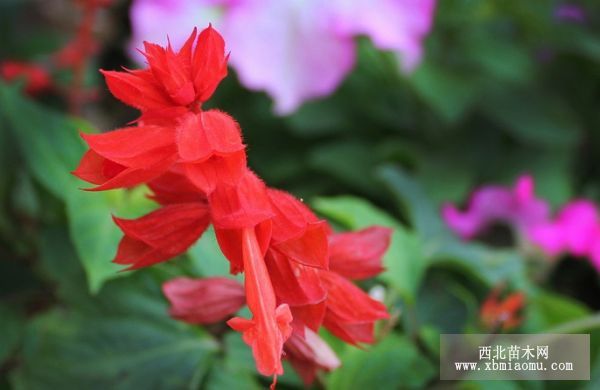
Scarlet sage is native to South America and prefers a warm, humid climate. Its suitable growing temperature is 20-25°C, and it dislikes heat and drought. In the hot summer months, temperatures often reach around 35°C. Harsh conditions such as blazing sun and drought without rain will affect the growth of scarlet sage. Excessively intense light will inhibit chlorophyll formation. During drought, strong transpiration from the leaves will cause the plant to wilt. Under blazing sun, the leaves will be damaged, affecting its growth.
The methods for helping scarlet sage safely through the summer are described below:
1. Shade and cooling. During hot, dry summer weather, move the scarlet sage pot to a cool, well-ventilated spot, but not one that is too shady. Because scarlet sage has a certain phototropic tendency, leaving it too long in one position will cause the plant to bend toward the light source. So turn the pot at the appropriate times to keep the plant symmetrical and attractive. During hot weather, frequently spray water around the flower pot; also spray the pot surface, the plant and the leaves to increase humidity in the immediate area and lower the temperature, reducing leaf evaporation and creating a warm yet cool microclimate that helps scarlet sage bud and bloom.
2. Avoid overly wet conditions and waterlogging. When a potted scarlet sage is in an overly wet environment, on the one hand its stems and leaves will grow excessively and it will easily lodge; on the other hand, too much water in the pot will weaken root respiration because the soil cannot supply enough oxygen. If this lasts too long, the root system will die from oxygen starvation. Therefore, during the rainy summer period, measures should be taken to prevent waterlogging and flooding. If there are consecutive overcast and rainy days, it is best to move the pot to a place sheltered from the rain. If sudden heavy rain comes and there is no time to move the pot, immediately tip the pot on its side to drain the accumulated water. After a rainstorm, the blazing sun and high temperature can easily damage the leaves; with the plant baked above and steamed below, the pot can become so hot that it scalds the plant to death. At this time, place the rain-soaked pot in a cool, well-ventilated spot so the excess water evaporates quickly. In summer, if a sudden rainstorm occurs during high temperatures, it can cause the potting soil to cool abruptly, making the root hairs lose their vitality and easily causing the plant to wilt, or even to die from physiological water shortage.
4. Pest and disease control. When summer is hot and ventilation is poor, scarlet sage is prone to pests and diseases. Bordeaux mixture, carbendazim, thiophanate and the like can be sprayed once every half month; if red spider mites are causing damage, dicofol at 1000-500 times dilution can be sprayed to kill them; if aphids are found, omethoate at 1000 times dilution can be used to eliminate them; if whiteflies are present, deltamethrin at 1000 times dilution can be sprayed to kill them.
Four-season care tips for scarlet sage
Spring
Sowing is usually done in April, or otherwise potted in March on an enclosed balcony. After planting, provide appropriate shade until the plants are established.
Spring is the early growth stage of scarlet sage. Keep the soil moist and ensure sufficient light. Depending on growth, top 3-4 times to promote the formation of a short, full plant, and water and fertilize promptly after topping.
If the planted variety is dwarf scarlet sage, top 1-2 times as appropriate. (Spring topping is very important; missing the timing will affect the plant's appearance.)
Summer
Common scarlet sage
It tolerates high temperatures and does not need shade in summer, but when temperatures are high, water promptly to avoid the plant drying out from lack of water. In late summer, when flower buds appear, appropriately increase watering frequency, keep the potting soil moist, and apply one topdressing.
Dwarf scarlet sage
It does not tolerate high temperatures. When the temperature reaches above 30°C, it will only grow poorly or even die. Place potted dwarf scarlet sage on a north-facing balcony, provide shade, and keep the potting soil slightly moist, avoiding waterlogging that causes rot. During high temperatures, frequently sprinkle water around it to lower the temperature. In late summer, as it gradually becomes cooler, appropriately increase light and apply appropriate topdressing.
Autumn
Autumn is the peak flowering season for scarlet sage. Keep the soil moist and ensure sufficient water and light.
After the flowers fade, promptly cut off the flowering branches and apply appropriate topdressing. Keep the temperature between 18-25°C, and it can send out branches and bloom again. In late autumn, as temperatures drop, the flowers have no ornamental value after fading. Moreover, scarlet sage is annual, so once the flowers fade it can be pulled out.
Winter
No care is needed in winter, as the plant has already withered, and you can sow again in spring!