How to grow Camellia sasanqua? Detailed care methods and tips
How to grow Camellia sasanqua: it is usually propagated by cuttings, and within 1-2 years after cuttings it should not be allowed to bloom, so as to build a good tree shape; only after 3 years can it be allowed to bloom. In terms of management, the main things to master are soil, fertilizer, water and light.
For the potting soil, choose leaf mold with acidic, loose and fertile characteristics, so as to suit the growth of Camellia sasanqua. Camellia sasanqua is a multi-flowered woody flowering plant and rather fond of fertilizer. Besides mixing in a small amount of decomposed cake fertilizer and other organic fertilizer when repotting, during the growing season it should frequently be given a small amount of diluted decomposed cake fertilizer water (water-to-fertilizer ratio of 10:1), and in particular fertilizer should be applied once each in March, May, July and October. To help Camellia sasanqua form many flower buds, fertilizer and water should be controlled in June, so as to avoid excessive nutrition turning flower buds into leaf buds and reducing the number of flower buds; in July, apply a small amount of superphosphate 1-2 times, which can make the flower color more brilliant. Water management is the key to growing Camellia sasanqua well: it is best to keep the potting soil slightly moist, and the soil must not be too wet or dry from lack of water. If too wet, aeration is poor, and over time the roots rot easily; if too dry, growth is unfavorable. In spring, keep an appropriate amount of moisture to favor growth.
In the plum rain season, prevent the potting soil from becoming too wet. In summer, when temperatures are high, young Camellia sasanqua plants should be properly shaded, or the flowerpot moved to an east- or north-facing position, with water sprayed once a day and the ground also sprayed, while paying attention to ventilation and light and keeping the leaf surface clean. In winter, prevent long-term water loss or excessive wetness, otherwise leaf drop, bud drop and a short flowering period and other poor growth phenomena easily occur. Pruning and bud thinning are carried out around August, generally leaving one bud per branch; any that are too dense, growing poorly or badly oriented should all be thinned out. Pruning is carried out when repotting or in mid-June after spring flowering, cutting away some slender weak twigs inside the crown, overly dense branches and inward-crossing branches, so as to make it well spaced and ventilated and let light through, which can reduce the occurrence of scale insects. The above is an introduction to how to grow Camellia sasanqua.
How to grow Camellia sasanqua? Cultivation methods for Camellia sasanqua
Camellia sasanqua blooms brilliantly and in many forms, with rich flower colors and a long flowering period, making it an excellent choice for indoor potted plants. So how should Camellia sasanqua be cultivated? Below is an introduction to the cultivation methods for Camellia sasanqua.
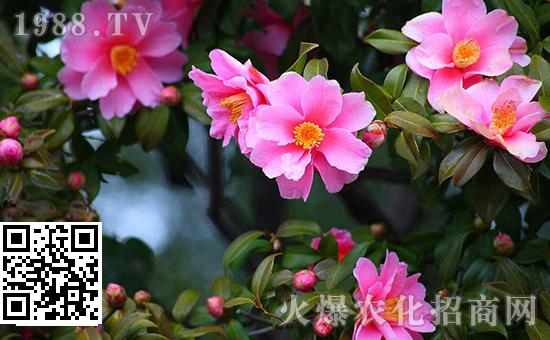
Cultivation methods for Camellia sasanqua
1. Soil: Camellia sasanqua is suited to fertile, loose, well-drained acidic sandy soil; alkaline soil and clay soil are unsuitable for planting, and calcareous soil is even more taboo. When potting in northern regions, choose a growing medium based mainly on leaf mold or peat soil with a small amount of river sand added.
2. Watering: For Camellia sasanqua, water so as to keep the potting soil moist without water accumulating. In summer, water once each morning and evening; in winter, water once every few days. Except in winter, water should also be sprayed on the leaf surface once every few days to keep the leaves clean, and watering must soak through.
3. Sunlight: Camellia sasanqua is a semi-shade plant and taboo to strong light. Generally, from May to September each year it should be kept in a shaded place; if exposed to direct strong sunlight, the leaves and buds are very easily scorched, causing the leaves to curl and, in severe cases, to wither and fall off. In late autumn and winter it needs more sunlight.
4. Temperature: Camellia sasanqua likes a warm environment, and the suitable growth temperature is 18-25°C. The temperature must not be too high; when the air temperature exceeds 35°C, the young leaves are prone to sunscald. At the same time, Camellia sasanqua has fairly strong cold resistance, and in winter it can be kept over winter in a cold room at above 2°C.
5. Fertilizing: Fertilizer for Camellia sasanqua should be light and fully decomposed; applying raw fertilizer or concentrated fertilizer will burn the root system, especially in one- or two-year-old small seedlings. Generally, apply a dilute nitrogen fertilizer once from February to March to promote the growth of branches and leaves. Apply dilute cake fertilizer water once between April and May to favor flower bud differentiation. Apply 0.2% monopotassium phosphate once from September to October to promote large flowers and vivid colors.
6. Pests: Camellia sasanqua has relatively few pests and diseases. The main diseases include gray leaf spot, sooty mold and anthracnose, which should be prevented and treated early; once disease occurs, spray with 300 times dilution of equal-amount Bordeaux mixture. If there is harm from scale insects, red spider mites and the like, they can be removed by brushing by hand; if red spider mites occur, spraying with soaked tobacco leaf water mixed with chili water also has a very notable effect.
7. Pruning: Like Camellia japonica, Camellia sasanqua also needs timely bud thinning and removal of spent flowers to reduce nutrient consumption. Generally, leave 1 flower bud per branch and thin out the rest, so that nutrients are concentrated and the flowers are large and vivid. Removing spent flowers in time not only keeps the plant shape attractive but also favors the sprouting of new branches and promotes healthy growth of the plant.
Notes on cultivating Camellia sasanqua
1. Avoid too high a room temperature: Household potted Camellia sasanqua is in a semi-dormant state in the cold winter and early spring, and the suitable temperature is 2-10°C. When the average temperature exceeds 10°C, it will promote vegetative growth, thereby competing for the nutrients needed by the developing flower buds, causing them to gradually wither and fall.
2. Avoid poor air circulation: When windows are sealed in winter to keep out the cold, whether the air can be kept fresh is also the key to preventing bud and flower stagnation in home-grown Camellia sasanqua. It is necessary to open the windows regularly for ventilation; ***it is best to open the windows morning and evening every day for ventilation, about ten minutes each time, to keep indoor air fresh and avoid contact with harmful gases.
3. Avoid frequently changing position: After potted Camellia sasanqua is moved indoors in winter, it stops vegetative growth and enters a semi-dormant period of flower bud swelling, and needs a stable cool and humid environment. At this time, ***temperature suddenly rising and falling and light suddenly becoming strong or weak are most taboo, and even more attention should be paid when it is about to bloom.
4. Avoid leaving too many buds: Camellia sasanqua consumes a large amount of nutrients from bud formation to flowering. If buds are not thinned promptly and in large numbers, it is difficult to ensure enough nutrients for the later development of flower buds and flowering. Not only will not a single normal flower be seen, but the plant will also be worn out and may even die.
5. Avoid fertilizing before flowering: Although Camellia sasanqua needs a large amount of nutrients during flower bud development and the flowering season, fertilizing before flowering will "push off" the large buds about to open; therefore, after being brought indoors in winter, generally do not fertilize, and the focus should be on strengthening fertilizer and water management during the vegetative growth period, with fertilizing divided into two stages, spring and summer.
The above is an introduction to the cultivation methods for Camellia sasanqua. Friends who grow Camellia sasanqua can refer to the above cultivation methods and cultivate it reasonably according to actual growing conditions.
Camellia sasanqua Camellia sasanqua illustrated guide: how to grow Camellia sasanqua / how to propagate Camellia sasanqua
Camellia sasanqua profileCamellia sasanqua Camellia sasanqua
Cultivation methods and notes for Camellia sasanqua: an introduction to Camellia sasanqua
Camellia sasanqua (Camellia sasanqua) is an evergreen shrub of the genus Camellia in the family Theaceae. Because its flower form combines the characteristics of camellia and plum blossom, it is called Camellia sasanqua. It has a delicate build, elegant leaf shape, brilliant flower colors and a long flowering period, and is a famous flowering plant excellent both for its flowers and its foliage.
Small tree, young branches hairy. Leaves leathery, elliptic, 3-5 cm long, 2-3 cm wide, apex shortly pointed, base cuneate, sometimes slightly rounded, dark green and shiny above when dry, brownish green beneath, hairless, lateral veins 5-6 pairs, inconspicuous above, visible beneath, reticulate veins not obvious; margin finely serrate, petiole 4-6 mm long, slightly bearing residual hairs. Flowers of varying sizes, 4-7 cm in diameter; bracts and sepals 6-7, pubescent; petals 6-7, broadly obovate, nearly free, of varying sizes, the largest 5 cm long and 6 cm wide, red; stamens free, 1.5-2 cm long, ovary downy, style 1-1.3 cm long, 3-parted almost to the base. Capsule spherical, 1.5-2 cm wide, 1-3 locular, valves 3-cleft, seeds brown, hairless.
Distributed in Japan, mostly cultivated; there are cultivated varieties in China.
Camellia sasanqua has been a traditional famous flower of China[1] since ancient times, with a long history of cultivation. Since the Song Dynasty, Camellia sasanqua has been commonly cultivated. Chen Jingyi of the Southern Song Dynasty recorded in "Quan Fang Bei Zu": "The light one is Yuming, the deep one is Dusheng; the large one is camellia, the small one is Haihong; its reputation spreads widely but it has few allies, year after year it stands amid snow and frost." The "Haihong" mentioned refers to Camellia sasanqua. At the same time, poetry describing Camellia sasanqua also appeared. Liu Shiheng of the Song Dynasty wrote in "Ode to Camellia sasanqua" of its elegant image and transcendent charm: "When the small courtyard is still cold and not yet warm, the Haihong flowers open late in the dusk; half deep and half light in the east wind, it is like Xu Xi's snow-laden branch." The Ming Dynasty painter Chen Daofu's "Camellia sasanqua" described its small and exquisite form: "Flowers bloom in spring snow, their form smaller than camellia. The old gardener calls it Camellia sasanqua, and the name is also most apt." Gao Lian of the Ming Dynasty, in "Plum Blossom Decree - Camellia sasanqua", not only wrote of the pale pink and slight red of the Camellia sasanqua flower, but also wrote that the flower shape resembles plum blossom: "The flower is, in fact, wholly like plum." Zhang Qiande of the Ming Dynasty, in "Vase Flower Manual", listed Camellia sasanqua as "sixth grade, fourth destiny". Camellia sasanqua is produced in areas south of the Yangtze River, and is also distributed in Japan. Wild Camellia sasanqua has a loose plant form and is a tree-like shrub; the leaf shape is graceful and extremely bright; the flowers are small, single-petaled, white or light pink, fragrant, and bloom in autumn. Through long-term natural selection and interspecific hybridization by horticulturists, Camellia sasanqua horticultural varieties have continuously been enriched. According to their degree of evolution, flowering period, characteristics of flowers and leaves, and ecological differences, Camellia sasanqua can be divided into three cultivar groups: Camellia sasanqua (Sasanqua Group), Winter Camellia sasanqua (Hiemalis Group, also called cold camellia in Japan) and Spring Camellia sasanqua (Oleifera Group). Camellia sasanqua: up to more than 1.5 m tall, flowers mostly white or white with red, also pink, a few red, most fragrant, blooming from October to December, an important ornamental flowering plant in autumn. Winter Camellia sasanqua: plant low, branches spreading; flowers mainly rose red, a few variegated, quite a few varieties fragrant, flowering from November to March of the following year, an important ornamental flowering shrub in winter. Spring Camellia sasanqua: an interspecific hybrid of Camellia sasanqua and Camellia japonica and its descendants, flowering from December to April of the following year, with flower and leaf forms mostly intermediate, mostly red and pink, a few varieties white.
Camellia sasanqua likes shady and humid conditions, with semi-shade being most suitable; strong summer light may scorch the leaves and buds. It is suited to growing in well-drained, humus-rich, moist, slightly acidic soil, with a pH of 5.5-6 being suitable. It is fairly cold-resistant, but for potted plants generally not lower than -2°C is best, and the optimum temperature is 18-25°C. It has strong resistance and few pests and diseases. It can be propagated by sowing, cuttings, grafting and other methods.
Although Camellia sasanqua has a long history of cultivation in China, its varieties are few and its application is not widespread enough; however, since 1984, the Hangzhou Flower Garden has successively introduced Camellia sasanqua varieties from Japan, New Zealand, the United States and other places and carried out propagation. From more than 100 Camellia sasanqua varieties, more than 10 excellent varieties were selected as key promotions, and in recent years they have been widely used in urban and rural landscaping in Hangzhou.
As an excellent flowering shrub, Camellia sasanqua has broad development prospects in landscaping. Varieties with graceful tree shapes and luxuriant flowers and leaves can be planted alone or in pairs in courtyards and lawns; lower Camellia sasanqua can be arranged with other flowering shrubs in flower beds and flower borders, or used as accent material, planted at forest edges, corners, wall bases and other places for decorative embellishment; Camellia sasanqua has a full posture, magnificent flowers and abundant blooms, is suitable for pruning, and can also be used as foundation planting and evergreen hedge material; when in bloom it can serve as a flowering hedge, and after the flowers fall it can serve as a green hedge; natural hilly land can also be used to establish a special Camellia sasanqua garden in open woodland with some shade, which can both fully display its characteristics and better preserve germplasm resources. Camellia sasanqua can also be potted and placed in studies, meeting rooms, halls, by doors, on windowsills and other places, adding much elegance and splendor.
Ecological habits of Camellia sasanqua
Evergreen shrub or small tree, up to 12 m tall, crown spherical or oblate. Bark grayish white. Young branches coarsely hairy, bud scales with reversed soft hairs on the surface. Leaves alternate, elliptic to oblong-ovate, apex shortly pointed, margin finely serrate, leathery, leaf surface glossy, midrib slightly hairy, lateral veins inconspicuous. Flowers mostly white and red, slightly fragrant. Capsule spherical, slightly hairy. Flowers hose-in-hose or semi-double; besides red, white, pink and other colors, there are also many strange color changes and red-and-white edges. Camellia sasanqua flowers are 3.5-6 cm in diameter, fragrant, with a long flowering period, opening from late October to April of the following year. Camellia sasanqua not only has magnificent and both elegant and plain flower colors, but also most branches spread horizontally, with a full posture and graceful tree shape. Capsule spherical. There are many Camellia sasanqua varieties, most with white flowers and a few with red flowers.
Variety classification of Camellia sasanqua
There are many Camellia sasanqua varieties, most with white flowers and a few with red flowers.
Camellia sasanqua is mainly produced in Jiangsu, Zhejiang, Fujian, Guangdong and other provinces along the river and in southern China, and is a subtropical suitable tree species.
Cultivation techniques for Camellia sasanqua
Camellia sasanqua likes shady and humid conditions, with half shade and half sun being most suitable. Strong sunlight will scorch its leaves and buds, causing the leaves to curl and fall off. But it also needs appropriate light to bloom abundantly and vividly. Camellia sasanqua likes a warm and humid climate. It is suited to fertile, loose, well-drained acidic sandy soil; alkaline soil and clay soil are not suitable for planting Camellia sasanqua.
The potting soil should be suitable, fertilizing should be light, watering should be done properly, and shading should be appropriate. Water so as to keep the potting soil moist without water accumulating.
In summer, water once each morning and evening; in winter, water once every few days. Except in winter, water should also be sprayed on the leaf surface once every few days to keep the leaves clean.
Watering must soak through. Fertilizing should be light, especially at the seedling stage. Generally, from February to March, human urine can be applied 1-2 times to promote the growth of branches and leaves; in April-May, apply cake fertilizer water once to promote flower bud differentiation; in September-October, apply phosphate fertilizer once more to promote good flowering and also help it overwinter.
Except that in winter it should be moved indoors to overwinter, Camellia sasanqua should be kept under a shade shed for care.
In winter, after being moved indoors, the room temperature must not exceed 7°C, with 3-6°C being suitable.
Camellia sasanqua can be propagated by cuttings, grafting, layering and sowing, and is generally mostly propagated by cuttings. Cuttings are taken in May; for the cuttings, choose robust branches from mother plants more than 5 years old, with a heel at the base, cut off excess lower leaves and keep only 2-3 leaves. Single-bud short cuttings can also be cut as cuttings and inserted as soon as cut. The cutting bed should be shaded; roots can form after about 20-30 days, and light should gradually be let through morning and evening. The seedlings can be transplanted or potted in the second year.
Planting key points
Camellia sasanqua has diverse flower colors, a long flowering period, magnificent and both elegant and plain colors, a graceful tree shape, branches mostly spreading horizontally, a full posture and abundant blooms, so it is very suitable for potted appreciation. The keys to growing Camellia sasanqua well are:
The potting soil should be suitable. For potting, choose a growing medium that is loose in texture, fertile, well drained and slightly acidic. In the north, a growing medium based mainly on leaf mold or peat soil should be used. For planting Camellia sasanqua, clay pots are best, as they favor aeration and water absorption. New pots should be soaked in water for a day and night to remove their fire before use; old pots must be washed clean with water and disinfected before use, to prevent pests and diseases. Small Camellia sasanqua seedlings should use small pots, and as the plant grows, gradually change to slightly larger pots, with the pot size in proportion to the plant size. For the potting soil, choose loose, fertile mountain soil or sandy loam; clay soil and alkaline soil are both unsuitable, and calcareous soil is even more taboo, as planting will never succeed. The drainage hole at the bottom of the pot must be unobstructed; first spread a layer of coarse sand grains or coarse slag grains at the bottom of the pot to favor drainage and aeration. The best planting time is in early spring, February-March. After planting, water once thoroughly, place in a semi-shady, wind-sheltered, warm place to recover for 1-2 weeks, and then it can resume growth and normal care and management can proceed.
Fertilizing should be light
Fertilizing should be kept light and fully decomposed. Applying raw fertilizer or concentrated fertilizer will burn the root system. Especially for one- or two-year-old small seedlings, the root system is tender and weak, and concentrated fertilizer must not be applied. Generally, apply a dilute nitrogen fertilizer once from February to March to promote the growth of branches and leaves; apply dilute cake fertilizer water once between April and May to favor flower bud differentiation; apply 0.2% monopotassium phosphate once from September to October to promote large flowers and vivid colors. To keep the potting soil at an appropriate acidity, you can water with alum fertilizer water or water soaked with green grass in combination with fertilizing. For newly planted Camellia sasanqua seedlings, absolutely do not fertilize at first; fertilizing too early easily causes the seedlings to die. Because the growing environment of the seedlings has changed, and because roots were burned or broken when lifting the seedlings and were also damaged during mailing, after planting they must adapt to the new environment, and restoring vitality takes a fairly long time. If fertilizer is applied repeatedly just as tender new roots begin to grow, the seedlings will inevitably be burned to death. Therefore, root fertilizer must not be applied for two or three months after planting. When leaves emerge and roots grow, spray the leaf surface with 0.2% monopotassium phosphate aqueous solution and additionally spray a very small amount of urea nitrogen fertilizer to accelerate the vigorous growth of the seedlings. Spray once every 7-10 days, continuously for 1-2 months; through nutrient absorption by the leaves, root growth is promoted, until new branches and leaves grow out and basically mature, only then can root fertilizer be applied, but at first concentrated fertilizer must not be applied; light fertilizer should be applied frequently, once every half month, to promote strong roots and luxuriant leaves and rapid growth.
Watering should be done properly
Proper watering is the key to the survival of newly planted Camellia sasanqua. Especially for mailed seedlings, watering must be done even more carefully, so that the water supply and transpiration of the aboveground stems, branches and leaves and the underground roots are balanced. Because mailed seedlings suffer damage to the root fibers when the plants are dug up and the mailing period is long, their roots, branches and leaves are damaged fairly seriously, resulting in poor revival ability and even poorer water absorption by the roots. If watered too much and the potting soil is too wet, the roots lack oxygen, respiration is blocked, and the roots suffocate and die. After the first thorough watering, as long as the potting soil is not too dry, do not water; spray water on the plant and the pot surface 2-3 times a day, keeping the potting soil slightly moist, which both ensures the leaf surface does not lack water and prevents the potting soil from becoming too wet, until the seedlings begin to sprout, unfold leaves and grow new branches, indicating that they have survived, only then can normal watering proceed.
Watering should keep the potting soil moist but not overly wet. Water according to the principle of watering when dry and stopping when wet, and when watering, soak through; absolutely avoid half watering.
Shading should be appropriate
Camellia sasanqua likes shady and humid conditions, with a semi-shady environment being most suitable. Generally, from April to September each year, it should be cared for under a shade shed. Strong summer sunlight will scorch the leaves and buds, causing the leaf surface to curl, wither and fall off. Even in autumn and winter, excessive light is unfavorable to its growth and development. Camellia sasanqua likes ample sunlight, and in spring it should receive full sun. Because newly planted Camellia sasanqua cannot withstand cold wind and sun in early spring, it should be placed outdoors in a wind-sheltered, warm, semi-shady place; if it is cold outdoors, it should be placed indoors in a spot with scattered light, and only as the temperature rises can the pot gradually be placed outdoors. As the temperature continues to rise, around noon the pot can be placed on a north windowsill of a south room or on a balcony of a north room, receiving only the morning and evening sun and avoiding direct sunlight around noon. In summer it should be placed under eaves or under a trellis in the courtyard. If the above facilities are unavailable, a sparse reed shed can be used for shade, so as to avoid strong sunlight around noon scorching the leaves and causing disease.
Disease control for Camellia sasanqua
Camellia sasanqua has relatively few pests and diseases. The main diseases include gray leaf spot, sooty mold and anthracnose, which should be prevented and treated early; once disease occurs, spray with 300 times dilution of equal-amount Bordeaux mixture. If there is harm from scale insects, red spider mites and the like, they can be removed by brushing by hand; if red spider mites occur, spraying with soaked tobacco leaf water mixed with chili water also has a very notable effect. Generally do not use pesticides, to prevent environmental pollution.
Cultivation methods for Camellia sasanqua
This is the phenomenon of flower stagnation in Camellia sasanqua, that is, its flower buds died long ago. To avoid this phenomenon, pay attention to the following points:
Avoid too high a room temperature
Household potted Camellia sasanqua is in a semi-dormant state in the cold winter and early spring, and the suitable temperature is 2-10°C. When the average temperature exceeds 10°C, it will promote its vegetative growth, thereby competing for the nutrients needed by the developing flower buds, causing them to gradually wither and fall.
Avoid poor air circulation
When windows are sealed in winter to keep out the cold, whether the air can be kept fresh is also the key to preventing bud and flower stagnation in home-grown Camellia sasanqua. The correct approach is: 1. Open the windows regularly for ventilation; it is best to open the windows morning and evening every day for ventilation, about ten minutes each time, to keep indoor air fresh.
2. Avoid contact with harmful gases. First, do not smoke indoors as far as possible; after the windows are sealed and doors closed, smoke cannot escape and will be harmful to Camellia sasanqua; second, do not place it in dirty places such as kitchens and toilets, to prevent poisoning by grease, dirt and coal gas; third, do not "confine" Camellia sasanqua in newly decorated rooms; if decorating, it is also best to choose odorless and non-toxic materials to prevent poisoning.
3. Air pollution is severe in cities or near industrial and mining areas. When dust accumulates on the leaves, it should be cleaned promptly to maintain normal respiration, so as to favor growth and bud and flower retention.
Avoid frequently changing position
Some families like to change the placement of potted flowers, which easily disrupts their growth pattern and affects growth and normal flowering. After potted Camellia sasanqua is brought indoors in winter, it stops vegetative growth and enters a semi-dormant period of flower bud swelling, and even more needs a stable cool and humid environment. Temperature suddenly rising and falling and light suddenly becoming strong or weak are most taboo. Especially when it is about to bloom, even more attention should be paid. If, when it is blooming in winter or spring, it is suddenly moved from a brighter, cooler balcony into a darker, warmer room, or from a north-room balcony to a warmer, sunnier south room, not only will buds and flowers stagnate, but a large number of leaves will also fall and growth will be setback. Therefore, absolutely avoid frequently changing position.
Avoid leaving too many buds
Some families are reluctant to cut away excess flower buds, and as a result, when just brought indoors the buds are large and promising, but after a period they gradually wither and fall. The bud pregnancy period is very long, and some varieties are even "ten months pregnant." A large amount of nutrients is consumed from bud formation to flowering. If buds are not thinned promptly and in large numbers, it is difficult to ensure enough nutrients for the later development of flower buds and flowering. The result is often that a whole year of cultivation is wasted; not only will not a single normal flower be seen, but the plant will also be worn out and may even die.
Avoid fertilizing before flowering
In winter and spring, during flower bud development and the flowering season, a large amount of nutrients is needed. But fertilizing before flowering often "pushes off" the large buds about to open, causing bud and flower stagnation. Therefore, potted Camellia sasanqua generally should not be fertilized after being brought indoors in winter. To ensure normal flowering, the focus should be on strengthening fertilizer and water management during the vegetative growth period, and fertilizing can be divided into two stages, spring and summer. In spring, after flowering and before shoot sprouting, apply thin alum fertilizer water 1-2 times promptly; during the shoot sprouting period, do not delay further, as fertilizing at this time most easily burns the camellia. In summer, fertilizing can be done after June when the spring shoots have matured; at this time the fertilizer amount can be slightly larger, and it can be applied successively (once every ten days, 2-3 times in succession). After late September, stop fertilizing, otherwise bud and flower stagnation easily occurs in winter.
Camellia sasanqua pictures