What are the cultivation methods for tuberous begonias?
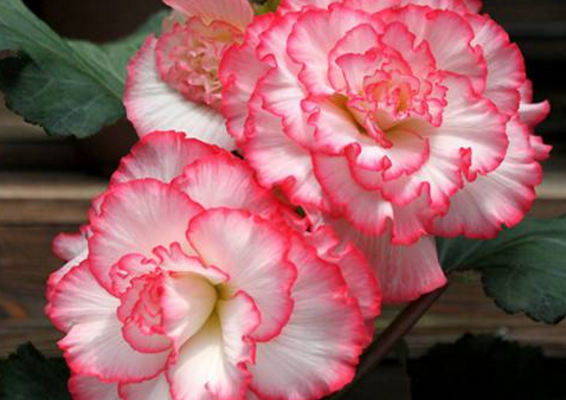
Cultivation methods for tuberous begonias. Tuberous begonias grow 15-25 cm tall, with juicy stems and underground tubers. The flower colors are rich and varied, the flower stems reach 5-10 cm, and the flower forms include single and double varieties, making them suitable for pots or hanging baskets. They prefer cool conditions, are not easy to cultivate, and bloom from spring to summer.
The potting soil for tuberous begonias should be loose and airy, rich in organic matter, and strong in water and fertilizer retention. It can be mixed from 4 parts leaf mold, 3 parts loam, 1 part perlite, and 1 part decomposed organic fertilizer. The best growing location receives 60%-70% sunlight, and good ventilation is required. Avoid high temperature and excessive humidity, otherwise the stems and leaves rot easily. Because it is a short-day flowering and long-day dormant plant, when the light duration is insufficient, the leaves become relatively weak; when the light is too strong, the plant is short, the leaves are thick and curled, and the flowers are compact and do not open fully.
In late spring and early summer, shade should be provided to avoid leaf scorch caused by strong light. It needs more than 13 hours of light to bloom. If the plant has already grown to a considerable height, you can use lights for 3 hours from 10 p.m. to 1 a.m. to promote flower bud differentiation. For topdressing, the three major elements nitrogen, phosphorus, and potassium can be used once a month. After flowering, wait until the underground parts turn yellow and withered, dig up the tubers, dry them in the shade, and store them in wood shavings or river sand, then plant them again the following spring. The optimal growing temperature is 18-22°C.
To care for tuberous begonias, adjust sunlight and temperature well, fertilize reasonably, manage water properly, and provide loose, fertile growing soil. Tuberous begonias like a warm, humid natural environment. They grow rapidly at temperatures of 12-26°C. Under strong light, the plant becomes dwarfed, and the leaves thicken and curl. When the temperature exceeds 30°C, leaves and flower buds drop. The above is an introduction to the cultivation methods for tuberous begonias.
Cultivation methods for tuberous begonias
Light and temperature
Temperature and light. Tuberous begonias prefer a warm, relatively humid growing environment. They do not like the intense heat of summer, nor can they withstand the severe cold of winter; partial shade is best. The most suitable temperature for tuberous begonia growth is 16°C-21°C. If the temperature is above 30°C, the flower stems and branches and leaves may very likely wither, and in more serious cases the underground stems may die. The minimum temperature for cultivation should not be below 10°C, and attention should be paid to keeping warm during overwintering. In addition, tuberous begonias also like light. Good long-day sunlight is the basic guarantee for brilliant flowering. In summer, it is necessary both to ensure sufficient light and to avoid direct exposure to strong sunlight. In winter, when sunlight is lacking, even more attention should be paid to ensuring sufficient sunshine.
Soil
The soil for planting tuberous begonias also needs attention. It should be nutrient-rich, loose, airy, and rich in humus; slightly acidic soil is also acceptable. Generally, we can add river sand to garden soil, or prepare leaf mold. In addition, adding some base fertilizer to the pot can increase fertility.
Watering
Tuberous begonias like a humid growing environment, but they are also afraid of waterlogging, so it is best not to let water accumulate. In summer, when the weather is dry, increase air humidity by misting and other methods. In autumn and winter, during the dormant period, reduce watering. During the sprouting period and flowering period of tuberous begonias, watering should also be reduced.
Fertilizing
Tuberous begonias relatively like water and fertilizer; when fertilizing, apply light fertilizer frequently. During the plant's growing period, apply some decomposed diluted fertilizer water every ten days. During the flowering period, apply some fertilizer that helps promote flowering. In winter and summer, be especially careful not to fertilize.
Cultivation methods for tuberous begonias
Tuberous begonias need winter dormancy. During the growing period, they bloom continuously. Their flowers are very large, their flower centers are very high, and their petals are orderly. The plants grow vigorously. The price is slightly high.During the growing period of tuberous begonias, pay attention to the following key points:
1. Watering: Do not water directly onto the soil above the tuber. You can press a "water channel" into the edge of the pot with your finger. Carefully pour water into the channel. If the weather is hot, avoid being rained on.
2. Light: Outdoors, direct sunlight before 11 o'clock can be accepted. At other times, shade is needed. Do not expose them to the sun in summer. Indoors, place them on a windowsill and adjust the light according to the environment.
3. Environment and temperature: The temperature difference between day and night is very helpful for the growth of tuberous begonias. Unlike tulips, narcissus, and ranunculus, tuberous begonias do not need cool conditions. They bloom continuously from spring to summer to autumn. Very beautiful. In addition, they are perennials and bloom year after year. Pay attention to planting them shallowly at first; the new shoots are pink. They are very tender, as fragile as cream, so do not touch them. Then you can add soil. Their tubers are also different from those of cyclamen. The tubers of tuberous begonias have many roots on top. Therefore, they only need to be buried 5 cm deep in the soil. Fortunately, unlike lilies, they do not require depth. So they are very suitable for pot cultivation.