Clivia Winter Care Methods and Precautions
Clivia winter care: the optimal growing temperature for clivia is 15-25°C. When moving it indoors for the winter, care should be adjusted according to the orientation and light conditions of the home. In southern China, if the home faces south and gets sun, it can be placed by an indoor window and door, and as long as the room temperature stays above 0°C, it will overwinter safely. Generally speaking, in early winter the room temperature is somewhat higher, and most clivias are still growing indoors, so fertilizer can continue to be applied; this benefits leaf and branch growth and future bud formation and flowering. If the room is equipped with heating equipment and the temperature is kept constant above 10°C, clivia can keep growing throughout the winter; Clivia nobilis, when given fertilizer once every 7 days, can even bloom earlier.
If the room temperature drops below 10°C, fertilization should be suspended, because at this point the clivia is already in a slow-growth or dormant phase; applying more fertilizer not only makes it hard for the roots to absorb, but is actually harmful.
If the home faces north, although the room gets no sunlight all winter, as long as the indoor temperature does not fall below 0°C, placing it in a warmer spot in the room away from cold drafts, and keeping the potting soil on the dry side rather than too wet, clivia can still endure the long cold weather safely, and large clivia plants moved outdoors after spring can still produce beautiful flowers.
As for small clivia plants, when overwintering in a sunny room, covering the whole pot with a plastic film bag still allows them to continue growing new leaves; placed in a north-facing room without sunlight and also covered with a plastic bag, they can likewise overwinter safely. That concludes this introduction to clivia winter care.
Clivia winter care | How to care for clivia in winter?
The author mainly introduces clivia winter care and how to care for clivia in winter. Clivia winter care mainly requires attention to the following five points:Clivia is native to South Africa and is a perennial evergreen herbaceous flower. It prefers a warm, cool climate and fears high heat and severe cold; it goes dormant in summer and grows in autumn and winter, so strengthening winter management is the key to cultivation. The main points are as follows:
1. Protecting leaves. When leaves are thick and lush, flowers are strong; when leaves are green, flowers are vivid. Short, broad, thick, green, glossy and upright leaves are the hallmarks of a healthy clivia and the basis for promoting flowering and raising ornamental value. To maintain robust leaf quality, besides providing reasonable fertilizer and water, the leaf surface must be kept clean to improve photosynthetic efficiency. Methods for protecting leaves: first, regularly wash the leaves, spraying and rinsing with the same clean water or wiping dust off soiled leaves to keep the leaf surface clean; second, promptly spray fungicide to prevent leaf spot, leaf blight and stem rot, ensuring the leaves stay green and the flowers vivid.
2. Fertilizing. Clivia grows fastest vegetatively in winter and needs the most nutrients, so applying good winter fertilizer is very important. Before bringing the pot indoors, apply bone meal, roasted sesame, cooked soybeans or a compound fertilizer, diluted in water and poured on once every 15 to 20 days; a soak solution of animal and plant residues can also be used to water the roots. Fertilizer must be fully decomposed and applied diluted to prevent damage from concentrated fertilizer.
3. Watering. Clivia has fleshy roots and likes air but fears waterlogging. In addition, clivia leaves have a waxy layer, and winter temperatures are low, so transpiration and evaporation of water are low. Therefore, watering should not be excessive; simply water along with fertilizing to keep the potting soil moist. Never flood-irrigate, which causes root rot and plant death.
4. Keeping warm. The most suitable growing temperature for clivia is 15°C to 25°C; growth stops at 10°C, and freezing damage occurs at 0°C. Therefore, in winter it must be kept warm and protected from freezing. After the flower stem emerges, maintaining around 18°C is ideal. If the temperature is too high, the leaves and flower scape grow leggy and thin, the flowers are small and poor in quality, and the flowering period is short; if the temperature is too low, the flower stem is short and prone to "clamping" and early blooming, affecting quality and reducing ornamental value.
5. Adjusting light. Clivia likes scattered light and avoids direct strong light. When caring for it indoors in winter, the pot should be placed in a spot with ample light. Especially before flowering, there should be good light, which helps the buds develop plump and sturdy. After flowering, appropriately lower the temperature, avoid strong light, and maintain good ventilation, which helps extend the flowering period.
Key Points for Clivia Winter Care
Clivia is a flower that people love. It likes warmth and light, is not cold-tolerant, and is easy to keep alive but hard to keep thriving. A flower enthusiast previously asked how clivia should be cared for in winter. Below, the editor discusses the key points of clivia winter care based on the care experience of flower enthusiasts:
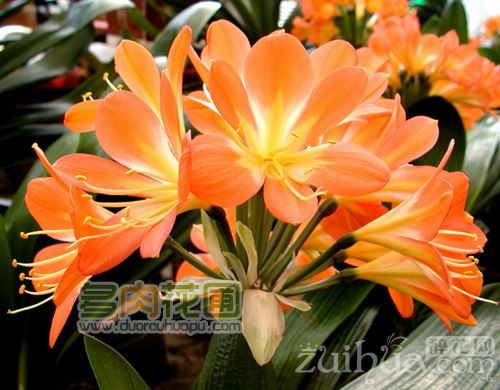
To grow clivia well in winter, special attention should be paid to strengthening management, with extra effort in the following 5 areas.
1. Soil and fertilizer management
Clivia likes loose, fertile neutral or slightly acidic humus soil. The growing medium can be made by mixing 65% humus soil, 20% clean sand and 15% fine furnace ash. From the Autumnal Equinox to the Winter Solstice, apply a solid fertilizer once to clivia, with less nitrogen fertilizer and more phosphorus and potassium fertilizer. Eggshell powder and decomposed fishy water are good phosphorus fertilizers, while chaff ash and tobacco ash are readily available potassium fertilizers. A nitrogen, phosphorus and potassium compound fertilizer can also be applied to encourage the emergence of more new shoots and leaves. Fertilization must be moderate, and never apply concentrated fertilizer or raw manure that has not been fermented and decomposed, otherwise the leaf tips are prone to scorching or rot. In winter, if new leaves show spots and the root system turns yellow, it indicates over-fertilization, while new leaves that are narrow, thin and especially pale indicate a fertilizer deficiency.
2. Watering
In winter, because water evaporation is low, the amount of water given to clivia should be reduced accordingly. The soil should not be too dry or too wet; each watering must soak through, and after buds appear, a little more water should be given. About every 20 days, combine watering with a once-through application of fermented soybean cake water, diluted fishy water or water from soaking water chestnuts, combining watering and fertilizing. When the room temperature is low, watering should be controlled to prevent the potting soil from becoming too wet; overly wet potting soil causes root rot and death, but the potting soil must not be allowed to become too dry either.
3. Keeping warm
The suitable temperature for clivia in winter is 15°C-20°C, and it is best not to go below 10°C. During the day it should be placed in a sunny spot indoors so it receives sunlight and keeps its original color. After the flower scape shoots up, the temperature should be kept at around 18°C, and the day-night temperature difference is best around 10°C; otherwise the flower scape will bloom before reaching the proper height, easily forming a "clamped scape". Therefore, when the outdoor temperature at night drops below 10°C, it should be moved indoors. When the indoor temperature drops below 10°C, besides covering the potting soil surface with a 1 cm thick layer of charcoal powder for insulation, it should also be placed in a sunny, warm spot indoors. When the indoor temperature is especially low, a film can be placed over the pot to raise the temperature, but the temperature under the cover must not exceed 25°C; if it does, ventilate to cool it down.
4. Adjusting light
Although clivia likes a semi-shaded environment, in winter the longer the sunlight exposure, the better. When flowering, strong light shortens the flowering period, while weak light extends it. It likes warmth and coolness and fears severe cold and intense heat; generally it grows well at 18°C-20°C, stops growing below 5°C, and is not damaged above 0°C. After clivia is brought indoors, light is restricted, so the pot must be moved by hand to adjust it. Therefore, place clivia in a spot with good light (a potted clivia at home can be placed at a sunny window to let it receive sunlight). Especially before flowering, pay more attention to light. Because the two rows of clivia leaves are opposite, if the light stays in one position for a long time, the leaves will grow unevenly, affecting the ornamental effect; therefore, when adjusting light, pay attention to the direction of the leaves and switch the sunny side about every 10 days. There are two ways to place the pot indoors: one is to set the leaves parallel to the sunny window, the other is to set the leaves perpendicular to the sunny window; the latter works better than the former.
5. Measures to extend the flowering period
The flowering period of clivia is mostly from December to March of the following year. The way to extend the flowering period is to place it in a dark spot when the flowers are about to open, appropriately control watering, and keep the temperature at 8°C-12°C. In this way, the flowering period can be extended by 10-20 days.
6. Timely pollination
In winter and spring, temperatures are low and it is hard for insects to pollinate, so the most effective method is artificial pollination. To prevent low seed set in clivia and degeneration in offspring development, cross-pollination is generally used.
Summary: The above are methods for clivia winter care, and we hope they are helpful to everyone.