How to grow Chinese hibiscus? Cultivation methods and precautions
How to grow Chinese hibiscus, also known as Zhujin peony. Its habits are warmth-loving and sun-loving but cold-shy, and it is not drought-tolerant either. It is not demanding about soil, and loose, fertile soil is suitable. To make Chinese hibiscus bloom brilliantly, the following aspects of care should be done well:
(1) Light. Chinese hibiscus likes ample sunlight. After being brought out of the house in April, it should be placed in a spot with plenty of light. In spring and summer, when it is dry and windy, and in the hot weather of midsummer, the leaves should often be sprayed with clean water to increase humidity. Under ample sunlight, its leaves spread out and are emerald green, and the flowers are large and richly colored. From Frost's Descent onward, when the potted plant is moved indoors, it should also be placed in a spot with ample sunlight and kept above 5°C, so it can overwinter safely; if kept above 15°C, it will bloom continuously. During the overwintering dormant season, if light is insufficient or there is too much water, the leaves will wither and drop.
(2) Watering. In spring and autumn, generally water once a day; in summer, water once each in the morning and evening. During the plum rain season and summer showers, check frequently and promptly drain any accumulated water in the pot to prevent waterlogging damage. In spring and summer, when the weather is dry, windy and hot, spray water on the leaves and the ground frequently to raise air humidity. After the autumn cools, gradually reduce the frequency of watering. In winter, control the amount of water, watering about once every 7 days (at noon on a sunny day); the amount should not be too much, and it is best if the potting soil is slightly moist.
(3) Fertilizing. Chinese hibiscus likes fertilizer. When replacing the growing medium, put some decomposed bone meal and other base fertilizer at the bottom of the pot. After Qingming is the period when Chinese hibiscus grows branches and leaves, and a decomposed liquid fertilizer combining nitrogen and phosphorus can be applied 1 to 2 times to promote dense growth of branches and leaves. May to June is the peak growing season and also the full bloom period, so fertilizer and water management should be strengthened, fertilizing once every 7 to 10 days. In spring and summer, nitrogen fertilizer is mainly used; in autumn, increase phosphorus fertilizer to encourage more flower buds. Stop fertilizing in October to prepare for winter. The above is an introduction to how to grow Chinese hibiscus.
Cultivation methods for Chinese hibiscus. How to grow Chinese hibiscus?
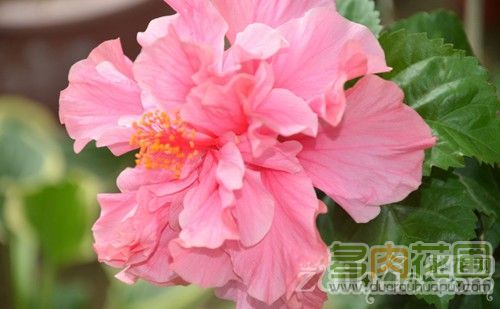
Chinese hibiscus is a beautiful ornamental flowering plant, with large, brightly colored flowers and a long flowering period. Besides red, there are also different varieties such as pink, orange-yellow, yellow, pink-edged with a red center, and white; besides single-petaled ones, there are also double-petaled varieties. Potted Chinese hibiscus is one of the best flowering plants for decorating holiday parks, flower beds, hotels, meeting venues and homes. It was already a popular ornamental plant in ancient times, and its place of origin is China. Today the editor will introduce the cultivation methods of Chinese hibiscus.
Potted Chinese hibiscus cultivation methods: Light
With sufficient sunlight, Chinese hibiscus can happily bloom. After autumn and winter, the frequency of watering and fertilizing can be gradually reduced. At this time, place it in a spot with good sunlight and good ventilation and give it a little care, but pay attention to maintaining the indoor temperature, keeping it between 5°C and 15°C as much as possible; otherwise, Chinese hibiscus will not only struggle to overwinter safely but also have its flowering quality the next year affected.
Potted Chinese hibiscus cultivation methods: Pruning
We know that Chinese hibiscus has a very long flowering period, produces many flowers, and has especially strong branching ability, so routine pruning work is also indispensable. When you have time, pruning away some old and weak branches of Chinese hibiscus not only beautifies its plant shape but also strengthens the growth of some new branches, thus laying a better foundation for the next year's flowering.
In order to maintain a beautiful tree shape and a large number of flowers, according to the characteristic of Chinese hibiscus's strong branching and sprouting ability, pruning and shaping can be carried out around the time it is brought out of the house in early spring. For each branch, except for leaving 2-3 buds at the base, the upper part is all cut off. Pruning can promote new branch growth, making the growth more vigorous and the plant shape more attractive. After pruning, because the aboveground part consumes less, water and fertilizer should be appropriately restrained.
Potted Chinese hibiscus cultivation methods: Humidity
During the period when Chinese hibiscus overwinters indoors, the potting soil should be on the dry side and avoid being wet, so watering should be controlled and the potting soil should be kept only slightly moist. Generally, water once every 5 to 10 days, and the amount should not be too much, so as to avoid root rot caused by a low-temperature, high-humidity soil environment. In northern winters, the climate is dry and phenomena such as pale yellow leaf color and dry leaf edges often appear, so attention should be paid to raising indoor air humidity. Methods such as spraying and washing the branches and leaves or covering with plastic film can be used to increase the air humidity around the plant and create suitable humidity conditions for its growth.
Potted Chinese hibiscus cultivation methods: Temperature
In winter, the suitable dormant temperature for Chinese hibiscus is 5°C to 15°C. If the room temperature is above 15°C, the plant cannot get sufficient dormancy and this will inevitably affect the next year's flowering; while below 5°C, it is prone to frost damage. In addition, when watering, pay attention to the water temperature. If the water temperature differs too much from the air temperature (more than 5°C), it can easily harm the roots, so it is best to let the water sit in the sun for a day first and use it when the water temperature is close to the indoor temperature.
That is where the editor's introduction to the cultivation methods of Chinese hibiscus ends. We hope it is helpful to everyone. Welcome to continue following Duorou Huapu to learn more about the care methods for woody flowering plants.
How to grow Chinese hibiscus, cultivation methods for Chinese hibiscus
How to grow Chinese hibiscus, cultivation methods for Chinese hibiscusThe leaf color and leaf shape of Chinese hibiscus are both like mulberry and hibiscus, hence the name Chinese hibiscus. It has been cultivated in China for more than 2,000 years. Its flowers are large and gorgeous, blooming without cease; when in full bloom they are like a blazing fire, brilliant and dazzling, and it is an excellent traditional plant of our country
the praise "Red Buddhist mulberry." In southern China, it is mostly planted as green hedges or scattered in front of pavilions, along roadsides and by walls. Its brilliant red flowers bloom continuously all year round, exceptionally lively. In the Yangtze River basin and areas to its north, it is often grown in pots to adorn balconies or small courtyards, and under conditions of sufficient light, its ornamental period is especially long. It is suitable for decorating courtyards, flower beds, meeting venues, living rooms and other places.
Chinese hibiscus is the national flower of Malaysia, where it is called “Bunga Raya”, and it is deeply loved by Malaysians. People compare it to fiery passion, expressing their boundless love for the motherland; some also compare it to the seeds of revolution scattered across the land, igniting red flames that made the colonialists of various countries retreat one after another. In Malaysia, Chinese hibiscus is not only revered as the national flower, but its pattern also appears on Malaysia's national emblem.
In addition, Sudan and Fiji also regard Chinese hibiscus as their national flower, and it is also the state flower of Hawaii in the United States.
The flowers, roots and leaves of Chinese hibiscus can all be used as medicine, having the effects of detoxifying and reducing swelling, and clearing heat and promoting urination. Its stem bark fibers can also be woven into gunny bags and made into ropes.
Chinese hibiscus, also known as Zhujin peony, is an evergreen shrub of the Malvaceae family. The plant is 1〜3 m tall. The stem is upright and much branched. The leaves are ovate and alternate, with coarse serrations on the leaf margins. The flowers are solitary in the leaf axils, large, and come in red, peach red, orange-yellow, yellow, white and other colors. The flowers are divided into single-petaled and double-petaled. The capsule is ovate-round. It blooms in summer and autumn.
Chinese hibiscus is native to southern China and is cultivated throughout the country. It likes a warm, humid and light-abundant environment. It is not tolerant of frost or drought. It requires fertile soil with good drainage. The branches have strong sprouting ability and are tolerant of pruning.
Fertile, loose, slightly acidic soil is best. The potting soil is mixed with 5 parts garden soil, 3 parts leaf mold, 2 parts sand, or 4 parts peat soil, 2 parts leaf mold, 3 parts sand, and 1 part perlite.
The suitable growth temperature is 15〜25.0; from March to October it is 18〜25°C, and from October to the following March it is 13〜18°C. In winter, the temperature cannot be lower than 5.0, otherwise the leaves turn yellow and drop; below 0.1 it is prone to frost damage. In the Yangtze River basin of China and areas to its north, it is all cultivated in greenhouses. At high temperatures above 30°C, Chinese hibiscus can still grow normally.
Chinese hibiscus is a strongly sun-loving plant. During the growing period, it needs sufficient light to grow and flower normally, and it is best to give it more than 8 hours of light per day. If light is insufficient, flower buds easily drop, the flowers are small, and the flower color is dull; but when the sunlight is too strong, the plant can suffer scorching, so appropriate shade protection should be provided.
Tolerant of moisture and afraid of dryness. During the growing period, watering should be sufficient, usually once a day, and during the dog days it can be watered once each in the morning and evening. On ordinary days, watering should depend on whether the potting soil is dry or wet, and avoid being too dry or too wet. In winter, because the temperature is low, the amount of watering should be strictly controlled; otherwise the plant's cold resistance weakens and frost damage easily occurs. During the growing period, it also needs frequent spraying.
Likes fertilizer. More fertilizer means more flowers. Spring and autumn are the full bloom periods; to make the flowers abundant and huge, apply a dilute liquid fertilizer mainly of phosphorus and potassium once a week, and avoid applying concentrated fertilizer before flowering. In autumn and winter, fertilizing should be stopped.
Propagation is commonly done by cuttings and grafting, mainly by cuttings. At home, cuttings can be taken in July to August, choosing 1- to 2-year-old branches. Cut the cuttings to 8〜10 cm long, remove the lower leaves, keep 2〜3 leaves on top, make the cut flat, and insert them into coarse sand or vermiculite with the inserted depth being 1/3〜1/2 of the cutting length. After inserting, spray water immediately, and keep the relative air humidity at 85%〜95% and the temperature at 18〜25°C.
They will root. When the roots are 3〜4 cm long, transplant them into pots.
Chinese hibiscus branches have strong sprouting ability and are tolerant of pruning. Every 1〜2 years, one heavy pruning is needed, keeping 2〜3 buds on the stem base of each side branch and cutting off all the upper branches, to promote the sprouting of new branches. During cultivation, Chinese hibiscus often shows flower bud drop, mainly caused by insufficient light, too much watering, potting soil that is too dry, and insufficient fertilizing.