How to Propagate Dracaena? A Detailed Guide to Common Propagation Methods
Dracaena propagation methods. After Dracaena was introduced into China, apart from a few tropical regions where seeds have been produced, other regions mainly use air layering and cuttings for asexual propagation.
(1) Layering propagation. The stems of Dracaena mostly grow upright and branch little. After the plant has grown for several years, the basal leaves fall off and it naturally loses its ornamental value. In view of this situation, growers can carry out air layering during the hot, humid season from May to July. The method is: make a ring cut at a suitable spot on the plant stem, with a ring width of 1.8-2.2 cm, deep to the xylem, and use a small knife to peel away the bark at the ring; wipe away the sap oozing from the cut with a clean wet cloth; apply a 500-1,000 ppm aqueous solution of naphthalene acetic acid to the bark above the cut; then tie white plastic film below the cut, smooth it into a funnel shape, fill it with a rooting medium mixed from moss and mountain soil, wrap it around the cut, water thoroughly, and tie the top of the film tightly; then place the plant outdoors for growing and strengthen fertilizer and water management. After air layering Dracaena, check at any time whether the medium is dry and replenish water as needed. Generally, after 30-40 days of cultivation, new roots appear at the ring-cut site, and by September to October it can be cut away from the parent plant and planted separately to become an independently growing plant.
(2) Cutting propagation. Dracaena can also be propagated asexually by cuttings, from May to June. This is the period of vigorous growth for Dracaena, when the plant is rich in nutrients, so cuttings root very easily. Before taking cuttings, select a mother plant with high ornamental value, take healthy branches that have grown for more than two years, each about 10-20 cm long, with or without leaves. Cut the base of the cutting to a flat end, make a cross cut at the top and keep the leaves; soak the upper and lower cuts in clean water to wash away the oozing sap, place in a cool, ventilated spot to air-dry for a while, then soak the base of the cutting 2-3 cm deep in 500-1,000 ppm naphthalene acetic acid, generally for 5 seconds, and insert immediately after soaking.
For Dracaena cuttings, a small earthenware flower pot can be used, and the medium can be vermiculite, perlite, or sterilized plain sand soil; after filling the pot, insert the cuttings. One plant per pot; after inserting, water thoroughly once and tend carefully. Later management mainly consists of keeping the medium moist. Dracaena wounds heal quickly, roots form early, and sprouting is rapid. Generally after 15-20 days, under the action of wound hormones, the cut produces callus tissue; after 25-35 days, under the action of endogenous hormones, the cutting soon forms root primordia; after 35-40 days, new roots can sprout; after two months, it can be repotted and transplanted with growing soil. The above is an introduction to Dracaena propagation methods.
Dracaena Propagation Methods
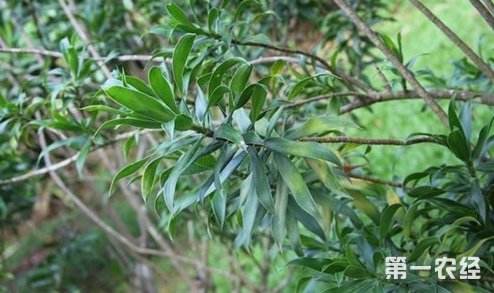
Image: Dracaena fragrans 'Massangeana'
[Common Questions] Dracaena Propagation Methods
[Expert Answer]
I. Layering Propagation
The stems of Dracaena mostly grow upright and branch little. After the plant has grown for several years, the basal leaves fall off and it naturally loses its ornamental value. In view of this situation, growers can carry out air layering during the hot, humid season from May to July. The method is: make a ring cut at a suitable spot on the plant stem, with a ring width of 1.8-2.2 cm, deep to the xylem, and use a small knife to peel away the bark at the ring; wipe away the sap oozing from the cut with a clean wet cloth; apply a 5000-1000ppm aqueous solution of naphthalene acetic acid to the bark above the cut; then tie white plastic film below the cut, smooth it into a funnel shape, fill it with a rooting medium mixed from moss and mountain soil, wrap it around the cut, water thoroughly once, and tie the top of the film tightly; then place the plant outdoors for growing and strengthen fertilizer and water management. After air layering Dracaena, check at any time whether the medium is dry and replenish water as needed. Generally, after 30-40 days of cultivation, new roots appear at the ring-cut site, and by September to October it can be cut away from the parent plant and planted separately to become an independently growing plant.
II. Cutting Propagation
Dracaena can also be propagated asexually by cuttings, from May to June. This is the period of vigorous growth for Dracaena, when the plant is rich in nutrients, so cuttings root very easily. Before taking cuttings, select a mother plant with high ornamental value, take healthy branches that have grown for more than two years, each about 10-20 cm long, with or without leaves. Cut the base of the cutting to a flat end, make a cross cut at the top and keep the leaves; soak the upper and lower cuts in clean water to wash away the oozing sap, place in a cool, ventilated spot to air-dry for a while, then soak the base of the cutting 2-3 cm deep in 500-1000ppm naphthalene acetic acid, generally for 5 seconds, and insert immediately after soaking. For Dracaena cuttings, the seedbed can be a small earthenware flower pot, and the medium can be vermiculite, perlite, or sterilized plain sand soil; after filling the pot, insert the cuttings. One plant per pot; after inserting, water thoroughly once, place the seedbed in a spot with dappled light, and tend carefully. Later management mainly consists of keeping the medium moist. Dracaena wounds heal quickly, roots form early, and sprouting is rapid. Generally after 15-20 days, under the action of wound hormones, the cut produces callus tissue; after 25-35 days, under the action of endogenous hormones, the cutting soon forms root primordia; after 35-40 days, new roots can sprout; after two months, it can be repotted and transplanted with growing soil.
III. Seed Propagation
Seed propagation requires collecting seeds from old plants and sowing in spring. Seedlings need many years before becoming mature plants. Horticultural varieties of Dracaena are usually not propagated by seed; plants propagated by seed have traits similar to the wild species or with different variations, losing the superior characteristics of the horticultural variety. After Dracaena was introduced into China, apart from a few tropical regions where seeds have been produced, other regions mainly use high-temperature treatment, cuttings, and tissue culture for asexual propagation.
[Editor's Comments] Dracaena propagation methods include sowing, layering, and cuttings. After being introduced into China, due to climate and variety reasons, sowing is generally not used; instead, layering and cuttings are the main methods. The above is the introduction to "Dracaena Propagation Methods" compiled by the First Agricultural Economics editor. This article ends here, and we hope it is helpful to you ^_^
How to Propagate Dracaena, Dracaena Propagation Methods / Layering or Cuttings
Dracaena is a perennial plant, but after several years of cultivation, its basal leaves may fall off, reducing its ornamental value. At this time, flower lovers should propagate it. However, some flower lovers do not understand its propagation techniques, so how do you propagate Dracaena? Let's look at Dracaena propagation methods.
How to Propagate Dracaena
According to the growing experience of flower lovers, the more commonly used propagation methods for Dracaena are mainly cuttings and layering, among which cuttings are the most common. Of course, flower lovers can choose a suitable method according to actual conditions. Below we introduce in detail the specific operation steps of these two methods.
Dracaena Propagation Methods
I. How to Take Dracaena Cuttings
1. Time
Generally, choose the period of most vigorous growth for Dracaena, that is, May to June each year. At this time the plant grows relatively robustly, and the branches and leaves contain richer nutrients, so cuttings survive more easily after insertion.
2. Cutting Steps
(1) Selecting cuttings. Choose healthy branches on the plant, preferably branches that are more than two years old. Cut the branches off and divide them into sections 10-20 cm long. Leaves may be present or absent, but it is best to keep leaves.
(2) Treating cuttings. Use a tool to cut the base into a flat end, make a cross cut at the top while keeping the leaves, then wash the sap from the cut with clean water, place in a cool spot to air-dry naturally, then soak the base 2-3 cm deep in 500-1000ppm naphthalene acetic acid for 5 seconds, remove, and begin inserting.
(3) Cutting technique. Once the cuttings are prepared, insertion can begin. At this point, how do you propagate Dracaena? Insert the cuttings into a flower pot filled with medium. The medium is made by mixing vermiculite and perlite, preferably sterilized, then water thoroughly, and afterward place in a cool spot for management.
(4) Care and management. During rooting, watering is generally not needed, but the medium must be kept moist. This allows the cut to heal quickly and begin rooting. From cutting to rooting generally takes 35-40 days. After rooting, do not rush to transplant; you can wait 2-3 weeks and transplant elsewhere depending on leaf growth.
II. Dracaena Layering Propagation
1. Time
Layering needs to be done during high temperatures, usually from May to July. The plants used for layering propagation are generally those that after many years of growth branch little and whose old leaves begin to fall off. Of course, healthy Dracaena can also be chosen for layering.
2. Operation Steps
(1) Make a ring cut and peel the bark at a suitable spot on the main stem, keeping the ring width at about 2 cm, with depth cut to the xylem. After peeling off the bark with a tool, wipe away the sap with a clean wet cloth, then apply 5000-1000ppm aqueous naphthalene acetic acid solution to the bark above the cut.
(2) Tie a plastic bag below the cut, shape the film into a funnel, then put in a ball of soil, which can be made by mixing moss and mountain soil, then water thoroughly, tie the top tightly as well, and place the plant in a ventilated spot with sufficient light.
(3) Carry out care and management according to normal Dracaena growing methods, while strengthening fertilizer and water management, replenishing water and fertilizer in time. After 30-40 days, the ring-cut site can grow new roots, and then in September to October it can be separated from the parent plant for transplanting.