Cymbidium sinense care tips: grow it this way for easier blooming
How do you care for Cymbidium sinense so it blooms more easily? Cymbidium sinense generally produces flowers around the Spring Festival, which is why it is also called the "New Year flower." How do you make its flower scapes sturdy and its flowers larger? First, select good seedlings, preferably a mother-and-child seedling cluster planted together in a pot. Pay attention to moderate fertilization at ordinary times, and after the beginning of autumn, add two applications of a late-season strengthening fertilizer.
Second, pay attention to light. Apart from midsummer, give it plenty of sun at ordinary times to promote photosynthesis. In spring and late autumn, it may even be exposed to direct sunlight (but be careful to cool it with water to prevent black spots from forming on the leaves). After the beginning of winter, when temperatures are low, you can spray leaf fertilizer and add light at night to encourage blooming.
Generally, high-grade flowering orchids and variegated-leaf orchids do not need to grow flowers. If you want to cut the flowers and leaves, you must do so after the first flower opens, cutting them and placing them in a vase, so as to avoid consuming too many nutrients and affecting the next generation of new shoots.
Key care points for Cymbidium sinense: how to grow it in northern China
Cymbidium sinense is a semi-shade plant with graceful plants, diverse flower shapes and unique flower colors, but it needs careful attention and care to grow more vigorously. So how should we care for Cymbidium sinense? Below, we introduce the key care points for Cymbidium sinense, as well as the key care points for growing it in northern China.
Key care points for Cymbidium sinense
1. Growth habits: Cymbidium sinense prefers shade and dislikes strong light; prefers warmth and dislikes severe cold; prefers moisture and dislikes dryness; likes fertilizer but dislikes turbidity.
2. Soil: Cymbidium sinense prefers a slightly moist soil environment and should not be allowed to suffer drought. The water used should preferably be soft water.
3. Fertilization: Cymbidium sinense has a low demand for fertilizer, and the plant can still grow well without base fertilizer. In spring and autumn each year, water the plant once with a dilute liquid fertilizer, and stop topdressing during the dormancy period.
4. Light: In summer, Cymbidium sinense should be shaded, but the plant should still receive appropriate direct sunlight; otherwise it grows poorly and blooms poorly. However, make sure the plant receives sunlight before 10 a.m. each day and avoid direct sunlight at noon and in the afternoon, otherwise normal growth will be harmed.
5. Environment: Cymbidium sinense likes an environment with circulating air. When ventilating under conditions of relatively low humidity, it is best to spray water at the same time, which helps increase air humidity and prevent leaf tips from drying.
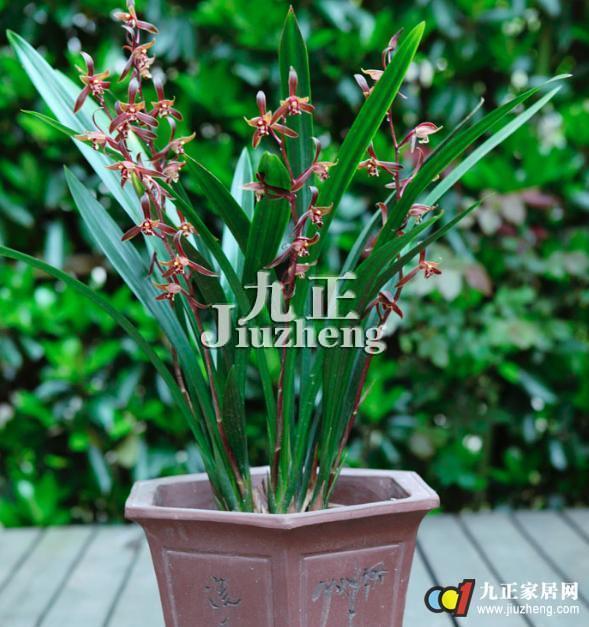
6. Temperature: Cymbidium sinense likes warmth, with the best range being 16°C to 28°C.
7. Pest and disease control: When exposed to too much sunlight in summer, the plant is prone to sunscald. Its symptoms are yellow spots appearing on the leaf surface, which then gradually turn black, and in severe cases the entire leaf dries up and dies. The control method is: avoid prolonged direct sunlight and provide timely shading. In balcony cultivation, Cymbidium sinense is prone to root rot and is often attacked by harmful organisms such as scale insects.
How to grow Cymbidium sinense in northern China
I. Pots
The key to success or failure in growing orchids lies in air. Orchids should preferably be grown in clay pots because of their good drainage and aeration, whereas purple clay pots have poor water permeability and air permeability, making root rot and poor blooming easy. Choose suitable earthenware pots, make 10 to 12 holes with a diameter of 1 cm in the pot wall, enlarge the hole at the bottom of the pot, and add several pieces of broken tile or charcoal chunks to increase water permeability and air permeability.
II. Watering and spraying
When watering orchids, grasp the principle of "not dry in summer and autumn, not wet in winter and spring." In the north, the water is mostly neutral, and long-term watering tends to make the potting soil alkaline. Therefore, for watering orchids, rainwater or snow water is best; hard water or alkaline water containing too many minerals must not be used. To grow orchids well, in addition to keeping the soil moist, you should also increase environmental humidity. During the summer growing season, spray water frequently on the pot surface or the ground to maintain a relative humidity of 45% to 65%, but the humidity must not be too high, so as to avoid causing disease. In northern regions, winter and spring are dry, so it must not be allowed to become too dry. In autumn, spraying can be stopped, and it is appropriate for the potting soil not to be dry.
III. Fertilization
Fertilizing orchids is very particular. In orchid cultivation, base fertilizer is rarely used; mostly liquid fertilizer is applied as topdressing. During the growing period, apply a dilute, fully decomposed liquid fertilizer once every 5 to 10 days. Do not apply topdressing in midsummer and severe winter, and do not fertilize before and after flowering. Overall, grasp the principle of "frequent but light applications; avoid sudden heavy applications." In addition, fertilization should mostly be done in the evening or when there is no wind and no rain, and on the next morning water once with treated clean water at a suitable temperature and spray the leaf surface.
IV. Suitable shading
Orchids are semi-shade plants, but too much shade prevents blooming or reduces blooming, and the degree of shade tolerance varies by species. Cymbidium sinense has strong shade tolerance, followed by Cymbidium ensifolium, while Cymbidium faberi needs ample light.
V. Pest and disease control
Grasp the principle of prevention being more important than treatment. During the rainy season with high temperatures, southern blight is likely to occur, and Bordeaux mixture or thiophanate-methyl can be used for prevention. When scale insects appear, pesticides such as dimethoate can be used for control.
The above are the key care points for Cymbidium sinense and the key care points for growing it in northern China that we have introduced to you. Is everyone clear now? For more home knowledge, please stay tuned.
Cymbidium sinense Cymbidium sinense Wild: Cymbidium sinense illustrated guide: how to grow Cymbidium sinense / how to propagate Cymbidium sinense
Cymbidium sinense profileCymbidium sinense Cymbidium sinense Wild
Cultivation methods and precautions for Cymbidium sinense: an introduction to Cymbidium sinense
Cymbidium sinense, also known as the New Year orchid, is native to China, Vietnam and Myanmar. The leaves grow in clusters on oval pseudobulbs, and the leaf blades are sword-shaped. Dark green, glossy. The flower stem usually rises above the leaves; in the wild state it can reach 80-100 cm, with 7-17 flowers, small bracts, nectar glands at the base, lanceolate sepals, light brown, with 5 purplish-brown veins; the petals are short and broad, the lip is not obviously three-lobed, and the apex droops and curls backward. The flowering period is from January to March, with very many cultivars, and a few bloom in autumn.
Morphological characteristics of Cymbidium sinense: the roots of Cymbidium sinense
The roots of Cymbidium sinense are a clustered fibrous root system. The roots grow from root points at the base of the pseudobulb. When young and tender they are white; if exposed above the pot or outside the soil, they are dark green, and over time become dark gray. They are fleshy and contain abundant water and nutrients. The anatomical structure of the root is divided into three layers. The innermost layer is a yellow-white fibrous core about 0.1 cm thick, tough and not easily broken. Its main function is to support the orchid plant and transport water. The outermost layer is the epidermal cells. It covers the entire root and mainly serves absorption and protection. Inside the epidermis (the middle layer) is the cortical tissue. Among the cortical cells, some contain needle-like crystalline substances, while others host orchid fungi. These orchid fungi and the orchid plant make use of each other. The orchid root cells provide a living place for the orchid fungi, while the orchid fungi are continuously dissolved by the orchid root cells during reproduction and digested and absorbed as nutrients. They are mutually causal: if the orchid fungi grow well, the orchid plant grows vigorously. If the living environment of the orchid roots lacks oxygen and is airtight, the orchid fungi will die, which in turn leads to the death of the orchid plant. Therefore, the soil or growing medium for orchids must never become compacted or waterlogged, and undecomposed organic fertilizer should not be applied, because undecomposed organic fertilizer consumes the oxygen in the soil and growing medium during fermentation, causing oxygen deficiency in the soil and growing medium and leading to the death of orchid fungi and orchid roots.
The stem of Cymbidium sinense
The stem of Cymbidium sinense is mostly oval, arrowhead-shaped or water chestnut-shaped, and in a few cases spindle-shaped. In the past, the stems of terrestrial orchids were customarily called pseudobulbs, but Professor Pan Ruichi, after examining them from physiological and morphological perspectives, believed they should be called pseudobulbs. The outside of the orchid stem is wrapped in a very thick cuticle, so water is not easily lost; this is a drought-tolerant physiological structure. Inside the cuticle are epidermal cells. Vascular bundles are scattered within the stem, and each vascular bundle is surrounded by many fine fibers. The orchid stem stores nutrients and water and is the organ that nurtures orchid leaves, orchid roots, tillering fungi and flowers. The internodes at the base of the stem are compact, and each node bears a scale-like leaf (commonly called a sheath), while the internodes in the middle and upper parts of the stem are slightly sparser, and each node bears a lanceolate leaf blade (also called a true leaf). The nodes of the pseudobulb are the places where new roots, new shoots and flower stems (flower scapes) sprout. In dissecting hybrid offspring orchid seedlings of Cymbidium sinense, the author observed that new shoots (tillering new seedlings) all sprout from the third to fifth nodes where scale-like leaves are borne and from the first to fifth nodes where true leaves are borne, while the first and second nodes of the mother plant that bear true leaves are the places where flower stems sprout.
The leaves of Cymbidium sinense
The leaves of Cymbidium sinense are generally linear-lanceolate leaves whose length is more than three to five times their width, leathery and glossy. The leaf blade is composed of upper epidermis, lower epidermis and mesophyll cells. The mesophyll cells contain chlorophyll and are an important organ for carrying out photosynthesis to manufacture nutrients.
The epidermal cells are small rectangular cells, and the long walls of the cells are arranged longitudinally parallel to the long axis of the leaf blade. Outside the cell walls there is a relatively thick leathery layer and wax, which gives the leaf blade its gloss and a protective effect for drought tolerance. The epidermal cells do not contain chlorophyll and are transparent and colorless. The upper epidermis has no stomata, while the lower epidermis has stomata, with a density of about 100-130 per sq mm. The epidermal cells adjacent to the stomata are slightly sunken, and the guard cells of the stomata have round or oval stomatal caps. The stomata are the channels that regulate water transpiration and the entry and exit of oxygen and carbon dioxide. The veins of Cymbidium sinense are arranged in parallel, and the main vein in the middle of the leaf is relatively thick, called the midrib, which is the support that keeps the leaf blade open and upright. The veins are the channels through which nutrients and water are exchanged and transported between the leaf blade and the organs and tissues of various parts of the orchid plant.
Differences in the amount and strength of fibers within the leaf blade give orchid leaves various leaf postures such as "upright," "semi-upright" and "arching and drooping," and different leaf postures create various forms of beauty in the orchid plant. In addition to the ornamental nature of leaf posture, changes in leaf shape and variation in leaf color (such as yellow, white, transparent, etc.) are even more important characteristics pursued by people for ornamental and commercial value.
The flowers of Cymbidium sinense
Although the flowers of Cymbidium sinense, like the flowers of general flowering plants, have floral organs such as sepals, petals, stamens and pistils, and ovary, their structure has notable characteristics. First, its sepals have become petal-like, and among the three petals, one has become lip-shaped, called the lip. The lip is the most gorgeous part of an orchid and is also a highly specialized petal. The lip is obviously or not very obviously three-lobed, and may even be multi-lobed. The front end of the lip is called the front lobe or middle lobe and generally curls downward; the lobes on both sides behind the front lobe are called side lobes, and the middle part between the two side lobes is called the lip disk. In the center of the lip disk there are two parallel longitudinal ridges. The petals generally have several reddish-brown stripes, while the lip has bright red spots. In some varieties the entire flower is green, yellow or white. The flower of Cymbidium sinense also has a most special structure, namely that the male and female parts are united on a columnar structure called the column. This is the most important feature distinguishing orchids from other plants and is also the main marker for orchid classification.
At the top of the column there is a cap-like structure called the anther cap. Under the anther cap there are two anthers, and each anther cap has two pollinia. Immediately below the anthers there is a sunken area containing mucus; this is the female organ, called the stigma.
Below the perianth (the general term for floral organs such as sepals and petals) is the ovary. The ovary of Cymbidium sinense is an organ with three ridged edges, rod-shaped, that nurtures the seed embryo. When the orchid opens, the ovary twists 180 degrees. A normal Cymbidium sinense has one ovary below the perianth, but in variant orchid plants, the ovary below the perianth shows branching and segmentation. For example, the ovary of 'Shenzhou Qi' undergoes multi-branched variation, and each branching site bears a perianth, forming flowers upon flowers, and the entire flower spike becomes a spectacular compound raceme. 'Datun Qilin,' by contrast, undergoes compact segmentation variation at the top of the ovary, and each segment also bears a perianth, forming the spectacular wonder of a flower within a flower (from a distance the flower looks like a multi-petaled strange flower). Systematic scientific research results on the flowering physiology of Cymbidium sinense have not yet been reported, and knowledge about its flowering is still very limited. At present it is only roughly known that the pseudobulb must grow large enough (generally two years of growth), and the external temperature must remain below 15°C for a period, before the flower scape will grow out. It can bloom smoothly at temperatures below 30°C; if the temperature is too high, the flower scape will quickly turn yellow, wither and fade. The fragrance of Chinese orchids is clear, quiet and far-reaching. According to analysis by experts at the South China Botanical Garden using gas chromatography, Cymbidium sinense has 56 aromatic components, which are emitted from the stomatal band at the base of the column. The emission time is generally around 10 a.m. and 7 p.m. (Cymbidium ensifolium generally emits from late night to early morning).
Through cytological and embryological observations, Mr. Wei Yabo and Mr. Wang Jingju confirmed that the front edge of the petals of hood-petal-type orchids has two anther sac structures. The anther sacs are composed of epidermis, fibrous layer and felt layer, and within the sac cells there are tetrad pollen grains (tetrad spores) densely packed. The two gentlemen believed that this stamenization of petals helps increase the chance of self-pollination in orchids.
Ecological habits of Cymbidium sinense
(1) Prefers shade and avoids strong light.
According to many field investigations, Cymbidium sinense mostly grows in sunny dense forests. According to experimental findings by the Chinese Orchid Research Center of South China Normal University and the Department of Botany of the National University of Singapore: the light compensation point of photosynthesis in Cymbidium sinense is about half of spring morning light, and the light saturation point is about 10%-15% of the light intensity at noon in summer. This fully confirms that Cymbidium sinense is a typical shade plant. If the sunlight is too strong, sunscald is very likely to occur. Therefore, in winter and spring there should be a shading density of 60%-70%; in summer and autumn there should be a shading density of 85%-90%.
(2) Prefers warmth and avoids severe cold.
The suitable growth temperature for Cymbidium sinense is 25-28°C, and the suitable dormancy temperature is 12-15°C during the day and 8-12°C at night. It cannot tolerate low temperatures below 3°C; even a brief low temperature below 2°C will cause cold damage.
(3) Prefers moisture and avoids dryness.
Cymbidium sinense originated in the rainy forest wilds of the south and prefers moisture to dryness. During the growing period it needs 75%-80% relative air humidity, and in winter it needs more than 50% relative air humidity. When the surface of the growing medium becomes on the dry side, water it as soon as possible, and never let it stay too dry for too long.
(4) Likes fertilizer but avoids turbidity.
According to measurements by relevant departments: the leaves and pseudobulbs of Cymbidium sinense both contain large amounts of phosphorus, and its old roots also have a very strong ability to absorb phosphorus, so Cymbidium sinense needs relatively little phosphorus; Cymbidium sinense has thick plants and broad leaves and has a relatively large demand for nitrogen. Because Cymbidium sinense has broad leaves, it needs more potassium nutrition so that the lignin and cellulose of the plant and leaves can effectively increase and strengthen the supporting force of the plant and leaves, preventing them from becoming weak and unable to stand. Therefore, the suitable ratio of the three major fertilizer elements for Cymbidium sinense is nitrogen 35% : 20% : 45%.
Although Cymbidium sinense likes fertilizer, it absolutely must not be given high fertilizer concentrations or frequent fertilization. Rather, it requires chemical fertilizer at 0.1%, organic liquid fertilizer at 0.1%-0.2%, applied once every 15-20 days.
Cultivation techniques for Cymbidium sinense
I. Cultivation substrate
Traditional Chinese potted orchids mostly use the humus soil from the forest floor of their place of origin, which local people call "orchid mud." This soil is rich in humus, loose and non-sticky, and often slightly acidic, making it an excellent potting soil for orchid cultivation. When growing orchids in the north, generally 5 parts leaf mold soil and 1 part sandy soil are mixed. Some also use a mixture of 4 parts humus soil, 2 parts peat soil, 2 parts furnace slag and 2 parts river sand.
II. Dividing seedlings and disinfection.
When dividing pots, first grasp the base of the orchid seedling with the five fingers of the left hand, turn the pot upside down, and gently tap around the pot to separate the pot from the potting soil, then carefully pat and shake the soil ball to shake off the soil. Carefully clean the orchid roots, cut off rotten roots, broken roots, dead leaves and dried pseudobulbs, then rinse clean with clean water, and place the orchid roots in a 1000-fold solution of thiophanate-methyl or an 800-fold solution of potassium permanganate for disinfection. Kill the pathogens near the wounds.
III. Potting.
After the pot is selected, before planting, first cover the drainage hole at the bottom of the pot with a large piece of broken tile, and lay down window screening, then spread coarse mountain soil particles, and then place the orchid plant in (the root system of the orchid plant should be distributed evenly and spread out, not touching the pot wall), then fill the pot with humus soil and bury up to the leaf base of the pseudobulb. Then cover the surface of the soil with a layer of white stones or Selaginella uncinata, which is both attractive and helps keep the surface soil moist. Next, use the bottom-watering method to make the soil thoroughly wet, then take it out, rinse the soil off the leaf surface with a watering can, place it in a shaded place to recover, and after one week move to normal management.
IV. Management.
Cymbidium sinense is a semi-shade plant and requires environmental conditions of "warmth, moisture, diffused light and ventilation." Whether it grows well depends entirely on care and management. The cultivation site requires good ventilation and shade facilities. The water requirements of Cymbidium sinense mainly depend on temperature, light intensity and plant growth. Gao Lian of the Ming Dynasty said in the appendix "Four Prohibitions for Cultivating Orchids" in Lan Pu: "Do not take them out in spring, do not expose them to the sun in summer, do not let them dry in autumn, do not let them stay wet in winter." These twelve characters are indeed the experience of growing orchids. For watering Cymbidium sinense, rainwater or snow water is best. If tap water must be used to water orchids, it must be exposed to the sun for one day before use. Use a watering can for watering, and do not spray water into the flower buds, so as to avoid causing rot. In summer, absolutely avoid being washed by sudden rain showers, and film must be used to block rain.
As for watering time, in summer and autumn it should be around sunset, and it is best for the leaf surface to be dry before nightfall. In winter and spring, watering around sunrise is best, and misting should also be used to increase air humidity to benefit the growth of Cymbidium sinense.
V. Fertilization.
Fertilize Cymbidium sinense "lightly, not heavily." Generally start in late spring and stop in late autumn. Fertilization is suitable when the temperature is 18-25°C, and fertilization is not suitable on cloudy and rainy days. As for fertilizer types, either organic or inorganic fertilizer may be used. Apply fertilizer once a week during the growing season; in autumn and winter Cymbidium sinense grows slowly, so fertilize less, once every 20 days. After fertilizing, spray a small amount of clean water to prevent the fertilizer liquid from soiling the leaves. Fertilization must be carried out on clear evenings; fertilizing on cloudy days risks root rot.
Cultivar classification of Cymbidium sinense
Perennial herb. Leaves 4-5, clustered on oval pseudobulbs, leaf blades sword-shaped, dark green. Flower stem upright, rising above the leaves, with 7-17 flowers. Common cultivars include 'Qiubang', 'Qiuxiang', 'Xiaomo', 'Huizhou Mo', 'Jinbian Molan', and 'Yinbian Molan'. In Taiwan, China there are 'Fugui Ming San', 'Yutao', 'Datun Qilin', 'Guoxiang Mudan', 'Qihua Lüyun', 'Shiba Jiao', 'Taoji' and many variegated-leaf Cymbidium sinense cultivars such as 'Baizhongtou', 'Zhongban', 'Damohu', 'Damoyanwei' and so on.
Disease control of Cymbidium sinense
The main orchid diseases include: mold disease, also known as southern blight. It mostly occurs in the moldy rainy season. At first, white mycelium appears on the soil surface and at the base of the leaves, causing the pseudobulb to rot.
Control method: remove the infected soil and spray with a 500-fold solution of quintozene powder. Black spot disease, also known as anthracnose. It often occurs in hot, rainy summers. At first brown spots appear on the leaves, and they enlarge and increase, becoming black spots. It mostly harms new shoots, and in severe cases the whole plant dies. Control method: pull out diseased plants, strengthen ventilation, and reduce humidity; use a 600-fold solution of 65% zineb powder or an 800-fold solution of 50% carbendazim for control. Apply once every half month, for 3 consecutive times. When humidity is relatively high and ventilation is poor, scale insect damage often occurs. Scale insects, commonly called orchid lice, are very difficult to eradicate. They can be controlled with a 500-800 fold solution of 20% omethoate emulsifiable concentrate.
Landscape uses of Cymbidium sinense
Cymbidium sinense has now become one of the more popular Chinese orchids in China. In Taiwan, China it has entered thousands of households, used to decorate indoor environments and as a main ceremonial potted flower for giving to relatives and friends. Flower branches are also used for flower arrangement appreciation. If Cymbidium sinense is used as the main material, paired with rhododendron, Spiraea cantoniensis, Callicarpa, Hydrangea and Panicum, it can display a vibrant picture.
Distribution range of Cymbidium sinense
Cymbidium sinense is a broad-leaf orchid, also called the New Year orchid in Taiwan, China. The reason Cymbidium sinense is called broad-leaf orchid is to contrast it with fine-leaf orchids (Cymbidium goeringii, Cymbidium faberi, lotus petal, spring sword, four-season orchid, Cymbidium kanran, Songchun, Duoxiang, etc.). Its producing areas are Guangdong, Guangxi, Fujian, Hainan, Taiwan, China and Yunnan in southwestern China; Vietnam and Myanmar also produce it. Among Cymbidium sinense from various places, those produced in Guangdong have upright and graceful leaf posture and good leaf quality; those produced in Guangxi have thin leaves and a drooping shape; those produced in Fujian have green leaves, thick texture, and often serrated edges; those produced in Hainan are tall and rugged; those produced in Taiwan, China have thick leaves, good shape, pointed tips, many serrations, and lack gloss; those produced in Yunnan have lighter leaf color and are mostly early-blooming autumn types; those produced in Vietnam and Myanmar are similar to those from Guangxi and Yunnan. The above is only the basic situation, and it is not always so. From this it can be seen that Cymbidium sinense has a broad distribution range, and with the south-to-north movement of cultivation in recent years, it has been introduced almost all over the country, including severe cold regions, where it can grow normally in greenhouses and homes; moreover, because Cymbidium sinense has broad leaves, the various variegated forms of line variegation and pattern variegation can all be most fully and perfectly expressed on its leaves, and because Cymbidium sinense has already established the basic theory of line variegation and pattern variegation, it has greatly enriched the connotation of orchid art, something no fine-leaf orchid can compare with; furthermore, Cymbidium sinense is imposing and majestic, full of the bearing of a great man, which no other orchid species has. In summary, I believe that among the large family of Chinese orchids, Cymbidium sinense can be called the most distinctive and important branch and should occupy a prominent position.
Propagation methods of Cymbidium sinense (1) Division propagation.
This method is simple and reliable to operate, blooms quickly after division, and can preserve the original characteristics of the cultivar.
It is a propagation method that divides the clustered pseudobulbs of orchids into single ones or groups of 2-3, planting them independently to achieve the purpose of multiplication. Division propagation of orchids is best carried out during the dormancy period, that is, before new shoots emerge from the soil and before new roots grow, or during the dormancy period after flowering. The separated orchid plants should be inspected as a whole, and rotten roots and dead leaves should be cut off.
For the disinfection method, a 800-1000 fold solution of 70% thiophanate-methyl can be used to soak the orchid plant roots for 10-15 min. After soaking, dry them slightly and they can be replanted. Although division propagation is simple and easy and can maintain the inherent characteristics of the cultivar, allowing many precious cultivars to be preserved, the propagation coefficient of division is, after all, small and can hardly meet the needs of large-scale production and the market. Therefore, we must explore more scientific and more advanced propagation methods. Tissue culture propagation of orchids is a more advanced propagation method that can meet production and market needs.
(2) Tissue culture.
Tissue culture is an advanced science and technology developed on the basis of cell theory and the theory of plant cell totipotency. At present it is continuously being promoted in forest tree propagation. According to relevant statistical data analysis, tissue culture propagation of herbaceous plants is easier than that of woody plants, and the success rate is also greater. Orchid tissue culture propagation is an advanced method of propagating orchids using advanced equipment and modern science and technology. Orchids propagated through tissue culture have strong resistance, few pests and diseases, and a high survival rate, and can be produced in batches. Over the past 20 years, some domestic research institutions such as the Chinese Academy of Sciences, Beijing, Kunming, the South China Botanical Garden, the Shanghai Landscape Institute, and the Sichuan Academy of Agricultural Sciences have all carried out this work, made progress to varying degrees, and obtained mericlonal asexual seedlings of Cymbidium goeringii, Cymbidium ensifolium, Cymbidium sinense and others. In Taiwan, China, tropical orchids have reached scale in automated control, factory production, tissue culture rapid propagation and new cultivar selection and breeding.
Research shows that Cymbidium sinense can absolutely be used for new cultivar breeding through hybridization.
First, there are no obstacles to hybridization among cultivars within the species Cymbidium sinense, and it is very easy to obtain large quantities of hybrid embryos; hybridization of Cymbidium sinense with Cymbidium ensifolium, Cymbidium goeringii, Cymbidium faberi and Cymbidium kanran is also very easy to succeed, and the amount of hybrid embryos is also very large; although hybridization between Cymbidium sinense and other species within the genus Cymbidium yields somewhat fewer hybrid embryos, the hybridization success rate is very high. Hybridization between Cymbidium sinense and orchids outside the genus Cymbidium is relatively difficult, but success can still be achieved, and we have already obtained hybrid embryos from combinations such as Cymbidium sinense and Phalaenopsis.
Second, although germination of Cymbidium sinense hybrid embryos is more difficult than that of tropical orchids, our research found that the difficulty of germination of Cymbidium sinense hybrid embryos is related to the hybrid parents. For example, the germination rate of hybrid embryos of Cymbidium sinense and Cymbidium grandiflorum can reach 100%, the embryos germinate quickly, and after germination they form protocorms, making it very easy to produce hybrid plants.
Therefore, hybrid breeding of Cymbidium sinense can first begin by using these resources. When Cymbidium sinense is hybridized with other species or cultivars of Chinese orchids, the germination rates of the resulting embryos vary greatly, ranging from 0 to 70% within 3 months, but because the amount of hybrid seeds is large, such a germination rate is already sufficient to meet breeding needs, and as long as suitable seed collection time is adopted and measures such as extending the germination time are taken, more embryos can be made to germinate. The vast majority of Cymbidium sinense hybrid embryos germinate to form rhizomes. Although regenerating plants from rhizomes is more difficult than with tropical orchids, current technology can already ensure the production of enough hybrid plants for selection and breeding.
Polyploid breeding is another important method of orchid breeding.
Using orchid protocorms or rhizomes as material, polyploids can be produced after treatment with colchicine or radiation. Polyploid orchids have thick, solid leaves and neat, symmetrical flower shapes, and have certain ornamental value themselves, but more importantly, after hybridization between polyploids and diploids, odd-ploid or aneuploid orchid plants can be produced, and these plants have peculiar flower shapes and bright flower colors with great ornamental value. In recent years, many new cultivars of tropical orchids have been bred using this method. In the past few years, we have also used this method to conduct polyploid induction research on Cymbidium sinense, and at present we have also obtained some tetraploid materials. These materials have dark green, thick, solid leaves and relatively large whole plants, and chromosome number identification is currently underway.
In addition to the above methods, Cymbidium sinense breeding can also use modern biotechnology, such as transgenics, for improvement. We believe that with the development of the orchid industry, the above breeding methods will surely be valued by orchid growers and breeders and become important methods for Cymbidium sinense breeding.
Cultural background of Cymbidium sinense
One account infers this based on a poem by Chancellor Zhang Jiuling of the mid-Tang Dynasty. Zhang Jiuling's "Gan Yu, No. 10" was written when Zhang retired and returned to his hometown (Shixing, Guangdong). The poem says: "...Purple orchids flourish on the empty path, bright dew takes away the secluded color, fragrant as the year is about to end, sighing how endless the feeling is. White clouds are in the southern mountains, at dusk I sigh deeply." The southern mountains mentioned in this poem are Zhang's hometown, the southern mountains of Shixing (in the area of the southeastern suburbs of present-day Shaoguan, Guangdong). According to "Guangdong Tongzhi: Qujiang Historic Sites," "Chancellor Zhang's garden was at the foot of the southern mountains south of the city." This area has always produced Cymbidium sinense. Judging from the line "fragrant as the year is about to end," it seems very much like a description of Cymbidium sinense. From this it is inferred that Guangdong had already begun cultivating ornamental Cymbidium sinense in the Tang Dynasty. But one or two lines of poetry cannot yet confirm it. Moreover, as a retired official poet, Zhang's writing about orchids in poetry was mostly, like Qu Yuan, using fragrant plants to symbolize his integrity and virtue and to express his feelings of having talent but no opportunity, and he was not necessarily actually writing about any particular orchid.
Another account infers this based on descriptions of several orchids in Zhao Shigeng's "Jinzhang Lan Pu" at the end of the Southern Song Dynasty. Its entry on "Wu Lan" says: "The color is deep purple, with fifteen sepals, the stem purple and the flowers red; when well cultivated it branches and grows, even reaching twenty sepals. The flower head is somewhat large, its color dazzles the eyes, like soaring luan and rising phoenixes, in a thousand forms and myriad shapes. The leaves are tall, large, firm, upright and strong in joint, verdant and lovely." Similar cultivars include Chen Mengliang, Pan Hua, Zhao Shisi and He Lan, all bearing purple flowers. Later in "Jinzhang Lan Pu," this type of flower is collectively called purple flower. On page 77 of "Orchids" compiled by Wu Yingxiang and Wu Hanzhu, it says that the purple orchids in the "Jinzhang Lan Pu" of the Song Dynasty mostly refer to today's Cymbidium sinense. In the entry on Cymbidium sinense on page 90 of "The Complete Book of Chinese Orchids" compiled by Chu Xinqi and Ji Zhanhe, it also says: "Cymbidium sinense, also known as the New Year orchid, is also a traditionally appreciated Chinese orchid, and cultivar records existed as early as the Southern Song." Jinzhang is located in southern Fujian, and this place has always been rich in Cymbidium sinense, so the above statement is not unreasonable. Unfortunately, "Jinzhang Lan Pu" only has simple textual descriptions of various orchids and no illustrations; the original species have been lost, and the terms Cymbidium sinense and New Year orchid do not appear in its text, but are collectively called purple orchids. It is difficult to confirm based only on statements such as deep purple flowers, purple stems and red flowers, and tall and large leaves, because the plant morphology of some local large-leaf Cymbidium ensifolium and large-leaf Cymbidium kanran is also similar. Nevertheless, the possibility that certain ancient purple orchids were today's Cymbidium sinense is still very great.
Likewise lacking illustrations and having only textual descriptions of cultivar plant morphology, but written more specifically and closer to Cymbidium sinense, should be volume 52 of "Guangdong Tongzhi" in the Siku Quanshu of the Qianlong period of the Qing Dynasty. In the "Flowers" section of that volume there is the description: "Orchids grow in secluded valleys, leaves broad and tough, one to two chi long, evergreen in all four seasons. The stem is purple and the nodes red; it blooms only when four to five chi tall, and below the flower it is yellow with purple spots." This part of the content is taken from the "Luofu Zhi" in "Guangdong Tongzhi." Luofu Mountain is east of Guangzhou, and it has been known since ancient and modern times to be rich in Cymbidium sinense. "The stem is purple and the nodes red; it blooms only when four to five chi tall" is clearly Cymbidium sinense; such a plant shape is rarely seen in other Chinese orchids. The orchid classic that directly records this orchid under the name "Cymbidium sinense" should be "Linghai Lanyan" by Ou Jince, a native of Nanhai, Foshan, at the end of the Qing Dynasty. The book divides Cymbidium sinense into two major categories, "white Cymbidium sinense types" and "black Cymbidium sinense types," with a total of 19 cultivars. Among its "white Cymbidium sinense types," the cultivars listed include Qijia Baimosu, Liuye Baimosu, Yuban Baimosu, Yingjian Baimosu, Ruanjian Baimosu, Duanjian Baimosu, Lüm osu and Jinsi Baimo, 8 in total. Among its "black Cymbidium sinense types," the cultivars listed include Zhijian Xiangmo, Zhijian Xiaomo, Liujian Xiaomo, Niujian Mo, Xinshan Mo, Changjian Bangmo, Duanjian Bangmo (Bangmo is the autumn bang that blooms in autumn. In ancient times the imperial examinations posted results in autumn to spread good news, and this flower blooms in autumn, hence the name), Nijinsu, Jinbian Mo, Huangjinta and Zhushamo, 11 in total. After this item, the author also mentions three types, Qiumo, Tiemian Bingxin (that is, white-tongue Qiumo) and Zifengwei, but judging from their descriptions, they should belong to the current orchid classification category of golden-edged (small bee orchid) and are not Cymbidium sinense. With so many Cymbidium sinense cultivars, it can be seen that the fashion of enjoying Cymbidium sinense in Guangdong at the end of the Qing Dynasty was already flourishing.
To understand more clearly the history of cultivation and appreciation of Cymbidium sinense, looking at the historical facts overall, we can roughly divide it into four periods:
First period
Before the mid-Qing, this was the initial period of the cultivation and appreciation of Cymbidium sinense. During this period, Cymbidium sinense was mostly cultivated and appreciated only among a small number of high officials, nobles, literati and refined scholars in the Cymbidium sinense-producing areas, and its spread was not wide, but it was already regarded as an elegant flower, and its cultural connotations had already been integrated into China's rich orchid culture.
Second period
From the late Qing Dynasty to the Republic of China period, this was the early flourishing period of the cultivation and appreciation of Cymbidium sinense. According to "Linghai Lanyan," the orchid gardens that could be cited at the time included, for example, "Daliang Dantong, famous for orchid cultivation, with as many as a thousand pots and nearly a hundred cultivars, was the villa of Minister Luo"; "Sihui Supu, the garden of Jiang Gui, had the most flourishing orchids"; "Zhou Airi Tong in Shakeng, Foshan, was also well known"; "Among those in the provincial capital renowned for orchid cultivation was Ren Laosan, whose name is forgotten; his home was in Henan (now Haizhu District, Guangzhou), and he was known as a gathering place of orchids. After his death, several hundred pots of fine cultivars were sold separately by his concubine, bringing in more than a thousand taels of silver." It can be seen that large orchid gardens had already appeared in various parts of the Pearl River Delta at that time. These orchid gardens mostly grew Cymbidium sinense, and orchid prices were not low either: "a pot of orchids with more than ten scapes, the expensive ones reached over a hundred jin," and each expensive scape was roughly equal to more than a thousand yuan in today's renminbi. Legend also has it that an Anhui tea merchant used Cymbidium sinense produced in Fujian as a gift to cater to the tastes of Guangdong tea merchants. This is today's Huizhou Mo, a traditional cultivar of Cymbidium sinense today. According to local records of Chaoshan, the then great bureaucrat of Chaoshan, Fang Yao (a native of Hongyang, Puning), once presented a large Ruanjian Baimosu to Empress Dowager Cixi as tribute. It can be seen that in this period Chinese Cymbidium sinense had entered the early flourishing period of cultivation and appreciation.
Third period
From the late Republic of China period to the 1970s, this was a period of partial loss of Cymbidium sinense cultivation and appreciation in mainland China and vigorous rise in Taiwan, China. During the eight-year War of Resistance Against Japan and the three-year War of Liberation, there could not have been much development in the cultivation and appreciation of Cymbidium sinense. In the early days of the founding of New China, Committee Member Zhu De, who loved orchids, visited Guangdong and Fujian many times and also cared about orchids in various places in his spare time. At his initiative, in 1958 the Guangzhou Orchid Garden, an orchid park in the busy city, was built on Jiefang North Road in Guangzhou, extensively collecting various orchids, many of which were traditional Cymbidium sinense cultivars, giving a great boost to Guangdong Cymbidium sinense. To this day, the Guangzhou Orchid Garden remains a good place for visitors to rest and appreciate orchids. But the three years of economic hardship and the Cultural Revolution that followed, with criticism of feudalism, capitalism and revisionism, meant that the Cymbidium sinense industry, like other flower industries, suffered severe damage, and some cultivars were thereby lost or on the verge of being lost. At this time, however, Taiwan, China, under the influence of certain Japanese orchid enthusiasts in earlier years and driven by economic development in the 1960s and 1970s, and with its uniquely advantaged resource of abundant Cymbidium sinense, saw the cultivation, appreciation and trade of Cymbidium sinense flourish there. Its rise can be divided into several stages: first, the gestation period of the rise. Before the 1960s, Taiwan, China was originally a province rich in Cymbidium sinense, and in addition had frequent exchanges with neighboring Fujian Province (a province with a long history of cultivating and appreciating Cymbidium sinense), which had long influenced orchid appreciation in Taiwan, China, and some Cymbidium sinense cultivars were also transmitted there from Fujian. In addition, during the period of Japanese occupation of Taiwan, Japanese orchid enthusiasts came to Taiwan to buy orchids, stimulating the development of Taiwan's orchid industry (including Cymbidium sinense). Against this background, the vigorous development of Cymbidium sinense in Taiwan, China was brewing. Second, the rising period of variegated-leaf Cymbidium sinense. Variegated-leaf orchids began in Japan. As early as 200 years ago, a craze for variegated-leaf orchids appeared in Japan. The first variegated-leaf orchid cultivar at that time was called Jiaye Wu (meaning blacksmith's home), cultivated by a blacksmith, and was a Cymbidium ensifolium cultivar. By 1904, Mr. Okouchi Toyokichi of Japan discovered in the bamboo grove in front of the Sanyi Station in Taiwan, China (today's Sanyi Station), where he worked, a Cymbidium sinense with a deep dark cap and white-centered striped variegation (that is, what people in Taiwan, China call the New Year orchid). At the time, the orchid world unanimously believed that this orchid was much better than previous Japanese Cymbidium ensifolium variegated orchids in both leaf posture and variegation changes, and it was immediately sold in Taipei for 300 yuan (equivalent to three or four years of Mr. Okouchi Toyokichi's wages). This orchid was later introduced to Japan and named 'Zhenhe'. After that, a craze for variegated-leaf Cymbidium sinense arose in Taiwan, China, and various variegated-leaf Cymbidium sinense were discovered one after another, presenting a rich and colorful scene. Half a century later, in 1957, Jinyu Mantang (discovered by Luo Atong and named by Zhou Deyi) was discovered in Jialanhei, Fenglin, Hualien County, Taiwan, China. These two variegated-leaf Cymbidium sinense had rich changes in variegation direction, and eventually gave rise to Jinyu Mantang Crown and Longfeng Crown, pushing the craze for variegated-leaf Cymbidium sinense in Taiwan, China to a climax and opening up a new world for the appreciation of Cymbidium sinense. Third, the rising period of Cymbidium sinense Damo. By 1973, people in Taiwan, China discovered beside the Damo Ancestral Temple in the Hualien mountainous area a variegated-leaf Cymbidium sinense with a short plant type, fat, broad, fleshy and wrinkled leaves, and blunt rounded leaf tips. This orchid was easy to cultivate, and its leaf variegation changed endlessly, forming a series of its own, and for a time swept Taiwan, Hong Kong, China, Macao, China and even Japan. In the 1990s, the highest-grade variegation sold for the highest price for a single orchid plant, about 1 million to 2 million yuan in renminbi. Driven by Damo orchid, in 1974 new cultivars such as Wenshan Jialong with vigorous dragon-like leaf posture were discovered, and subsequently short types Tian, Jiuzhi, Wuzhi and others appeared, opening up another new world for the development of Cymbidium sinense. Fourth, the rise of the Cymbidium sinense strange flower series. Its initiating cultivar was Datun Qilin. This cultivar was discovered in 1977 by Guo Juncheng on Datun Mountain in Taiwan, China. Its flower shape is large and different from ordinary orchids. It is a nested strange-petal type, with double layers and multiple petals on the main and secondary petals; the first layer is willow-leaf petals, and the second layer is narcissus petals; the lip is double-layered and three-lobed, with a rolled tongue bearing bright red spots. Similar strange flowers include Yushizi discovered in 1974, Fucui discovered in 1979, and Guoxiang Mudan discovered in 1980, and together they are called the four great strange flowers of Cymbidium sinense in Taiwan, China. Also rising in the same period were the Cymbidium sinense butterfly-flower types, such as Wenshan Qidie, Wenhan Qidie, Qiankun Die, Huaguang Die and so on. Fifth, the excavation of the Cymbidium sinense color-flower series and petal-type flower series. Ordinary Cymbidium sinense flowers that excel in color or petal type can also become points of appreciation. Discovered in 1963 and registered in 1982, named by Mr. Peng Shuangshong, Cymbidium sinense Taoji (representative of the red flower series) is loved for its bright flower color, delicate pink, and elegant and refined leaf posture. Driven by Taoji, there also appeared Yingji, Fenghuang, Yangming Jin, Xinniang, Laba Ji and other Cymbidium sinense, forming for a time the red-flower series of Cymbidium sinense. Chinese people regard red as an expression of festivity, and this type of flower blooms around the Spring Festival, so it can form a selling point and also became popular. Among petal-type flowers, Qinghe, Longmei, Shiba Jiao Mei, Cailong and so on appeared. By the 1960s and 1970s, Cymbidium sinense in Taiwan, China had already formed an unprecedentedly lively situation with many points of appreciation, and in addition to exports to Japan and South Korea, its trade volume also increased greatly. At its peak, the number of orchid-growing households across Taiwan, China exceeded 200,000, and orchid-growing techniques also advanced day by day along with the province's agricultural refinement. Orchid seedlings, growing media, pots, fertilizers, pesticides, shelves, sprayers, shade nets, and even alarms, anti-theft nets, guard dogs and other orchid-related supplies and items were all available, already forming an orchid industry of considerable scale. Orchid association organizations and orchid exhibitions in various places were also dazzling. This was the vigorous rise period of Cymbidium sinense in Taiwan, China.
Fourth period
After the 1970s, driven by the reform and opening up of the mainland, exchanges across the Taiwan Strait suddenly became frequent. Through the interaction of orchid enthusiasts on both sides of the strait, a period of all-round development of Chinese Cymbidium sinense emerged. With the mainland's reform and opening up and economic prosperity, various healthy national treasures gained opportunities for substantial development, and Cymbidium sinense once again became popular in Shunde, Nanhai and other places in the Pearl River Delta, where it has a long cultivation history. Orchid enthusiasts and orchid merchants from Taiwan, China came in droves. They found that Taiwan was small in area and its various orchid resources had been almost fully developed, while the mainland was vast, and most of the Cymbidium sinense variety resources and consumer markets in its places of origin had not yet been developed. Here there were both orchid opportunities and business opportunities. They brought new varieties of Cymbidium sinense, as well as rich experience in developing the Cymbidium sinense market and advanced orchid-growing techniques. In just a few years, a wave of searching for and cultivating orchids was set off in Guangdong, Guangxi and Fujian. Led by the Pearl River Delta and the Chaoshan region of Guangdong, over the past ten to twenty years, flagship varieties of Cymbidium sinense odd flowers were successively developed, such as Shenzhou Qi, Piaoyi, Foshou and Zhuhai Yunv, as well as Cymbidium sinense crystal series varieties and multi-art varieties with white flowers and leaf art such as Cymbidium sinense Yinhua and Baiyu Sujin; and petal-type flower varieties of Cymbidium sinense such as Lingnan Damei, Nanhai Mei, Guihe and Nanguo Shuixian. They greatly enriched the horticultural varieties and lines of Cymbidium sinense and drove the development of Cymbidium sinense in other producing areas such as Fujian, Guangxi, Guizhou, Yunnan and Hainan. The domestic sales and foreign trade volume of Cymbidium sinense also surged accordingly. Now Cymbidium sinense is not only cultivated and enjoyed in its producing areas; even in China's non-Cymbidium sinense areas such as East China, Central China, Northeast China and Northwest China, there are people who enjoy Cymbidium sinense, and it has spread to Southeast Asia, Northeast Asia and Chinese communities in other countries around the world. With its extremely rich varieties and ornamental value, and its strong geographical adaptability, Cymbidium sinense has moved toward both home and abroad, giving rise to a situation of all-round development. Cymbidium sinense can be said to have a long history of cultivation and appreciation and a profound influence. In addition to merging into traditional Chinese orchid culture, and especially appreciating its subtle fragrance, nobility and purity, elegance and refinement, using it to symbolize virtuous people, gentlemen and moral integrity, and elevating it into a cultural symbol, it also has its own unique cultural expressions. For example, in Chinese painting from the Song, Yuan, Ming and Qing dynasties and even modern and contemporary times, orchids are rarely drawn from Cymbidium sinense, but mostly from Cymbidium ensifolium and Cymbidium goeringii. In modern and contemporary times, because the Cymbidium sinense producing areas of Guangdong and Fujian were more influenced by Western culture, there were often those who painted Cymbidium sinense in oil painting, watercolor and pastel, which is extremely rare in paintings of Cymbidium ensifolium and Cymbidium goeringii. Architectural decorations and wood carvings in Guangzhou, the Pearl River Delta and the Chaoshan area also often use Cymbidium sinense as a motif. It is worth mentioning the orchid pots for Cymbidium sinense. Over the past two or three hundred years, due to different cultivation methods for various orchid varieties in different places, pot vessels with various characteristics were formed, such as urns and jars in Yunnan and Guizhou, barrel-shaped pots in Sichuan, and open-mouthed medium and short pots in Jiangsu and Zhejiang. The most imposing and most exquisite are the Cymbidium sinense orchid pots fired at the famous folk kiln, the Foshan Shiwan Kiln. These orchid pots come in many styles, mostly large open-mouthed colored pots with ceramic bodies and imitation glaze. Some pot bodies have melon-rib patterns, some have polychrome reserved-panel applique decoration, and some have pot mouths in lotus-leaf wavy edges; while the most popular one is a light green open-mouthed melon-ribbed pot. This kind of large open-mouthed pot is very suitable for cultivating tall, strong and vigorous traditional varieties of Cymbidium sinense, and when placed in pavilions, corridors, terraces and chambers of Lingnan gardens, it appears very generous and elegant.
As for publications, among the books and periodicals related to Chinese orchids published over the past half century (including those published in mainland China, Taiwan, China, Japan and South Korea), reports on Cymbidium sinense are the most numerous. The most beautiful pictures are also mostly of Cymbidium sinense. This is related to the fact that most Cymbidium sinense plants are large, with thick and plump leaves, striking leaf art, tall and uplifted flower stems and flowers, and rich flower colors, which better display photographic effects.
Appreciation of the work
Liangzi's "Cymbidium sinense" is selected from Liangzi's rhyme collection "Return from the Forbidden City", and is one of the pieces in Liangzi's "Four Gentlemen" rhyme set.
The style of the rhyme song is very similar to "Wan Ju". The whole rhyme unfolds its description based on a painting of Cymbidium sinense, combining the characteristics of Liangzi's rhyme songs such as the beauty of artistic conception, and turning the Cymbidium sinense painting into groups of words. It also has time travel, also classicality, also Jiangnan, also the fragrance of ink. It is a classical rhyme. Published on February 17, 2011 (Lantern Festival), word count: 253 characters.
Green waves hidden at the head,
The painted boat is old,
Stepping outside the window, a chord enters the wind and still feels shy,
Fine water flows long,
Star shadows like eyes,
A small tune of pipa slips through the boudoir,
Drifting across the river on a lone boat.
Green ink and vermilion, colored makeup, hanging brush writes down a fingertip of parting sorrow,
Ten thousand scrolls of cottage smoke, willing to smell elegant flavor, self-appreciating as writing falls among the silver thicket.
Revisiting the spring bridge, missing the fragrant rain, slowly and belatedly dyed as before,
The fragrance of the qin drifts over, beauty fades, flowers bloom and wither, how do they fall.
Memories of the hometown, yellow paper freehand brushwork, remnant stamens and lingering fragrance coil around the hand,
Wild geese fly past, orchid-like threads of feeling pull through the ink realm to meet again. Waiting for you, yet thoughts on paper end in drawn chapters, leaning and wrinkling,
Leaving me to walk in vain, rustling, extremely drunk, resting a while below the evening pavilion.
In the front courtyard,
Lush flowers lean by the chamber entrance,
Willows send them off,
Separated by mist like three autumns;
One stroke of rhyme,
The melody walks out from the painting,
Dusk grows thin,
Seeking you, I see the ink countenance.
Years pass like a shuttle,
Two worlds in time and space,
Hidden in the ink, that clump of orchid grass fills the west tower with fragrance,
The small inkstone remains as before,
Do you know memory is thick?
Lingering spring river is waiting,
The lone orchid ink is faint and deep.
Appreciation
The whole rhyme comes from the author's inspiration while appreciating the painting; it is because the night scene is quiet that the entire scene of the painted boat on the green waves is described most vividly. The author first appreciates the painting, then sighs over the painting, then sends off the painting (back to the paper), and finally remembers the painting. A painting of Cymbidium sinense is compared to a beautiful woman. That soft and beautiful rhyme passage: "Memories of the hometown, yellow paper freehand brushwork, remnant stamens and lingering fragrance coil around the hand, wild geese fly past, orchid-like threads of feeling pull through the ink realm to meet again. Waiting for you, yet thoughts on paper end in drawn chapters, leaning and wrinkling, leaving me to walk in vain, rustling, extremely drunk, resting a while below the evening pavilion." It writes out the fragrance of the orchid and the ancient fragrance of ink, savoring the elegant flavor of the vicissitudes of ancient ink, and knowing the fleeting passage of a single orchid plant.
Allusions
1. Painted boat: an ornately decorated pleasure boat. Fang means boat, and is often used broadly to refer to small boats. A painted boat is an ornately decorated small boat, generally used for drifting and playing on the water, convenient for viewing the scenery in the water and on both banks, and sometimes also used for banquets and drinking. Sometimes a painted boat also refers to a building built on the water surface of a garden imitating the shape of a boat. The method is relatively similar to a real painted boat, but the lower hull is made of stone, so it looks like a boat but cannot move, and is generally fixed on a relatively open shore, also called an unmoored boat.
2. Vermilion: In ancient times, cinnabar was also called dansha or zhusha. Many ancient women directly used "zhusha" as a name. That touch of bright red seems to condense five thousand years of lingering sorrow and resentment in China, and is very beautiful, but probably few people know that cinnabar used to grind ink can grind out colored ink, very much like a girl's changeable inner heart, hiding a feeling of being outwardly firm and inwardly gentle.
3. Silver thicket: refers to a clump of orchid grass.
4. Three autumns: means nine months. One autumn is three months, so three autumns are nine months. "Book of Songs, Wang Feng, Cai Ge": "One day without seeing him is like three autumns." Kong Yingda's subcommentary: "A year has four seasons, each season has three months, three autumns means nine months." One theory says it refers to three years. See Qing Yu Yue's "Examples of Doubts in Ancient Books: Substituting a Major Name with a Minor Name". Lu Ji of Jin, one of the "Elegies": "Three autumns are still enough to harvest, how can ten thousand generations be contemplated!" Song Li Mixun, "Shui Diao Ge Tou, Following Xiang Bogong's Xianglin and Sending It": "Not seeing the recluse gentleman, one month compares to three autumns." "Yanshan Waishi", volume two: "The room is near but the person is far, often cutting the feeling of three autumns."
5. Ink hidden: dark ink traces.
Fine lines
①. Green ink and vermilion, colored makeup, hanging brush writes down a fingertip of parting sorrow, ten thousand scrolls of cottage smoke, willing to smell elegant flavor, self-appreciating as writing falls among the silver thicket.
②. Memories of the hometown, yellow paper freehand brushwork, remnant stamens and lingering fragrance coil around the hand, wild geese fly past, orchid-like threads of feeling pull through the ink realm to meet again.
③. Waiting for you, yet thoughts on paper end in drawn chapters, leaning and wrinkling, leaving me to walk in vain, rustling, extremely drunk, resting a while below the evening pavilion.
④. In the front courtyard, lush flowers lean by the chamber entrance, willows send them off, separated by mist like three autumns; one stroke of rhyme, the melody walks out from the painting, dusk grows thin, seeking you, I see the ink countenance.
⑤. The small inkstone remains as before, do you know memory is thick? Lingering spring river is waiting, the lone orchid ink is faint and deep.
Liangzi's "Four Gentlemen" rhyme set
Liangzi's "Four Gentlemen" rhyme set was created in rhyme form after combining the predecessors' understanding of "plum, orchid, bamboo and chrysanthemum". They are respectively [Shu Mei], [Mo Lan], [Ya Zhu] and [Wan Ju].
Drunk smearing, waking daubing, always spring, on the branches of a hundred flowers embellishing spirit.
Since painting Xiang orchid, no longer casually inscribing for others.
Cymbidium sinense pictures