How to Grow a Boston Fern? Detailed Guide to Care Methods and Precautions
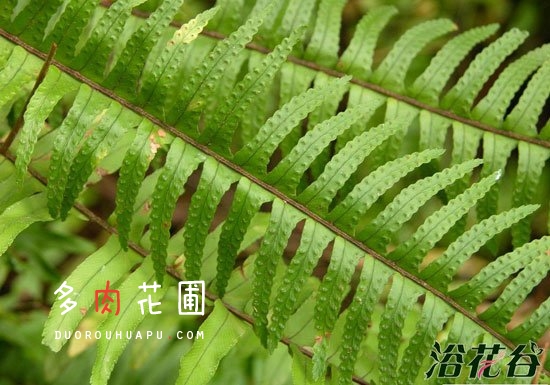
How to grow a Boston fern (Nephrolepis cordifolia), also known as ladder fern, rock fern, and so on, is a medium-sized terrestrial or epiphytic fern of the genus Nephrolepis in the family Nephrolepidaceae. The plant grows 30-80 cm tall, with smooth leaf surfaces, fronds 30-70 cm long and 3-5 cm wide. Sori are borne at the tips of the upper lateral veins of each vein group, and the sori are kidney-shaped.
The Boston fern is an ornamental fern widely used both in China and abroad today. It is easy to grow and robust, widely used for open-ground cultivation and indoor potted foliage display. It is especially charming when grown in a hanging-basket style. The Boston fern is also an important cut-foliage material. Many cultivated varieties of the Boston fern are among the most widely used ferns in the world. These cultivated varieties are highly suitable for potted and hanging cultivation and are ideal materials for indoor decoration, popular all over the world, but most varieties are sterile and must be propagated vegetatively.
The Boston fern likes bright, indirect light and can be placed near a north-facing window indoors. Its optimum growing temperature is 15-21°C at night and 24-26°C during the day. The Boston fern is relatively drought-tolerant, but during the growing season it needs a sufficient water supply and moist air, with humidity of 50%-60% being adequate. The Boston fern is suitable for planting in loose, airy, neutral to slightly acidic soil. The potting mix can be made of 1 part leaf mold, 1 part plain sand, and 2 parts vermiculite. During vigorous growth, liquid fertilizer should be applied 1-2 times a month. The Boston fern grows very fast, and its roots will quickly fill the pot, so it must be repotted every year.
The most commonly used method of propagating the Boston fern is division in spring when repotting. The Boston fern has many horizontal creeping stolons, which should be pressed down with clods of soil or fixed to the soil surface with wire hooks and the like; they will then grow into small plantlets, which can be separated from the mother plant and planted once they reach a certain size. The round tubers of the Boston fern can also develop into small plantlets. When grown in the open ground, the Boston fern can quickly establish natural colonies through the growth of its stolons. Spore propagation is also a widely used propagation method. The above is an introduction to how to grow a Boston fern.
How to Grow a Boston Fern
Some flower enthusiasts ask how to grow a Boston fern. Compared with other ferns, the Boston fern is relatively easy to care for. To put it simply first, the Boston fern is a type of fern and shares the same characteristic as other ferns, namely a love of humid environments, so the most important thing in growing a Boston fern well is to first meet its basic environmental needs as much as possible.Since the Boston fern likes humid environments, daily care should keep the soil moist, and the leaves should also be sprayed with water frequently to keep the air humid. In spring and autumn, when temperatures are suitable, the Boston fern grows vigorously and new fronds keep emerging from the pot; at this time it should be watered thoroughly so that the young fronds can grow normally and quickly. In winter, watering should be reduced and spraying stopped, keeping the potting soil merely from drying out. When grown indoors in winter, if there is heating or a stove in the room, the dry air often causes the leaf margins to scorch, so attention should be paid to this.
In addition, during cultivation, when the soil lacks water, the air is too dry, or watering is alternately too much and too little, the plant's leaves often become pale, washed-out, and chlorotic, with scorched leaf tips, and in severe cases many leaves drop off, reducing its ornamental value, so water management must be done well.
The Boston fern is not tolerant of severe cold, so in winter good warmth retention should be provided, keeping the temperature above 5°C to avoid frost damage; above 8°C it can still grow slowly, but it should not be placed near a heat source, otherwise the high temperature often causes excessive growth that spoils the overall plant shape. In winter cultivation, special attention should be paid to preventing night frost and cold winds. The Boston fern also fears intense summer heat; when summer temperatures are high and transpiration is intense, heat protection and cooling must be done well, taking care to maintain good ventilation and continuously spraying the plant with water, which can also make the leaf color more tender green. In summer, with sufficient watering and spraying, the Boston fern can still grow normally at temperatures of 30°C-35°C. Spring and autumn, with their suitable temperatures, are the periods of vigorous growth for the Boston fern; attention should be paid to good ventilation and to turning the pot regularly to prevent growth from leaning to one side.
The Boston fern is relatively shade-tolerant; as long as it receives indirect light, it can be displayed indoors for a long time with almost no need for special lighting. During cultivation, when light is too strong, the fronds of the Boston fern often dry up, wither, and drop off. In home cultivation, special care should be taken to avoid a Boston fern that has been kept indoors for a long time suddenly encountering strong light; in such a case, even for a very short time, the fronds will lose water, wilt, and have scorched margins and yellowed fronds, seriously affecting its ornamental value. Although the Boston fern is a relatively shade-tolerant plant, long-term shade without light will also cause weak growth, paler leaf color, and frond drop, and because the fronds elongate, its original form changes, resulting in irregular growth and poorer ornamental quality. Therefore, when displaying it indoors, in order to maintain good ornamental effect over the long term, attention should be paid to letting it see light regularly: in spring and autumn it can be given a little light in the morning and evening, ensuring 4 hours of light per day; in winter the Boston fern can be placed in a spot by the window where it can see sunlight; in summer, when light is strong, the Boston fern can simply be kept in a spot indoors where it can see indirect light.
As a fern, the Boston fern does not flower or set seed, consumes little nutrients, and has relatively modest fertilizer requirements, but regular fertilization should still be noted during cultivation. Fertilization of the Boston fern is mainly nitrogen-based; during the vigorous growth periods of spring and autumn, apply dilute cake fertilizer water once every half a month to 1 month, or a nitrogen-based organic liquid fertilizer or inorganic compound liquid fertilizer. The fertilizer must be dilute and not too concentrated, otherwise fertilizer burn is very likely. A moderate amount of fertilizer can keep the leaf color lastingly emerald green, filling the plant with vigor and strong vitality. The Boston fern's leaf color is relatively lighter than that of other foliage plants; this is its own normal appearance, not a sign of nutrient deficiency. In cultivation, some people always think this is nutrient deficiency and keep fertilizing, with the result that the leaf color improves somewhat but the plant grows weak and the fronds become too long, spoiling the overall shape. This point needs attention.
The Boston fern's root system is relatively shallow and somewhat epiphytic in nature, so the potting mix should be loose, fertile, and well-drained. The potting soil is generally a mix of leaf mold or peat soil with a small amount of garden soil, and fine sand and vermiculite can also be added to increase water permeability. When grown as a hanging basket, an equal mix of leaf mold and vermiculite can be used as the potting mix; it is lighter in weight and suitable for hanging. For home potting, in order to keep the soil moist, some sphagnum moss, peat moss, and the like can be mixed into the potting mix, which is very beneficial to the growth of the Boston fern.
The Boston fern has few pests and diseases during cultivation, but sometimes, due to poor management, the following troubles can occur: in overly damp places there will be slug damage; when ventilation is poor, scale insects may appear; in addition, nematodes sometimes cause damage, producing brown round spots on the fronds and affecting the ornamental value. As long as we manage carefully and correctly during cultivation, taking care to provide suitable conditions of temperature, humidity, light, and soil according to the growth habits of the Boston fern, these problems can generally be effectively avoided and overcome.
What Plant Is the Boston Fern, and How to Grow It
Many people have never heard of the Boston fern, let alone seen one, and do not know what plant the Boston fern is. In this article, the editor introduces the Boston fern, as well as how to grow it, and includes related pictures of the Boston fern.
What Plant Is the Boston Fern
The Boston fern, also known as round fern, comb grass, phoenix egg, ladder fern, rock fern, and so on, belongs to the order Polypodiales and is an epiphytic or terrestrial fern of the family Davalliaceae. It is native to tropical and subtropical regions, and grows wild in mountain forests of various parts of South China. It often grows on the ground and epiphytically in rock crevices and on tree trunks beneath streamside forests. It likes warm, humid, and semi-shaded environments and avoids direct sunlight. The Boston fern is an ornamental fern widely used in China and abroad; besides garden applications, the Boston fern is also a traditional Chinese medicinal material. The underside of the Boston fern has large numbers of sporangia, used to reproduce offspring.
How to Grow a Boston Fern
It likes warm, humid, and semi-shaded environments, avoids strong direct light, is not drought-tolerant, and prefers well-drained, loose, fertile soil rich in humus. To grow a Boston fern, the potting mix can be made of 4 parts leaf mold, 4 parts vermiculite, and 2 parts river sand, or mainly leaf mold or peat soil mixed with a small amount of river sand. Because the Boston fern's root system is relatively shallow, it should be planted in a shallow pot.
The Boston fern likes bright, indirect light. In spring, summer, and autumn it can be kept near a north-facing window indoors, but attention must be paid to ventilation. When kept outdoors for care, it should be placed in filtered shade to avoid direct sunlight. If light is too strong, the fronds very easily scorch yellow; if too shaded, the pinnae often drop easily. In summer, besides keeping the potting soil moist at all times, clear water should also be sprayed on the fronds 2-3 times a day to increase air humidity, which is necessary to keep the fronds emerald green. When the air is dry, the pinnae easily curl at the edges and scorch, reducing the ornamental value. But watering should not be excessive either; if water accumulates in the pot, it easily causes the fronds to yellow and drop.
During the peak growing season, generally apply dilute, well-rotted cake fertilizer water or compound chemical fertilizer once every half a month, and be careful to prune dead fronds at any time to keep the plant shape neat. In winter, keeping the room temperature above 10°C is enough for it to overwinter safely.
The above introduced what plant the Boston fern is, as well as how to grow it, and I hope it is helpful to everyone. It should be noted that the Boston fern grows robustly and its roots will quickly fill the bottom of the pot, so it needs to be repotted once every spring; when repotting, old fronds should be cut off and division carried out.