How to grow ferns? Care tips and precautions
How to grow ferns. Ferns are increasingly favored by people because of their strong shade tolerance, few pests and diseases, and simple management. However, because people do not know much about ferns, combined with neglect in management, yellowing leaves and leaf drop are often caused. Therefore, scientific methods should be used in the process of cultivation and management.
Ferns are suited to loose soil rich in humus, so the soil used for planting is best made entirely of leaf mold, or with 1/3 peat soil added. In addition, because most ferns are shallow-rooted plants, the pot used should be shallow rather than deep, and afterward the pot should be changed once every 2 to 3 years.
Most ferns prefer moisture and have high requirements for air and soil humidity. During the growing season, they should be watered once a day, and during the period of vigorous growth, they should be misted 2 to 3 times a day. If placed indoors, they should be watered once every 2 to 3 days. On one hand, this can supplement some water; on the other hand, it can wash away dust from the leaves, which is good for photosynthesis and also good for viewing. During the winter dormant period, water less; water again when the potting soil is slightly dry, and when watering, water thoroughly. During the growing season, apply a diluted liquid compound fertilizer once every 2 to 3 weeks. If the leaves are thin and yellow, it indicates poor growth, so the frequency of fertilizing should be increased or fertilizing should be stopped. Dead branches and yellow leaves, as well as some undesirable branches and leaves, should be cut off from the soil surface to keep the whole plant fresh and attractive and to help new branches sprout.
In the north, indoor heating equipment is available, so overwintering indoors is not a problem. In the middle and lower reaches of the Yangtze River and northern Jiangnan, there is generally no indoor heating equipment, so the plants should be placed in a bedroom where people live and kept appropriately warm so they can overwinter safely. Never place them in a place with drafty airflow or in a dark room to overwinter, as this can easily cause cold damage and yellowing and falling leaves.
Although ferns have a certain degree of shade tolerance and can grow well in bright rooms, they are also prone to yellowing and falling leaves in dark rooms, so the plants in bright places and dark places should be swapped once every 2 to 3 weeks. In addition, on balconies (especially high-rise balconies), because of strong light, strong wind, and dryness, these conditions are extremely unfavorable for fern growth. If there are no warming measures, they must never be placed there, otherwise the leaves will very easily turn yellow and fall off. The above is an introduction to how to grow ferns.
What are ferns, and how to grow ferns
Ferns are a relatively primitive major group among higher plants and are also the earliest land plants. These plants are herbs that grow in the mountains and wilds, with tenacious and vigorous vitality, and are found throughout the temperate and tropical regions of the world.
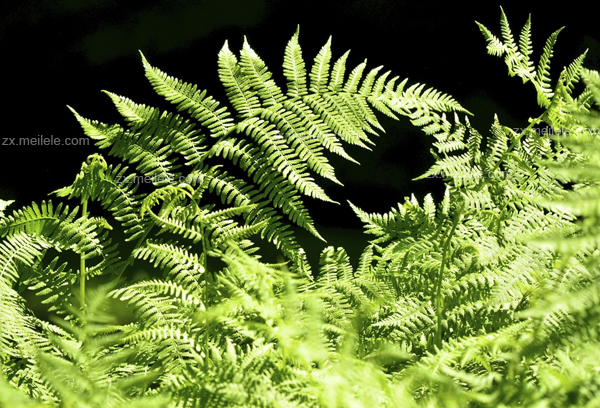
What are ferns
Ferns refer to woody plants that grow in lowlands. They need water as part of their reproductive cycle, and they began to diversify into various different species, and they are still plants with extremely strong vitality today. Ferns have a life cycle with alternation of generations, cycling between the diploid sporophyte and the haploid gametophyte. The typical life cycle of a fern is that the sporophyte produces haploid spores through meiosis; the spores form a gametophyte through cell division; the gametophyte produces reproductive cells through mitosis; motile sperm with flagella fertilize the egg still attached to the prothallus; the fertilized egg forms a diploid zygote and grows into a sporophyte through mitosis.
How to grow ferns
Different ferns have different suitable planting regions, and varieties selected from different regions have different adaptability. For example, the pH of the soil is very important for fern growth. Most ferns need an acidic growing environment, and if this point is ignored, their growth will be affected. For instance, Osmunda japonica is suited to growing in a slightly acidic soil environment, so it is very easy to grow in the south. However, because water in the north tends to be alkaline, to grow it well, the water needs to be treated, otherwise it will grow worse and worse.
Division propagation
Division propagation refers to taking the plant out of the pot and, as needed, dividing one plant into several plants, each of which must have roots and leaves. Be careful when dividing, and do not damage the growing points. Keep as much soil around the roots as possible. Cut off aged and damaged leaves and roots. Replant the divisions according to the original soil level line and water them. Division propagation has no strict seasonal requirements; if needed, it can be done in all four seasons.
Tissue culture
Ferns can also be tissue cultured. For species that produce few spores or no spores, as well as species that are difficult to propagate by spores, or to rapidly expand propagation of valuable species, tissue culture can be used for in vitro rapid propagation. To carry out large-scale modern commercial production, tissue culture propagation is also needed.
Ferns in different growth stages have different requirements for light. Generally, in the early growth stage, that is, the budding stage, strong light should be prevented and more shade should be provided. During the dormant period, they should be placed in a place with sufficient light. Most ferns prefer filtered, indirect, or reflected scattered light. If light is insufficient, the plant will grow leggy and appear weak or wilted.
What are ferns, and how to grow ferns
Ferns are a relatively primitive major group among higher plants and are also the earliest land plants. These plants are herbs that grow in the mountains and wilds, with tenacious and vigorous vitality, and are found throughout the temperate and tropical regions of the world.
What are ferns
Ferns refer to woody plants that grow in lowlands. They need water as part of their reproductive cycle, and they began to diversify into various different species, and they are still plants with extremely strong vitality today. Ferns have a life cycle with alternation of generations, cycling between the diploid sporophyte and the haploid gametophyte. The typical life cycle of a fern is that the sporophyte produces haploid spores through meiosis; the spores form a gametophyte through cell division; the gametophyte produces reproductive cells through mitosis; motile sperm with flagella fertilize the egg still attached to the prothallus; the fertilized egg forms a diploid zygote and grows into a sporophyte through mitosis.
How to grow ferns
Different ferns have different suitable planting regions, and varieties selected from different regions have different adaptability. For example, the pH of the soil is very important for fern growth. Most ferns need an acidic growing environment, and if this point is ignored, their growth will be affected. For instance, Osmunda japonica is suited to growing in a slightly acidic soil environment, so it is very easy to grow in the south. However, because water in the north tends to be alkaline, to grow it well, the water needs to be treated, otherwise it will grow worse and worse.
Division propagation
Division propagation refers to taking the plant out of the pot and, as needed, dividing one plant into several plants, each of which must have roots and leaves. Be careful when dividing, and do not damage the growing points. Keep as much soil around the roots as possible. Cut off aged and damaged leaves and roots. Replant the divisions according to the original soil level line and water them. Division propagation has no strict seasonal requirements; if needed, it can be done in all four seasons.
Tissue culture
Ferns can also be tissue cultured. For species that produce few spores or no spores, as well as species that are difficult to propagate by spores, or to rapidly expand propagation of valuable species, tissue culture can be used for in vitro rapid propagation. To carry out large-scale modern commercial production, tissue culture propagation is also needed.
Ferns in different growth stages have different requirements for light. Generally, in the early growth stage, that is, the budding stage, strong light should be prevented and more shade should be provided. During the dormant period, they should be placed in a place with sufficient light. Most ferns prefer filtered, indirect, or reflected scattered light. If light is insufficient, the plant will grow leggy and appear weak or wilted.
More information >>
|Effects of pothos|How to grow cactus|Serissa bonsai|Lily of the valley flower meaning|Office feng shui plants|
|How to grow gardenia|How to grow Christmas cactus|Carnation flower meaning|Effects of lavender|How to grow camellia|
|How to grow carnation|How to grow clivia|Canna pictures|Potted flower pictures|How to grow bowl lotus|