What are the methods to prevent root rot in geraniums?
Geranium, also known as shilabong, renlabong, hydrangea, and foreign hydrangea, is a subshrub or perennial herbaceous plant in the Geraniaceae family and the genus Pelargonium. It is covered all over with fine soft hairs and has a distinctive scent.
It is native to southern Africa and is now widely cultivated around the world. It prefers a cool climate, with an optimum temperature of 10-25°C, and can tolerate low temperatures of 0°C. During the high-temperature period in summer, it enters a semi-dormant state. It likes sufficient light; when light is insufficient, it does not bloom. During the flowering period, direct strong light should be avoided, otherwise the petals scorch and drop easily. It is drought-tolerant and averse to excess moisture; too much water can be fatal. It prefers loose soil with good drainage. The peak flowering period is from April to June, and the flowering period is long. If given a relatively high temperature in winter and managed properly, it can bloom continuously from October to June of the following year.
Spring and autumn are the periods of vigorous growth for geraniums, so a little more water can be given appropriately. When temperatures are high in summer, geraniums enter a semi-dormant state, and watering must be strictly controlled. It is enough that the potting soil is not too dry, and watering in the morning and evening is preferable. Never water at noon when the soil temperature is relatively high, otherwise it can very easily cause root rot. Rain should be avoided on rainy days, and during the "plum rain" season, the potting soil must never be kept too moist for a long time.
To prevent root rot in geraniums, in addition to paying attention to watering, a sandy loam rich in humus and with good drainage and aeration should also be selected. Heavy clay soil has poor drainage and aeration and must not be used to plant geraniums.
When transplanting geraniums, the trowel must not be too close to the roots, so as to avoid damaging the root hairs. The roots should be kept as intact as possible; if the roots are damaged, they are most likely to become moldy and rot after watering.
If you want geraniums not to suffer root rot, timely prevention and control of pests and diseases is also needed. Nematodes are a common pest of geraniums. When the temperature is 25-30°C and the humidity is around 40%, this is the most suitable period for nematodes to invade the roots of geraniums. When the damage is severe, it causes sections of the root system to fall off one after another, and even to rot completely.
How to prevent root rot in geraniums
Preventive measures for root rot in geraniums: (1) Soil. Choose a sandy loam rich in humus, with good drainage and good aeration. (2) Transplanting. When transplanting, keep the trowel as far from the root system as possible, so as to avoid root damage that causes root rot. (3) Watering. This is the key to preventing root rot. Do not water too much normally; during the vigorous growth periods in spring and autumn, a little more water may be given appropriately. In summer, when temperatures are high, watering must be strictly controlled; it is enough that the potting soil is not very dry, and especially at noon when temperatures are high, watering must absolutely not be done. During the plum rain season, management should be strengthened, and the potting soil must not be kept too moist for a long time. (4) Pest and disease control. Nematodes are the main pest causing root rot in geraniums. When planting, it is best to use artificial media such as perlite and vermiculite, or to disinfect the soil with 3% carbofuran granules (apply 8-10 grams per 25 sq cm). If diseased plants are found, pull them out promptly and burn them.How to prevent root rot in geraniums
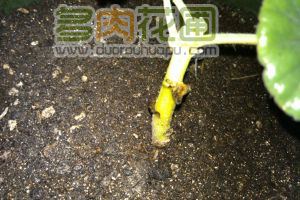
There are many causes of root rot in geraniums: excessive watering, which leads to water accumulation in the pot; a stuffy, hot environment, which makes root respiration difficult; pest and disease infestation, which gnaws at the roots; improper fertilizing, which burns the roots. Any inappropriate action during care can cause root rot. So the key is not to analyze the causes, but to find methods to avoid it.
Preventing root rot in geraniums - choose suitable soil
The quality of the soil determines root growth in geraniums, so choose a sandy loam rich in humus, with good drainage and good aeration. When roots grow robustly, their resistance is relatively strong, and even if care is not timely, they will not rot very easily.
Preventing root rot in geraniums - be careful when repotting and transplanting
Geraniums must be repotted or moved into a larger pot every autumn, and this is a cause of large-scale root damage. So during the operation, keep the trowel a little farther from the root system to avoid cutting the roots. You should know that every wound is fatal to the plant.
Preventing root rot in geraniums - water correctly
Correct watering is the key to preventing root rot. Do not water too much normally. During the vigorous growth seasons in spring and autumn, a little more water may be given appropriately, but the potting soil must not have water accumulation. In summer, when temperatures are high, watering must be strictly controlled; as long as the potting soil is not very dry, try not to water, especially at noon, when watering will instead harm the plant. In addition, during the plum rain season in many places, the potting soil must not be exposed to long-term rain or become too damp. Rainwater can be collected for irrigation, but pay attention to the amount used.
Preventing root rot in geraniums - pest and disease control
Nematodes are the main pest causing root rot in geraniums. When planting, it is best to use artificial media such as perlite and vermiculite, or to disinfect the soil. Also, if diseased plants are found, pull them out promptly and burn them.