Water your flowers like this in winter, and the plants won't die and will still look lively
Water like this in winter, and your flowers won't die and will still look lively! If you don't know how to water in winter, no plant (green plants such as pothos and money tree, and potted flowers such as clivia and orchids) will thrive. Let me teach you the right method!
There's a lot to learn about watering succulents! A share of general small tips for watering succulents
Succulents are a kind of small ornamental potted plant that many people like to grow nowadays. Their thick leaves give a sense of substance and make people find them incredibly cute, just like a baby's fat, all fleshy. We know that no matter what plant it is, it cannot do without water, so if you grow succulents, then you certainly have to water them. Let's take a look below at the succulent watering guide.
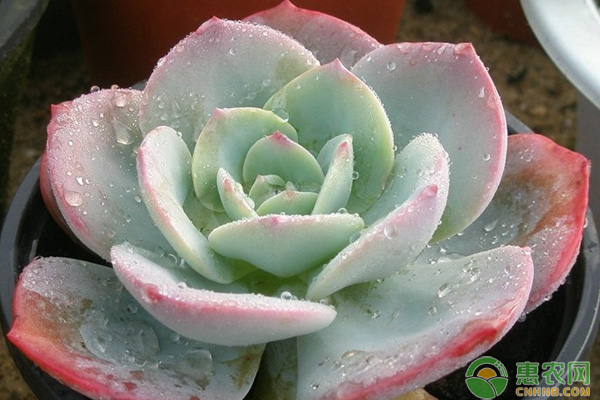
General small tips for watering succulents
1. How long between waterings. When watering succulents, there is usually no fixed watering schedule. We can water appropriately by understanding the temperature and the soil. Usually, watering is done according to the season.
2. Soil moisture. During the growing period, we water according to the soil moisture. During the succulent's growth process, when the soil is almost dry, the soil can be watered. At this time, we need to soak the soil as much as possible so that the roots can fully absorb it. Generally speaking, spring and autumn are the watering seasons, while in summer and winter the amount of water should be reduced accordingly, because at this time the succulent enters a dormant state and does not need much water.
3. Choosing a flowerpot. Choosing a pot for succulents is an important factor. We need to choose a flowerpot of the right size to promote growth. If the flowerpot is too small, it dries out easily and cannot meet the plant's water needs. If it is too large, more water will be needed, and too much moisture will cause root rot, so the flowerpot is very important.
4. Watering time. In the hot summer, you can water in the morning and evening. In winter, watering is done at noon, when the temperature is relatively high, which can effectively avoid frostbite and damage to the succulent. The succulent's growth should be kept at a room temperature of about 20 degrees, so that it can grow vigorously and luxuriantly. If the temperature is too low, it may cause dormancy or even death. Therefore, in similar temperature difference conditions, we must water the flowers. The tap water used is usually used after filtering.
How to water succulents in summer
Watering succulents in summer. In summer, watering is usually done in the evening and at night. At this time, the best watering is a moderate amount, so the water can be absorbed and the plant will be safer.
In summer, watering needs more attention. The cycle generally refers to the usual watering cycle, and it is best to repeat it slightly. Under normal circumstances, observe the potted soil and water when you find it is dry. If it is a soil with poor permeability, the watering time will be extended a little, because the soil may already be dry on the surface, but in fact its bottom is still moist. If it is a succulent that has entered dormancy, it needs less water, and some even must be given very little water.
When watering succulents in summer, generally water along the edge of the pot with a moderate amount of water. Do not pour water directly; let the water seep in naturally. The second method is the pot-soaking method, which can ensure there is enough water in the succulent. This takes more time. In the evening, you can also spray the succulent, which can help keep the succulent moist and cool. When watering, be careful to avoid pouring it into the inner part of the leaves and other such places, as it is easy to make them fall off the leaves, and be careful not to let water accumulate.
Succulents are a cute potted plant, but only a succulent that grows well has the best ornamental value. So succulents must be watered in good time, so that they can grow lively and vigorous.
How to water flowers in winter? How often should you water?
In our daily flower growing, the most common thing we do is water the potted flowers. Generally, we think watering is a very simple matter, but if the watering does not go through, frequent watering can also easily dry the potted plant to death, because watering only half-way is a major taboo in flower growing. Many people say they do not water only half-way, and they only stop when water leaks out each time. You may think that once you see water leaking out, it has been watered through, but in fact this is not the case.
"Half-way water" (that is, only wetting the surface of the pot soil). When we water, if the pot soil is compacted, the water we pour leaks out at once. In this way, the inside is actually not watered through, which will lead to an insufficient water supply to the plant roots, causing leaf drop or even death.
The correct watering methods for daily flower growing
After the pot soil turns white and cracks from dryness, first pour a little water into the flowerpot, then use a bamboo stick to poke along the edge of the flowerpot, poking down 5 or 6 cm. If the bamboo stick is very dry, it means it has not been watered through, so you can water several more times, a little water each time. Or soak the pot once a month, soaking the flowerpot in a basin full of water for twenty minutes. In this way, moisture is drawn in from below and slowly permeates upward, so it will be watered through. You will find that your wilted flowers suddenly look lively, and you will suddenly realize where the problem was. However, the pot-soaking method should not be used often; using it once a month for wilted flowers is enough.
It is not suitable to water with tap water, because tap water contains chlorine and other components harmful to flowers, and freshly drawn tap water differs greatly from room temperature. Watering directly can easily injure the root system. It is best to let tap water sit for one or two days before watering the flowers.
It is best to water flowers at noon, when the temperature is warmer, and at the same time you can ventilate, which can speed up the evaporation rate of moisture. If the winter weather is dry, spray more water on foliage plants to make the flowers grow more robust and glossy green.
Four signs for watering flowers. Choose any one as a reference; if you still feel unsure, use all four.
1. Observe, look
When you find that the surface of the pot soil is so dry that it has cracked, it really is time to water. If only the surface layer is dry, then use your hand to dig a little deeper and look. If it is still dry, water it, and remember to water it through.
2. Tap the flowerpot
Don't want to dig in the soil? Then tap the flowerpot. Tap the pot with your hand. If the sound is crisp, water it. If the sound is dull, no need to water.
3. Weigh the flowerpot
Weigh it in your hand. This requires accumulated experience. When you feel it is much lighter than before, water it.
4. Insert a chopstick
Find a chopstick from home and insert it into the pot. After a few minutes, take it out and look at the chopstick. If the chopstick is dry and has no soil on it, water it. If the chopstick comes out moist and with soil on it, do not water.
The above are the four signs of watering flowers in winter and the correct watering methods compiled by the Huinong Network editor. Among them, the chopstick-inserting method is the simplest, clear and easy to understand, the most useful, and suitable for beginners. If you want to learn more about growing knowledge, please follow Huinong Academy!